
Reviewed · PABLO ESCOBAR TOURS
We Don’t Talk About Pablo: Untold Narcos Story and Transformation
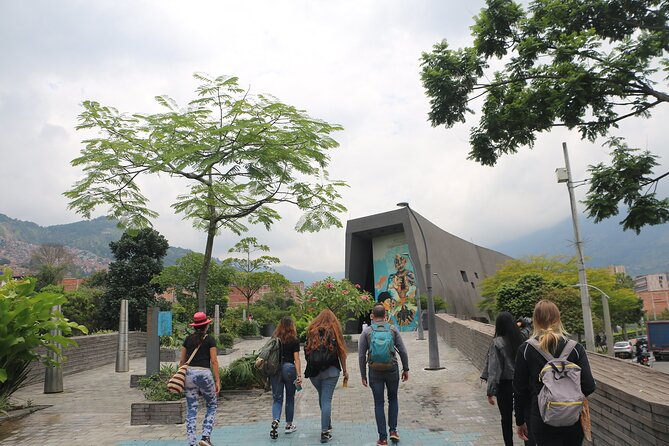
Pablo Escobar is only the doorway into this four-hour tour. The real subject is Medellín during the narco era, the people caught in the violence, and the city’s long effort to rebuild. You will travel by minivan, cable car, and tram while connecting neighborhoods and memorials to the larger story.
I like the victim-centered approach, which avoids treating Escobar as a folk hero. I also like the cable-car and tram rides, since they help you understand how Medellín’s hills, neighborhoods, and public works fit together.
The main drawback is simple: this is not the tour for a checklist of Escobar landmarks. Some past versions of the experience included places such as his grave, former home, or La Catedral, but the current route focuses on the Memory Museum, Comuna 8, Ayacucho, and memorial sites. If you want celebrity-crime sightseeing, you may find it restrained.
Key points before you book
- The story reaches beyond Escobar: You learn how drug trafficking affected Colombian families, institutions, communities, and the environment.
- Cable car and tram rides are part of the lesson: The transport is not just a way to get around. It shows how Medellín connects hillside districts with the city center.
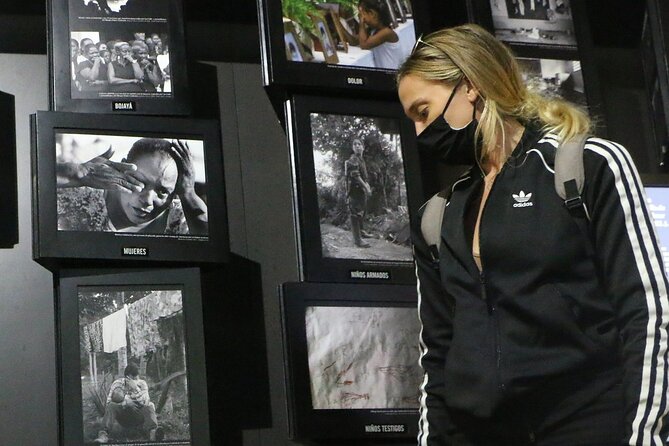
- The Memory Museum gives the tour its moral center: Interactive exhibits present several voices about violence, loss, and recovery.
- Private groups get a more personal pace: Only your party participates, and past guides such as Carlos, Juan Carlos, Wilson, Hector, and Luis Ospina have been praised for clear storytelling.
- The $95 price includes the moving parts: Pickup and drop-off, transit tickets, entry fees, snacks, and a bilingual guide are covered.
- Allow for serious subject matter: This is a history and social-change tour, not light entertainment.
A different kind of Pablo Escobar tour
Many Medellín tours build the day around Escobar’s former home, grave, prison, or favorite haunts. This one uses his story to explain a much larger crisis. You will hear how narcotrafficking grew, how violence reached ordinary neighborhoods, and why Medellín’s recovery cannot be reduced to a single criminal or a television series.
That distinction matters. Escobar’s name can pull you in, but the tour’s purpose is to shift your attention toward the people and places affected by the narco years. The experience does not present him as a leader. It aims to give you a fuller account of Colombia’s past and its present.
I would choose this tour if you want context. It can also work well early in your Medellín stay, since the route introduces the city center, hillside communities, the transit network, and several important sites in one half-day. One past participant specifically found it useful as a first-day orientation.
The tone is serious, but not necessarily grim from start to finish. Guides have added personal stories, local politics, culture, and details about how Medellín changed over the past 40 years. Carlos, Juan Carlos, Nicolas, and Hector were singled out for turning the subject into a clear, human story. Your guide will vary, but the experience is designed for English and Spanish speakers.
More Pablo Escobar Tours in Medellin:
- Medellín: The Real Pablo Escobar Tour
★ 4.8 · 3,205 reviews - Medellín: Pablo Escobar Tour with beer included
★ 4.7 · 612 reviews - Medellin: Guatapé Day Trip & Boat to Pablo Escobar’s Estate
★ 4.7 · 365 reviews
Hotel pickup and a city lesson on wheels
The tour begins at your Medellín accommodation. Transportation is provided, with an air-conditioned minivan used to start the route. The practical value is clear: you do not need to find a distant meeting point, and you can reach several parts of the city without arranging separate taxis.
The details describe hotel pickup and drop-off through public transportation, while the route description also refers to a minivan. In practice, you should expect a combination of private vehicle transport and Medellín’s public transit system, especially the cable car and tram. Confirm the exact pickup arrangement when your booking is confirmed, since availability is checked after booking.
The first hour is spent setting the context. Instead of rushing straight to a famous address, your guide explains how Medellín’s geography, inequality, political pressures, and illegal economies shaped the narco era. That background makes the later stops easier to understand.
This opening is especially useful if your knowledge comes mainly from Narcos. Television can give you names and drama, but it leaves out much of the daily cost paid by residents. The guide’s job here is to connect the criminal story to the city around you.
Riding the cable car to Comuna 8
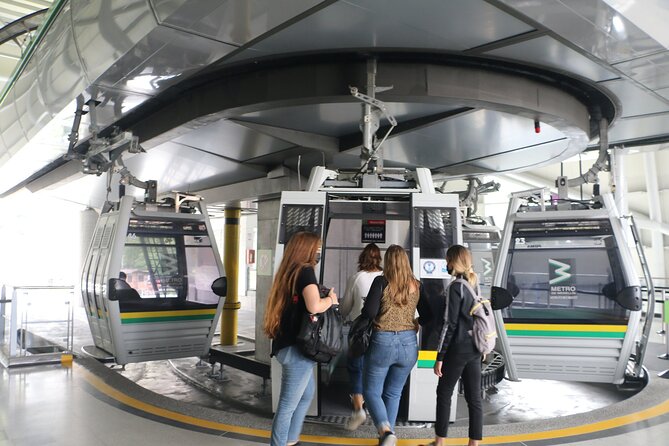
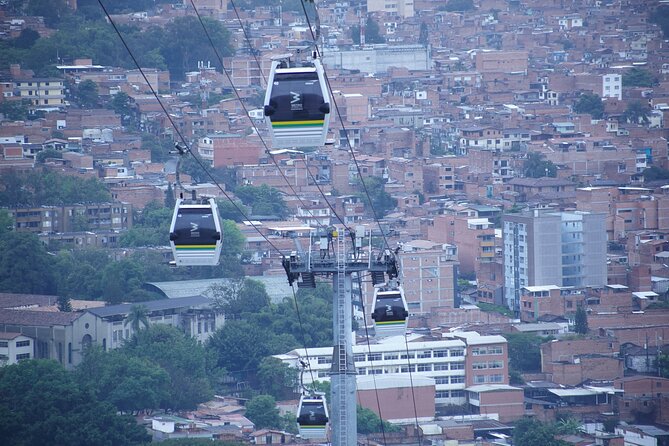
The cable car is one of the most meaningful parts of the route. As the cabin rises toward Comuna 8, you get a practical view of Medellín’s steep terrain and the neighborhoods spread across the hillsides. You are not simply looking at the city from above. You are seeing why transport has been such an important part of social change.
For decades, steep hills made movement harder for many residents. Medellín’s cable-car system helped connect hillside communities with jobs, schools, and the wider transit network. The ride gives your guide a natural way to explain how public projects can affect daily life.
Comuna 8 is not presented as a backdrop for dramatic photos. You walk through an area tied to the city’s difficult past and hear about different stages of its transformation. Keep your clothing comfortable and your shoes practical. The tour includes walking, transfers, and time outdoors, so this is not a sit-in-a-van excursion.
You should also approach this stop with respect. Neighborhoods are home to real people, not movie sets. Listen to your guide, follow local directions, and avoid treating poverty or past violence as spectacle. The value here comes from understanding the community’s experience, not from collecting sensational images.
The Memory Museum and its many voices
From Comuna 8, the route uses the tram to reach Museo Casa de la Memoria, or the Museum of Memory. Entry is included. The museum’s interactive exhibits focus on Colombia’s violence and the people who lived through it, giving the tour a stronger social and human focus than a standard Escobar itinerary.
This is likely the most important stop for anyone who wants to understand the cost of the narco years. The museum presents more than one viewpoint, including stories of struggle, loss, and resilience. That matters because there is no single, tidy explanation for Medellín’s past.
The institution helped shape the tour’s research and narrative. That connection gives the museum visit a clear purpose rather than making it a spare indoor stop between outdoor attractions. You are given a place to think about what your guide has explained and to hear from voices beyond the famous names.
Plan on about an hour here. A museum visit can feel slower than a drive past a former Escobar property, but it offers more substance. If you have limited time in Medellín, this stop gives you information that is useful long after the tour ends.
Same city, a completely different kind of day:
- Medellin: Comuna 13 Graffiti Tour, Cable Car & Street Food
★ 4.8 · 9,046 reviews - Medellín: Comuna 13 True Story and Street Food Tour
★ 4.9 · 1,779 reviews - Medellín: Comuna 13 District Tour with Cable Car Ride
★ 4.8 · 1,467 reviews - Medellin: Coffee Tour with Transport, Snacks and Tastings
★ 4.7 · 1,357 reviews
Parque Memorial Inflexión and the meaning of remembrance
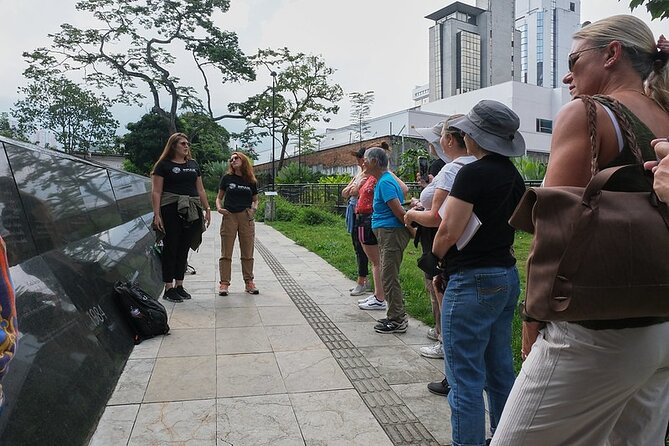
The final two hours include Parque Memorial Inflexión and other locations from El Pinal to Ayacucho. Parque Memorial Inflexión was created to remember victims of the narco wars. Its purpose is not to celebrate power, wealth, or criminal legend. It asks you to consider the human toll behind the headlines.
The memorial works best when paired with the guide’s explanation. A monument alone can seem abstract, especially if you do not know what happened in the city around it. Here, the surrounding walk and earlier museum visit help connect remembrance to actual neighborhoods and families.
The stops in and around Ayacucho also show Medellín’s efforts at renewal. The tour links violent history with changes in public space, transportation, and community life. You will not receive a simple story in which the city completely solved its problems. Instead, you get a picture of a place that has made major changes while still living with the marks of the past.
This section can also be the most physically demanding. The tour lasts about four hours, and the route combines walking with cable-car and tram rides. Comfortable shoes are not a minor suggestion. You should also wear clothes suited to moving between a vehicle, public transit, museum rooms, and outdoor streets.
What the guides add to the experience
The guide can make or break a tour like this. The subject is complicated, and a poor explanation could turn it into either a fan club for Escobar or a dry list of dates. The strongest guide accounts describe clear storytellers who answered questions and placed the narco era within Medellín’s wider political and social story.
Several guide names appear in past accounts of this experience, including Carlos, Juan Carlos, Wilson, Hector, Nicolas, Luis Ospina, and John William. Some were praised for personal connections to the period, and one guide was described as having served as a police officer during the Escobar era. Guide assignments change, so you should not book on the assumption that a particular person will lead your group.
The private format helps. Only your group participates, which gives you more room to ask about difficult subjects or request clarification. It also allows the guide to adjust the pace. In past cases, guides changed the schedule when a group had already visited Comuna 13, and some added a stop such as La Catedral for an extra fee.
That flexibility is useful, but it is not the same as a guaranteed custom itinerary. The published route centers on the museum, Comuna 8, Parque Memorial Inflexión, El Pinal, and Ayacucho. Ask before departure if you hope to see a particular Escobar site.
What is included for $95
At $95 per person, this is not the cheapest way to hear about Escobar. You are paying for a private, guided experience rather than a quick drive past a few locations. The price includes a bilingual English and Spanish guide, hotel pickup and return transportation, cable-car and tram tickets, snacks, and entrance fees.
That package makes the price easier to assess. Medellín’s transit fares and museum admission are covered, and you do not have to arrange several separate rides. The guide is also doing more than pointing out addresses. The value rests on research, explanation, and the ability to connect locations that would otherwise feel unrelated.
Still, the price may feel high if you only want photographs of a house, grave, or prison. One past assessment described the tour as a little expensive for a ride around the city, and that is a fair warning for visitors with narrow expectations.
I see better value for a small private group that wants serious historical context. The cost also makes more sense if you are new to Medellín and plan to use the tour as an orientation. If you are traveling alone, $95 is a larger outlay, but the private format can provide a more focused conversation.
Tips and personal expenses are not included. Unspecified food and drinks are also extra, though snacks are provided.
Who should take this tour
I would recommend it to you if you want to understand Medellín rather than simply photograph Escobar-related sites. It suits visitors interested in modern Colombian history, urban change, public transportation, memorials, social policy, and the voices of people affected by violence.
It is also a good match for anyone who has watched Narcos and wants to separate television from fact. The tour gives you a chance to ask how the show’s popular image fits, or fails to fit, the lived experience of Medellín.
Parents and adult children can get a lot from it. One past account describes a parent-child outing in which the guide’s personal story added another layer to the day. The private format can help families set their own pace and ask questions openly.
I would not choose it for young children or for anyone seeking a cheerful city sightseeing loop. The subject includes killings, narcotrafficking, political violence, and community trauma. The tour is educational, but the material can be heavy.
Practical details that affect your day
Confirmation arrives within 48 hours, subject to availability, so do not assume the booking is final the instant you submit it. The tour is near public transportation, but hotel pickup and return are included as part of the arrangement.
Most people can participate. Wear comfortable clothes and sturdy walking shoes. The route lasts about four hours, and you will use several forms of transport rather than remaining in the vehicle.
Free cancellation is available if you cancel at least 24 hours before the local start time. Within 24 hours, refunds and changes are not accepted. Keep that cutoff in mind when planning around flights, weather, or other fixed reservations.
The experience is recommended by 95 percent of customers and has a 4.7 rating from 56 evaluations. Those figures suggest a strong overall experience, but they do not erase the key tradeoff: the tour succeeds through explanation and context, not through a long list of sensational sights.
Should you book We Don’t Talk About Pablo?
Book it if you want the Escobar story placed inside Medellín’s wider struggle and recovery. The cable car, tram, Memory Museum, Comuna 8, and Parque Memorial Inflexión give you a useful mix of city geography, public memory, and social change.
Skip it if your main goal is La Catedral, the Escobar house, his grave, or other dedicated crime-tour stops. Those places may appear on some adjusted or earlier versions, but they are not the heart of the route described here.
For most curious adults, I think the thoughtful approach is the right reason to choose it. You leave with more than a criminal biography. You gain a clearer sense of how Medellín remembers its dead, how its neighborhoods changed, and why the city’s transformation is still unfinished.
FAQ
How long does the tour last?
The experience lasts approximately four hours.
What transportation is used?
The tour begins with hotel pickup in a comfortable, air-conditioned minivan, then uses Medellín’s cable-car system and tram. The included details also describe pickup and drop-off through public transportation, so confirm the exact vehicle arrangement after booking.
Is the Memory Museum included?
Yes. Entry to Museo Casa de la Memoria is included in the price.
Is the tour offered in English?
Yes. A bilingual guide provides the experience in English and Spanish.
Is this a private tour?
Yes. Only your group participates.
What does the $95 price include?
The price includes the bilingual guide, hotel pickup and drop-off transportation, cable-car and tram tickets, snacks, and entry tickets.
Can I cancel for a full refund?
Yes, if you cancel at least 24 hours before the experience start time. Cancellations or changes made less than 24 hours before the start time are not accepted for a refund.
Just added around Medellin
- Comuna 13 Neighborhood & Street Art Private Tour★ 4.7 · 12 reviews
- From Medellín: El Retiro Private Tour with Food Tastings★ 4.4 · 8 reviews
- Medellin: Private 3-Hour Pablo Escobar Tour★ 4.8 · 37 reviews
- Medellín: Private Pablo Escobar and City Tour★ 4.6 · 24 reviews
- Private Tour Comuna 13 with Cable Car★ 5.0 · 4 reviews
- Private Pablo Escobar Tour – Dark days and the new Medellin★ 4.9 · 6 reviews
- City Tour of Downtown Medellin Private or Shared★ 4.9 · 8 reviews
- Luxury boat ride – Guatapé★ 4.2 · 6 reviews
Pablo Escobar Tours, compared.
Guatapé Day Trip & Boat to Pablo Escobar’s Estate
Read our review →

(Private Guatapé) Mansion Pablo Escobar+Paintball+Cuatrimoto+Boat
Read our review →Browse the lists this tour appears in