
Reviewed · MEDELLIN TOURS
Anti tour Medellin
Medellín’s Anti Tour asks what the city sacrificed for progress. Instead of showing only polished plazas and famous art, it points to demolished markets, erased colonial buildings, displaced memories, and the people left to carry the past. The city’s missing pieces are the main attraction.
I like the honest look at redevelopment and the chance to taste viche, a traditional Colombian liquor, in a setting tied to La Alpujarra. I also like the visit to Casa de la Memoria, which gives the tour a serious human center. The tradeoff is clear: parts of the route pass through crowded, rough-edged areas, and one booking noted that some streets can feel unsafe. You need comfortable shoes, street awareness, and an open mind.
Key points to know before you go
- You study what Medellín demolished: The route focuses on erased markets, lost colonial fabric, and buildings replaced in the name of progress.
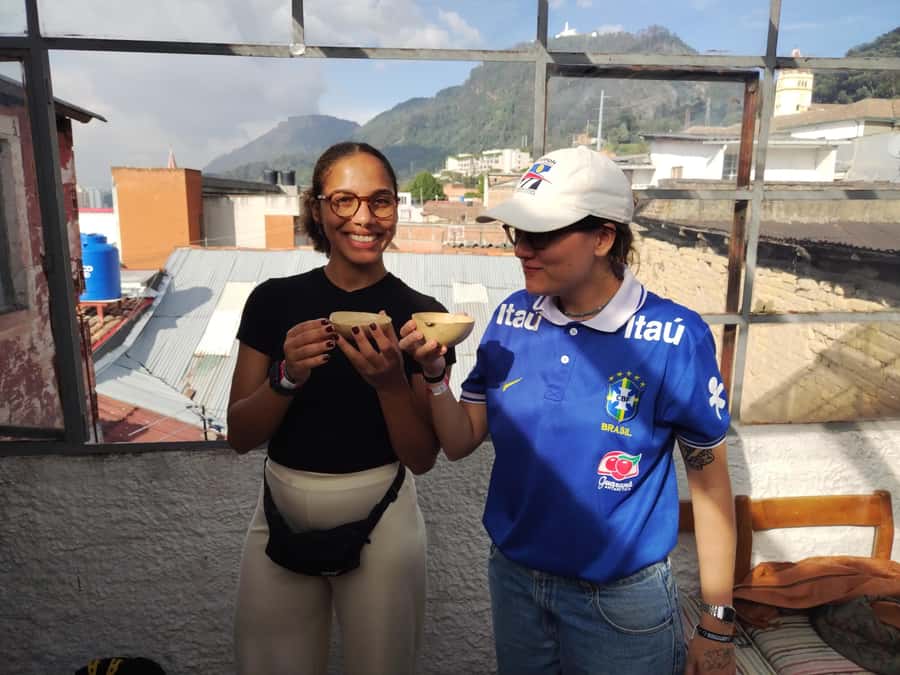
- Viche adds a local taste: A traditional liquor tasting takes place during a 40-minute La Alpujarra stop.
- The route includes El Hueco: This busy commercial district offers a look at daily city life, but it can feel intense and requires attention to your belongings.
- Casa de la Memoria gives the tour weight: The museum visit connects urban change with Colombia’s armed conflict, victims, and survivors.
- The walk is in English: Manuel is one guide associated with the experience, though your guide may vary by departure.
- The price is fair for the content: At $33 per person, the museum ticket, tasting, and three-hour guided route make this more than a basic orientation walk.
Why this is not a standard Medellín walking tour
Many city tours point you toward what Medellín wants to show today: public art, new libraries, modern transit, and the city’s remarkable comeback story. This Anti Tour takes another route. It asks you to look at what disappeared in order to make that new city possible.
That question gives the experience its edge. Medellín changed quickly through industrial growth, urban renewal, violence, and redevelopment. In the process, much of the old center was torn down or altered. You will not simply hear dates and names. You will compare old functions with present uses, such as a former market square now filled with light poles or a judicial palace converted into a shopping center.
I like this approach because it keeps the city from becoming a simple success story. Medellín has made major changes, but progress has costs. The tour gives you language for noticing those costs as you walk.
The subject matter is serious. You will hear about Colombia’s armed conflict and meet people connected to that past, including ex-combatants and victims. This is not a light sightseeing stroll with a little history added on. If you want a cheerful introduction to restaurants, viewpoints, and nightlife, choose another tour. If you want to understand how the center was shaped, this is a more useful choice.
Other Medellin days worth booking alongside this:
- Medellin: Comuna 13 Graffiti Tour, Cable Car & Street Food
★ 4.8 · 9,046 reviews - Medellín: The Real Pablo Escobar Tour
★ 4.8 · 3,205 reviews - Medellín: Comuna 13 True Story and Street Food Tour
★ 4.9 · 1,779 reviews
Starting at Monumento a la Raza
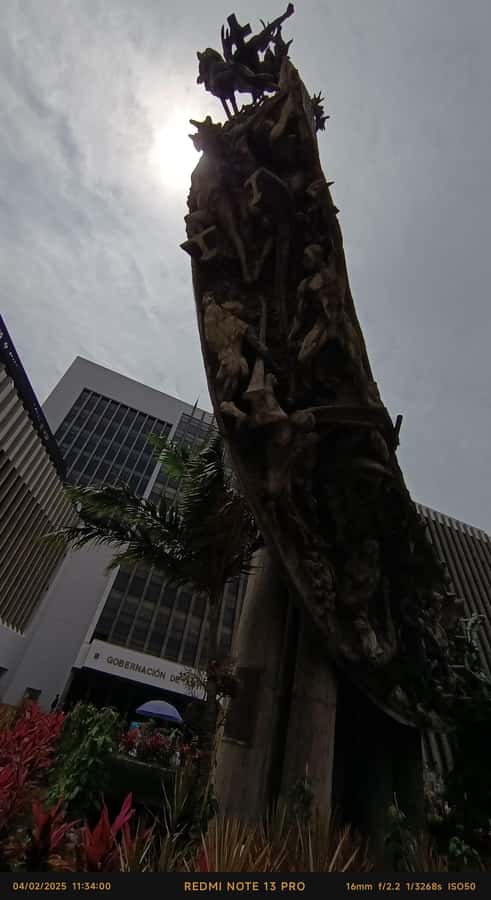
The meeting point is in front of the Monumento a la Raza in La Alpujarra. This is the political and administrative heart of Medellín, so it makes sense as a starting place. The monument is tied to ideas of identity, power, and regional pride, giving the guide a strong place to begin the city’s story.
Nearby, the old train station helps explain the force of industrialization. Rail connections helped Medellín grow as a commercial and industrial center, but that growth also encouraged the city to favor speed and modern construction over older buildings.
You should arrive ready to walk rather than expecting a bus tour. The experience lasts three hours and uses the central streets as its classroom. Transportation to the meeting point and away from the ending point is not included, so plan those parts yourself.
Bring water, sunscreen, and a hat. Medellín’s weather can change, and the route includes exposed streets and busy public spaces. Comfortable walking shoes matter more than stylish ones here.
Parque de las Luces and the city that was removed
The walk continues toward Parque de las Luces, an area that once served as a lively market square. Today, tall light poles give the space a modern identity, but the tour asks you to picture the public life that came before.
This is one of the most effective ideas on the route: a place can remain on the map while its original meaning disappears. The name may survive, but the market, sounds, businesses, and social habits that made the square important may be gone.
The surrounding buildings sharpen that contrast. Carré and Vásquez, the EPM Library, and other newer structures show how Medellín has repeatedly rebuilt its center. Some projects brought useful public space and new services. At the same time, the changes reduced the visible connection with the older city.
I like this stop because it teaches you how to read urban space. You are not just admiring architecture. You are asking why this building is here, what stood here before it, and who gained or lost from the change.
El Hueco, where daily Medellín takes over
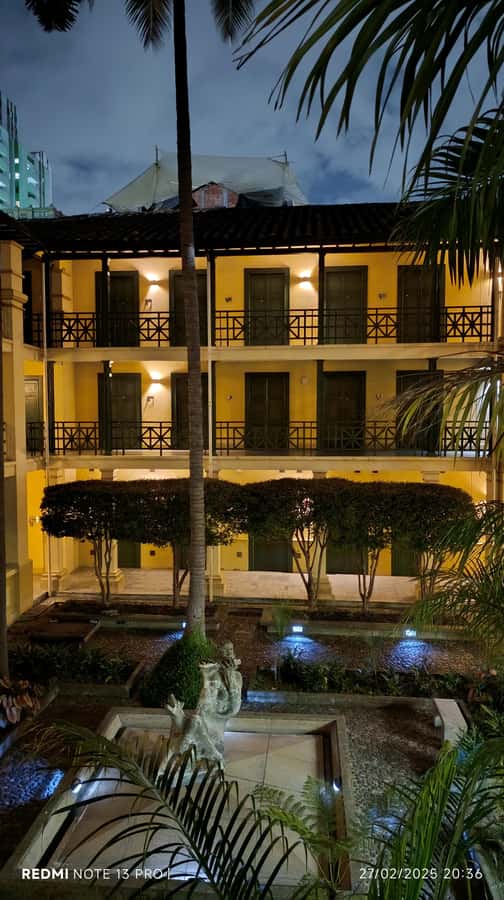
From the formal civic spaces, the route moves into El Hueco. The name refers to a dense commercial area filled with informal trade, shops, music, foot traffic, and constant movement. This is not a carefully arranged sightseeing zone. It is a working part of the city.
The experience may include a short scenic drive or transfer through the area, with views of old fragments beside newer, anonymous buildings. That mixture captures Medellín’s habit of building without pause. Old walls survive beside quick commercial construction, and the result can feel untidy, loud, and very real.
El Hueco is important because it puts the city’s history beside ordinary economic life. Urban change is not only about monuments and government plans. It also affects vendors, shopkeepers, commuters, and people who depend on crowded central streets to earn a living.
You should stay alert here. One booking specifically pointed out that parts of the route can feel dangerous, and that is useful advice rather than a reason to panic. Keep your phone and camera secure, listen to your guide, and avoid wandering away from the group. The point is to see everyday Medellín, not to treat the district like a stage set.
Same city, a completely different kind of day:
- Medellín: Comuna 13 District Tour with Cable Car Ride
★ 4.8 · 1,467 reviews - Medellin: Coffee Tour with Transport, Snacks and Tastings
★ 4.7 · 1,357 reviews - From Medellín: Paragliding Tour with GoPro Photos & Videos
★ 4.9 · 1,210 reviews - Tour Guatapé
★ 5.0 · 865 reviews
Palacio Nacional and La Veracruz
The Palacio Nacional offers another sharp example of changing power. Once a judicial palace, it now functions as a shopping center. That change is more than a curious reuse of an old building. It shows how political and civic spaces can lose their original role and become commercial property.
The tour considers what happens when a symbol of law is absorbed into retail life. You can still see the building, but its meaning has shifted. That is a recurring theme in Medellín: the physical shell remains while the institution, purpose, or memory inside it changes.
A short visit to the Church of La Veracruz provides a quiet counterpoint. It is one of the last colonial survivors in the center, surrounded by a city that largely moved away from its colonial architectural past.
I like the church stop because it is modest. It does not need grand scale to make its point. Its continued presence gives you a physical link to an older Medellín, and its survival feels almost like a refusal to disappear.
The guided visit is listed at about 10 minutes, so do not expect a long religious or architectural lecture. Its value comes from the contrast with the surrounding redevelopment.
La Alpujarra and the viche tasting
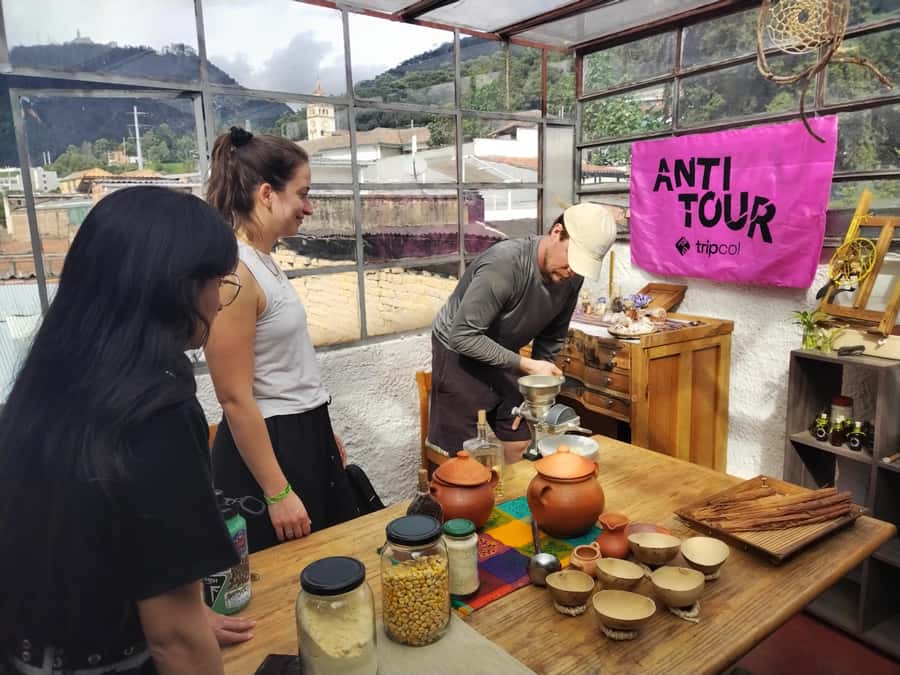
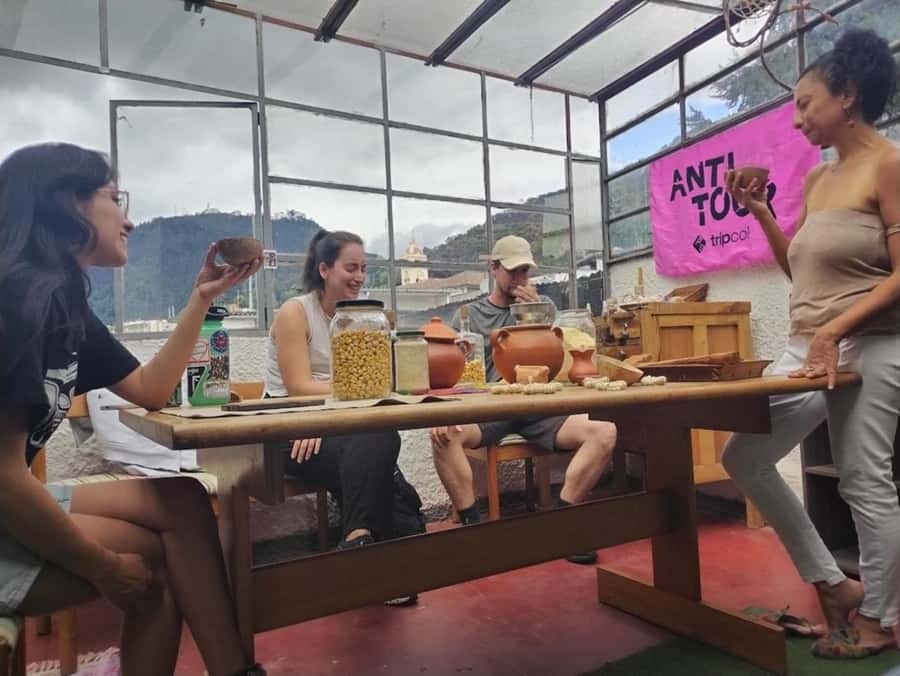
The La Alpujarra portion lasts about 40 minutes and includes a viche tasting and workshop. Viche is a traditional Colombian liquor made from sugar cane, and the tasting gives the tour a sensory break after its heavier architectural discussion.
This part is not just a drink stop. It connects culture with place. La Alpujarra represents government, administration, and official power, while viche brings in a more local and living tradition. The contrast helps prevent the tour from becoming a string of buildings and political facts.
You should pace yourself. The tour lasts only three hours, and the tasting is part of the program, not a separate bar crawl. If you do not drink alcohol, check the tasting arrangements before booking. The available information identifies viche as included but does not describe a nonalcoholic alternative.
The 40-minute workshop is also one reason the $33 price works. You are paying for more than a guide walking you past façades. The fee includes the guided old-center route, a cultural tasting, and admission to Casa de la Memoria.
Plaza Botero and the politics of a new identity
Plaza Botero brings art into the discussion. Fernando Botero’s large sculptures draw attention, but the Anti Tour looks beyond the obvious photo stop. It asks how art and public space can help rebrand a city and shape the way outsiders understand it.
The square is closely tied to Medellín’s modern public image. For many people, Botero’s sculptures are their first visual connection with the city. That makes the plaza useful for discussing identity: who gets to define Medellín, and which parts of its past receive the most attention?
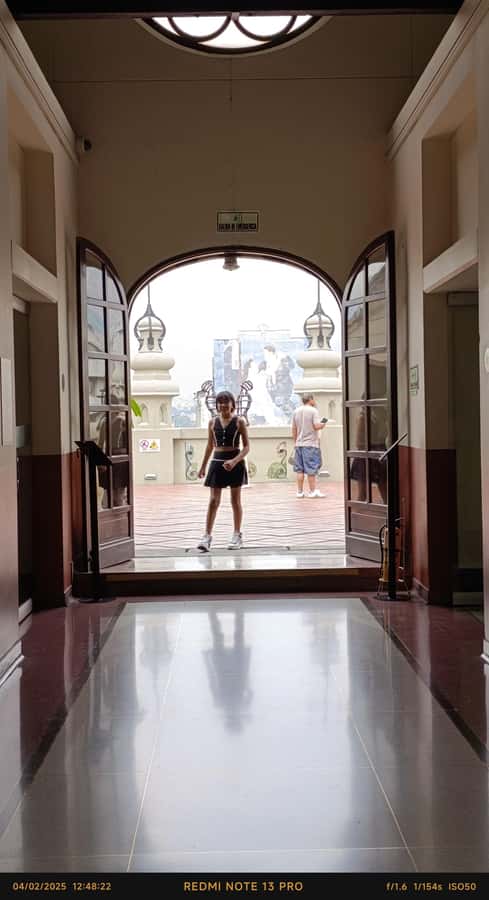
The nearby Palacio de la Cultura Rafael Uribe Uribe adds another layer. Its ornate presence contrasts with the newer structures around the center and shows how different versions of civic ambition sit side by side.
You will have photo opportunities here, but the tour is not designed around photography alone. The guide uses the art and buildings to ask questions about power, reputation, and cultural renewal. That makes the stop more rewarding if you already know a little about Medellín’s difficult past, but the guide provides the basic context you need.
Coltejer Building and Junín Street
The Coltejer Building represents industrial ambition. Its presence recalls the factories, business leaders, and economic drive that helped shape Medellín. The building is not treated as an isolated landmark. Instead, it fits into the larger story of a city that valued production and expansion.
Junín Street once served as the center of elegant urban life. Walking through this area lets you consider how commerce and fashion changed over time, and how economic progress can push older public habits aside.
This section may appeal to you if you enjoy urban history more than landmark collecting. The guide is connecting buildings, streets, and vanished routines. You might not leave with a long list of dates, but you should have a better sense of how the center changed from a place of formal social life into a more crowded and commercial urban core.
The route can feel dense. Three hours is enough for a strong introduction, but not enough to explore every building or museum display at length. Think of this as a carefully chosen argument about the city, not a complete survey of Medellín architecture.
La Playa Avenue and Casa de la Memoria
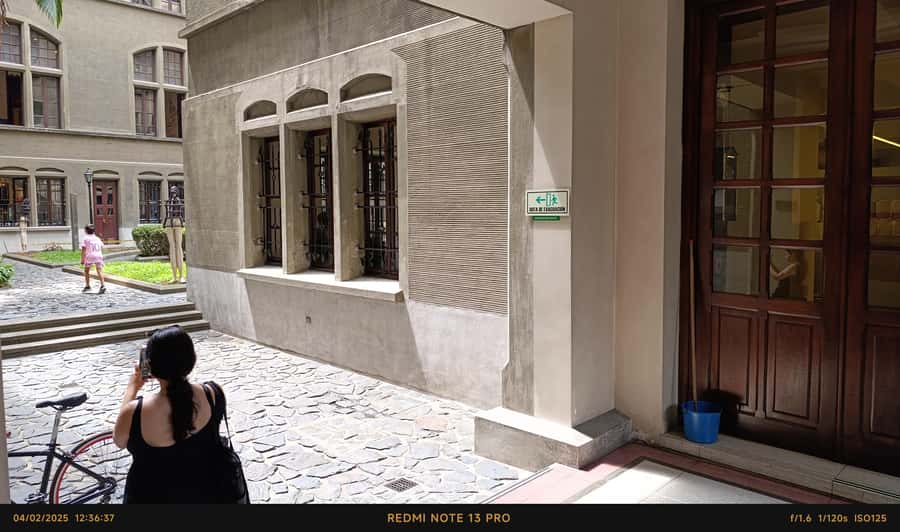
The final stretch reaches La Playa Avenue, one of the remaining traces of Medellín’s aristocratic past. Old mansions, theaters, and other remnants give the avenue a different mood from El Hueco and the newer civic spaces.
The final museum visit at Casa de la Memoria is the emotional center of the experience. The museum focuses on violence, loss, memory, and resilience connected to Colombia’s armed conflict. You receive admission as part of the tour, and the visit lasts around 30 minutes.
That is not enough time to absorb everything a museum about conflict can contain. Still, placing it at the end is a smart choice. After seeing demolished buildings and altered neighborhoods, you arrive at a place concerned with people whose lives were changed or destroyed by violence.
The tour includes encounters with ex-combatants and victims of the conflict. Treat that part with respect. Listen carefully, avoid turning personal testimony into a photo opportunity, and allow yourself time to think before rushing to the next activity.
The experience finishes at the Parroquia de San Ignacio de Loyola. Since the museum is near the end but the listed finish is at the church, confirm the exact final meeting point with the guide on the day. The supplied route information places the tour in the central area, but it does not include transport after the walk.
What $33 gets you
At $33 per person, the cost is reasonable for a three-hour English-language experience with several distinct elements. You receive:
- A guided walk through Medellín’s old center
- Stops at La Alpujarra, Parque de las Luces, El Hueco, and Plaza Botero
- Visits to historic buildings and newer structures
- A viche tasting and workshop
- Admission to Casa de la Memoria
- Discussion of Medellín’s redevelopment and armed conflict
- Stories connected to ex-combatants and victims
The value depends on what you want from a city tour. If you mainly need directions and a quick list of attractions, you can spend less on a simple self-guided walk. If you want context, a museum ticket, a local liquor tasting, and a serious explanation of what changed, the price is easier to justify.
The guide makes a big difference. Manuel is one guide associated with the experience, and the praise for his storytelling focuses on the city’s progress, its daily life, and the parts of Medellín that are not packaged for tourism. If you book, ask who will lead your departure and confirm that the tour will run in English.
Who should book this experience?
I would choose this tour if you are interested in cities as living places, not just collections of attractions. It suits you if you want to understand redevelopment, informal commerce, conflict memory, and the tension between old buildings and new projects.
It is also a good fit if you have already seen Plaza Botero or La Alpujarra and want more meaning behind them. The tour gives familiar places a different frame.
I would be cautious if you dislike serious subjects or prefer a relaxed sightseeing walk. The discussion of violence can be difficult, and the route includes crowded central areas where you need to stay alert.
It is not suitable for wheelchair users according to the activity information. The route is on foot, and you should expect uneven or busy urban conditions even though the exact walking distance is not provided.
For timing, allow a full three hours and avoid scheduling a tight appointment immediately afterward. Weather can vary, so wear light, comfortable clothing, carry water, and protect yourself from the sun. A camera is useful, but keep it secure in crowded areas.
Should you book the Anti Tour Medellín?
Book it if you want the city’s uncomfortable questions, not just its famous answers. The best parts are the erased market beneath Parque de las Luces, the converted Palacio Nacional, the surviving Church of La Veracruz, the viche workshop, and the thoughtful finish at Casa de la Memoria.
Skip it if you want a polished, upbeat introduction with little walking and no discussion of violence. The Anti Tour is direct, sometimes unsettling, and occasionally rough around the edges. That is also its value. At $33, it offers a focused way to see how Medellín was built on top of its own past.
FAQ
How long does the Anti Tour Medellín last?
The experience lasts three hours.
What language is the tour offered in?
The live guided tour is offered in English.
Where does the tour begin?
The meeting point is in front of the Monumento a la Raza in La Alpujarra.
Where does the tour finish?
The listed ending point is the Parroquia de San Ignacio de Loyola.
Is viche tasting included?
Yes. A viche tasting and workshop are included, with the La Alpujarra portion listed at about 40 minutes.
Is admission to Casa de la Memoria included?
Yes. The museum ticket is included, and the visit lasts about 30 minutes.
Is transportation included?
No. Transportation to and from the activity is not included.
Just added around Medellin
- Tour Guatapé con visita a Granja de las Llamas y las Alpacas★ 3.5 · 11 reviews
- Medellín: Flower Farm & Silletero History Tour★ 4.3 · 23 reviews
- Shared Tour to Comuna 13 & Aurora Cable Car in Medellin★ 5.0 · 4 reviews
- Shared Tour Medellin’s Violence & Post-conflict after Pablo★ 4.1 · 3 reviews
- Comuna 13 Neighborhood & Street Art Private Tour★ 4.7 · 12 reviews
- From Medellín: El Retiro Private Tour with Food Tastings★ 4.4 · 8 reviews
- Medellin: Private 3-Hour Pablo Escobar Tour★ 4.8 · 37 reviews
- Medellín: Private Pablo Escobar and City Tour★ 4.6 · 24 reviews
Medellin Tours, compared.
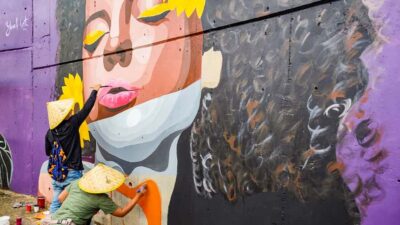
Comuna 13 Graffiti Tour, Cable Car & Street Food
Read our review →

Coffee Tour with Transport, Snacks and Tastings
Read our review →
Browse the lists this tour appears in