
Reviewed · CYCLING TOURS
Colombia cycling trip
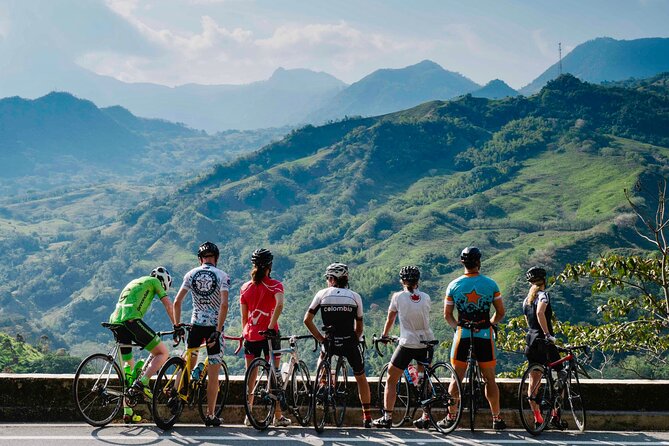
The great appeal here is that you do not simply pedal around Medellín. You move through Antioquia by bike, from the wooded hills of El Retiro to the reservoir at Guatapé and on toward coffee country, crossing rivers and climbing roads that reveal Colombia one turn at a time. The trip mixes hard riding with local food, farm visits, city neighborhoods, and time to understand Medellín’s remarkable changes.
I especially like the careful support system, with guides riding at the front and back, plus a support vehicle and motorcycle. I also like the way the trip treats meals and lodging as part of the experience, not afterthoughts. Tomas handles bike preparation and route details, while Marcela keeps transfers, restaurants, and daily plans moving.
The main caution is simple: this is a serious cycling holiday, not a gentle sightseeing tour. Long days run up to 11 hours, the route includes steep slopes and a 23-kilometer first-category climb, and you need a moderate level of fitness. Bike rental is not included, so you must arrange that separately if you are not bringing your own.
Key things to know before you book
- The route covers Medellín, Guatapé, and Antioquia’s coffee country, giving you several very different sides of the region.
- A 23-kilometer first-category climb is the biggest test, with the road rising toward one of Antioquia’s most scenic villages.
- Tomas and Marcela provide hands-on trip support, from airport pickup and bike setup to restaurant timing and daily messages.
- Meals are built into the price, including eight breakfasts, seven lunches, and eight dinners.
- You ride with a support vehicle and motorcycle, with cycling staff helping at the front and rear of the group.
- The $2,974.36 price is strongest for riders who value logistics, included food, lodging, transfers, and guided support more than a low-cost independent trip.
Why this nine-day route works
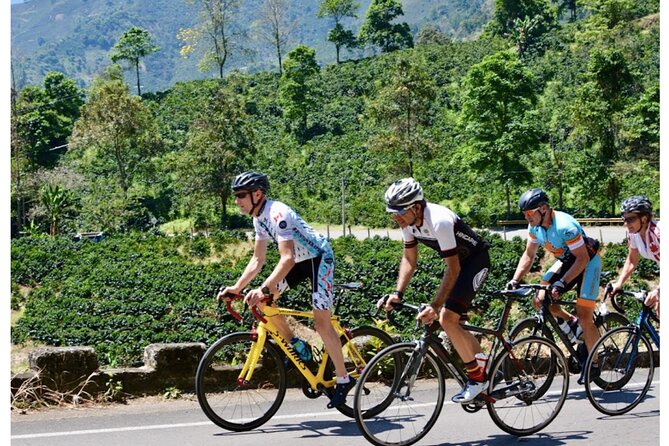
This journey has a smart shape. The first rides help you adjust to the hills, then the route moves into longer and harder days before ending back in Medellín. You get a mix of rural roads, town walks, coffee culture, and city visits instead of repeating the same type of ride each day.
That variety matters in Antioquia. The area around Medellín changes quickly with altitude and geography. One day you are climbing through forest toward Parque Arví. Later, you cross the Cauca River, follow the San Juan River, and reach coffee-growing country at about 1,400 meters.
The trip also uses road transfers sensibly. On the final day, a transfer helps avoid traffic before you return to Medellín. That may sound minor, but it saves energy and reduces the risk of spending the last afternoon on an unpleasant urban road.
The schedule is full. Daily durations are listed at roughly eight to 11 hours, and that includes more than time in the saddle. Meals, transfers, town walks, showers, bike packing, and city visits all take time. You should expect an active day from breakfast until evening rather than a short morning ride followed by free time.
A few more Medellin trips to weigh up
- Medellín: History & Local Life Essentials Tour on an E-Bike
★ 4.9 · 130 reviews - Medellín: E-bike and Foodie Tour
★ 4.8 · 102 reviews - E-Bike City Tour Medellin with Local beer and Snacks
★ 4.9 · 55 reviews
Day 1: Airport pickup, bike fitting, and a Colombian welcome
Your trip begins with pickup at José María Córdova International Airport in Rionegro, the airport serving Medellín. You then transfer to your accommodation, assemble your bike, or receive a quick fitting if you rent one.
That first bike check is important. Ask for adjustments before the riding starts, especially if you bring your own saddle, pedals, or shoes. A small fit problem becomes a large one after several days of climbing.
The evening welcome meal introduces Colombian cooking and gives the group a chance to meet. Tomas presents the route and explains how the trip will work. This is useful time to clarify daily start times, food stops, luggage arrangements, and the plan for support on the climbs.
The first night also sets the tone for the service. Tomas and Marcela are described as staying in close contact, and Marcela helps coordinate meals and practical details throughout the trip. That level of communication is a real benefit if you prefer not to spend your holiday solving restaurant and transport puzzles.
Day 2: El Retiro and your first lesson in Colombian hills
The opening ride uses El Retiro as an acclimatization day. That does not mean flat or easy. You meet the local repechos, the short, sharp rises that make Colombian riding demanding even when the total distance looks manageable.
El Retiro is known for woodwork, and the town becomes your base for the next three nights. Its setting gives you a calmer start than staying in central Medellín every evening. After a day on the bike, returning to one base also means less daily packing.
This is the day to learn how the guides manage the road. The trip includes advice on riding in Colombia, and the support pattern is reassuring: one cyclist from the team can ride ahead while another stays behind. A support vehicle and motorcycle add another layer of help.
You should still pace yourself. Early enthusiasm can hurt later in the week, and the short climbs may tempt you to push too hard. Use this day to find a comfortable rhythm, learn when to eat and drink, and pay attention to how your body responds to repeated uphill efforts.
Day 3: Guatapé, reservoir views, and the Piedra del Peñol
The ride to Guatapé is one of the route’s signature days. The town sits beside one of Colombia’s major power-generation reservoirs, and the water gives the area a striking change from the forested roads around El Retiro.
Near the route is Piedra del Peñol, a huge rock rising to 2,135 meters, or 7,005 feet. You can climb its 659 steps to the top, although the cycling schedule may not leave much energy for that extra effort. Ask your guide how much time is available before committing to the stairs.
You finish in Guatapé, eat lunch, and walk around town to learn about its past. This combination is one of the trip’s strengths. You are not rushing through a famous view, taking a photograph, and leaving. You have time to eat and see the town on foot after arriving by bicycle.
The day lasts about 11 hours, making it one of the longest on paper. That duration reflects the ride, meal, and town visit. If you want a relaxed look at Guatapé, do not treat the final kilometers as a race. Save something for the walk and the next morning.
Same city, a completely different kind of day:
- Medellin: Comuna 13 Graffiti Tour, Cable Car & Street Food
★ 4.8 · 9,046 reviews - Medellín: The Real Pablo Escobar Tour
★ 4.8 · 3,205 reviews - Medellín: Comuna 13 True Story and Street Food Tour
★ 4.9 · 1,779 reviews - Medellín: Comuna 13 District Tour with Cable Car Ride
★ 4.8 · 1,467 reviews
Day 4: Parque Arví, steep slopes, and Medellín’s social change
The route toward Parque Arví takes you into Medellín’s well-known flower region, associated with the silleteros, the flower carriers celebrated in local culture. For cyclists, the day is also about climbing, including a category 2 ascent and more steep slopes.
The description of this region as a producer of top-level riders is easy to understand once the road turns upward. You face repeated changes in grade rather than one isolated hill. This is a useful day for compact gearing and steady pacing.
After riding, you reach a country hotel for a shower and lunch. That break is particularly welcome because the day then shifts from rural cycling to Medellín. You leave the forest and visit one of the city’s neighborhoods linked with social transformation and development.
The city visit gives the trip more depth than a purely athletic tour. You hear how Medellín was selected as the world’s most innovative city and see an area that has become a symbol of change. The visit is not just about polished central streets. It connects the city’s present with the difficult story behind its development.
This is another 10-hour day, so expect a full schedule. The mix of hard riding, a shower, lunch, and a city visit makes the day rewarding, but not restful.
Day 5: Medellín by bicycle and the move south
Day 5 uses the bicycle as a way to see Medellín itself. The plan includes major neighborhoods, a food-focused outing, and a broader look at the city before lunch and the transfer toward coffee country.
Cycling through the city lets you cover more ground than a walking tour while keeping you close to daily life. You see Medellín as a working city rather than only as a starting point for rural rides. The food portion also helps explain how cooking changes from one Colombian region to another.
This day is listed at about eight hours, but the transfer afterward means you should not think of it as a short day. Keep your riding clothes and essentials easy to reach, and confirm what happens to the bike during the move south.
The transition is well placed. After several days based around El Retiro and Medellín, the trip changes its focus to farms, rivers, mountain roads, and coffee. You get a fresh setting without losing the support structure already established.
Day 6: Crossing the Cauca River into coffee country
The sixth day heads toward the southwest of Antioquia, with Cerro Tusa in view. The mountain has a pyramid shape and a connection to Indigenous offerings. It is also tied to the Juan Valdez coffee image used in the region’s coffee identity.
The route drops as low as about 600 meters above sea level before crossing the Cauca River. That change in height brings a different climate and new plant life. You then follow the San Juan River before climbing again toward coffee-growing country.
At about 1,400 meters, you begin to see the tall green coffee plants. This is the kind of geographic change that makes a cycling trip worthwhile. In a vehicle, the shift can pass in a blur. By bicycle, you feel the gradient and temperature change and have time to notice how the countryside changes around you.
The day is about 10 hours, and the repeated climbs require restraint. You may find the support vehicle especially useful here, since the route combines long riding with major altitude changes. Drink regularly and use the supplied energy bars and drinks when offered.
Day 7: A coffee farm and Antioquia’s major climb
The morning begins with a visit to a typical coffee farm. You learn about Colombian coffee before continuing by bicycle. That stop gives context to the plants you saw the day before and makes the coffee region more than a scenic backdrop.
Then comes the week’s biggest challenge: a 23-kilometer first-category climb known as Colombia’s Mont Ventoux. The road rises toward a village described for its topography, republican-style architecture, coffee culture, and horse traditions.
This is a long, sustained effort rather than a quick hill. If you are not used to extended climbing, ask the cycling staff about pacing and breaks before you begin. The front and rear riding positions help keep the group together, and the team provides encouragement, drinks, and energy bars.
You do not need to approach this as a contest. The value is in reaching the top under your own control and seeing the countryside change along the way. Ten hours is a long day, so a steady pace will serve you better than chasing stronger riders early on.
Day 8: One last challenge and a final Medellín evening
The final riding day includes one more challenge before a shower and lunch at a country road hotel. A transfer then helps you avoid traffic on the way back to Medellín.
Once in the city, you pack the bikes and take part in a closing event. This is a practical ending, since the equipment is dealt with before the final night rather than left until the morning of your flight.
You have one last night in Medellín, with the option to celebrate and see the city’s nightlife. After a demanding week, you may prefer a quiet dinner, but the choice is yours. The final evening gives the trip a social finish and lets you enjoy the city without needing to wake up for another major climb.
Food, hotels, and the value of the price
The listed price is $2,974.36 per person. It includes eight breakfasts, seven lunches, and eight dinners, along with the guided program and stated transfers. Bike rental is extra, and services not specifically listed are also outside the price.
The food arrangements appear to be a major part of the package. Meals are planned and timed throughout the trip, and the restaurants are selected as part of the route rather than left to chance. That saves you time and gives you a better chance to eat well in smaller towns and rural areas.
Accommodation is also positioned as a comfort feature. The first hotel outside Medellín is described as having a large room, balcony, and views over the old town. A country hotel on Day 4 provides a shower and lunch after the ride, while another country road hotel does the same on Day 8.
For an independent cyclist, nearly $3,000 is a substantial outlay. But the comparison is not simply the tour price against hotel and meal costs. You are paying for airport pickup, route planning, support vehicles, bike preparation, daily coordination, lodging, most meals, and transfers between cycling sections.
I would consider the price reasonable for a rider who wants a tightly managed trip and does not want to handle Colombian logistics alone. It is less attractive for a confident independent cyclist who already has local contacts, equipment, and the time to plan every road and meal.
Who should book this cycling adventure?
You should consider it if you enjoy long climbs, want to see more than a single city, and value a support team. It suits riders who want Colombian culture alongside serious road riding, especially coffee, food, town visits, and Medellín’s urban story.
You also need a moderate level of fitness. The route is not presented as beginner cycling, and the 23-kilometer climb is a clear marker of its difficulty. You can ask about bike fitting and pacing, but you should arrive ready for consecutive hard days.
The private-tour format means your group participates on its own, though the cycling arrangement described for one departure included several riders and multiple team members. Confirm the expected group setup when booking if that matters to you.
The package is less suitable if you want flexible afternoons, short rides, or a holiday built around independent exploration. The schedule is structured, and most days run from morning into the afternoon or evening.
Cancellation is free up to 24 hours before the start time. Poor weather or failure to reach the minimum number of riders can lead to a different date, another experience, or a full refund.
Should you book Colombia Cycling?
Book this trip if you want the hard parts of Colombia cycling without having to organize every transfer, meal, hotel, and support vehicle yourself. The route gives you Guatapé, Parque Arví, Medellín, Cerro Tusa, rivers, coffee farms, and a major mountain climb in one well-packed journey.
I would be most comfortable recommending it to a fit cyclist who enjoys structure and who values personal coordination from Tomas, Marcela, and the cycling team. Before paying, confirm bike rental costs, the exact bike fit, daily distances, and the expected group size. If those details suit you, the combination of demanding roads, strong support, and genuine regional variety makes this a compelling way to ride Antioquia.
FAQ
Where does the cycling trip begin?
The trip begins with pickup at José María Córdova Airport in Rionegro, which serves Medellín.
How long does the experience last?
The experience lasts approximately nine days, from airport pickup on Day 1 through the airport transfer on Day 9.
Is bike rental included?
No. Bike rental is not included in the listed price.
What meals are included?
The package includes eight breakfasts, seven lunches, and eight dinners.
What level of fitness do I need?
You should have a moderate level of physical fitness. The route includes steep slopes, a category 2 climb, and a 23-kilometer first-category climb.
Is the tour private?
Yes. It is described as a private activity for your group.
Which places does the route visit?
The route includes Medellín, El Retiro, Guatapé, Parque Arví, and the Antioquia coffee region.
Will there be cycling support?
The cycling setup includes a support vehicle and motorcycle. The cycling team can also place one rider at the front and another at the rear of the group.
What happens if bad weather cancels the trip?
If poor weather causes cancellation, you will be offered a different date or a full refund.
Can I cancel for a full refund?
Yes. You can cancel at least 24 hours before the experience start time for a full refund. Cancellations made less than 24 hours before the start are not refunded.
Just added around Medellin
- Comuna 13 Neighborhood & Street Art Private Tour★ 4.7 · 12 reviews
- From Medellín: El Retiro Private Tour with Food Tastings★ 4.4 · 8 reviews
- Medellin: Private 3-Hour Pablo Escobar Tour★ 4.8 · 37 reviews
- Medellín: Private Pablo Escobar and City Tour★ 4.6 · 24 reviews
- Private Tour Comuna 13 with Cable Car★ 5.0 · 4 reviews
- Private Pablo Escobar Tour – Dark days and the new Medellin★ 4.9 · 6 reviews
- City Tour of Downtown Medellin Private or Shared★ 4.9 · 8 reviews
- Luxury boat ride – Guatapé★ 4.2 · 6 reviews
Cycling Tours, compared.
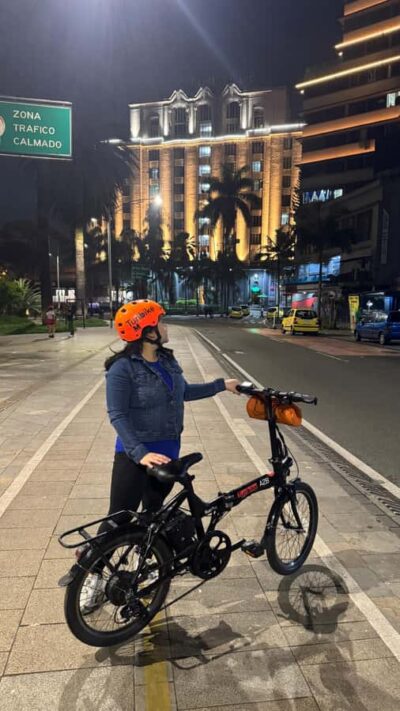
History & Local Life Essentials Tour on an E-Bike
Read our review →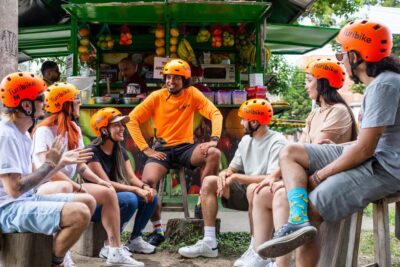
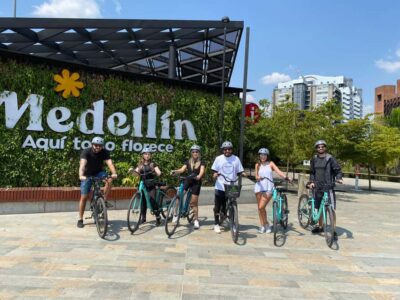
E-Bike City Tour Medellin with Local beer and Snacks
Read our review →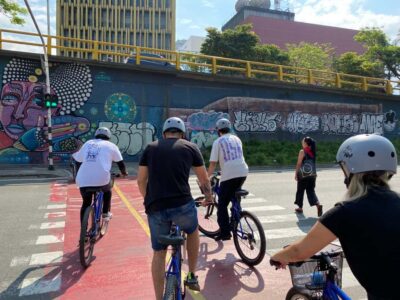
Browse the lists this tour appears in