
Reviewed · COMUNA 13 TOURS
Comuna 13 & Downtown: From violence to innovation
Medellín’s story comes into focus when you move through it as residents do. This small-group tour of up to nine people links Plaza Botero and downtown with Comuna 13 by Metro, Metrocable, bus, and on foot. It is not just a street-art outing. It uses public transport to show how the city’s past, politics, design, and daily life fit together.
I like two things especially: the unusual mix of transportation, which gives you a broader view of Medellín, and the chance to hear the city explained by Sebastián, a guide with experience as a city planner. The tour also includes Metro, Metrocable, and bus tickets, snacks, and a soft drink, so the $39 price covers more than a simple walk.
The main consideration is time. Four to four and a half hours can introduce you to several major parts of the city, but the stops are compact. If you want a long look at every mural or a slow museum visit, you may wish the tour lasted longer.
Key points at a glance
- Plaza Botero begins the story: See 23 works by Fernando Botero in a central Medellín setting.
- Public transport is part of the lesson: Metro, Metrocable, bus, and walking show how the city connects.
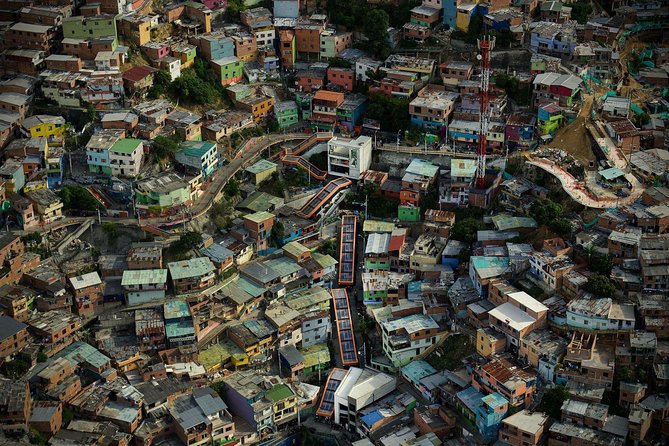
- Comuna 13 brings art and infrastructure together: The Graffitour and electric stairs are treated as parts of one urban story.
- Sebastián adds planning insight: His background gives the city’s development and politics extra context.
- The tour finishes in Comuna 13: You end near Graffitour13 in the 20 de Julio neighborhood, not back at your hotel.
- The price includes useful extras: Transportation tickets, snacks, and a soda are included for $39 per person.
Why this Medellín tour feels different
Many city tours keep you in one district and explain what is directly in front of you. This experience makes the journey itself part of the subject. You begin at the Basilica of Our Lady of Candelaria in La Candelaria, then travel toward Comuna 13 using the same transport system that locals rely on.
That matters in Medellín. The tour is built around the link between urban change and access. You are not simply shown a famous neighborhood after arriving by private vehicle. You ride Metro, Metrocable, and bus, then walk through the places where art and public works have become part of the city’s identity.
The title, From violence to innovation, points to the central theme. The experience examines how Medellín changed and how public projects helped reshape daily life. Sebastián’s background as a former city planner makes that angle especially useful. He can connect streets, transport, politics, and buildings in a way that a guide focused only on photo stops may not.
The current rating is 4.9 from 42 reviews, and 98 percent of participants recommend the experience. Those numbers do not replace your own judgment, but they fit the tour’s strongest qualities: careful guidance, varied transportation, and a clear effort to explain more than the obvious.
More Comuna 13 Tours in Medellin:
- Medellin: Comuna 13 Graffiti Tour, Cable Car & Street Food
★ 4.8 · 9,046 reviews - Medellín: Comuna 13 True Story and Street Food Tour
★ 4.9 · 1,779 reviews - Medellín: Comuna 13 District Tour with Cable Car Ride
★ 4.8 · 1,467 reviews
Starting at Plaza Botero with 23 sculptures
Meet at the Basilica of Our Lady of Candelaria, at C. 50 #49-112 in La Candelaria. The first stop is Plaza Botero, where you see 23 works by Fernando Botero. Admission to this stop is free.
The plaza gives you a quick introduction to one of Colombia’s best-known artists. Botero’s sculptures are famous for their rounded, exaggerated forms, and the open setting lets you view them from several angles. You can take in the scale and arrangement of the works without paying a separate museum fee.
The listed time here is about 10 minutes. That is enough for an introduction and a few photographs, but not enough for a slow art lesson. If Botero is a major reason for your visit, keep your expectations measured. The value comes from seeing a group of his works as part of a wider city tour, not from having a long gallery visit.
I like this opening because it starts with culture before moving toward Comuna 13. You get a recognizable point of reference in central Medellín, then begin to consider how art appears in public spaces across the city.
Crossing Medellín by Metro, Metrocable, and bus
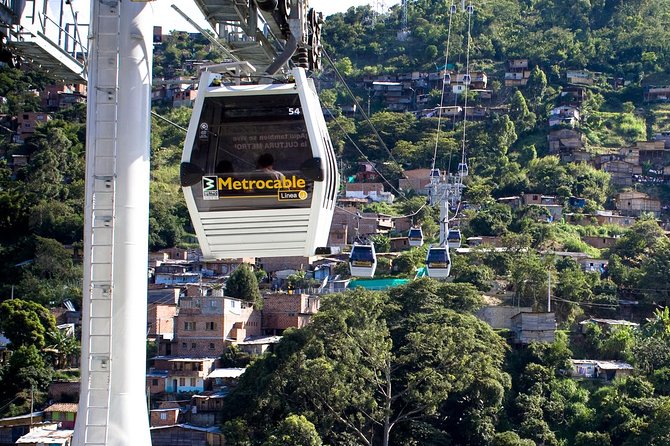
Transportation is not a minor detail here. Your tickets for the Metro, Metrocable, and bus are included, and the routes form a practical thread through the day.
A standard walking tour can tell you that Medellín has invested in transport and public access. This tour lets you experience that system directly. You change the pace from plaza walking to rail travel, cable-car views, bus travel, and neighborhood walking. Each mode gives you a different sense of the city’s scale.
The exact sequence of transfers is not specified in the tour details, so you should expect the guide to manage the route on the day. That is helpful for anyone who does not want to work out Medellín’s public transport system alone. It also means you should stay close to the group and listen carefully when Sebastián gives meeting instructions.
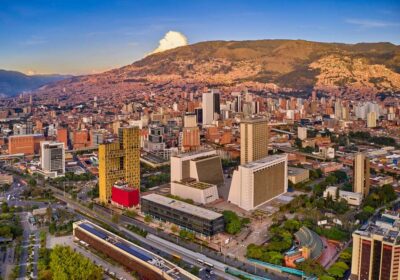
One of the strongest aspects of the experience is the way transportation supports the subject. The city’s public works are not just something you hear about from a sidewalk. You use them as you move from downtown to the western hills.
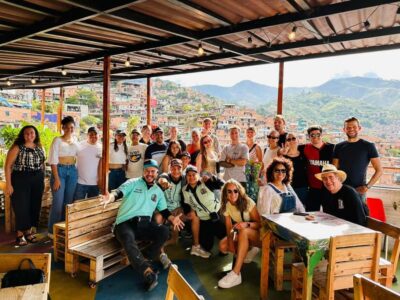
The group limit of nine is another advantage. A small group makes transfers easier and gives you a better chance to ask Sebastián about Medellín’s politics, planning, and changing neighborhoods. It is also less cumbersome than a large coach group when walking through Comuna 13.
Reading the Graffitour in Comuna 13
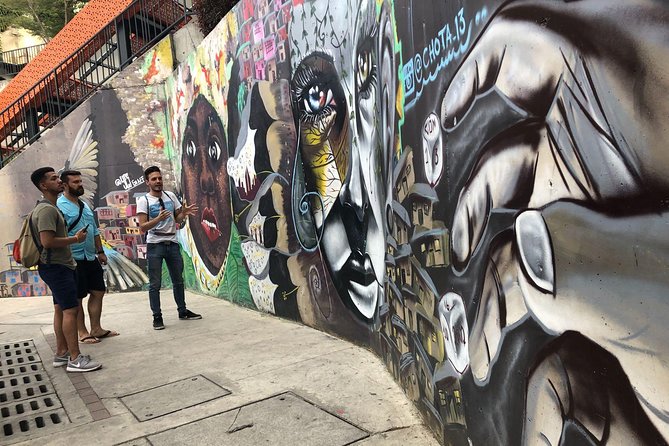
The Graffitour is listed as a 30-minute stop. You see as many murals as possible in an area described as one of the most important street-art galleries in Latin America. Admission is free.
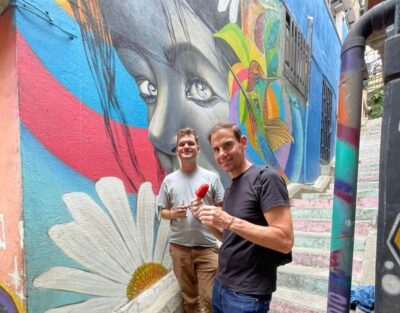
This is likely to be the most visually immediate part of the experience. Murals cover walls, stairways, and public spaces, turning the neighborhood into an open-air display. The important point is not only the number of paintings. The art provides a way to discuss memory, identity, local pride, and the changes that have taken place in Comuna 13.
The short timing shapes what you will get. You can expect a focused introduction to the main art route, rather than a leisurely study of every image. If you stop often for photographs, you may need to choose between taking pictures and keeping up with the explanation.
I would pay close attention to the guide’s interpretation here. A mural can be attractive on its own, but the context gives it weight. Sebastián’s city-planning background may help you see the art as part of a broader public effort, not simply as decoration placed on old walls.
The Graffitour is also where you should keep your attention on the group and the walking route. The tour is designed to cover many murals, so the pace may be steady. Wear comfortable shoes and be ready for a walking section, even though the total experience is not a full-day hike.
Same city, a completely different kind of day:
- Medellín: The Real Pablo Escobar Tour
★ 4.8 · 3,205 reviews - Medellin: Coffee Tour with Transport, Snacks and Tastings
★ 4.7 · 1,357 reviews - From Medellín: Paragliding Tour with GoPro Photos & Videos
★ 4.9 · 1,210 reviews - Tour Guatapé
★ 5.0 · 865 reviews
The electric stairs and Medellín’s public works
The Escaleras Eléctricas de la Comuna 13 are another 30-minute stop. They are presented as one of Medellín’s most notable infrastructure and innovation projects.
The electric stairs matter because they are practical as well as symbolic. They help connect a steep neighborhood and have become one of the best-known examples of public infrastructure in Comuna 13. On this tour, they follow the street-art portion, allowing you to consider both the cultural and physical changes in the area.
You may find the stairs more interesting after hearing the wider story of the neighborhood. Without context, they are simply a striking urban feature. With context, they become part of a discussion about movement, access, and how a city invests in places that once faced serious challenges.
The 30-minute stop should give you time to see how the system works and hear the guide’s explanation. It is not meant to cover every detail of Comuna 13’s past or every stage of its redevelopment. If you want a lengthy neighborhood study, you may need additional time on another day.
Still, the pairing of murals and electric stairs is smart. One shows how residents and artists express themselves. The other shows how a public project can change the way people move through their neighborhood.
From violence to innovation, without a rushed slogan
The tour’s title is powerful, but the experience is most useful when it avoids reducing Comuna 13 to a simple before-and-after story. The area’s past is part of the visit, yet the point is not to treat hardship as a backdrop for photographs.
Sebastián’s role is important here. The strongest account of Medellín needs more than a list of dates or dramatic headlines. It should explain how policy, transport, public space, and community life affect one another. One participant specifically valued his explanations of the city’s history and politics, as well as the care he took with the group.
That makes this a good choice if you want Medellín explained through its built environment. You will likely get more from the tour if you ask questions and pay attention to how the guide connects each stop.
The experience is less suited to you if your only goal is a quick mural photo session. You will spend part of the morning or afternoon in transit, and that time is purposeful. The tour asks you to see Medellín as a city in motion.
What $39 includes, and what it does not
At $39 per person, the price is reasonable for a four to four-and-a-half-hour small-group experience. Your fee includes Metro, Metrocable, and bus tickets, plus snacks and a soda. Those inclusions remove several small costs that can otherwise add up during a city outing.
The group maximum of nine also improves the value. You are paying for a guided experience rather than simply buying transport tickets, and a small group usually makes explanations and transfers easier to manage.
The tour does not include alcoholic drinks. That is unlikely to matter for most people, since the schedule is built around sightseeing and public transportation. You should also plan for your own ride after the tour, because the finish is in the 20 de Julio neighborhood near Graffitour13, at Cra. 109 #38 a 11. You can take a taxi or Uber back to your hotel.
The end point is worth noting before you book. This is not a loop that returns you to the Basilica of Our Lady of Candelaria or to your accommodation. If you have an evening reservation, allow extra time after the official finish.
Who will get the most from this experience
I would choose this tour if you want a first look at Medellín that combines art, transport, urban design, and local history. It is especially useful for someone who wants help understanding how separate parts of the city relate to one another.
It also suits you if you prefer a small group and an active guide. Sebastián’s experience as a city planner adds a useful layer for anyone interested in public works, urban policy, or how cities respond to difficult periods.
You should think twice if you want a slow, unstructured afternoon. The tour has several moving parts, and its stops are brief. Plaza Botero receives about 10 minutes, while the Graffitour and electric stairs each receive about 30 minutes.
Most people can participate, and the tour is near public transportation. Even so, you should be comfortable walking and using several forms of transport in one outing. The route is not presented as a specialized accessible tour, so contact the provider if you need specific mobility information.
Timing, weather, and cancellation details
The tour lasts about four to four and a half hours. Confirmation is provided when you book, and the experience requires good weather. If poor weather forces a cancellation, you are offered another date or a full refund.
You can cancel for a full refund up to 24 hours before the start time. Cancellations or changes made within 24 hours are not accepted and are not refunded. The activity also requires a minimum number of participants. If that minimum is not reached, you are offered another date or experience, or a full refund.
These rules are fair but worth noting. Book it on a day when you can keep your schedule flexible, and avoid placing an important timed commitment immediately after the tour.
Should you book Comuna 13 and Downtown?
Book this tour if you want more than a quick visit to Comuna 13. For $39, you get a small group, a guide with city-planning experience, public transport tickets, snacks, and a route that links Botero’s sculptures with street art and public infrastructure.
The best reason to choose it is the structure. You are shown Medellín through its art, its transport system, and its changing neighborhoods, not through isolated photo stops. The main drawback is the compact timing, especially if you want long explanations or lots of time at each mural.
I would recommend it for a first visit, for anyone curious about city planning and public space, and for you if Sebastián’s history and politics-focused approach sounds appealing. If your priority is an unhurried art tour, choose a longer specialist visit instead.
FAQ
Where does the tour start?
It starts at the Basilica of Our Lady of Candelaria, at C. 50 #49-112 in La Candelaria, Medellín.
Where does the tour finish?
It finishes near Graffitour13 in the 20 de Julio neighborhood of Comuna 13, at Cra. 109 #38 a 11.
How long does the experience last?
The tour lasts approximately four to four and a half hours.
What places are visited?
The route includes Plaza Botero, the Graffitour in Comuna 13, and the electric stairs of Comuna 13.
How many Botero works can I see?
The Plaza Botero stop includes 23 works by Fernando Botero.
Are admission tickets included?
Admission is free at the listed stops. The tour also includes tickets for the Metro, Metrocable, and bus.
Are food and drinks included?
Snacks and a soda or soft drink are included. Alcoholic beverages are not included.
How large is the group?
The experience has a maximum of nine participants.
Can most people participate?
The tour information states that most people can participate and that the route is near public transportation.
What happens if I need to cancel?
You receive a full refund if you cancel at least 24 hours before the start time. Cancellations or changes made less than 24 hours before the start are not accepted and are not refunded.
Just added around Medellin
- City tour, Commune 13, Metro Cable, Botero Park and more. Private★ 5.0 · 34 reviews
- Aerial Hammocks, Zip and Waterfall Trek on Medellin Private Tour★ 5.0 · 39 reviews
- Commune 13, Graffitour street food. History.All inclusive★ 5.0 · 35 reviews
- Hiking Mountains and Magical Forests★ 5.0 · 27 reviews
- Barrio transformation and urban escalator of Comuna 13★ 5.0 · 47 reviews
- Walking tour downtown Medellín★ 5.0 · 39 reviews
- Tour to the Hacienda Nápoles Theme Park★ 4.0 · 22 reviews
- Tour Santa Fe de Antioquia★ 5.0 · 46 reviews
Comuna 13 Tours, compared.
Comuna 13 Graffiti Tour, Cable Car & Street Food
Read our review →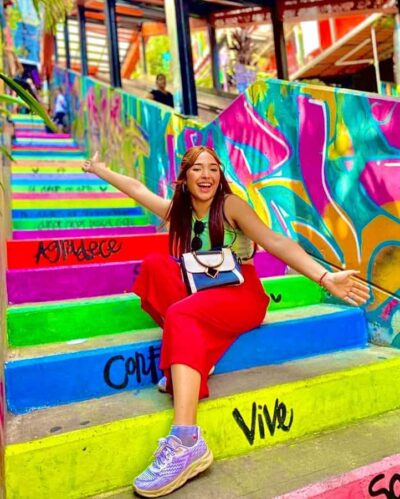
Private City Tour with Metrocable and Comuna 13
Read our review →
Comuna 13 Tour with Snacks And Your Own Graffiti
Read our review →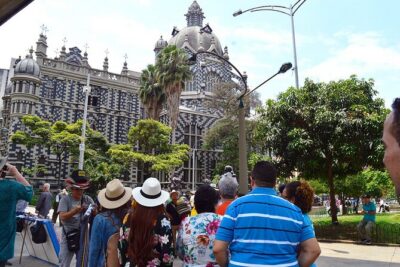
Comuna 13 and Graffiti Guided Tour with a Local
Read our review →
Browse the lists this tour appears in