
Reviewed · MARKETS
Shared Tour of Colombian Exotic Fruit at Paloquemao Market
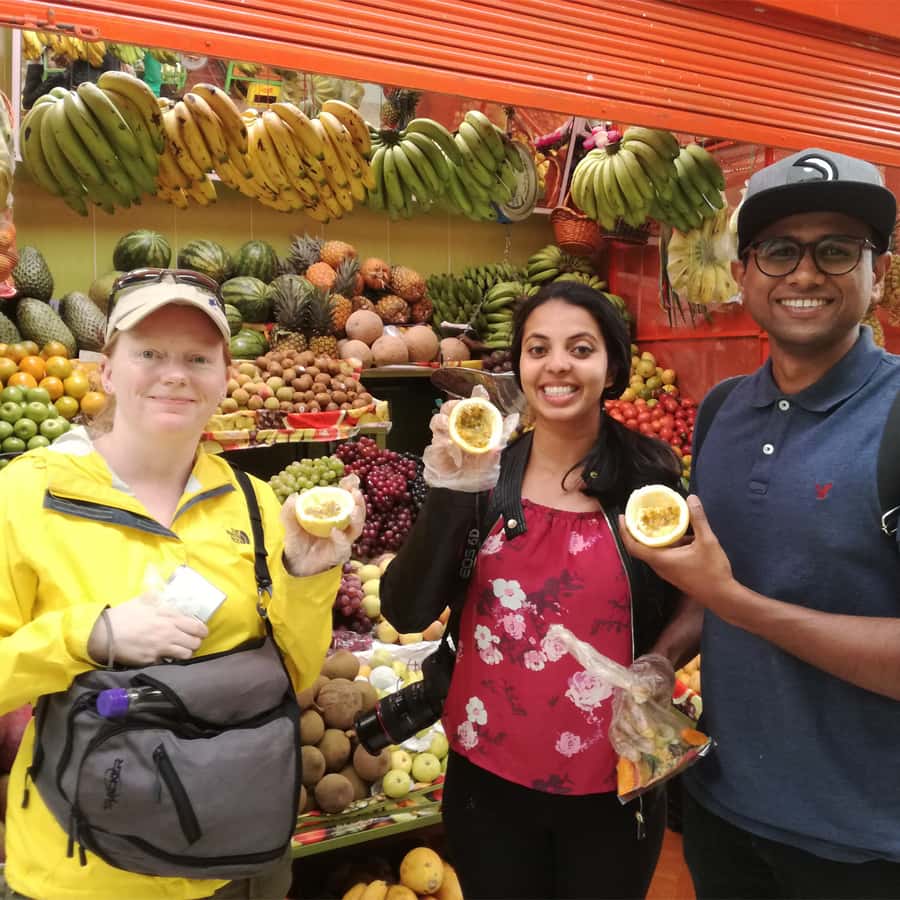
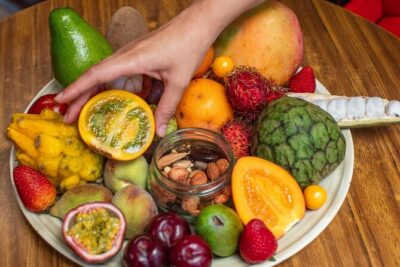
Colombia’s fruit culture is the star here. At Paloquemao Market, you taste more than 15 fruits, learn why Colombia can grow such a wide range of produce, and see how market food connects to daily life. I like the family-run stalls and the chance to ask questions directly while tasting. I also like that the tour explains cultural uses and health benefits, not just fruit names.
The small group limit of 10 should make it easier to hear the guide and interact with vendors. Still, keep your expectations in check: the tasting portions may be quite small, and some tours have finished in under three hours. At $47 per person, this is a guided cultural visit, not a cheap way to fill up on fruit.
Key points at a glance
- Taste more than 15 Colombian fruits: Expect small samples rather than whole pieces of fruit.
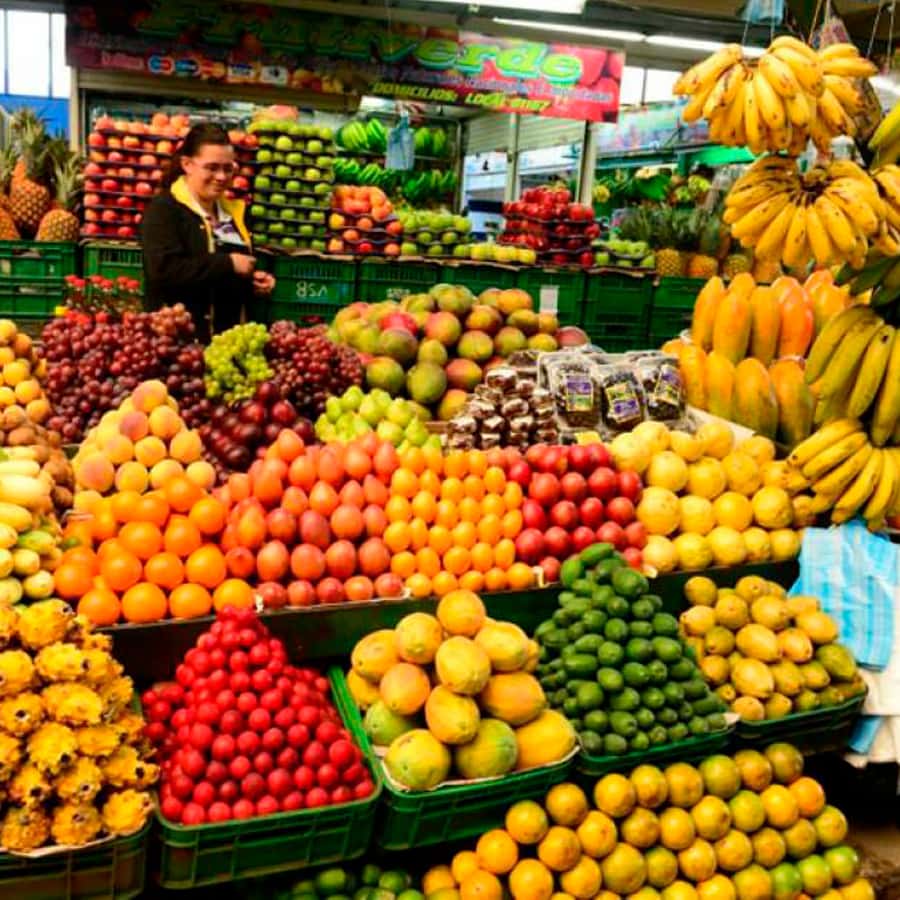
- Explore Paloquemao Market: This is Bogotá’s largest fruit market, with much more than produce.
- Meet longtime market families: Your guide helps you connect with vendors whose families have run stalls for years.
- Learn the reason behind Colombia’s variety: The tour explains the country’s growing conditions and lack of four traditional seasons.
- Try a fresh juice: One exotic fruit juice is included in the price.
- Plan a snack beforehand: The fruit tasting may come late in the visit, so it is not a reliable breakfast or lunch replacement.
Why Paloquemao makes a useful first stop in Bogotá
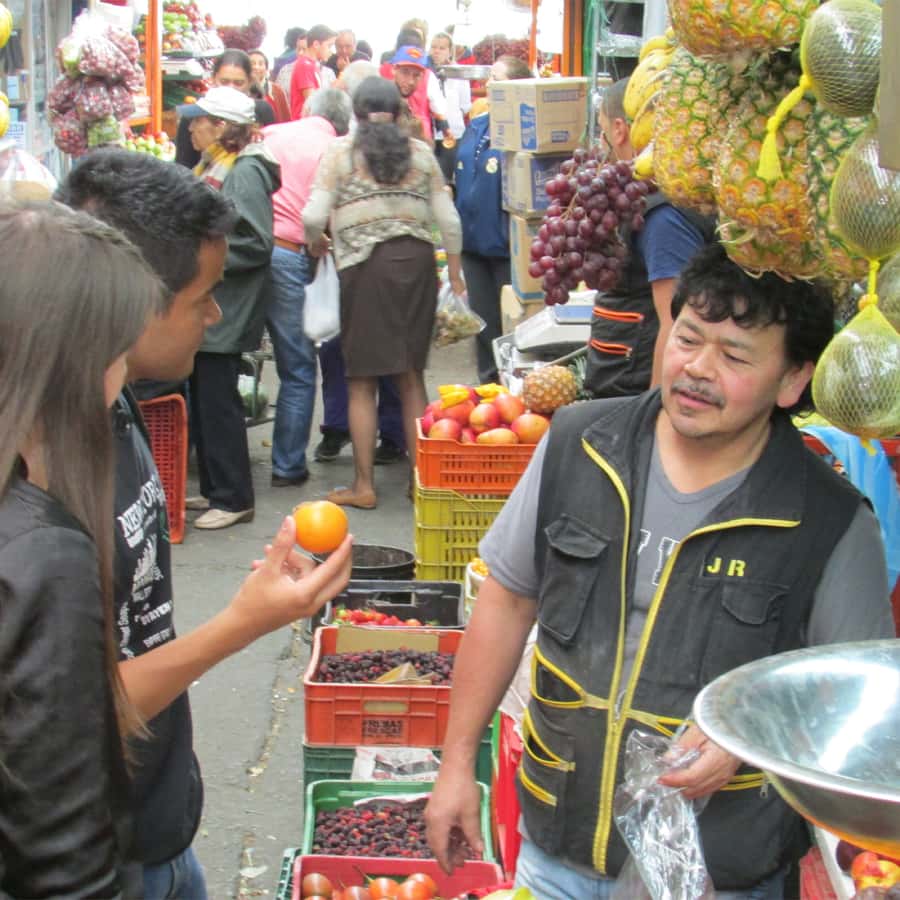
Paloquemao is not a staged food attraction built only for sightseeing. It is a working market where fruit, vegetables, meat, flowers, and other food products move through the city. That gives the tour its best quality: you are not simply looking at colorful displays, you are seeing a place tied to everyday shopping and family businesses.
The meeting point is Gate 10, beside the Davivienda cash machine, at Cl. 19 #25-57. That precise location matters because a large market can be confusing, especially if you arrive in a hurry. Give yourself enough time to find the gate and the cash machine before the scheduled start.
Your guide leads the group through the market rather than leaving you to guess which fruits are worth trying. That is useful in Colombia, where some of the most interesting produce may be unfamiliar even if you know your way around a supermarket. Names, textures, preparation methods, and local uses can be hard to understand from appearance alone.
The market visit also gives you a better sense of food prices, working routines, and the social role of local commerce. Food markets are meeting places as much as shopping areas, and that is an important part of the experience. You see the people behind the produce instead of treating the market as a backdrop for photographs.
A few more Bogota trips to weigh up
- PALOQUEMAO MARKET FOOD TOUR. EXOTIC FRUIT. LOCAL SNACKS. /Min 2 pax
★ 5.0 · 70 reviews - Fruit Tour at the World’s sweetest Market
★ 5.0 · 67 reviews - VIP Bogota City Tour: Farmers Market, Monserrate, Candelaria, 9hr
★ 5.0 · 66 reviews
What the three-hour route actually includes
The experience begins at the market entrance and returns to the same point after about three hours. The main activity is a guided walk through Paloquemao, with fruit tastings and explanations along the way.
The exact order of stops is not fixed in the information provided, so you should think of this as a flexible market walk rather than a tightly staged sequence. Your guide shows you the fruit area, introduces you to traditional vendors, and explains how the produce is used. You also see that local markets offer more than fruit, although the tasting remains the central purpose.
The package includes more than 13 exotic fruit samples, described elsewhere as more than 15 fruits. That small difference probably reflects the fact that the selection can vary, but you should expect a broad tasting rather than a fixed menu. The group shares samples, and one important practical point is that portions may be cut into very small pieces.
If you want a tour where each person receives a whole fruit, this may disappoint you. A recent experience was described as offering only one small bite of each sample. That is a fair warning, particularly for anyone booking this as a meal or judging value by the amount of food served.
A juice of your choice is included. This gives you one fuller taste of the produce than the tiny fruit pieces may provide, and it helps break up the tasting. Extra drinks, food, and souvenirs are not included, so bring some money if you want to buy something else inside the market.
More than unusual fruit on the table
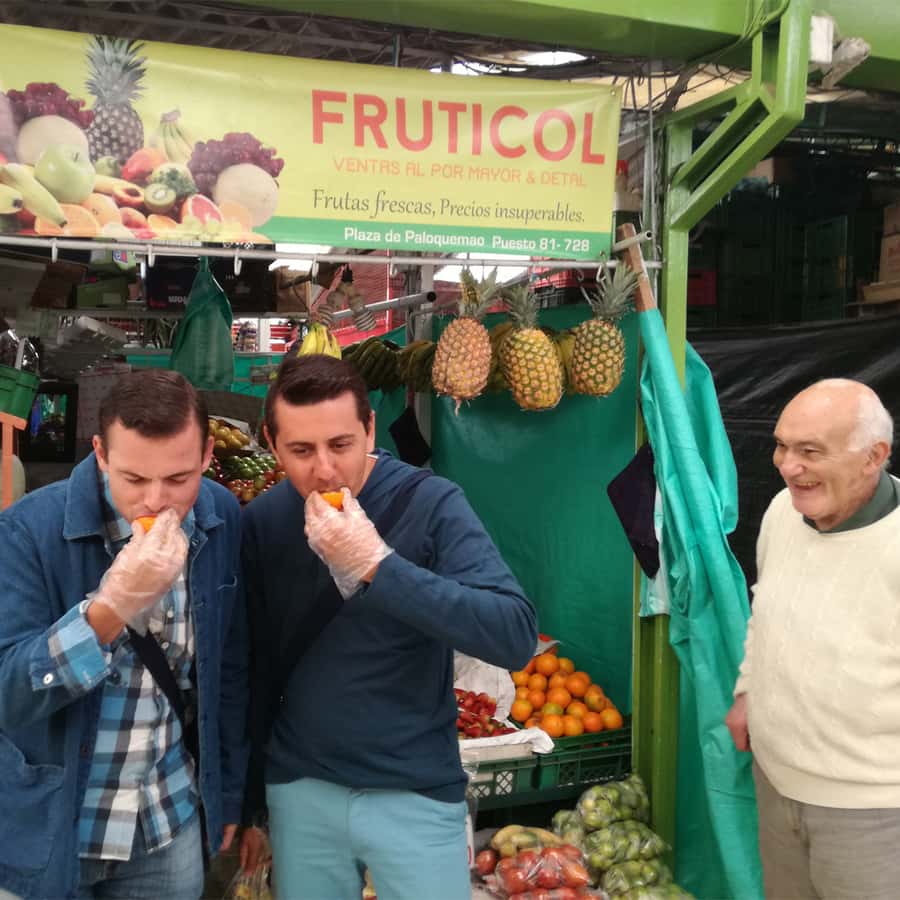
The fruit itself is the obvious draw, but the better question is what you learn while tasting it. The tour explains why Colombia is so well suited to fruit production and points out that the country does not have four traditional seasons during the year.
That seasonal difference helps explain why so much fruit can be available across the year. The tour presents the subject in a cultural way, linking produce to climate, eating habits, health claims, and local customs. I like that approach because it turns a list of unfamiliar names into a picture of how people actually use them.
You can ask about the health benefits of each fruit, although it is sensible to treat health information as general food knowledge rather than medical advice. The most useful part is likely the cultural context: which fruits are eaten fresh, which become juice, and how produce fits into Colombian meals and routines.
The tasting also gives you a chance to compare texture and flavor. Some fruit may be sweet, sour, creamy, firm, or full of seeds. Because pieces are small, pay attention to the first bite and ask questions while the guide is talking. You may not get a second sample.
Meeting the families behind the stalls
One of the most appealing details is the connection with traditional families who have owned their market stands for years. That gives the visit a human center. You are not just sampling products selected by a guide. You are seeing the vendors who sell them and hearing about the market through a relationship built over time.
The guide acts as the bridge. That matters in a busy market, where approaching a stall with a camera or a language question might feel awkward. With a guide present, you can focus on tasting and conversation while the vendor continues working.
Guides have included Nataly and Ludwyn. Nataly was specifically praised for explaining the fruits and making the tasting constructive, while Ludwyn was noted for helpful advice about other places to shop and eat afterward. Guides can change, so do not book on the assumption that one particular person will lead your departure.
The group is limited to 10 people. That is a sensible size for a food market. A larger crowd would make it harder to stand near a stall, hear explanations, or ask questions without blocking shoppers. A shared tour also means you do not get a private guide, but it can make the experience more social and less expensive than a private walk.
Same city, a completely different kind of day:
- Bogota: Bicycle City Tour
★ 4.9 · 2,156 reviews - Zipaquirá: Salt Cathedral Group Tour with Pickup
★ 4.8 · 1,606 reviews - Bogotá: Guided La Candelaria Walking Tour
★ 4.8 · 1,229 reviews - Bogotá: Private City Tour, Monserrate, Emerald and Botero
★ 4.9 · 798 reviews
The value of $47 per person
At $47 per person, this is priced well above the cost of buying fruit directly at a Colombian market. You are paying for the guide, language support, introductions, explanations, and the ease of knowing what to taste. You are not paying simply for the food.
That distinction is important. If you want maximum quantity for your money, buy fruit at the market yourself. If you want help understanding what you are seeing and why it matters, the guided format has a clearer case.
The price may feel high in relation to local costs, especially when tasting portions are tiny. One assessment called the tour expensive for Colombia, and that is a reasonable concern. The value improves if you care about cultural context, have limited time in Bogotá, or feel unsure about exploring a large market alone.
The duration creates another value question. The advertised length is three hours, but some departures have ended after less than two hours. That does not automatically mean the visit is poor, since market conditions and group pace can vary, but you should not build a full three-hour schedule around it without flexibility.
I would treat the tour as a guided introduction to Paloquemao rather than a long food crawl. If the group moves quickly and the fruit samples are brief, you may have time afterward to browse independently, shop, or find lunch nearby. Ask the guide for suggestions, as Ludwyn has been noted for giving useful advice about shopping and lunch.
What to eat before you arrive
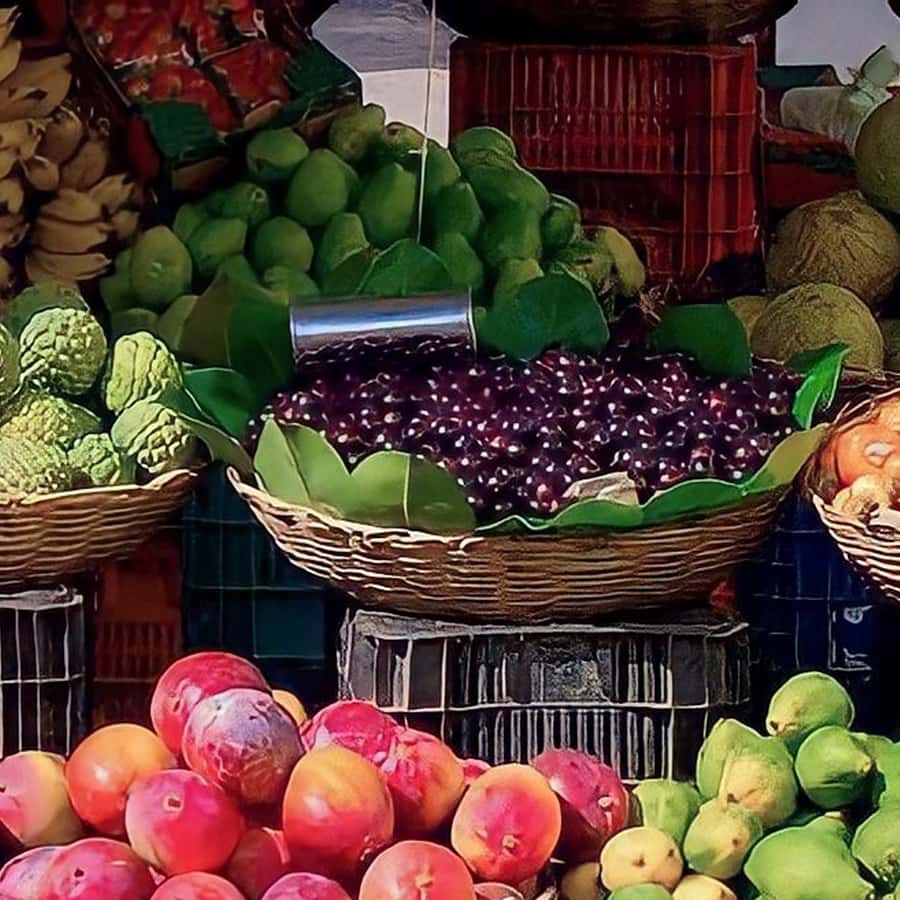
Do not arrive hungry and assume the fruit will serve as your meal. The tasting may come near the end of the experience, and portions can be small. One practical recommendation is to eat a light snack beforehand.
That does not mean you should eat a heavy meal and spoil the tasting. A modest breakfast or snack gives you enough energy for the market walk while leaving room for the fruit and juice. Comfortable clothes are also sensible, since you will be walking and standing in a working market.
Bring a drink. It is listed among the recommended items, and it is useful even though an exotic fruit juice is included. Pets are not allowed, so leave them elsewhere for this activity.
You may also want a little extra time before or after the tour. The experience begins and ends at Gate 10, and the market itself offers more than the planned tasting. The included tour does not cover extra food, drinks, or souvenirs, but you can make separate purchases if you choose.
Languages, group size, and the pace of the visit
The tour is offered with live guiding in English, Italian, Spanish, Portuguese, and French. That is a real advantage in a market setting, where the best questions often come up spontaneously and explanations can involve food terms that are not easy to translate on your phone.
The shared format keeps the group to 10 participants. Expect to listen to other people’s questions and share the attention of the guide. I would choose this arrangement if you enjoy meeting people and want a lower price than a private tour.
If you prefer to stop for photographs, study every stall, or ask long questions about each fruit, the group pace may feel brisk. Small portions also mean that the tasting can move quickly. Ask early if you want more explanation about a particular fruit, rather than waiting until the group has moved on.
The experience has received a strong overall rating of 4.7 from 20 reviews, with especially positive comments about the guides, the market, and the quality of the cultural explanation. At the same time, the mixed feedback about duration and portion size is too specific to ignore. Go for the market access and interpretation first, and consider the food a sample rather than a feast.
Who should book this experience
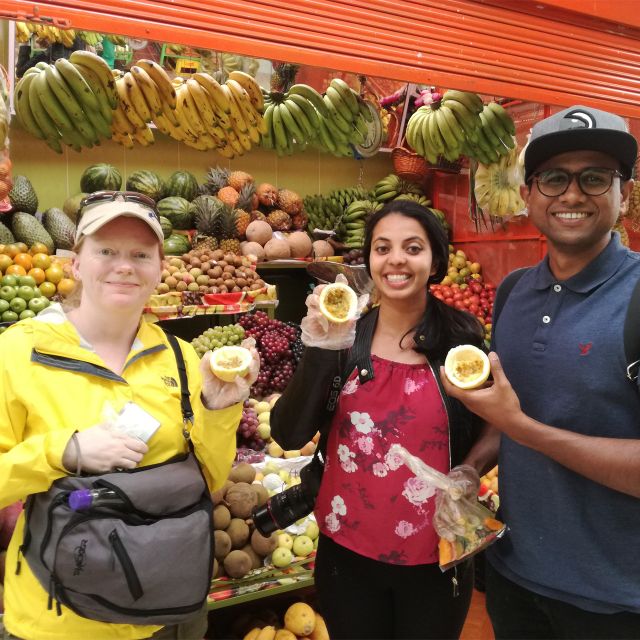
I would recommend it to first-time visitors who want a structured introduction to Colombian food culture. It suits curious eaters, photographers who enjoy working markets, and anyone who wants to learn what is behind the fruit displays instead of simply taking pictures.
It also works well for people who do not speak Spanish but want local interaction with language support. The guide can help make vendor conversations easier and explain customs that you might miss on your own.
Families may enjoy the colorful setting and unusual tastes, but the activity data does not provide age guidance, so check suitability for your group before booking. Anyone with food allergies or strict dietary needs should ask the provider directly, since the exact fruit selection is not fixed.
I would be more cautious if your priority is value measured in food quantity, a guaranteed three-hour program, or a private experience. You may find the small portions and shorter-than-advertised timing frustrating. The tour is best viewed as a cultural walk with tasting, not an all-you-can-eat fruit event.
Should you book the Paloquemao fruit tour?
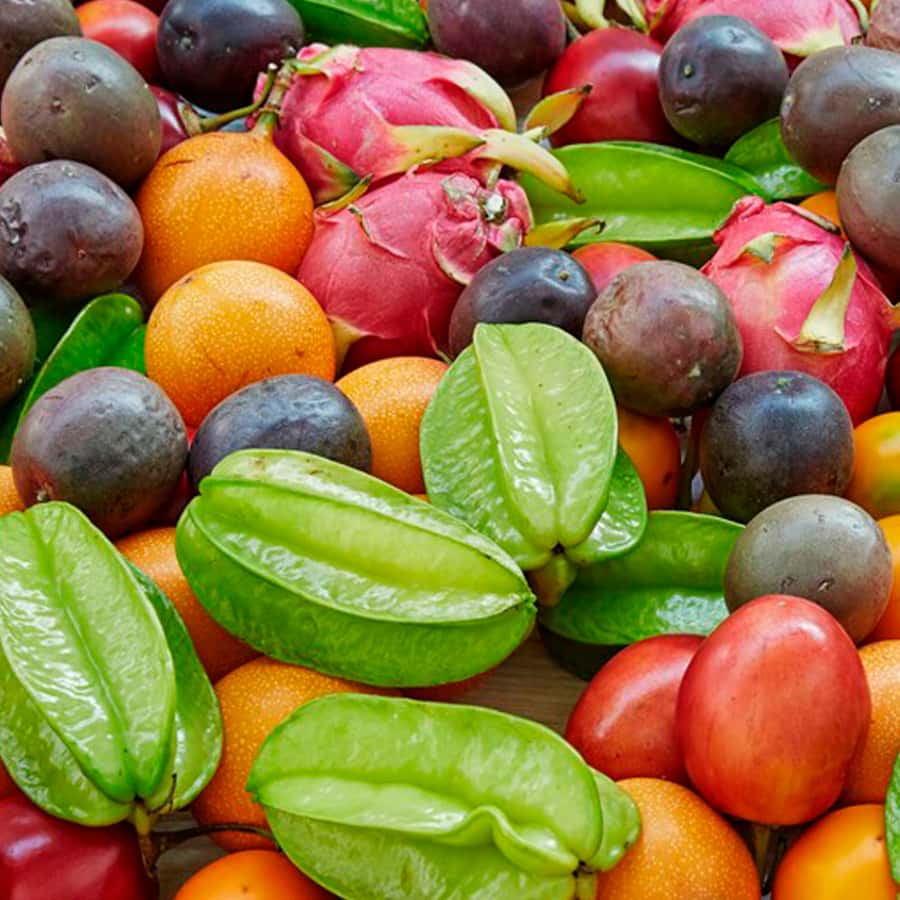
Book it if you want a friendly, guided way to understand one of Bogotá’s major food markets and taste produce you may not recognize. The longtime vendor relationships, language choices, small group, and explanations about Colombia’s fruit culture give the experience substance.
Skip it if you mainly want a cheap meal or a large amount of fruit. For the best value, eat a snack first, keep your schedule flexible, and use the guide’s advice to continue exploring the market or find lunch afterward.
The booking terms are useful for uncertain plans: you can cancel up to 24 hours before the activity for a full refund, and you can reserve without paying immediately. That flexibility does not solve the portion-size concern, but it lowers the risk of committing too early.
FAQ
Where does the tour meet?
Meet at Gate 10 of Paloquemao Market, next to the Davivienda cash machine. The listed address is Cl. 19 #25-57.
How long does the experience last?
The advertised duration is three hours. Some departures have finished in less than two hours, so keep your schedule flexible.
How many people are in the group?
This is a shared small-group tour limited to 10 participants. An exclusive private guide is not included.
How many fruits will I taste?
The experience includes more than 13 exotic fruit samples, and the description also refers to more than 15 fruits. The exact selection may vary.
Is a juice included?
Yes. You can choose one exotic fruit juice. Other drinks and food are not included.
What languages are available?
Live guiding is offered in English, Italian, Spanish, Portuguese, and French.
Is food beyond the fruit tasting included?
No. Extra food, drinks, and souvenirs are not included in the activity price.
Can I bring a pet?
No. Pets are not allowed on the tour.
Can I cancel the booking?
Yes. You can cancel up to 24 hours in advance for a full refund. You can also reserve now and pay later.
Just added around Bogota
- Bogotá: Graffiti Tour el mejor recorrido de arte urbano★ 4.7 · 41 reviews
- Shared Tour to Monserrate Hill and Gold Museum in Bogota★ 4.9 · 8 reviews
- Shared Tour Bogota’s Street Local Food★ 4.5 · 22 reviews
- Shared Tour Colombian Conflict War, Drug Trafficking & Peace★ 4.8 · 46 reviews
- Paragliding Activity with Transfers from Bogota★ 4.9 · 21 reviews
- Monserrate Express tour 3 hrs★ 4.6 · 6 reviews
- Nemocón Salt Mine Tour★ 5.0 · 3 reviews
- La Chorrera and Chiflon Waterfalls Private Hike Tour★ 5.0 · 7 reviews
Markets, compared.
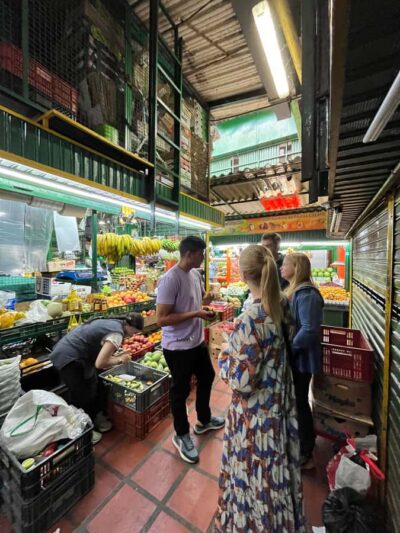
Medellín Multi-sensory Tour in the market, +15 Exotic Fruits
Read our review →
PALOQUEMAO MARKET FOOD TOUR. EXOTIC FRUIT. LOCAL SNACKS. /Min 2 pax
Read our review →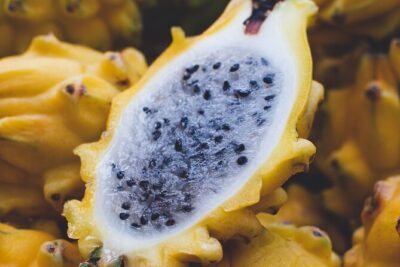
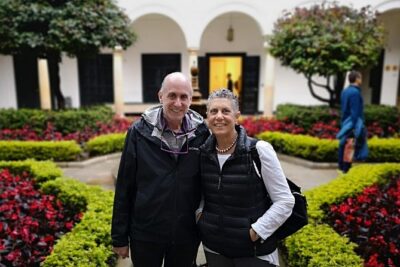
VIP Bogota City Tour: Farmers Market, Monserrate, Candelaria, 9hr
Read our review →
Cartagena Bazurto Market: Authentic Food & Culture Tour
Read our review →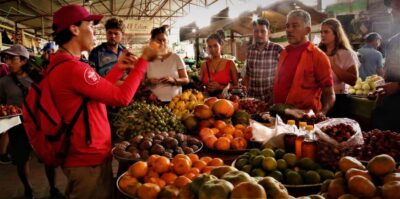

Browse the lists this tour appears in