
Reviewed · CARTAGENA TOURS
Tour Compartido de Gabriel García Marquez en Cartagena
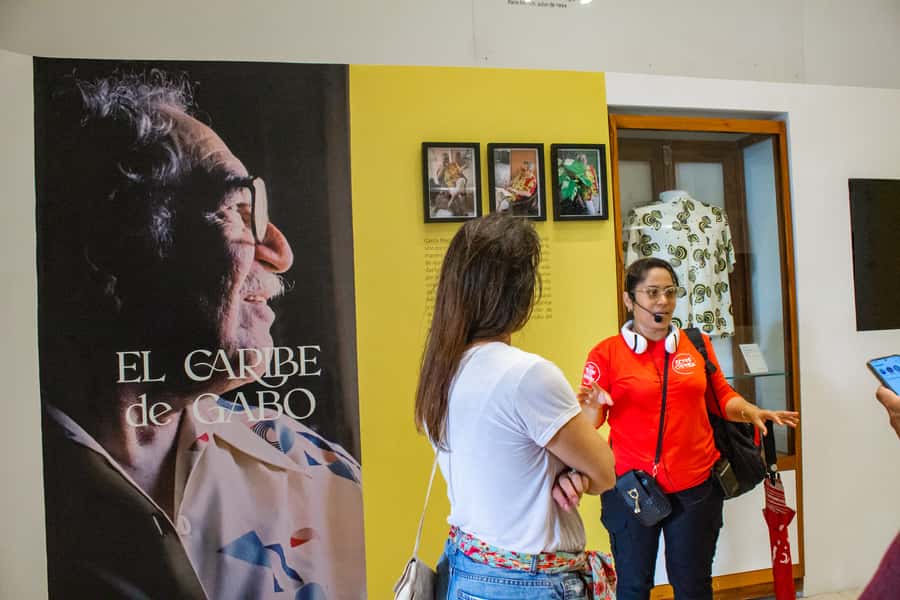
Gabriel García Márquez’s Cartagena is not found in a museum. It is in the balconies, convents, alleys, and old houses of San Diego, where ordinary life helped feed the imagination behind Love in the Time of Cholera and Of Love and Other Demons. This tour connects those real places with Gabo’s life, books, politics, and Nobel-era fame.
I like the way the walk joins literature to daily life instead of treating Gabo as a name on a plaque. I also like the clear, simple Spanish explanations praised by guests who toured with Yuli, Juli, or Juliet. The main drawback is the pace: you may walk about 8 kilometers, and the activity details give both two hours and roughly two and a half hours, so it is a longer outing than the short headline suggests.
Key points at a glance
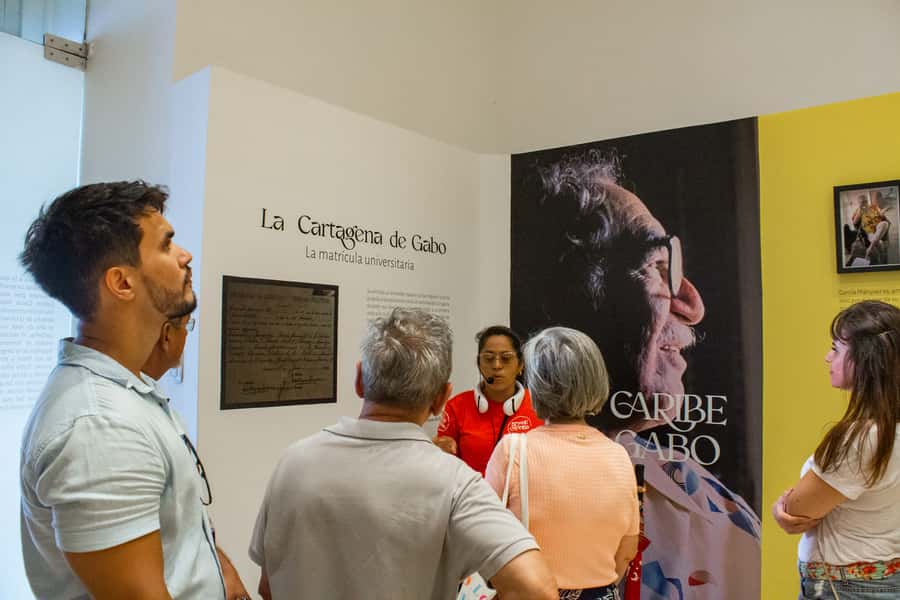
- San Diego as a literary setting: Follow streets and corners linked with the emotional world of Gabo’s fiction.
- Plaza de San Diego: Use this atmospheric square as a starting point for Cartagena’s old social and literary life.
- Colonial balconies with a purpose: Learn how balconies showed family status and how houses could conceal corridors and secrets.
- Gabo’s Cartagena: Connect the writer’s life and books with real locations inside the walled city.
- Spanish storytelling: Guides such as Yuli, Juli, and Juliet explain the subject in direct, accessible Spanish.
- Strong value at $12: You get a focused literary walk, local recommendations, and no surprise entrance charges.
Why Gabo makes San Diego worth a closer look
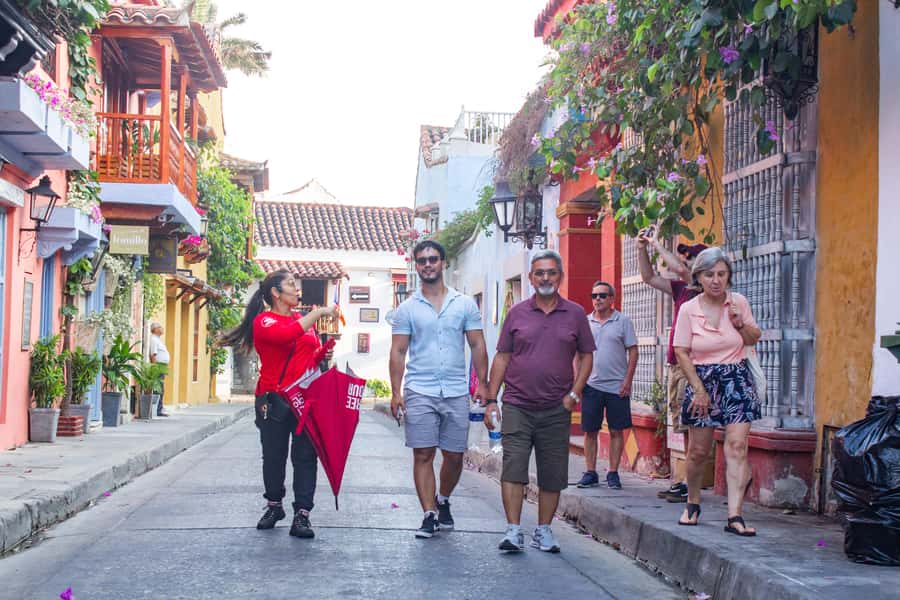
Cartagena can be easy to admire at street level. You see flowers, painted doors, old stone, and wooden balconies, then move on to the next photo. This walk asks you to pause and ask what those buildings meant to the people who lived behind them.
San Diego was once a center of power and faith within the walled city. Influential families, merchants, religious communities, and political figures occupied its streets. That mix matters because Gabo’s world is not made only of romance or fantasy. His stories also turn on class, religion, authority, family memory, gossip, loneliness, and political pressure.
I like this approach because it keeps the tour grounded. You are not asked to treat magical realism as something separate from normal life. Instead, you see how a city filled with old rituals, private courtyards, crowded homes, religious bells, and family secrets could give a writer so much to work with.
The guide’s task is to show the link without making every old building sound like a confirmed scene from a novel. Based on the tour’s stated focus, you will hear which places are tied to Gabo’s stories, which settings helped shape their mood, and how real people influenced his characters. That distinction is useful for anyone who loves the books but wants to avoid blurry literary claims.
Other Cartagena days worth booking alongside this:
- Cartagena: Historic Center and Getsemaní Shared Walking Tour
★ 4.9 · 2,716 reviews - Cartagena: Rosario Islands Catamaran with Lunch and Snorkel
★ 4.5 · 2,479 reviews - Full-Day Rosario Islands Including Barú, Bocachica & Playa Blanca
★ 4.0 · 1,729 reviews
Meeting at Botero’s Gertrudis in Santo Domingo Square
The meeting point is the Botero sculpture Gertrudis in Santo Domingo Square, where you look for the red Beyond Colombia sign or guide. This is a practical location in the old city, but it can be busy, so arrive with enough time to identify the group.
The sculpture gives you a clear visual marker. You do not need to search for a hotel lobby or a tucked-away office. Once the group gathers, the guide introduces the theme and leads you toward San Diego on foot.
This is a shared tour, not a private appointment. That keeps the price low and gives you a chance to meet people from different places, but it also means the pace and discussion are shaped by the group. If you want a long, personal conversation about one particular novel, a private guide would give you more control.
The tour is offered in Spanish. That point matters more than the five-star rating. You should be comfortable following a spoken explanation about literature, biography, politics, and colonial society. The guides praised by name, including Yuli, Juli, and Juliet, are described as clear and experienced, but the language remains Spanish.
San Diego’s streets, balconies, and old houses
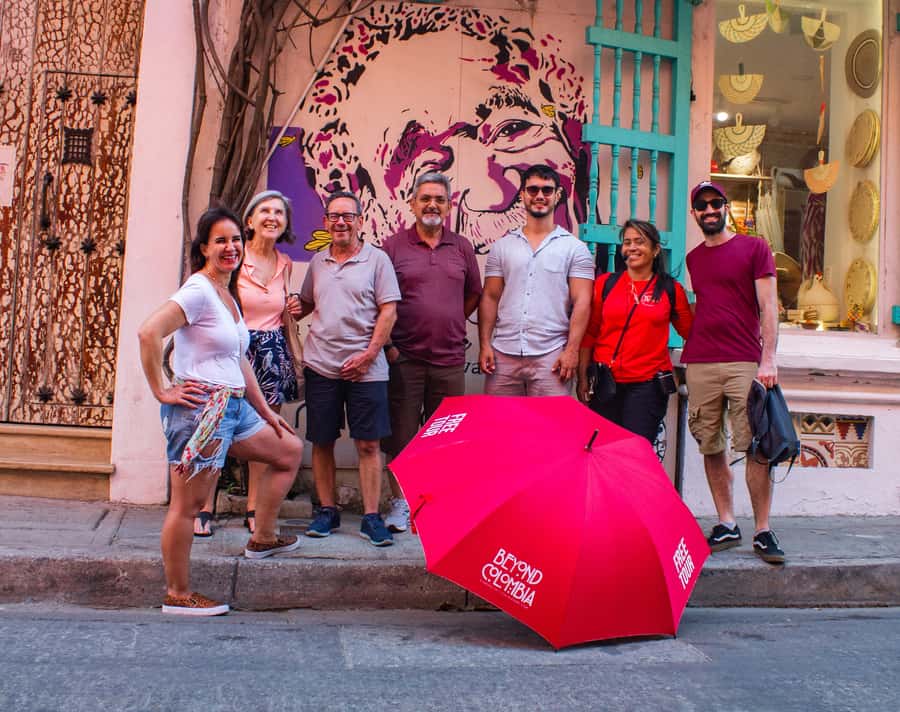
Once you enter San Diego, the tour shifts from a general Cartagena walk to a more focused reading of the neighborhood. The streets provide the setting, while the guide supplies the links to Gabo’s books and life.
Look closely at the colonial houses. Their balconies were not just pretty features for postcards. They could signal wealth, family pride, and social position. A balcony facing the street also put domestic life on public display, giving writers plenty of material for stories about courtship, reputation, surveillance, and longing.
The tour also points to houses connected by internal corridors. These passages allowed people to move without being seen, an architectural detail that fits naturally with stories about secrets, hidden relationships, and private power. You will not be asked to enter every building, and the walk does not promise access to private interiors. The value comes from understanding how the buildings worked and what they reveal about the society around them.
San Diego’s old religious sites add another layer. Convents once played a role in the colonial economy, and some still preserve bells dating from the 17th century. That link between faith and money helps explain why the neighborhood’s stories are not simply romantic. Religion could shape education, family decisions, social rank, and public behavior.
I would pay attention to how the guide describes the difference between a house as architecture and a house as memory. In Gabo’s work, a home often carries the habits and burdens of several generations. San Diego gives that idea physical form.
Plaza de San Diego and the feel of literary Cartagena
Plaza de San Diego is one of the tour’s key settings. The square helps you picture Cartagena during its older, more intimate eras, before the city became mainly a place for quick photographs and evening meals.
The guide uses the plaza to connect public life with fiction. A square can be a meeting point, a place for gossip, a stage for status, or a quiet record of changing times. The tour’s theme is that Gabo’s Cartagena grew from these small encounters rather than from fantasy alone.
That is especially helpful if you have read Love in the Time of Cholera. You can consider how streets, houses, balconies, and social divisions shaped the book’s atmosphere without expecting the novel to function as a literal map. The walk is strongest when it lets you compare fiction and place while keeping both separate.
You may also hear about Cartagena’s golden era and the way political power, faith, merchants, and family names shaped life inside the walls. These details give the literary discussion some weight. Gabo’s characters do not float above society. They are caught in its rules.
The square is also a good point to take a breath and study the group dynamic. This is a walking tour with rest stops, not a nonstop lecture. Still, Cartagena’s heat can make even a short pause feel welcome, so carry water or another preferred drink.
Same city, a completely different kind of day:
- Cartagena de Indias: 2-Hour Sunset Cruise
★ 4.7 · 1,105 reviews - 2-hour tour in Cartagena Sunset View in party boat
★ 4.6 · 899 reviews - Cartagena: Guided Street Food Tour with Tastings
★ 4.9 · 833 reviews - Cartagena: City Sightseeing Hop-On Hop-Off Bus Tour & Extras
★ 3.9 · 681 reviews
From real people to Gabo’s fictional characters
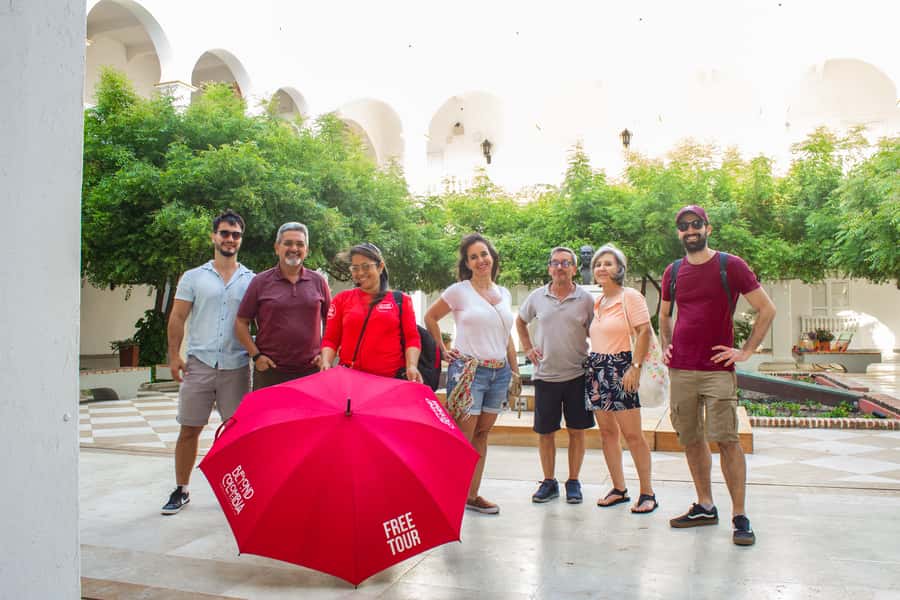
One of the most interesting ideas in the tour is that many of Gabo’s characters drew on people he encountered in real life. The guide explains how personal memories, local personalities, family stories, and public events could become part of a larger fictional world.
That does not mean you will be given a simple one-to-one answer for every character. Literature rarely works that neatly. Instead, you will see how a writer can borrow a gesture, a rumor, a family conflict, or a familiar personality and reshape it into something universal.
The tour also addresses Gabo’s political life. One recent tour comment singled out the political side of his story, which is useful because visitors often focus only on romance and magical realism. His work also reflects power, inequality, public conflict, and the pressure of history on private lives.
I like that wider frame. It helps you read the books as products of a real society, not just as charming tales set in an exotic place. Cartagena supplies beauty, but it also supplies tension. The same balcony that suggests romance can also represent status. The same religious institution that suggests devotion can be tied to authority and money.
Expect the guide to move between biography and bibliography. You may hear about Gabo’s life in Cartagena, the books connected with the city, and the ways certain parts of San Diego appear in his literary universe. The guide’s skill matters here. The best explanations use plain language and keep the story moving, which is why Yuli, Juli, and Juliet are names worth noting when you select a departure.
The settings behind Love in the Time of Cholera
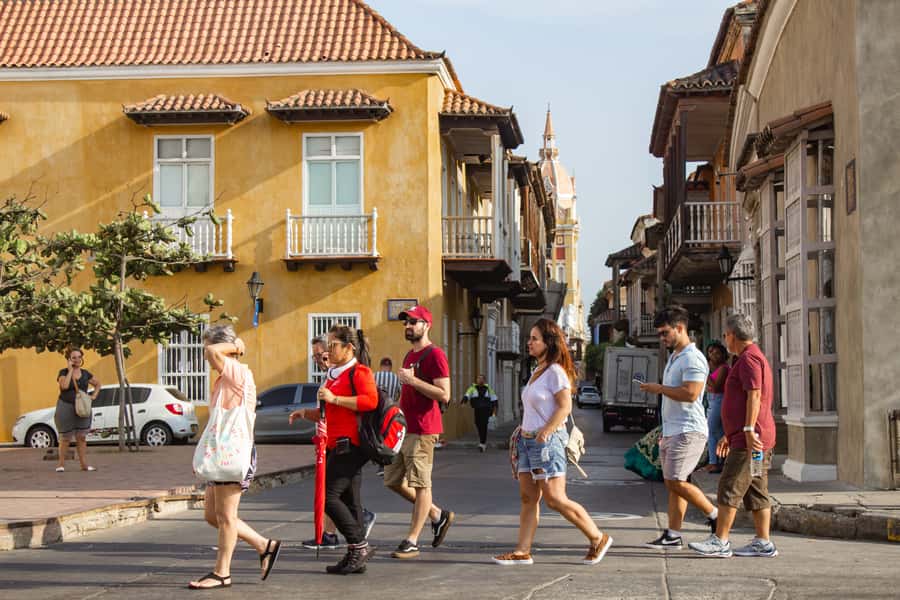
The tour gives special attention to places associated with Love in the Time of Cholera. You will not simply hear a plot summary. The aim is to understand how the city’s old houses and social customs helped form the novel’s sense of love, waiting, memory, and loneliness.
Cartagena’s architecture is central to that discussion. A narrow street can suggest closeness, while a large house can hold several generations and years of unresolved feeling. Balconies place private emotion above public streets, where neighbors can notice, judge, and remember.
The tour may help you picture why the city works so well as a literary setting. Its old walls and homes carry evidence of earlier lives, while daily routines continue around them. That mix of the present and the remembered past is close to the way Gabo builds his stories.
If you have not read the novel, you can still follow the walk. The guide explains the setting in terms of people, places, and mood rather than assuming you know every character. If you are a serious Gabo reader, you will get more from it by reading or revisiting the relevant books before arriving.
Of Love and Other Demons and the role of faith
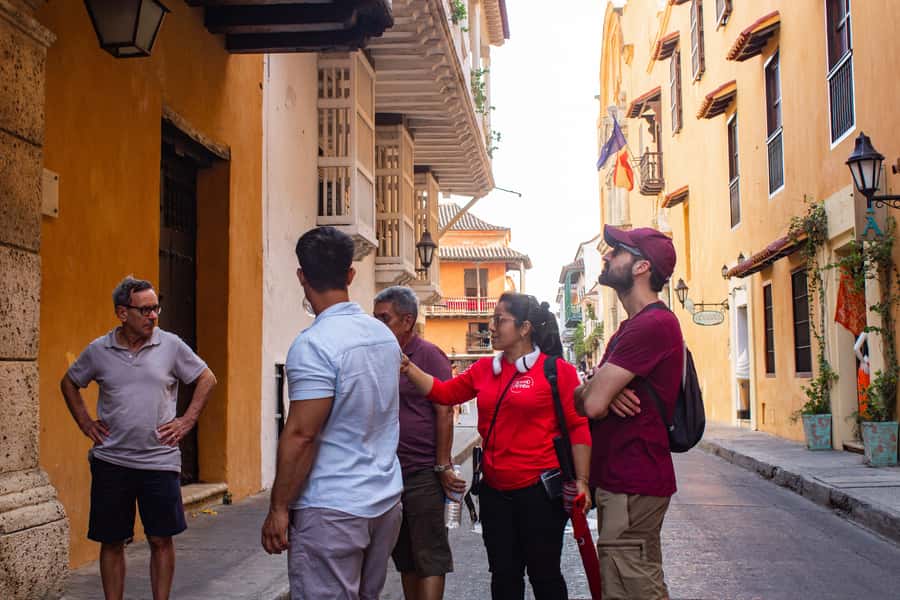
The walk also explores the atmosphere behind Of Love and Other Demons. Here, the relationship between the church, colonial society, family authority, and superstition becomes especially important.
San Diego’s convents and religious buildings provide more than an attractive backdrop. They point to institutions that helped shape the city’s economy and social order. Original bells, old religious spaces, and stories of faith give the guide concrete details to use when explaining how devotion and fear could exist side by side.
This part may appeal to you even if you prefer history to literary analysis. You learn how institutions worked, how beliefs affected ordinary life, and how Gabo transformed those pressures into fiction.
The subject can be serious, and the quality of the explanation depends on the guide’s ability to keep the line between documented history and literary interpretation clear. The tour promises precise knowledge of Gabo’s life and writing, but you should still treat a two-hour walk as an introduction, not a university seminar.
Gabo’s house and the limits of the route
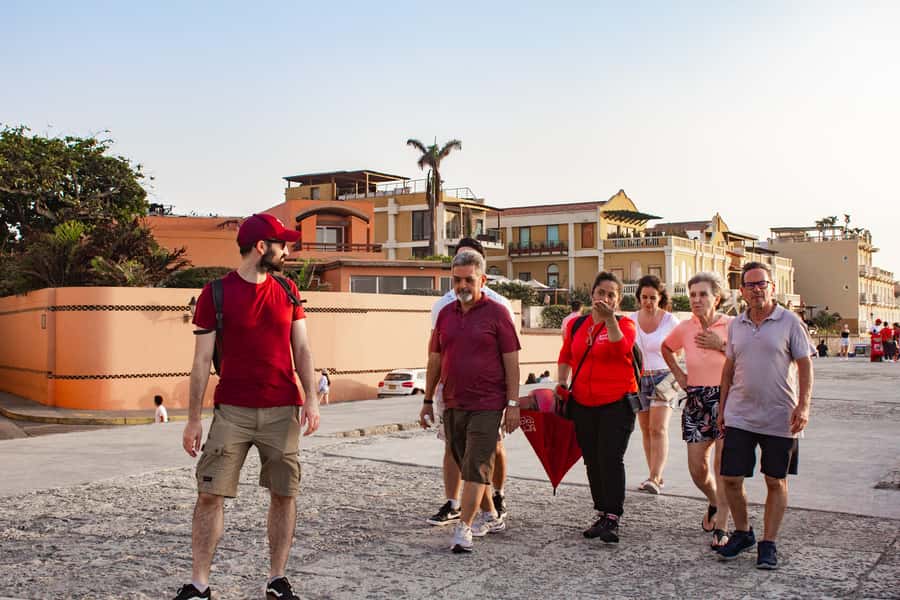
Gabo’s house in Cartagena is included among the places discussed. The details provided do not promise a house tour or guaranteed interior access, so plan to hear about the connection rather than assume you will enter the property.
That is an important distinction when you compare tours. This experience is built around walking through San Diego and interpreting the city. It does not list museum tickets, private-house visits, or paid attractions. The absence of entrance fees keeps the outing simple and protects you from sudden charges, but it also means the experience depends heavily on the guide’s storytelling.
You will receive recommendations for local places to eat lunch, buy coffee, and shop for souvenirs. Those suggestions can be useful after the walk, especially if you want to keep exploring the neighborhood on your own. Participants also receive a handle that can provide benefits or discounts with recommended local businesses.
The $12 price and what you get
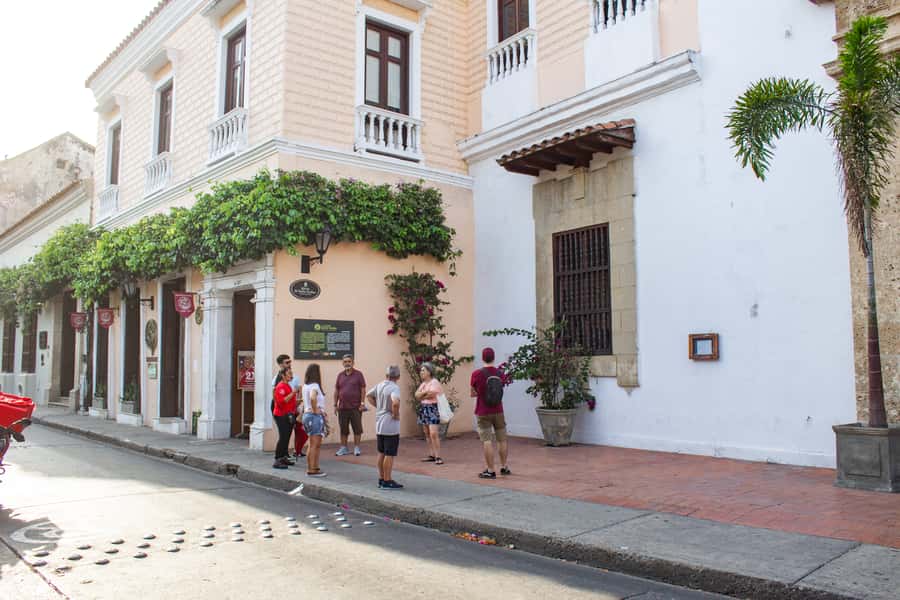
At $12 per person, this is a strong-value introduction to literary Cartagena. You are paying for a Spanish-language guide, a structured route through San Diego, explanations of Gabo’s life and books, local recommendations, and a shared social setting.
The price does not include food, drinks, souvenirs, hotel transport, or transportation during the walk. You also do not pay sudden entrance charges along the route because no paid admissions are planned. That makes the final cost easy to understand.
The low price comes with normal shared-tour limits. You do not get an exclusive guide, and you cannot set the pace for the whole group. The route may also last around two and a half hours despite the shorter two-hour description, so avoid scheduling a tight appointment immediately afterward.
Free cancellation up to 24 hours before the activity and reserve-now, pay-later booking add useful flexibility. Accessibility is listed as wheelchair friendly, but the stated distance of about 8 kilometers and the colonial streets make it sensible to confirm that the route suits your mobility needs before booking.
Who should book this San Diego walk
I would choose this tour if you have read Gabo, plan to read him, or simply want a more thoughtful way to see Cartagena’s old city. It suits adults who enjoy connecting buildings with family stories, politics, religion, and novels.
It is also a good choice if you want an affordable first orientation to San Diego. The guide’s local recommendations can help you decide where to eat or stop for coffee afterward.
You should reconsider it if you dislike walking in heat, prefer English, want a private guide, or need a short activity with little physical effort. The tour asks you to walk roughly 8 kilometers, with rest stops, and it is specifically not considered suitable for people over 65. That age guidance is broad, so personal fitness and mobility matter more than the number alone.
Wear comfortable clothes and shoes. Keep your belongings close in busy areas, and do not bring alcohol or drugs. Audio recording is not allowed, and party groups are excluded, which tells you the tone is focused and literary rather than rowdy.
Should you book the Gabo tour?
Book it if you want to see Cartagena as a source of stories, not just a collection of colorful streets. The strongest parts are the clear Spanish storytelling, the attention to Yuli, Juli, and Juliet as standout guides, and the way the route links balconies, convents, politics, memory, and Gabo’s fiction.
Skip it if you want a private literary seminar, an English tour, or a gentle stroll of only a few blocks. At $12, the value is hard to question, but the long walking distance and uncertain two-hour versus two-and-a-half-hour timing deserve real thought before you reserve.
FAQ
Where does the tour meet?
Meet at Botero’s sculpture Gertrudis in Santo Domingo Square. Look for the red Beyond Colombia sign.
How long does the activity last?
The activity information lists two hours, while the detailed description says approximately two hours and 30 minutes. Plan for the longer duration.
What language is the tour in?
The live guide speaks Spanish.
How much walking is involved?
You will walk about 8 kilometers, with rest stops to listen to the guide.
What should I bring?
Bring comfortable shoes, comfortable clothing, and water or another preferred drink.
Is the tour wheelchair accessible?
The activity is listed as wheelchair accessible.
Is this a private tour?
No. It is a shared tour, so you will join other people and will not have an exclusive guide.
Are entrance fees included?
The route does not take you to places where sudden additional entrance charges apply. Food, drinks, souvenirs, hotel transport, and transportation during the tour are not included.
Can I cancel or pay later?
You can cancel up to 24 hours in advance for a full refund. You can also reserve now and pay later.
Just added around Cartagena
- Tour Compartido al Castillo San Felipe de Barajas Cartagena★ 4.3 · 18 reviews
- Tierra Bomba Island: A day at Marine Beach Club★ 3.4 · 5 reviews
- The best sunset tour in the bay: Open bar party & fun★ 5.0 · 3 reviews
- Cartagena Tasting Mezcal & Tequila★ 3.2 · 5 reviews
- Tayrona Park adventure in Santa Marta: Cabo San Juan from Cartagena★ 3.8 · 3 reviews
- Sunset Party open bar on the bay while sharing with locals★ 5.0 · 7 reviews
- Santa Marta and Tayrona Park Day Trip★ 3.7 · 9 reviews
- Sunset boat tour open bar and free club entrance Cartagena★ 3.6 · 7 reviews
Cartagena Tours, compared.
Historic Center and Getsemaní Shared Walking Tour
Read our review →
Rosario Islands Catamaran with Lunch and Snorkel
Read our review →
Full-Day Rosario Islands Including Barú, Bocachica & Playa Blanca
Read our review →

2-hour tour in Cartagena Sunset View in party boat
Read our review →

City Sightseeing Hop-On Hop-Off Bus Tour & Extras
Read our review →
Browse the lists this tour appears in