
Reviewed · BOGOTA TOURS
Bogotá: Graffiti Tour el mejor recorrido de arte urbano
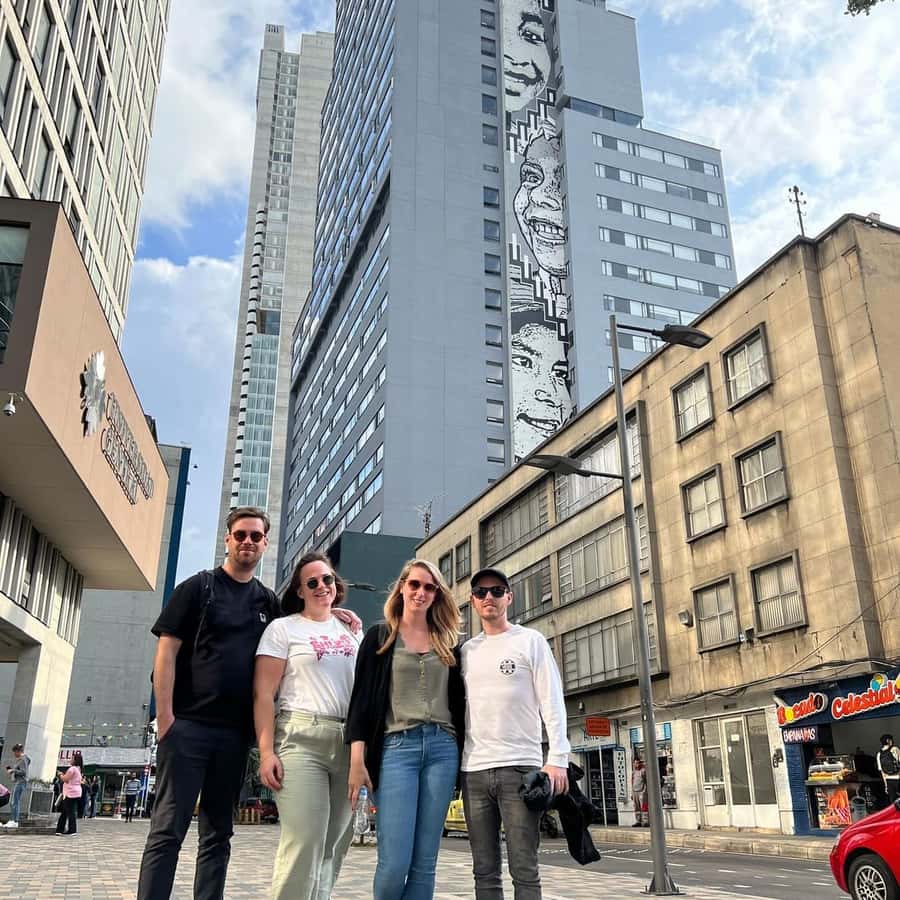
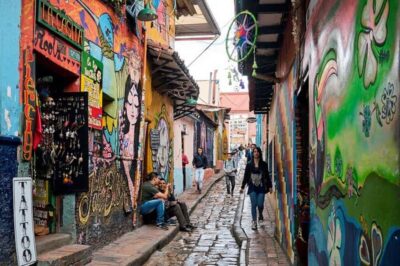
Bogotá’s walls tell stories that regular city sightseeing can miss. On The Original Bogotá Graffiti Tour, you walk through the city with a guide who explains the artists, symbols, techniques, and political ideas behind the paint. It is less a quick photo stop and more a lesson in how public art can shape a neighborhood’s identity.
I like two things right away: the tour links graffiti to Colombian history and social change, and it gives you a way to read details you might otherwise walk past. Guides including Lifred, Ivonne, Luis, and Giovanni have been praised for explaining the art clearly and answering questions with patience.
The main consideration is that the published details are a little muddled. The experience is listed at $13 per person, while the description also calls it a free graffiti tour and a private tour. Confirm exactly what your booking includes, along with the language and group format, before you set off.
Key points to know before you book
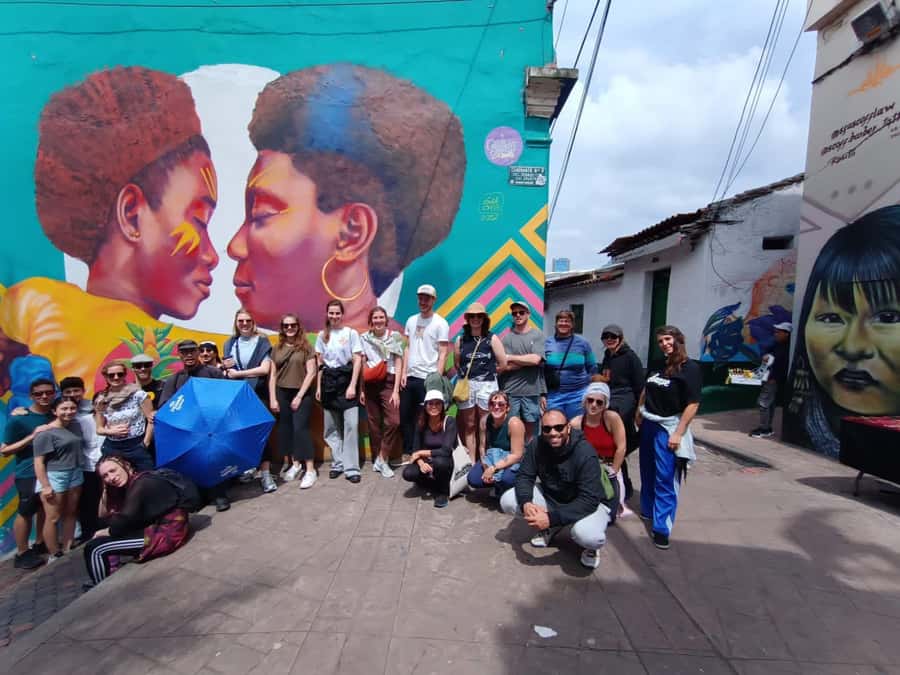
- Two hours on foot: The tour is short enough to fit into a day of sightseeing, yet long enough to connect murals with Bogotá’s past and present.
- Meet at Parque de los Periodistas: The stated meeting point is on Jiménez Avenue at Carrera 4, a central starting place in Bogotá.
- More than mural spotting: You learn basic graffiti ideas, artist backgrounds, protest themes, and the role of building owners and local communities.
- Strong guide reports: Lifred, Ivonne, Luis, Giovanni, Christian, Fabian, and Yvonne are singled out for clear explanations, warmth, and patience.
- English is listed: The main activity lists a live English-speaking guide, with Spanish, German, and French options available by inquiry.
- Good value at $13: The price is modest for a guided cultural walk, but clarify the free-tour and private-tour wording when reserving.
Why Bogotá’s walls are the real classroom
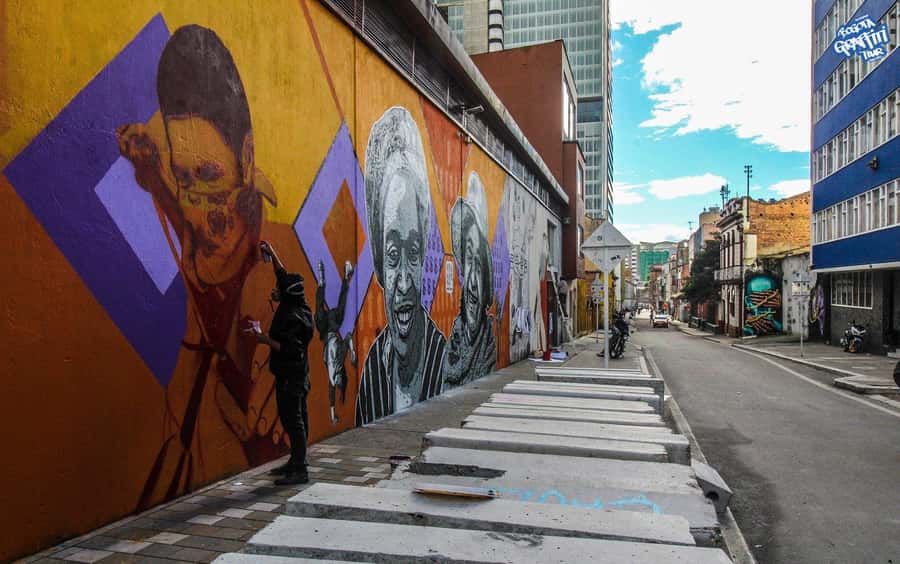
Bogotá’s street art is not simply decoration placed between museums. The tour presents it as a record of the city’s graffiti movement, the people who built it, and the way urban art connects with Colombia’s wider story.
That framing matters. A large mural can look striking in a photograph, but the reason it was painted, who made it, and how it relates to the surrounding community give it weight. Your guide helps you see those connections instead of treating each wall as a colorful backdrop.
I like this approach because it gives the walk a clear purpose. You are not only searching for the biggest or most detailed piece. You are learning how graffiti works as a public conversation, sometimes as protest, sometimes through collaboration with property owners, and sometimes as a tool for community work.
The experience also reflects a wider project. The company behind the tour supports urban-art programs involving local, national, and international artists, community houses, cultural centers, foundations, district schools, and graffiti groups in different areas. That does not turn every stop into a social project, but it explains why the tour treats graffiti as a living practice rather than a finished product.
Other Bogota days worth booking alongside this:
- Bogota: Bicycle City Tour
★ 4.9 · 2,156 reviews - Zipaquirá: Salt Cathedral Group Tour with Pickup
★ 4.8 · 1,606 reviews - Bogotá: Guided La Candelaria Walking Tour
★ 4.8 · 1,229 reviews
Starting at Parque de los Periodistas
The listed meeting point is Parque de los Periodistas, at Jiménez Avenue with Carrera 4. The meeting point is useful because it gives you a clear place to begin in central Bogotá, without asking you to find a distant neighborhood or arrange transport before the walk.
The tour runs daily in two stated time windows: 10:00 a.m. to 12:30 p.m. and 2:00 p.m. to 4:30 p.m. The advertised duration is two hours, so allow a little extra time around the start and finish. The schedule shown includes half-hour windows, which may reflect meeting and ending times, so check the available departure when you book.
At the beginning, expect an introduction to Bogotá’s graffiti movement and to the basic ideas that help you interpret the walls. The guide may explain how artists use lettering, images, scale, placement, and technique. The precise route can change, so I would not book this expecting a fixed list of named murals.
That flexibility is useful in street art. Paint changes, buildings change, and new work appears. It also means you should think of the tour as a guided look at a moving art scene, not as a museum visit with a permanent collection.
Learning the language of graffiti

One of the tour’s practical strengths is its attention to graffiti basics. You do not need prior art training to follow the discussion. The guide explains enough of the vocabulary and visual choices to help you notice how a piece was made and what the artist may be trying to communicate.
That is where guides such as Ivonne and Lifred appear to make a difference. Ivonne has been praised for explaining street-art basics while connecting individual works to Bogotá, Colombia, and the artists who made them. Lifred is described as kind, clear, and good at placing the art in a wider setting.
You can also ask questions as you go. Several guide reports point to patient answers, which is important on a subject that can raise simple but useful questions. Why is one wall treated as a legal artwork while another is called vandalism? How do artists work with property owners? What makes a painted signature different from a large public mural?
The tour gives you tools for thinking about those questions. It does not reduce graffiti to one easy definition, and that is a plus. Street art can be personal, political, decorative, collaborative, or all four at once.
From protest art to Colombian culture
The strongest part of the experience is the link between street art and public life. Giovanni has been praised for explaining graffiti as protest and for pointing out work created jointly by artists and building owners. That pairing is useful because it shows two sides of urban art: confrontation and cooperation.
You may see how a wall can carry a message about power, identity, or social concerns. You may also learn how a piece can become part of a neighborhood through an agreement between the artist and the person who owns the building. The value is in understanding the different relationships behind the paint.
Christian has been noted for connecting street art with Colombian culture, while Yvonne has been praised for placing Bogotá’s graffiti in a broader Colombian setting. Those details suggest that the tour is not limited to names and dates. You are encouraged to consider how the city’s public art reflects its people and its changing ideas.
I would keep your expectations sensible. The provided information does not name each stop or guarantee a particular mural. The route may focus on a selection of works rather than attempting to cover all of Bogotá’s graffiti. That is normal for a two-hour walk and helps keep the experience manageable.
Same city, a completely different kind of day:
- Bogotá: Private City Tour, Monserrate, Emerald and Botero
★ 4.9 · 798 reviews - Bogotá´s Barrios: El Paraíso Favela Tour with Cable Car
★ 4.8 · 731 reviews - Bogota: Guatavita and Salt Cathedral Daily Group Tour
★ 4.7 · 615 reviews - Bogotá City Tour with Monserrate, Gold and Botero Museums
★ 4.9 · 584 reviews
The guides shape the experience
A good street-art walk depends heavily on the guide. Paint on a wall cannot answer your questions, explain a reference, or point out a small detail hidden inside a large image.
This tour has several named guides associated with strong feedback. Lifred is described as friendly and well informed about the stories behind the art. Ivonne is praised for her teaching and her ability to connect murals with city life. Luis is described as articulate, considerate, and generous with background information.
Giovanni’s focus on artists, protest, and collaboration may appeal to you if you want social context. Christian is a good name to look for if Colombian culture is a priority, while Fabian is associated with a relaxed, easygoing walk. The guide assigned to your departure may vary, so treat these names as examples rather than a promise.
The repeated praise for warmth and patience is especially useful for first-time visitors. You can ask basic questions without feeling out of place. That makes the tour suitable for people who know little about graffiti, as well as for anyone who already follows urban art.
What the $13 price really offers
At $13 per person, this is an inexpensive way to add a cultural activity to a Bogotá visit. You receive a two-hour guided walk, a live guide in English, and an explanation of the art that would be hard to recreate from a map or a string of photos.
The value is strongest if you want context. If you only want to photograph walls, you can explore on your own for less. But you will miss the artist stories, the discussion of graffiti as protest, and the explanation of how some pieces relate to communities and building owners.
There is one point to settle before payment. The activity information uses both free graffiti tour and private tour language, while the listed price is $13 per person. Those terms can mean different things in practice. Ask the provider at [email protected] whether $13 is a set charge, a suggested contribution, or connected to a specific booking type.
The reserve-now-and-pay-later option gives you some planning flexibility. Free cancellation is available up to 24 hours in advance for a full refund. These details are helpful if your Bogotá schedule is still shifting, but they do not remove the need to confirm the exact tour format.
Timing, walking, and access
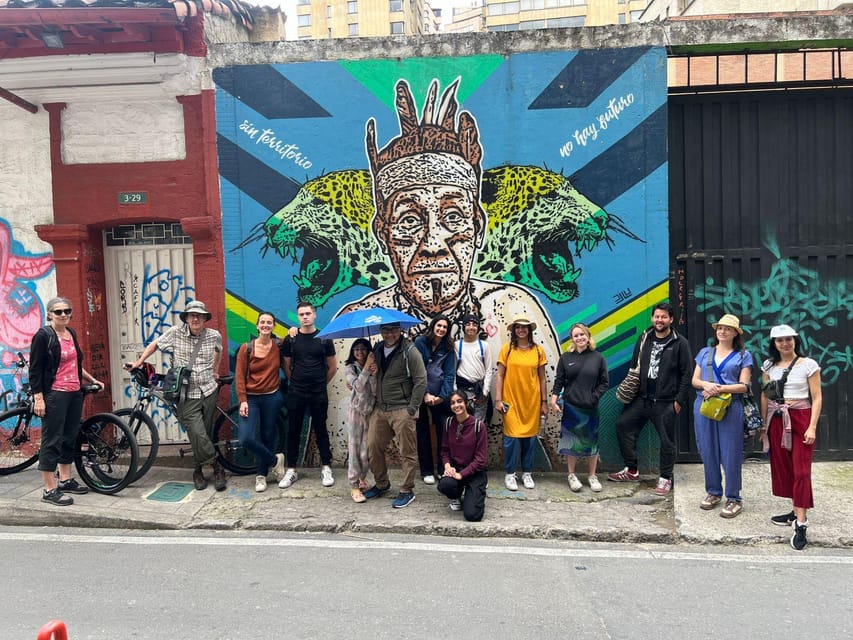
Two hours is a good length for this subject. You get enough time to discuss several works without turning the walk into an exhausting half-day commitment. The morning departure can fit neatly before lunch, while the afternoon option works well after other central sightseeing.
The experience is a walking tour, so wear shoes you can use comfortably for two hours. The material does not provide a detailed route, distance, or rest schedule, so anyone with mobility concerns should contact the provider before booking even though the activity is listed as wheelchair accessible.
The central meeting point is another practical advantage. You do not need to organize a separate excursion outside Bogotá, and you can pair the walk with other activities in the city. I would still arrive early enough to find Parque de los Periodistas and locate the exact meeting spot around Jiménez Avenue and Carrera 4.
The main listed language is English. Spanish, German, and French tours are advertised as options, but you should request those languages in advance rather than assume every departure offers them.
Who should take this tour
I would recommend it most strongly to first-time visitors who want to understand Bogotá beyond its major sights. The tour gives you a local cultural subject, a central meeting place, and a short time commitment.
It also suits anyone interested in public art, photography, city politics, or contemporary Colombian culture. You do not need to be an art specialist. The explanations of basic graffiti ideas make the walk accessible, and the guide’s role is to help you ask better questions of the walls.
Families and mixed-age groups may also find the format workable because the subject is visual and the walk lasts only two hours. The listing does not provide a minimum age or a detailed family policy, so check those points if you are booking for children.
I would be less enthusiastic if your priority is a private, fully customized route with a guaranteed list of famous murals. The information does not spell out the group size, route, or specific works included. For that kind of precision, contact the provider and confirm the private-tour wording.
Small details that make the walk better
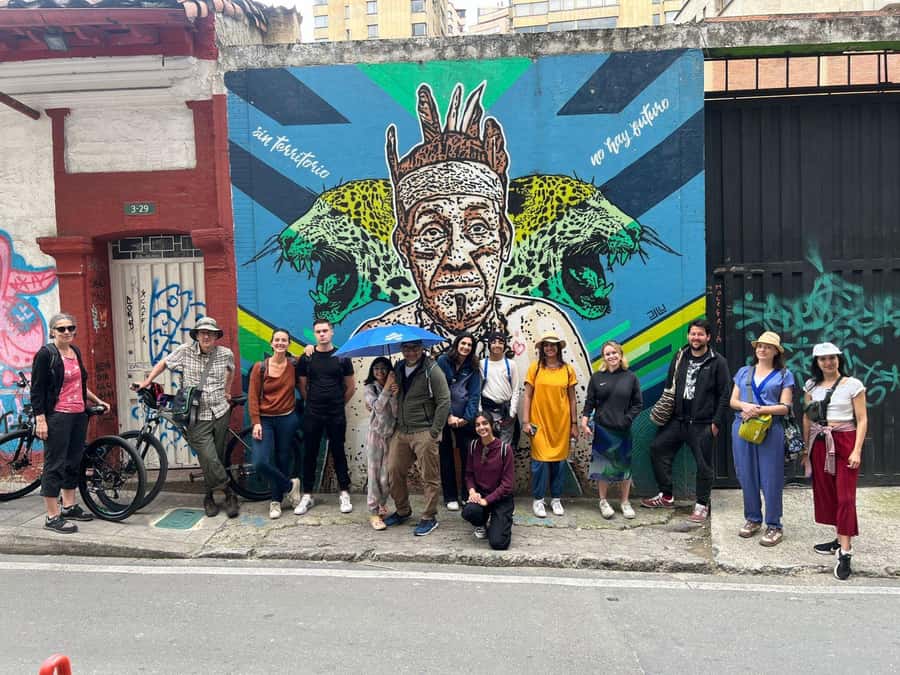
Bring curiosity more than preparation. You do not need to study Bogotá graffiti beforehand, since the guide introduces the movement and explains the basics during the walk.
Ask about the artists as well as the images. The most useful parts of the experience are likely to come from learning who made a work, what issue it addresses, and how it came to occupy that particular wall.
Pay attention to smaller details. A large mural may draw your eye first, but the guide may point to a technique, symbol, signature, or collaboration that changes how you read the whole piece.
If you enjoy the walk, ask about the other services offered by the company. It also lists cycle tours, city tours, urban-art workshops, private and business tours, and design services. Those options are not part of the standard two-hour experience, but they may suit you if you want a longer or more specialized look at Bogotá’s art scene.
Should you book The Original Bogotá Graffiti Tour?
I would book this tour if you want a reasonably priced, two-hour introduction to Bogotá through its walls. The strongest reasons are the clear focus on artists and ideas, the connection to Colombian culture and protest, and the number of guides praised for warmth, patience, and clear teaching.
Book it early in your Bogotá stay if possible. Then you can recognize the city’s graffiti when you explore on your own later. Before paying, confirm the $13 price, the meaning of free graffiti tour, whether your booking is private, and the language of your departure.
Skip it only if you want a fixed route, guaranteed murals, or a tour devoted mainly to taking photographs. For everyone else, this is a smart way to see Bogotá with more context and fewer blank walls.
FAQ
Where does the Bogotá graffiti tour meet?
The stated meeting point is Parque de los Periodistas in Bogotá, at Jiménez Avenue with Carrera 4.
How long does the tour last?
The tour lasts two hours.
What time does the tour run?
The listed daily time windows are 10:00 a.m. to 12:30 p.m. and 2:00 p.m. to 4:30 p.m. Check availability for the exact starting time.
What is the price?
The listed price is $13 per person. The description also uses the term free graffiti tour, so contact the provider to confirm exactly what the price and booking type include.
Is the tour offered in English?
Yes. The activity lists a live English-speaking guide.
Can I request another language?
Spanish, German, and French tours are advertised as available by inquiry. Ask the provider before booking.
Is the tour wheelchair accessible?
Yes, the activity is listed as wheelchair accessible.
Can I cancel for a full refund?
Yes. You can cancel up to 24 hours in advance for a full refund.
Where can I ask questions before booking?
You can contact the provider at [email protected].
Just added around Bogota
- Shared Tour of Colombian Exotic Fruit at Paloquemao Market★ 4.7 · 20 reviews
- Shared Tour to Monserrate Hill and Gold Museum in Bogota★ 4.9 · 8 reviews
- Shared Tour Bogota’s Street Local Food★ 4.5 · 22 reviews
- Shared Tour Colombian Conflict War, Drug Trafficking & Peace★ 4.8 · 46 reviews
- Paragliding Activity with Transfers from Bogota★ 4.9 · 21 reviews
- Monserrate Express tour 3 hrs★ 4.6 · 6 reviews
- Nemocón Salt Mine Tour★ 5.0 · 3 reviews
- La Chorrera and Chiflon Waterfalls Private Hike Tour★ 5.0 · 7 reviews
Bogota Tours, compared.
Private City Tour, Monserrate, Emerald and Botero
Read our review →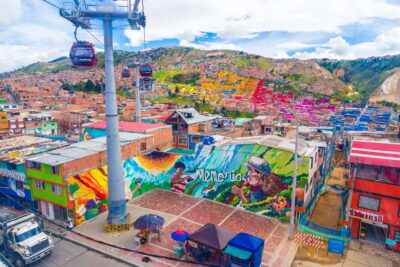
Bogotá´s Barrios: El Paraíso Favela Tour with Cable Car
Read our review →
Bogotá City Tour with Monserrate, Gold and Botero Museums
Read our review →
Zipaquirá Salt Cathedral and Lake Guatavita Day Tour
Read our review →Browse the lists this tour appears in