
Reviewed · BOGOTA TOURS
Breaking Borders: Bogota Gansters Story
Bogotá’s Breaking Borders experience takes you beyond the polished streets of La Candelaria and into Barrio Egipto, where former gang members explain how violence, drugs, and limited opportunity shaped their lives. You walk with people who lived that past, not with a guide repeating a script.
I like the honest personal stories, especially when guides such as Harold, Monkey, Andrea, or Gildardo Arango connect their own lives to the neighborhood’s murals and new football field. I also like that your money supports a local effort to create safer choices for young people. The uphill walk can be demanding, and the subject matter is serious, so this is not a light sightseeing stroll.
Key points to know before you go
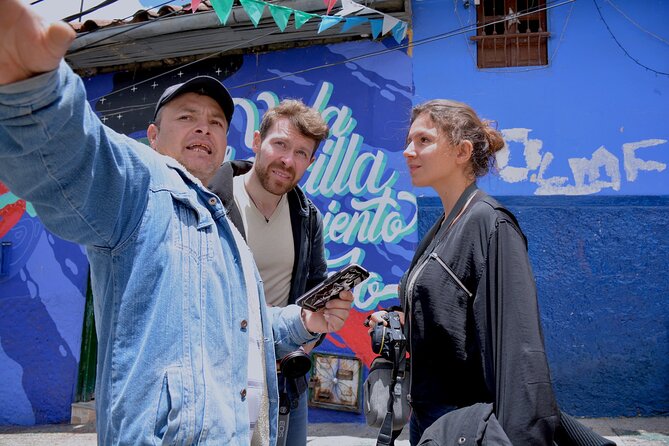
- Former gang members lead part of the visit: You hear first-person accounts of violence, drugs, gang control, and the hard work of changing direction.
- The walk begins at Bogotá’s founding place: Meet at Chorro de Quevedo in La Candelaria before heading toward Iglesia de Egipto.
- Murals explain the neighborhood: Your guide interprets graffiti that records local pain, identity, and hope.
- The football field has a social purpose: It represents new opportunities for children and young people in Egipto.
- The price is $91 per person: That includes the three-hour private experience, bilingual guidance, a snack, and traditional chicha, with hotel transport included only when that option is selected.
- Bring cash and sturdy shoes: Tips and personal purchases are not included, and the climb into Egipto is easier in comfortable footwear.
Why Barrio Egipto changes the usual Bogotá visit
La Candelaria is where many visitors begin exploring Bogotá. Its old streets, museums, churches, and cafés make it an easy first stop. Chorro de Quevedo marks the starting point for this activity, but the purpose here is different. You use the square as a doorway into a neighborhood that is close to the historic center yet rarely included in a standard city walk.
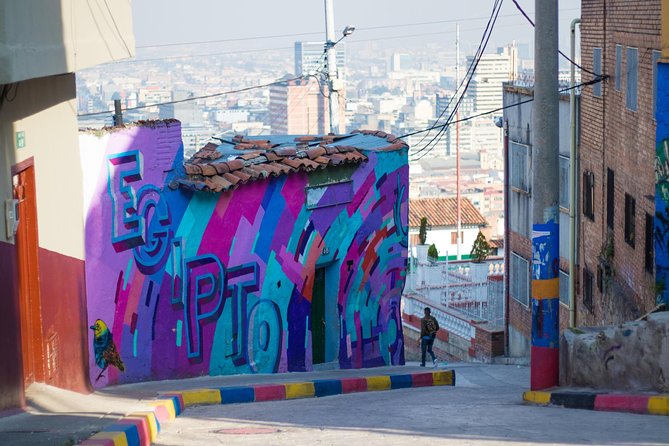
Barrio Egipto sits on the hills above central Bogotá. The route leads away from the square and toward Nuestra Señora de Egipto, the church at the entrance to the neighborhood. This church is also tied to the January 6 festivities, an important local celebration mentioned during the walk.
The change in setting matters. You are not simply looking at old buildings or checking off a viewpoint. You are seeing how a community has tried to reshape its own story. The tour presents Egipto as a place affected by violence and poverty, but not defined forever by them.
That distinction is important. The experience does not pretend that every problem has vanished. Instead, it shows the work still under way, including efforts tied to tourism, youth activities, and employment for people who once had few legal options.
Other Bogota days worth booking alongside this:
- Bogota: Bicycle City Tour
★ 4.9 · 2,156 reviews - Zipaquirá: Salt Cathedral Group Tour with Pickup
★ 4.8 · 1,606 reviews - Bogotá: Guided La Candelaria Walking Tour
★ 4.8 · 1,229 reviews
Starting at Chorro de Quevedo
Your meeting point is Plazoleta Chorro de Quevedo, at Cl. 12b #2-98 in the Antonio Nariño area of Bogotá. The activity ends back at this same meeting point, unless you select the option with private hotel transport.
At the square, the guide introduces the Breaking Borders project and explains how the visit will work. Depending on the departure, your English and Spanish support may come from guides such as Raul or Gigio, while local figures from Egipto share their personal stories.
This opening gives you useful context before the uphill section begins. You learn that the tour is not designed to treat the neighborhood as a spectacle. The goal is to meet people involved in changing its future and to understand the forces that made that change necessary.
Plan your arrival carefully. The published meeting point is specific, and you should be ready to walk from the square. One practical point raised during the experience is that the first climb can feel steep, especially if you arrive by taxi and begin at Chorro de Quevedo. Comfortable clothing and shoes are strongly recommended.
Reading Egipto through its murals
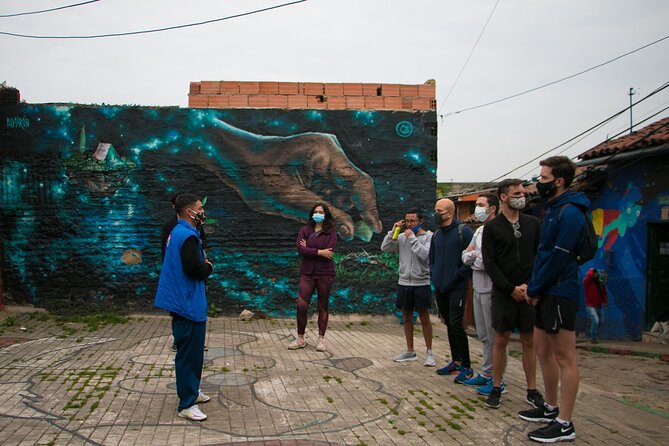
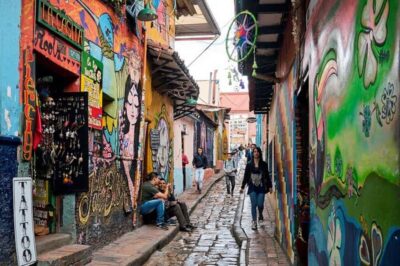
The route toward Iglesia de Egipto is lined with graffiti and murals. These works are more than decoration. Your local guide explains the people, events, and ideas shown in the artwork, giving you a way to read the neighborhood through images.
The first hour is largely about walking and listening. You may see pictures connected to local identity, the effects of violence, and the community’s desire to offer children a different future. The murals help turn broad words such as change and resilience into something you can actually see on the walls around you.
This is one of the strongest parts of the experience because the guide supplies the meaning. On your own, you might notice the colors and scale of the artwork but miss the stories behind it. With someone from the area explaining those stories, the route becomes a lesson in memory and public space.
The walking pace also gives you time to ask questions. Previous guide teams have included Gigio with Harold, Monkey, and other local speakers. Gildardo Arango has also led the visit, blending Bogotá context with the personal accounts of Egipto residents. The exact people on your departure may vary, but the format centers on bilingual guidance and local voices.
Meeting the people behind Breaking Borders
The heart of the visit comes when former gang members speak about their lives. Harold, Monkey, and other local guides have explained how they entered gang life, what they experienced, and why they chose to leave it.
These conversations are direct and personal. You may hear about the effects of drug use, weapons, violence, poor education, and limited work. You also hear about the less dramatic but equally important result of leaving that world behind: greater calm, family time, and the ability to plan for the future.
One particularly striking story described Friday nights once shaped by drinking, drugs, and violence becoming family movie nights for the neighborhood. That detail shows the scale of change in a simple way. Social change is not only a new building or a public announcement. It can also mean what people do together on an ordinary evening.
The guides’ openness can make this an emotional experience. You should listen respectfully and avoid treating personal hardship as entertainment. The best approach is to ask thoughtful questions about change, opportunity, and community life rather than pressing for sensational details about crime.
The format is private, with only your group participating. That can make sensitive conversations feel less rushed and gives you more room to ask questions. It also means the $91 price is not based on joining a large group at a low shared rate. You are paying for a focused, private visit with bilingual support and local participation.
Same city, a completely different kind of day:
- Bogotá: Private City Tour, Monserrate, Emerald and Botero
★ 4.9 · 798 reviews - Bogotá´s Barrios: El Paraíso Favela Tour with Cable Car
★ 4.8 · 731 reviews - Bogota: Guatavita and Salt Cathedral Daily Group Tour
★ 4.7 · 615 reviews - Bogotá City Tour with Monserrate, Gold and Botero Museums
★ 4.9 · 584 reviews
Iglesia de Egipto and the January 6 tradition
Nuestra Señora de Egipto marks the entrance to Barrio Egipto and provides an important landmark during the walk. The guide explains the church’s place in local life, including its connection to celebrations on January 6.
The church is not presented as an isolated monument. It is part of the neighborhood’s social setting, where community events and local identity come together. This helps you see Egipto as a lived-in area with traditions, not merely a former trouble spot being presented to outsiders.
The route around the church can also help you understand the physical setting. The neighborhood climbs the hills above central Bogotá, so you should expect slopes and uneven walking rather than a flat downtown promenade. If you have mobility concerns, the supplied information says most people can participate, but it does not promise a step-free route.
The football field and a new set of choices
The second part of the visit takes you farther into Egipto, including the community football field. Its value is not just recreational. The field represents an investment in young people and a practical way to support healthier use of time and public space.
You learn how the field fits into the wider effort to change the neighborhood’s social fabric. A football area cannot solve poverty or violence by itself, but it can provide a place for children to gather and develop interests outside gang activity.
This part also keeps the experience from focusing only on the past. The former gang members are not introduced merely as people who survived difficult years. They are shown as guides, organizers, and people taking responsibility for what comes next.
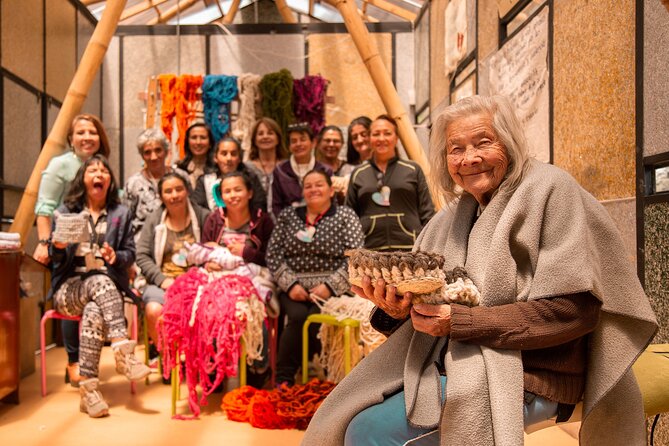
Some local initiatives connected to the visit may also include a weaving workshop. One account described meeting women who sold hand-loomed rugs and receiving the chance to support them directly through a purchase. The supplied schedule does not promise a workshop on every departure, so treat it as a possible addition rather than a guaranteed stop. If it is included, allow time to look properly, since the visit may feel rushed within a three-hour window.
What the $91 price really covers
At $91 per person, this is not the cheapest way to spend three hours in Bogotá. You can walk around La Candelaria independently for little money. The value here comes from access, interpretation, and direct support for a community initiative.
The fee includes a bilingual expert guide in English and Spanish, a personal guide from Egipto, a local snack, and traditional chicha. Private transportation to and from your hotel is included only if you choose the transportation option. Without that option, you meet at Chorro de Quevedo and return there at the end.
The private format improves the value for couples, families, and small groups who want time for questions. A solo booking can cost more in total, as one person found, so check the exact per-person price before paying. The published amount is $91 per person, but the final cost can depend on group size and selected transport.
Bring extra cash. Tips are optional and not included, and you may want to buy a craft or pay for personal drinks. Alcoholic drinks are available for purchase, but alcohol is not included in the tour.
Safety, comfort, and the right attitude
The experience takes you into an area with a difficult past, but the supplied information says the activity is private and that most people can participate. A past participant described feeling safe throughout the visit. That said, you should follow the guide’s directions and remember that this is a working neighborhood, not a staged attraction.
Wear comfortable shoes and clothing. The climb into Egipto is the main physical issue, and the route may feel warm or tiring depending on the weather and your pace. Children can participate, but they must be accompanied by an adult.
Service animals are allowed, and the meeting point is near public transportation. If you select hotel pickup and drop-off, private transport removes some of the planning involved in reaching Chorro de Quevedo. If you do not select it, arrange your own way to the square and leave enough time to find the exact meeting point.
The subject matter calls for courtesy. Ask questions, but let people control how much of their past they wish to share. Buy local goods if you genuinely want them, and tip according to the value you received rather than feeling pressured.
Who will get the most from this experience
I would choose this for you if you want to understand Bogotá through present-day social change rather than only through monuments and museums. It suits visitors who enjoy conversation, local voices, and stories that challenge easy assumptions.
It is also a strong choice for families with older children and teenagers. The football field and youth focus give younger people a clear point of connection, while the personal stories can lead to thoughtful discussion about education, poverty, and choices.
Couples and small groups benefit from the private format. You can ask more questions and set a pace that works for your group. Solo visitors may still find the experience worthwhile, but they should pay close attention to the final price because a private booking can feel expensive for one person.
I would not choose it if you want a relaxed, carefree morning with little walking. The content involves trauma, crime, and social hardship. Some parts may feel emotionally heavy, and the uphill route is not designed for people seeking an effortless city tour.
Timing and cancellation details
The activity lasts about three hours. The first walk from Chorro de Quevedo toward Iglesia de Egipto takes about one hour, followed by roughly two hours in the neighborhood.
It is often booked around 20 days ahead, so reserve early if your Bogotá dates are fixed. Confirmation arrives when you book. You can cancel for a full refund up to 24 hours before the local start time. Changes or cancellations made within 24 hours are not accepted for a refund.
Should you book Breaking Borders?
Book it if you want a serious, personal look at a part of Bogotá you would be unlikely to visit on your own. The combination of mural stories, former gang members, the Egipto church, the football field, and the project’s focus on young people gives the visit a clear purpose.
The strongest reason to go is the people. Guides such as Harold, Monkey, Gigio, Raul, Andrea, and Gildardo Arango have helped make the experience personal, though the exact team can vary. Their stories show both the damage caused by violence and the effort required to change course.
Skip it if you prefer conventional sightseeing, dislike difficult subjects, or are not comfortable walking uphill. For everyone else, the $91 fee can be a worthwhile use of three hours, especially when you value direct local participation over a standard city tour. Bring cash, wear good shoes, arrive ready to listen, and give yourself time to take in what the neighborhood is saying.
FAQ
Where does the Breaking Borders experience start?
It starts at Plazoleta Chorro de Quevedo, Cl. 12b #2-98, Antonio Nariño, Bogotá, Colombia.
Where does the activity end?
The activity ends back at the Chorro de Quevedo meeting point.
How long does the experience last?
It lasts approximately three hours. The first part takes about one hour, and the visit to Egipto takes about two hours.
Is hotel transportation included?
Private transportation to and from your hotel is included when you select the transportation option. The standard meeting point is Chorro de Quevedo.
Who leads the experience?
A bilingual English and Spanish guide leads the activity, along with a personal guide from the Egipto neighborhood. Local guides connected with the experience have included Harold, Monkey, Andrea, Gildardo Arango, Gigio, Raul, and Mr. Pumpkin.
What is included in the price?
The price includes the bilingual expert guide, a local Egipto guide, a local snack, and traditional chicha. Private hotel transportation is included only with the transportation option.
Should I bring cash?
Yes. Cash is recommended for personal expenses, optional tips, alcoholic drinks, and possible purchases such as local crafts.
Can children join the activity?
Yes. Children can participate, but they must be accompanied by an adult.
Just added around Bogota
- Bogotá: Graffiti Tour el mejor recorrido de arte urbano★ 4.7 · 41 reviews
- Shared Tour of Colombian Exotic Fruit at Paloquemao Market★ 4.7 · 20 reviews
- Shared Tour to Monserrate Hill and Gold Museum in Bogota★ 4.9 · 8 reviews
- Shared Tour Bogota’s Street Local Food★ 4.5 · 22 reviews
- Shared Tour Colombian Conflict War, Drug Trafficking & Peace★ 4.8 · 46 reviews
- Paragliding Activity with Transfers from Bogota★ 4.9 · 21 reviews
- Monserrate Express tour 3 hrs★ 4.6 · 6 reviews
- Nemocón Salt Mine Tour★ 5.0 · 3 reviews
Bogota Tours, compared.
Private City Tour, Monserrate, Emerald and Botero
Read our review →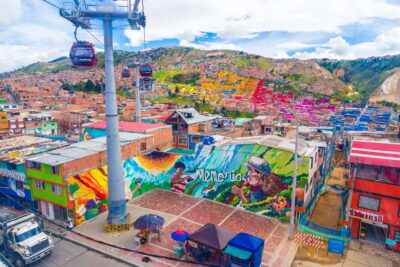
Bogotá´s Barrios: El Paraíso Favela Tour with Cable Car
Read our review →
Bogotá City Tour with Monserrate, Gold and Botero Museums
Read our review →
Zipaquirá Salt Cathedral and Lake Guatavita Day Tour
Read our review →Browse the lists this tour appears in