
Reviewed · COLOMBIAN COFFEE FARM TOURS
Medellín Coffee Farm Tour with Trolley and Cable Car Ride
Medellín’s most unusual coffee outing takes you not to the countryside, but into Barrio La Sierra, a hillside community within the city. You ride the electric tram and cable car, walk through Comuna 8, meet a local family, pick coffee berries, and follow the crop from plant to cup.
I like the genuine community setting and the hands-on work in the coffee field. I also like that guides such as Arturo, Melissa, Carolina, Valentina, and David bring the neighborhood story into the visit, not just a list of coffee facts. The main drawback is the uphill walking, steps, and uneven ground. This is not a good choice if you have limited mobility.
Key points at a glance
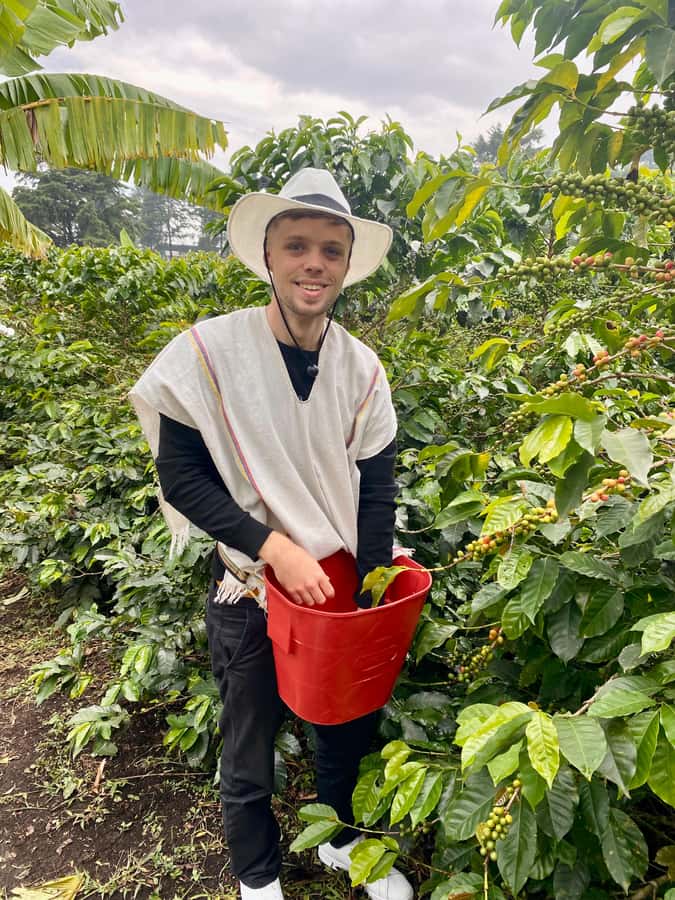
- Coffee picking in the city: Harvest coffee berries by hand at a family-run farm inside Medellín.
- A useful mix of transport and walking: The electric tram and cable car provide city views before the uphill community walk.
- Comuna 8 takes center stage: Learn how Barrio La Sierra changed and how local families are building new opportunities.
- A full seed-to-cup lesson: See the stages of growing, cleaning, fermenting, drying, roasting, grinding, and brewing.
- Small-group feel: The experience is often personal, with guides translating and answering questions as you go.
- Prepare for hills: Wear closed shoes, expect steps, and bring insect repellent if you plan to spend time in shorts.
From San Antonio to the hills of Comuna 8
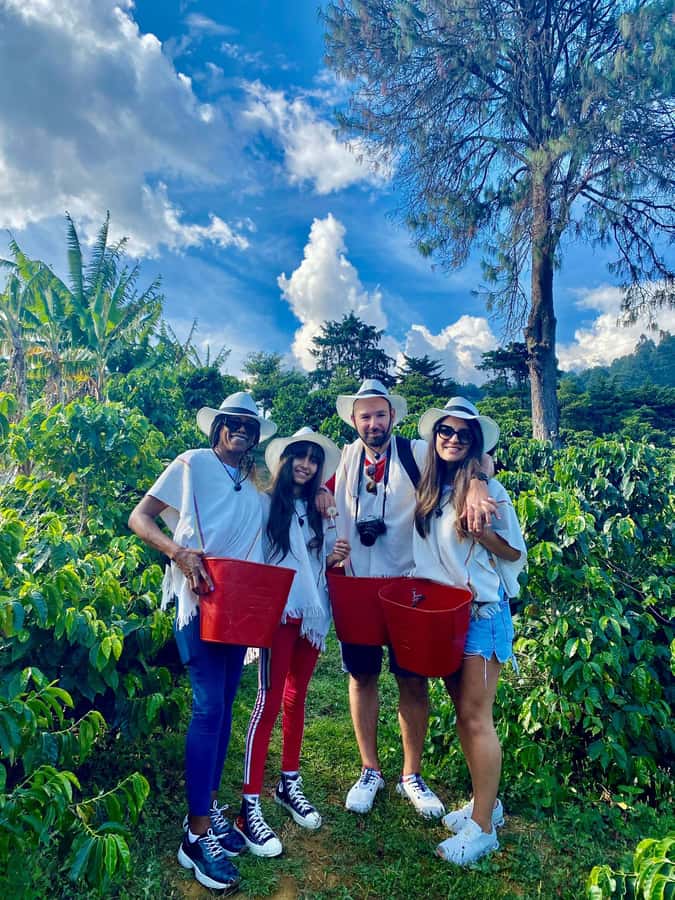
The meeting point is in front of the main entrance to the San Antonio Tranvía station, at street level beneath the San Antonio metro station. Look for the sign for San Antonio Tranvía station rather than waiting inside the metro complex.
From there, the tour begins with Medellín’s electric tram. The ride takes about 30 minutes and gives you a practical introduction to the city’s public transport system. This is not simply a transfer to the farm. The tram helps you move from central Medellín toward the eastern hills in the same way local residents do.
You then board the cable car for about 12 minutes. As the cabins climb, you get broad views across Medellín and a clear sense of how the city rises up the valley walls. The ride also explains why this experience feels different from a standard coffee excursion. You are not leaving the city for a distant plantation. The coffee farm is part of an urban community that many people would otherwise never visit.
The cable car is one of the strongest parts of the outing for anyone interested in Medellín’s transport and city planning. It gives you a high view over neighborhoods and hillsides, while the later walk puts you at street level among homes, paths, and local businesses.
More Colombian Coffee Farm Tours in Medellin
- Medellin: Coffee Tour with Transport, Snacks and Tastings
★ 4.7 · 1,357 reviews - Medellin: Coffee Tour and Wellness Spa
★ 4.8 · 209 reviews - Medellin: Coffee Tour with Hotel Transfers and Meals
★ 4.9 · 186 reviews
Walking through Barrio La Sierra
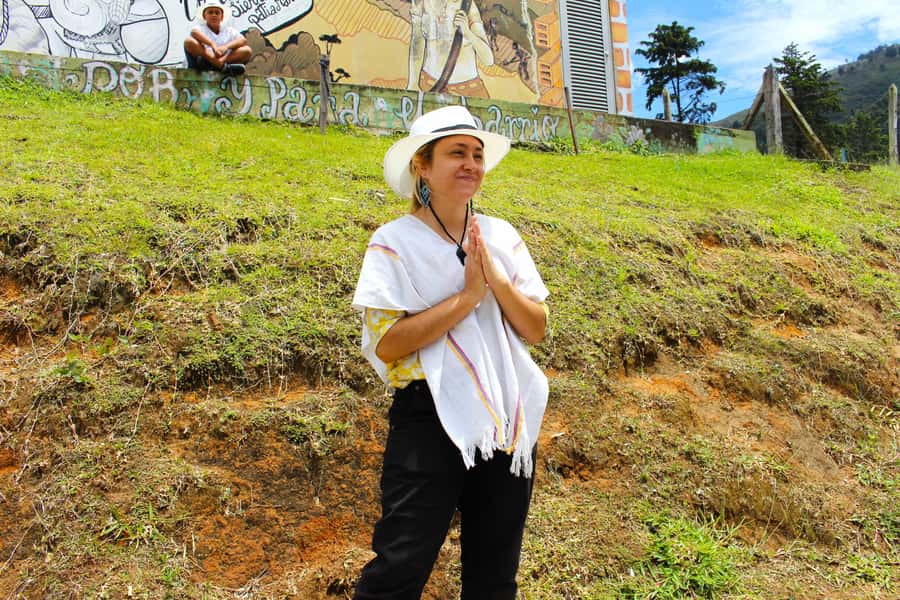
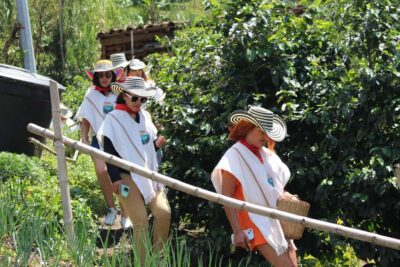
Once you reach the community, your guide leads you on foot through Barrio La Sierra. The tour focuses on the transformation of Comuna 8, an area that has faced years of hardship but is now home to local projects, family businesses, and new efforts to create opportunity.
Your guide helps connect the streets around you with the wider story of Medellín. Arturo is praised for his strong understanding of the city and his ties to the local community. Melissa, Carolina, Valentina, David, Christian, Emily, Camilo, Felipe, and other guides have led this experience in English or Spanish, with several guides also translating conversations at the farm.
That translation matters. You are not just listening to a rehearsed presentation in English. You can hear from the farming family and then ask your guide to explain the details clearly. This makes the visit more personal and helps you understand both the coffee work and the family’s role in the neighborhood.
The walk includes hills and steps. One account describes roughly 500 stairs, so treat that figure as a useful warning even though the exact route may vary. You should be comfortable walking uphill for much of the visit. Even some older visitors completed the route, but the activity is officially unsuitable for people with mobility impairments.
Casa Finca de La Sierra and the family farm
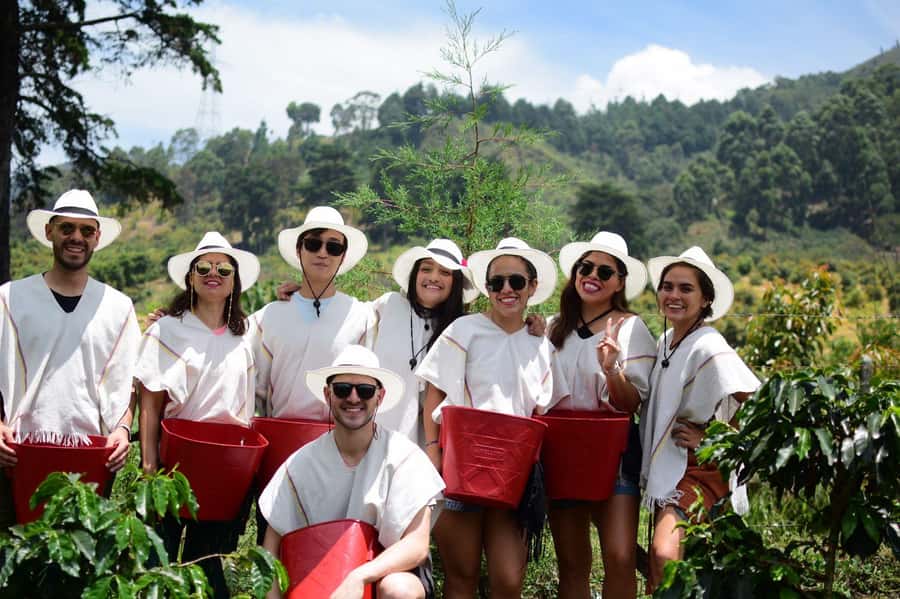
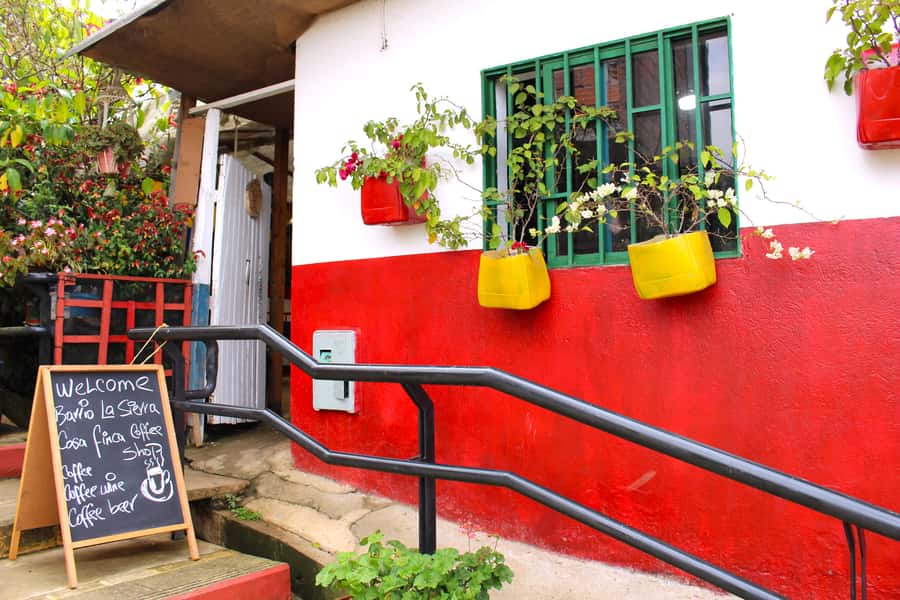
The farm visit centers on Casa Finca de La Sierra, which includes a small museum and a working coffee operation. The family welcomes you into the process and explains how coffee is grown, gathered, prepared, and served.
This is a modest, local experience rather than a polished plantation attraction. That is part of its value. You see coffee production in a place where farming, family life, and neighborhood development exist side by side.
The visit also carries a social purpose. The farm involves local families and young people who are learning about the work. Some accounts describe children helping with the activity and learning English and other skills. Your payment supports a local family and a community project, though you should still judge the tour on its content rather than assuming every part of the social program will be visible on every departure.
Picking coffee berries by hand
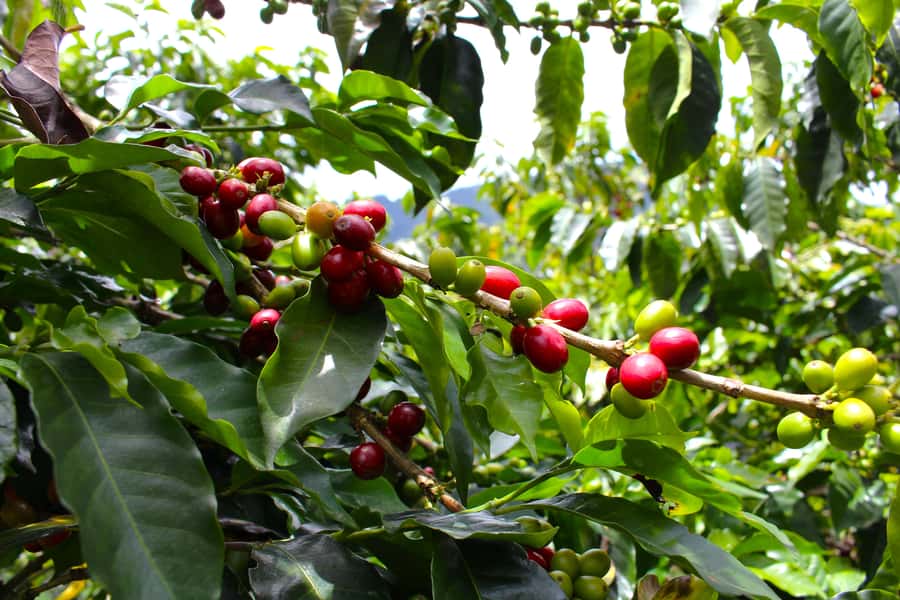
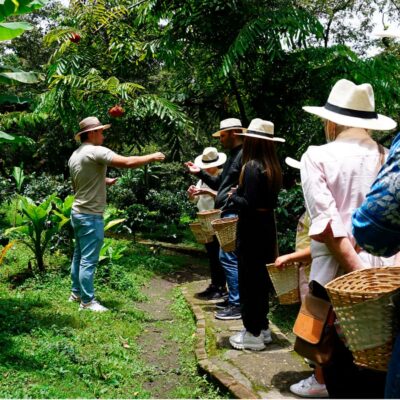
The most memorable activity is the harvest. You walk into the coffee field and pick the ripe berries yourself. This is a simple task, but it changes the way you think about your morning cup.
You quickly see that coffee is not produced by one dramatic step. It begins with careful picking, often berry by berry. The tour lets you handle that first stage before the family explains what happens next.
The hands-on work is also a good reason to choose this experience over a tasting-only visit. You are not standing at a counter while someone else does everything. You take part, ask questions, and then follow the crop through its later stages.
Wear closed shoes. The field and hillside paths may be uneven, and you will be walking outdoors. If you wear shorts, insect repellent is a sensible precaution. Bring water and a small snack as well, since one account specifically notes that there is no food available for purchase along the way.
Same city, a completely different kind of day:
- Medellin: Comuna 13 Graffiti Tour, Cable Car & Street Food
★ 4.8 · 9,046 reviews - Medellín: The Real Pablo Escobar Tour
★ 4.8 · 3,205 reviews - Medellín: Comuna 13 True Story and Street Food Tour
★ 4.9 · 1,779 reviews - Medellín: Comuna 13 District Tour with Cable Car Ride
★ 4.8 · 1,467 reviews
Following coffee from berry to cup
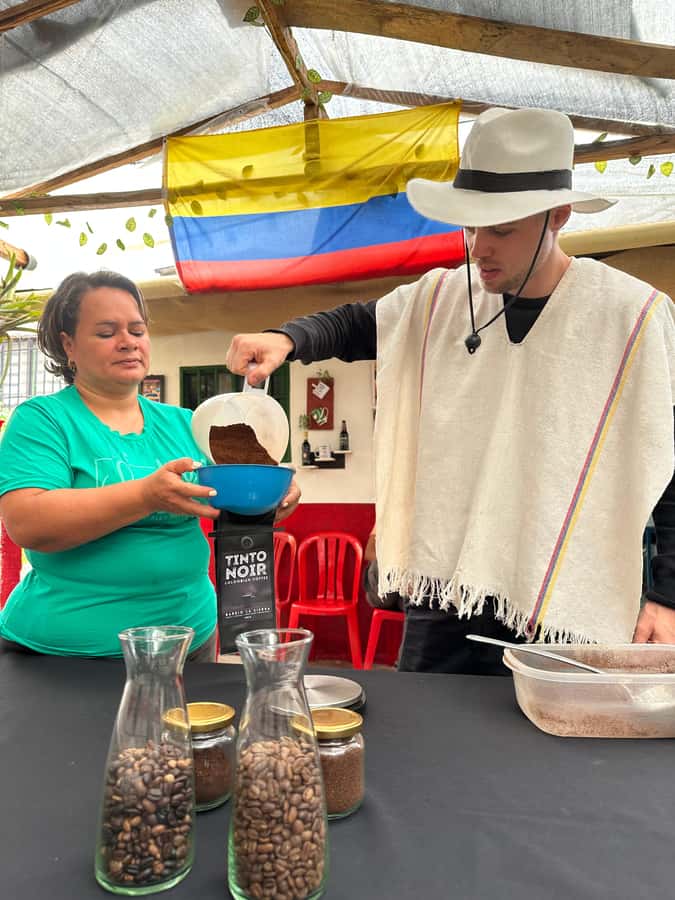
After picking, the family explains the coffee process step by step. The exact order and length of each demonstration can depend on the day, but the experience covers the main stages from harvested fruit to brewed drink.
You can expect to learn about:
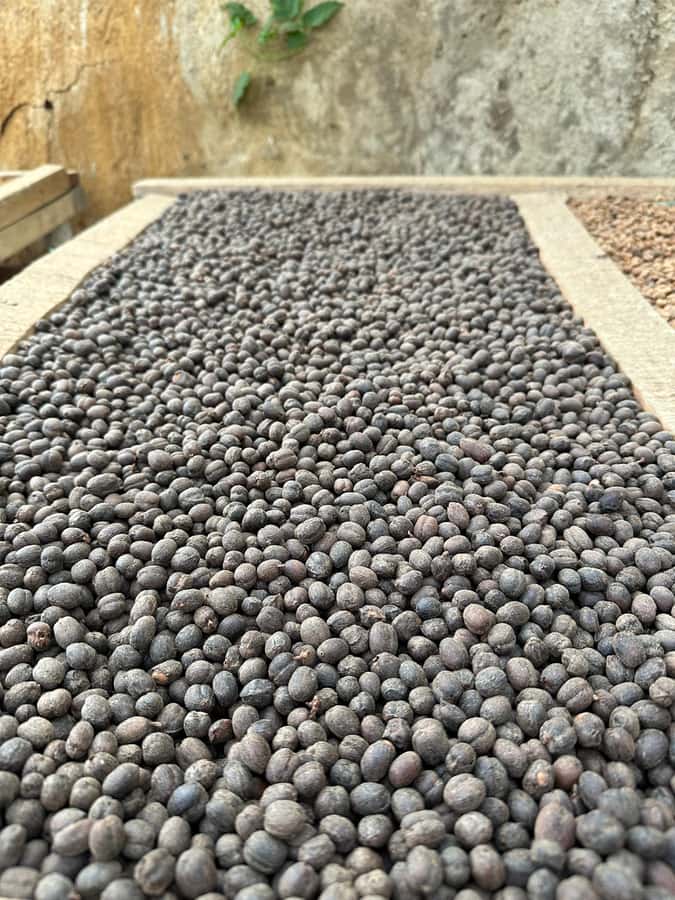
- Cleaning the harvested coffee
- Fermenting and drying the beans
- Roasting the coffee
- Grinding the roasted beans
- Brewing and tasting the final drink
- Packaging the finished coffee
The tour’s strength is the connection between these stages. You see how much manual work sits behind a single cup, and why the character of coffee depends on more than the final brewing method.
The coffee tasting comes after the practical lesson. You drink locally grown coffee, and the farm may also serve a pastry or local snack. The coffee is a major highlight, even for people who are not serious coffee drinkers. If you want to take some home, coffee bags are not included in the $56 price, but some visitors were able to buy coffee at the farm.
One limitation is that the tasting is not described as a formal comparison of several coffees. If you are looking for a detailed lesson in roast levels, origins, or side-by-side brewing, this may feel basic. If you want to understand the work behind a local cup and drink good coffee in the place where it is produced, it fits well.
What the $56 price delivers
At $56 per person, this is more expensive than taking public transport to a café or booking a short coffee tasting. The price makes more sense when you count the full package: the tram and cable car rides, a guide, the neighborhood walk, the farm visit, the museum, the harvest, the coffee lesson, and the tasting.
You are also paying for access to a working family operation in a community setting. That is different from visiting a large commercial attraction with a standard display. The small-group format, when available, allows more time for questions and makes translation easier.
The tour lasts 270 minutes, or about four and a half hours. That is a substantial half-day activity. I consider it good value if you want transport, city views, local history, and coffee production in one outing. It is less compelling if you only want to sample Colombian coffee or see a large rural plantation.
There is no pressure to buy extra products reported in the experience details, although coffee bags are an optional purchase if available. The main value is the time spent with the family and in the community, not shopping.
The return to San Antonio
After the farm visit and final coffee tasting, you return to the San Antonio metro and Tranvía area. The return journey completes the same tram and cable car connection that brought you into Comuna 8.
The transport adds structure to the day. You begin and end at an easy-to-identify central point, rather than having to arrange a separate taxi from a hillside neighborhood. Check the exact departure time when booking, since the activity lasts several hours and availability changes by date.
The meeting instructions are important. Go to the street-level entrance of the San Antonio Tranvía station, underneath the San Antonio metro station. Your guide will be holding a sign for the station. You must provide your full name and passport number when booking, but do not bring your passport on the tour.
Guides and language support
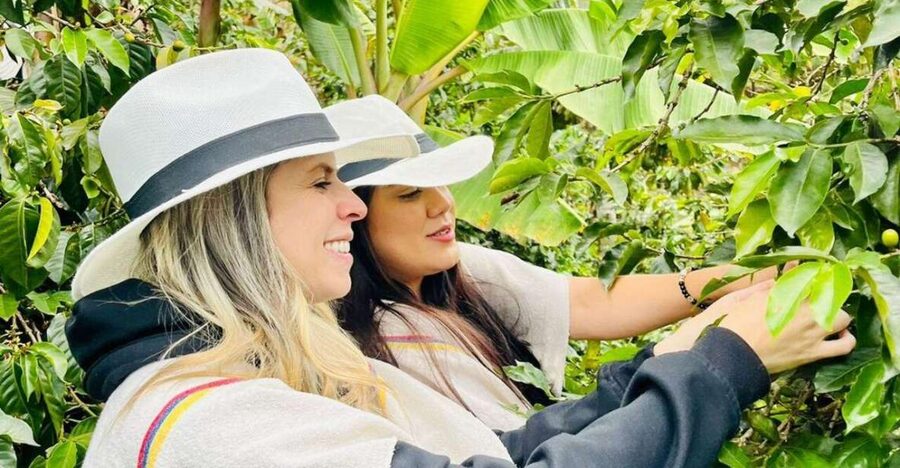
The experience runs in English and Spanish. Guide quality matters here because the tour involves conversations with the farming family as well as explanations about Comuna 8.
Several guides have been singled out for being warm, clear, and patient. Melissa is especially strong at translating between English and Spanish and explaining how coffee production connects with the area. Arturo brings local cultural knowledge and a personal connection to Medellín. Carolina and Valentina are praised for combining friendly conversation with clear explanations, while David and Christian have helped visitors understand both the neighborhood and the coffee process.
Your guide may shape the day more than any single stop. Ask questions as you walk, especially about the community and the family farm. The tour is at its best when it becomes a conversation rather than a one-way lecture.
Who should book this experience
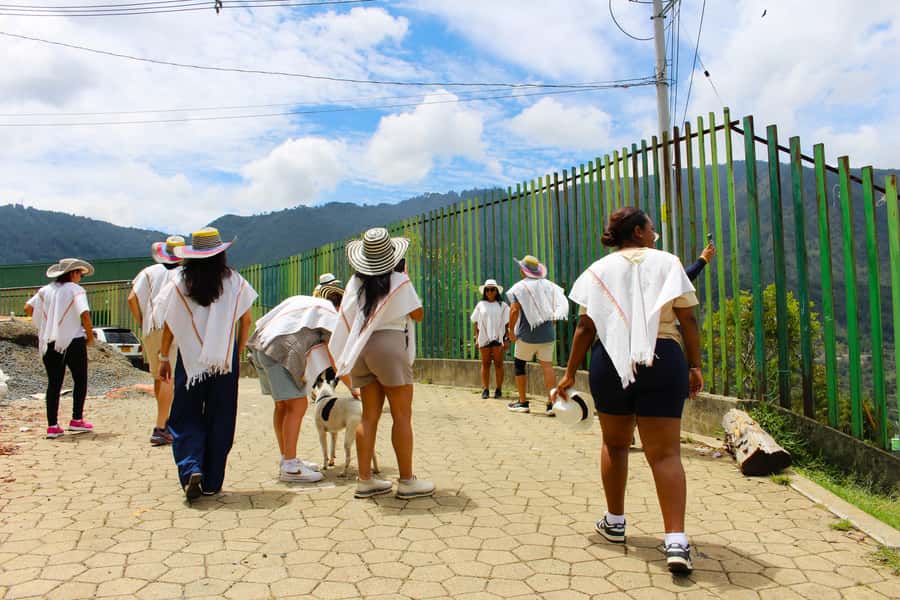
I would choose this tour if you want to see a side of Medellín beyond central attractions and polished café districts. It suits you if you care about local families, enjoy public transport, like city views, and want an active coffee lesson.
It also works well for people who are not devoted coffee drinkers. The neighborhood story, farm visit, and cable car ride give the outing value beyond the beverage.
You should think twice if you dislike hills, stairs, uneven paths, or warm outdoor walking. The activity is not suitable for people with mobility impairments, and there is no food available for purchase during the route. Eat beforehand, carry water, and wear practical shoes.
The tour is also a better fit for curious visitors than for those seeking a luxury farm visit. Facilities and presentation may feel simple because this is a community-based family setting. In return, you get a more direct look at how coffee is grown and how a local project operates.
Practical details before you go
The booking allows free cancellation up to 24 hours before the activity for a full refund. You can also reserve now and pay later, which is useful if your Medellín schedule is still changing.
Bring:
- Closed walking shoes
- Water
- Insect repellent, especially with shorts
- A small snack, since food is not available for purchase
- A light rain layer if the forecast looks unsettled
Do not bring your passport, even though your full name and passport number are required in advance. The tour includes the cable car and the walking visit, but coffee bags are not part of the price.
Should you book the La Sierra coffee tour?
Book it if you want a hands-on coffee experience tied to Medellín’s people and neighborhoods, not just a plantation tour. The combination of tram, cable car, hillside walking, coffee picking, family hospitality, and a full seed-to-cup lesson gives you a rare view of the city.
Skip it if you need a flat route, a full meal, or a formal multi-coffee tasting. For most active visitors who can handle the hills, the $56 price buys a thoughtful half-day with real local contact and plenty to see and taste.
FAQ
Where does the tour meet?
Meet in front of the main entrance to the San Antonio Tranvía station, at street level underneath the San Antonio metro station. Look for the sign for San Antonio Tranvía station.
How long does the experience last?
The tour lasts 270 minutes, or about four and a half hours.
How much does the tour cost?
The listed price is $56 per person.
Is transportation included?
The electric tram and cable car portions are included in the tour. The experience begins and ends at the San Antonio station area.
What languages are available?
The tour is offered in English and Spanish.
Do I need to bring my passport?
No. You must provide your full name and passport number, but you should not bring your passport on the tour.
Will I pick coffee berries myself?
Yes. The visit includes harvesting coffee berries at the farm.
What coffee-making stages will I learn about?
The experience covers the process from seed to cup, including cleaning, fermenting, drying, roasting, grinding, and brewing.
Is food included?
The tour includes local snacks or a pastry as part of the farm visit, but food is not available for purchase along the route. Bring a small snack if you may need more food.
Is the tour suitable for people with mobility impairments?
No. The activity is not suitable for people with mobility impairments because it includes uphill walking, steps, and uneven paths.
More Farms in Medellin
- Medellin: Guatape, El Peñol Coffee Farm Private Tour & Fruit
★ 5.0 · 49 reviews - Medellin: Coffee Farm and Barista Workshop Experience
★ 4.4 · 9 reviews - From Medellin: Guatapé & Peñol Rock with Boat & farm animals
★ 4.7 · 6 reviews - Medellin: Coffee Farm Tour & Spa with Overnight Glamping
★ 4.5 · 3 reviews
More Coffee Experiences in Medellin
- Medellin: Horseback Riding Coffee Farm Tour with Coffee Spa
★ 4.8 · 151 reviews - Coffee & Chocolate Private Tour in Medellin: Genuine Experience
★ 5.0 · 100 reviews - Coffee Tour with arrival on horseback and sugar cane processing
★ 5.0 · 90 reviews - Medellin: Coffee Tour, Horseback Arrival, and Sugar Cane
★ 4.7 · 82 reviews
Just added around Medellin
- Comuna 13 Neighborhood & Street Art Private Tour★ 4.7 · 12 reviews
- From Medellín: El Retiro Private Tour with Food Tastings★ 4.4 · 8 reviews
- Medellin: Private 3-Hour Pablo Escobar Tour★ 4.8 · 37 reviews
- Medellín: Private Pablo Escobar and City Tour★ 4.6 · 24 reviews
- Private Tour Comuna 13 with Cable Car★ 5.0 · 4 reviews
- Private Pablo Escobar Tour – Dark days and the new Medellin★ 4.9 · 6 reviews
- City Tour of Downtown Medellin Private or Shared★ 4.9 · 8 reviews
- Luxury boat ride – Guatapé★ 4.2 · 6 reviews
Colombian Coffee Farm Tours, compared.
Coffee Tour with Transport, Snacks and Tastings
Read our review →
Horseback Riding Coffee Farm Tour with Coffee Spa
Read our review →

Browse the lists this tour appears in