
Reviewed · COLOMBIAN COFFEE FARM TOURS
Cartagena: History, Culture & Coffee Experience
Cartagena’s best introduction may be its three-part view of the city: military power at San Felipe Castle, church influence at La Popa Convent, and daily life in the old center and Getsemaní. You move from pirate defenses to colonial plazas, then finish with Colombian coffee and street art.
I like the private format, which lets you ask questions and pause for photos. I also like that the tour adds the human side of Cartagena, including the history of enslaved Africans at Plaza de la Aduana and the work of San Pedro Claver. The main drawback is practical: the vehicle is available for only three hours, and the tour ends on foot in the Historic Center, with no ride back to your hotel.
Key points at a glance
- San Felipe Castle gives you tunnels, watchpoints, and a clear look at Cartagena’s defenses.
- La Popa Convent sits at the city’s highest point, with wide views of Cartagena, the bay, and the Caribbean Sea.
- The private format makes this easier to tailor for questions, photographs, and a slower pace.
- The Historic Center goes beyond pretty buildings, with stops tied to colonial trade, slavery, faith, and human rights.
- A Colombian coffee tasting adds flavor and context to the sightseeing.
- The tour ends in Getsemaní, where murals, music, animals, and local street life replace formal colonial architecture.
A four-hour introduction to Cartagena
This half-day tour works because it gives you several different Cartagenas in one sitting. You see the city as a fortified Spanish port, a Catholic colonial capital, a modern Caribbean city, and a neighborhood shaped by local art and everyday life.
The route is guided in English or Spanish and uses a private group format. That matters here. Cartagena’s streets and landmarks carry plenty of detail, and a private guide gives you room to ask why a building matters instead of simply moving from one photo stop to the next.
The tour costs $152 per person. That is not a budget sightseeing ride, but the price includes a private bilingual guide, entry tickets to San Felipe Castle and La Popa Convent, hotel pickup in eligible areas, and a small Colombian coffee tasting. For one or two people, the private arrangement may feel costly. For a small group that wants direct attention and a set route, it offers more value.
The experience lasts four hours, so expect a brisk visit rather than a full study of Cartagena. You will cover a lot of ground, but the schedule does not leave unlimited time at each stop.
More Colombian Coffee Farm Tours in Cartagena:
- Cartagena: Colombian Specialty Coffee Tasting
★ 4.4 · 130 reviews - Cartagena Highlights: San Felipe, Popa & Coffee Experience
★ 4.5 · 39 reviews - Cartagena: Coffee Tasting
★ 4.5 · 5 reviews
San Felipe Castle: Cartagena’s stone shield
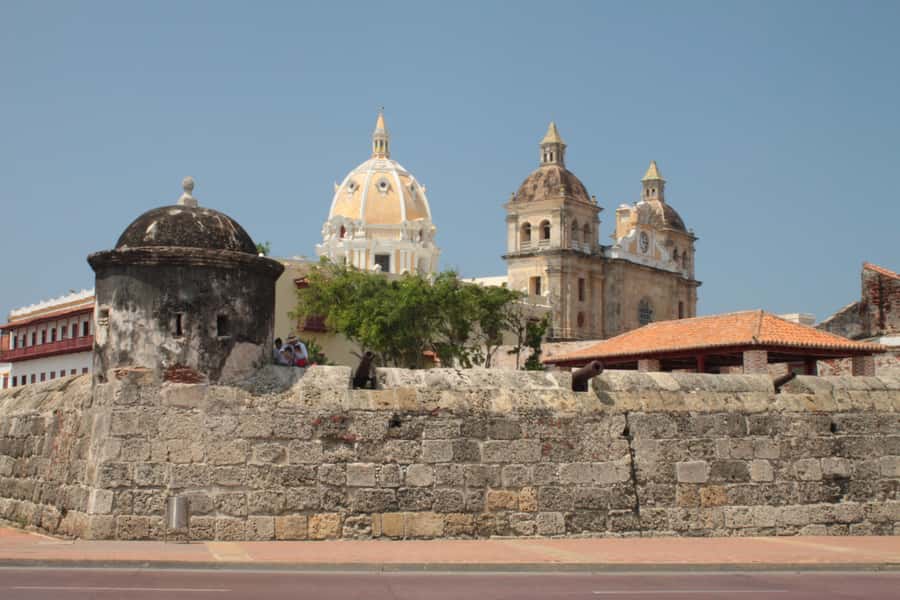
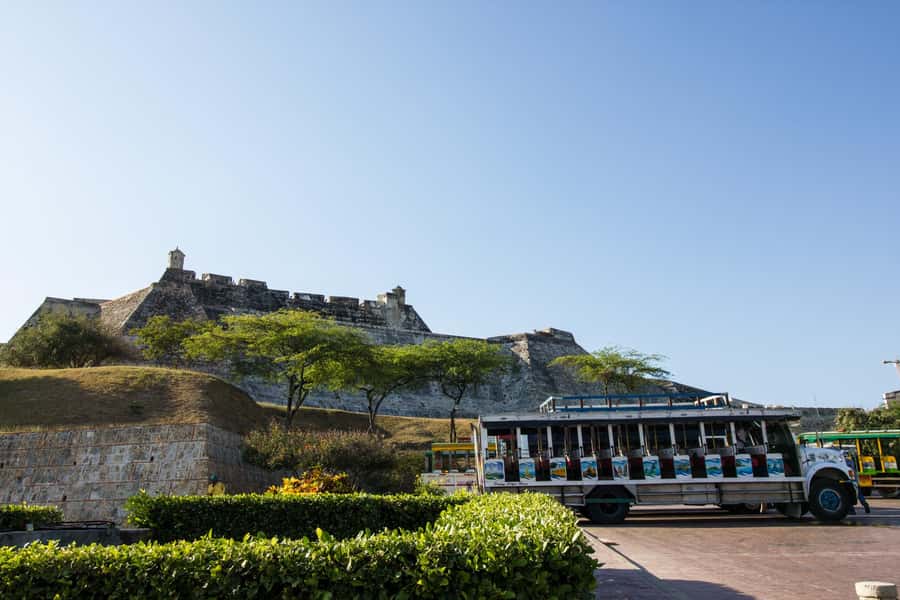
San Felipe Castle is the tour’s strongest opening stop. The fortress was built by the Spanish to protect Cartagena from pirate attacks, and its scale helps explain why this port mattered so much.
You can explore underground tunnels and strategic watchpoints while your guide explains how the fort was designed for defense. The tunnels are not just a quick photo opportunity. They show how soldiers could move through the structure and protect different parts of the fortress without exposing themselves in the open.
The watchpoints also give the visit a practical focus. Instead of seeing only thick walls, you can think about what the defenders needed to see, guard, and control. The setting connects the fortress to Cartagena’s position beside the bay and the Caribbean Sea.
Bring comfortable shoes. The castle visit involves walking, and the stone fortification can feel exposed to the sun. A hat, sunscreen, and water will make this part easier.
The time available at the castle is tied to the vehicle schedule. Transportation is provided for the first three hours of the experience while visiting San Felipe and La Popa, so do not expect to linger indefinitely. If fortress architecture is your main interest, tell your guide early that you want time for the tunnels and watchpoints.
La Popa Convent and the city from above
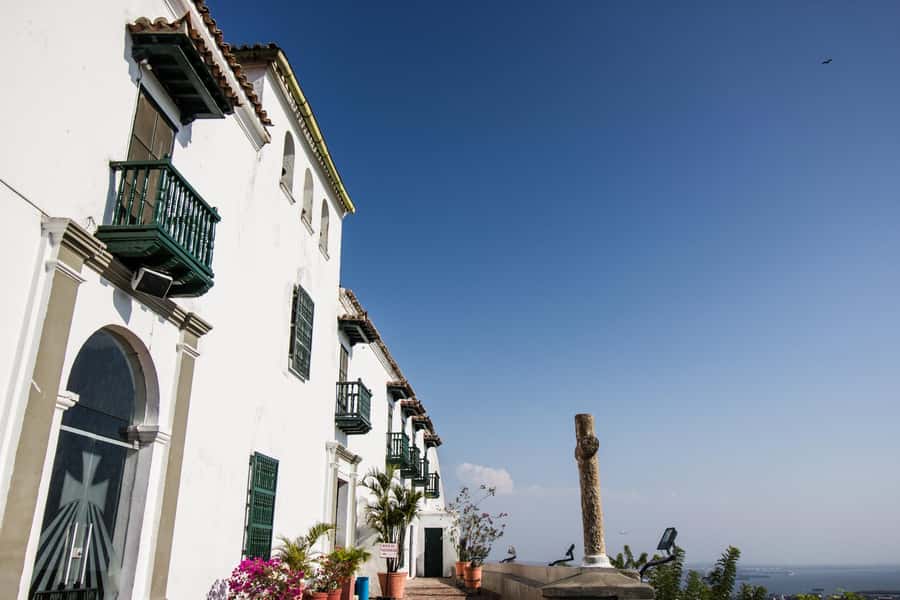
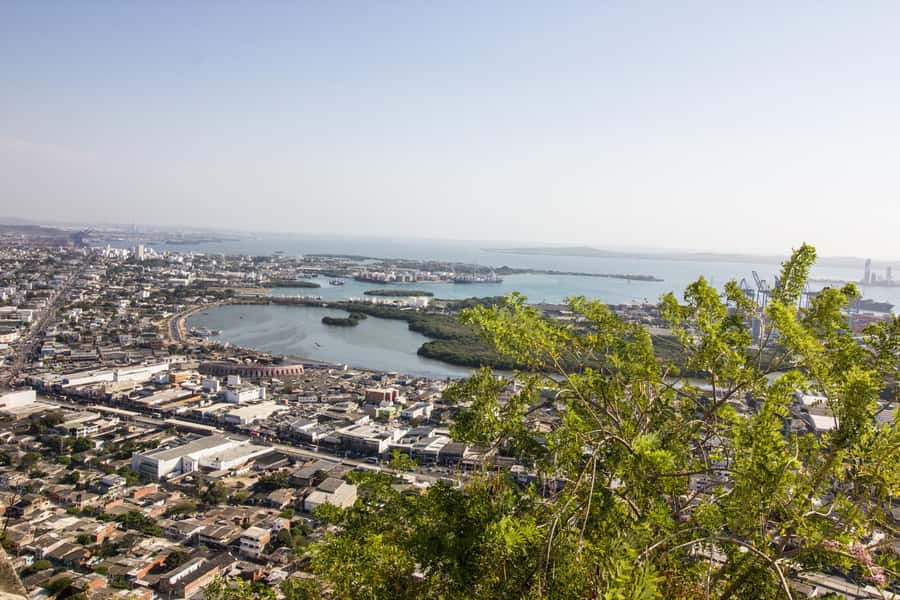
From San Felipe, the experience continues to La Popa Convent, a 17th-century monastery on Cartagena’s highest point. The attraction here is the view: the city, bay, and Caribbean Sea spread out below the convent.
This stop changes the way you read Cartagena. At street level, the old center can feel like a maze of plazas, churches, balconies, and narrow lanes. From La Popa, the city becomes easier to understand as a port, a fortified settlement, and a modern urban area gathered around the water.
The convent also adds a religious layer to the tour. Cartagena’s colonial story was shaped not only by military buildings and trade but also by churches and monasteries. Your guide can connect the convent to that larger setting.
The view is the reason to bring a camera, but it is also the reason to bring water and sun protection. The tour notes recommend comfortable clothing, walking shoes, and a hat. Those are useful suggestions for both La Popa and the rest of the route.
The drive to this hilltop stop is included during the vehicle portion of the tour. After the fortress and convent, the vehicle service ends, and the rest of the route continues on foot in the Historic Center.
Plaza de la Aduana and the difficult side of colonial Cartagena
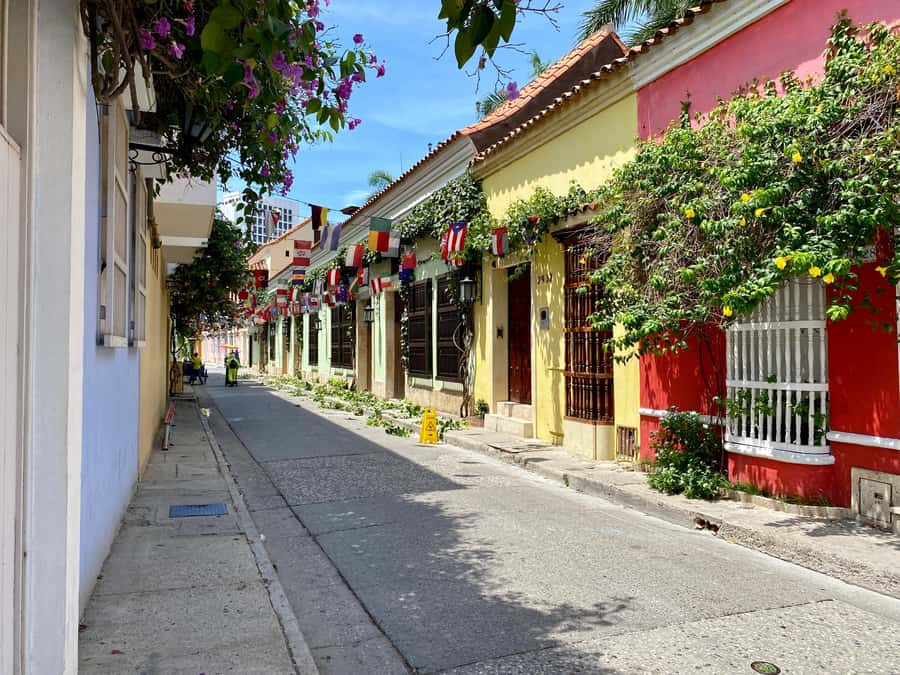
The walking section begins at Plaza de la Aduana, once the main trading hub for enslaved Africans during the colonial period. This is an important part of the experience because it keeps Cartagena’s beauty from becoming the whole story.
The plaza is surrounded by historic buildings, but its past is not simply decorative. Your guide helps place the architecture within the systems of trade, forced labor, and colonial power that shaped the city. I value this kind of context because it makes the old center more than a collection of colorful facades.
Expect the guide to point out details that are easy to miss when walking alone. The stated aim is to uncover the stories behind historic buildings, so the value depends heavily on the guide’s explanations and your questions.
The tour has received a five-star rating across five verified bookings, with especially warm attention given to the guides’ patience, friendliness, and ability to explain local history. Carlos was praised for arriving on time, speaking fluent English, answering many questions, and allowing extra pauses for photographs. Oralis Barrios was also singled out for creating a memorable personal tour.
Those details matter if your group includes someone who needs a slower pace. One person specifically noted that Carlos was patient with a traveler who had a knee problem. That does not turn the tour into a medical-access service, but it suggests you should mention mobility concerns when arranging the pickup and starting time.
A few more Cartagena trips to weigh up
- Cartagena Coffee Masterclass: Artisanal Roasting and Brewing
★ 5.0 · 3 reviews - Medellin: Coffee Tour with Transport, Snacks and Tastings
★ 4.7 · 1,357 reviews - Medellín Coffee Farm Tour with Trolley and Cable Car Ride
★ 4.9 · 277 reviews - Coffee Tour at the Finca del Café
★ 5.0 · 213 reviews
Passing through the Clock Tower
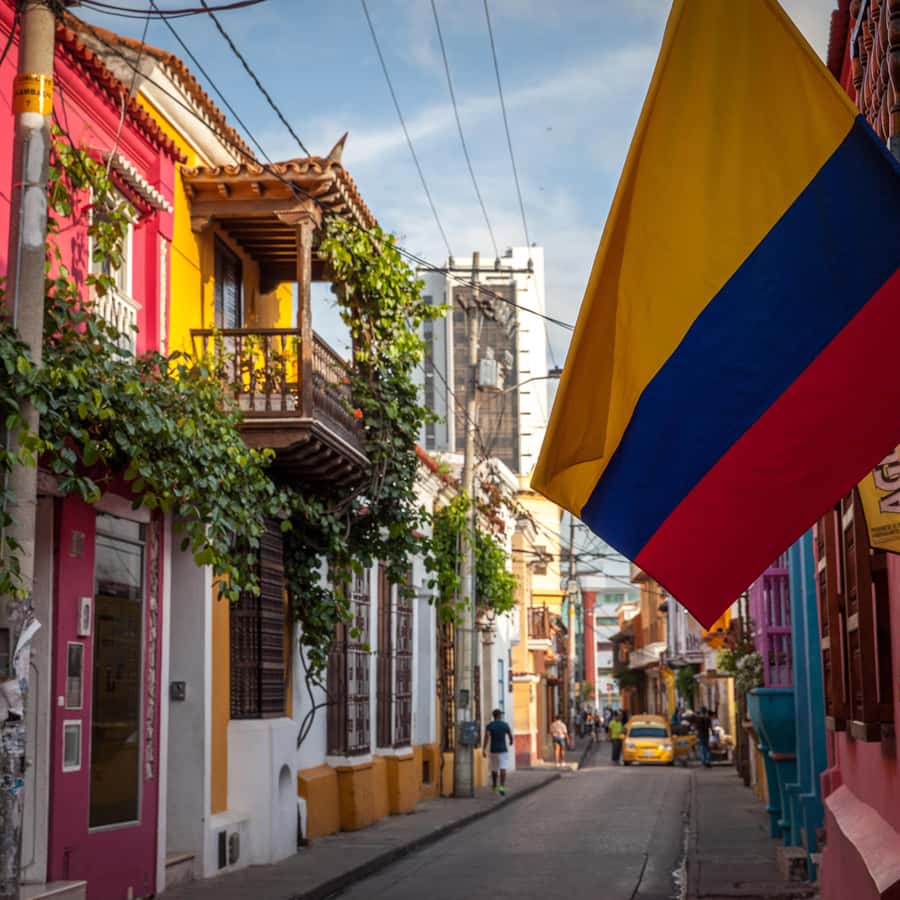
The Clock Tower is Cartagena’s emblematic entrance and a natural link between the old city and its streets. Passing through it gives you a sense of crossing into the Historic Center, where the formal defenses give way to plazas, churches, shops, and colonial buildings.
This is a short part of the route, but it helps with orientation. The tower is not presented as an isolated monument. It functions as a gateway, and your guide can connect it to the city’s historic center and the walking route ahead.
You should be ready for a public urban setting rather than a quiet museum visit. The city center includes active streets and open plazas, so keep your group together and stay aware of the guide’s directions.
San Pedro Claver Church and Plaza de Bolívar
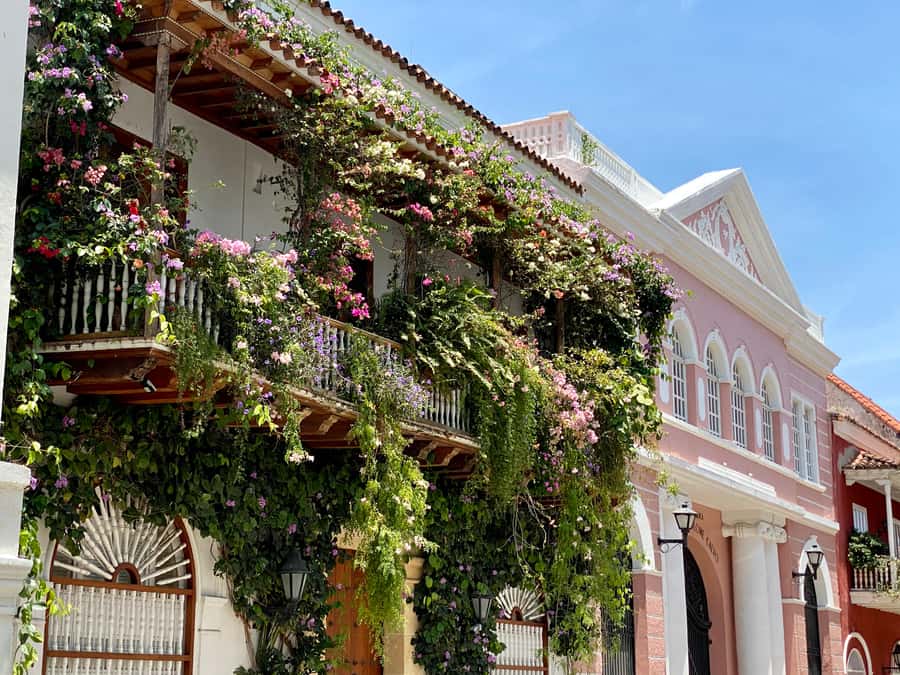
San Pedro Claver Church adds another layer to the tour’s discussion of faith and human rights. The church is dedicated to San Pedro Claver, known here as the patron saint of human rights.
That dedication gives the stop moral weight. After hearing about the slave trade at Plaza de la Aduana, you encounter a site connected with a figure remembered for defending enslaved people. The sequence encourages you to consider how religion, colonial power, and resistance to cruelty overlap in Cartagena’s past.
Next comes Plaza de Bolívar, a place to pause among some of the city’s most attractive colonial buildings. This break is useful after the earlier walking stops. You can take photographs, catch your breath, and look at the surrounding architecture without rushing straight to the next landmark.
I like this part of the route because it balances movement with observation. You are not only collecting names and dates. You are given time to sit in a public square and see how Cartagena’s old center works as a living part of the city.
Colombian coffee with a small tasting
The coffee tasting is a modest part of the tour, but it gives the itinerary a welcome change of pace. You learn why Colombian coffee is celebrated worldwide by considering its flavors and aromas rather than simply hearing another architectural explanation.
The tasting is small, so you should not expect a full coffee workshop or a long meal. No unspecified food or beverage is included, and the coffee experience is specifically described as a small Colombian tasting.
That limitation is useful to know before booking. If you want a serious coffee-focused activity, this tour is not designed around coffee. If you want a short local food and drink experience woven into a city tour, it adds variety and gives you a sensory way to connect with Colombia.
Ask questions as you taste. A private guide can make this more useful by explaining what you are noticing and how the coffee fits into Colombia’s international reputation. The format is especially good for people who enjoy small details but do not want to spend an entire morning at a coffee farm.
Centenario Park and Cartagena’s unexpected wildlife
Centenario Park brings a touch of nature into the city route. It is a green space in the middle of Cartagena where sloths, monkeys, and iguanas roam freely.
This stop can be a pleasant surprise, especially after the stone walls and formal plazas. Keep your expectations sensible, since the park is part of a walking tour rather than a wildlife excursion. You may find the animals more memorable than the architecture here, but sightings are not presented as a guaranteed program.
The park also shows that Cartagena’s character is not limited to colonial buildings. The city includes trees, open space, animals, and public areas where daily life continues between major landmarks.
Have your camera ready, but avoid letting the search for wildlife distract you from the group. The tour still has a schedule, and the final walk to Getsemaní remains ahead.
Getsemaní: street art and local character
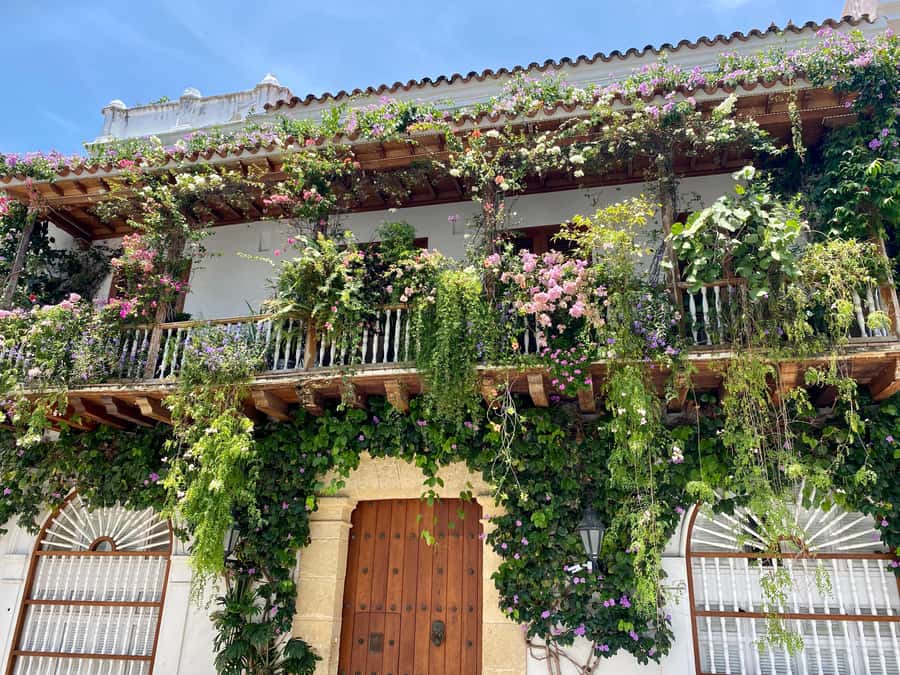
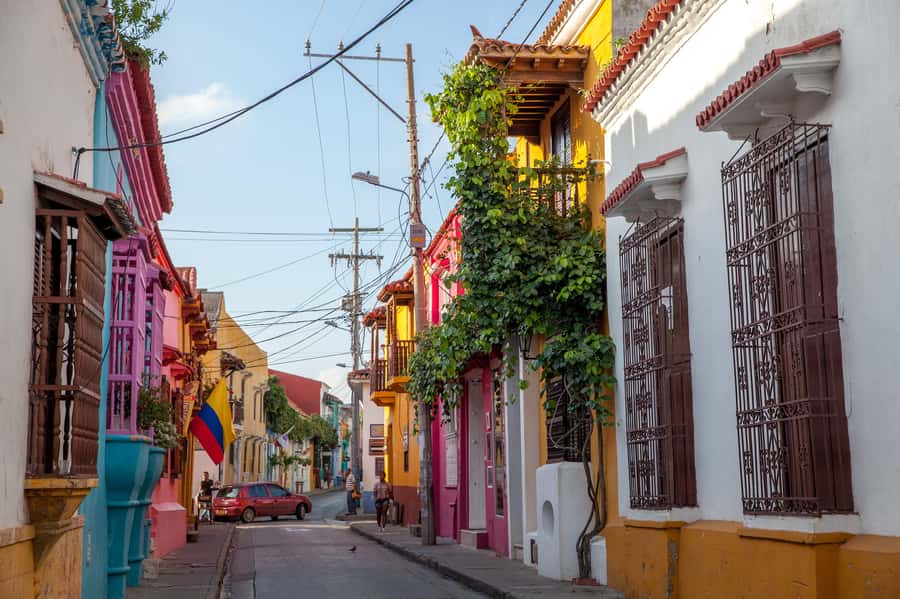
The tour ends in Getsemaní, one of Cartagena’s most recognizable areas for local culture. The neighborhood is known here for street art, colorful murals, music, and welcoming residents.
This is a fitting finish because Getsemaní feels less formal than the old colonial plazas. The focus shifts from Spanish fortifications and church history to public art and neighborhood energy. Murals and music show how Cartagena continues to express itself in the present.
The end point is important. You finish on foot in the Historic Center, with no transportation back to your hotel. If you are staying in the old center or nearby, this may be convenient. If you are staying farther away, plan your return before you set out.
The tour includes optional hotel pickup in Cartagena’s Historic Center and Bocagrande. Pickup in the Manzanillo area costs extra, and hotel pickup is not available in the Manzanillo or Barú area under the standard inclusion. Enter your pickup details carefully when booking.
How the private format changes the experience
A private group is the clearest reason to choose this tour over a larger sightseeing outing. You can ask about the fortress tunnels, request help with photographs, and tell the guide when you need a pause.
The named guides connected with the experience include Oralis Barrios and Carlos. Carlos was especially good at combining jokes with history lessons, responding to questions, and adjusting his pace for a group that stopped often for photographs. Oralis Barrios was praised for making the outing feel personal.
Of course, guide quality can vary by assignment, and you cannot assume you will receive one particular guide unless the provider confirms it. Still, the guide-led format is central to the experience. The buildings are worth seeing on their own, but the stories give the route its purpose.
The tour is wheelchair accessible, though the route includes a fortress, a hilltop convent, and walking in the Historic Center. If you use a wheelchair or have a knee problem, contact the provider in advance with your needs and ask how each stop will be handled.
Who should book this Cartagena tour?
I would choose this experience if you have only one free morning or afternoon and want a broad introduction to Cartagena. It covers major sights without requiring separate bookings for the fortress and convent, then adds the old center, coffee, park, and Getsemaní.
It suits couples, families, and small groups that prefer a private guide. It also works well for people who ask many questions or need a patient pace for photographs.
I would think twice if you want a slow, specialist visit to San Felipe Castle, a long coffee tasting, or a full day in Getsemaní. Four hours is enough to sample all these places, not enough to explore each one in depth.
Wear walking shoes, use sunscreen, carry water, and bring a passport or ID card. Leave alcohol and drugs behind, and do not go barefoot. You should also plan your ride after the tour, since the final section ends on foot.
Should you book it?
Book this tour if you want Cartagena’s main stories in a compact private outing, with strong guide attention and transport for the fortress and hilltop convent. The best features are the range of stops, the serious treatment of colonial history, and the chance to finish among Getsemaní’s murals and music.
At $152 per person, the value is strongest for a small private group that wants convenience and direct access to a bilingual guide. It is less attractive if you are comfortable arranging inexpensive transport and visiting the Historic Center independently.
The lack of return transportation is the one detail you should plan around. If that suits your hotel location, this is a useful first look at Cartagena, with enough history, local life, and coffee to help you decide what deserves a longer visit.
FAQ
How long does the Cartagena History, Culture & Coffee Experience last?
The tour lasts four hours. Vehicle transportation is available for three hours while visiting San Felipe Castle and La Popa Convent, followed by walking in the Historic Center.
Is hotel pickup included?
Optional hotel pickup is included for hotels in Cartagena’s Historic Center and Bocagrande. Additional cost applies for hotels in the Manzanillo area, and pickup is not included for the Barú area.
Where does the tour end?
The tour ends on foot in Cartagena’s Historic Center. Transportation back to your hotel is not included.
What languages does the guide speak?
The tour is available with a live guide in English or Spanish.
Is the tour private?
Yes. The activity is arranged for a private group rather than a shared group.
What is included in the price?
The $152 per person price includes a professional bilingual guide, entry tickets to San Felipe Castle and La Popa Convent, hotel pickup where applicable, and a small Colombian coffee tasting. Unspecified food and beverages are not included.
More Historical Tours in Cartagena
- Cartagena: Historic Center and Getsemaní Shared Walking Tour
★ 4.9 · 2,716 reviews - Visit Palenque with natives : history, culture and ancestral legacy
★ 5.0 · 53 reviews - Mangroves, cultural fishing, black heritage town and lunch
★ 4.5 · 29 reviews - Shared Tour Cali’s Historical Downtown
★ 4.8 · 143 reviews
Just added around Cartagena
- Shared Old Cartagena & Getsemani Tour with Wireless System★ 4.4 · 8 reviews
- Cartagena: Scuba Diving Day Trip at Playa Blanca with Lunch★ 4.0 · 22 reviews
- Scenic Horseback Ride in Tropical Mountain Reserve★ 5.0 · 4 reviews
- San Felipe Castle and Getsemani Walking Tour with tickets★ 4.3 · 27 reviews
- San Basilio de Palenque Private Day Tour★ 4.2 · 4 reviews
- Cartagena: Rosario Islands Private Boat Tour★ 4.8 · 3 reviews
- Rosario Islands -Barú : Agua Azul Beach, with lunch★ 4.0 · 8 reviews
- Mud Volcano Tour in Cartagena with Lunch★ 3.4 · 3 reviews
Colombian Coffee Farm Tours, compared.
Coffee Tour with Transport, Snacks and Tastings
Read our review →
Medellín Coffee Farm Tour with Trolley and Cable Car Ride
Read our review →
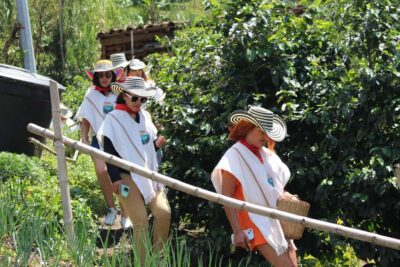
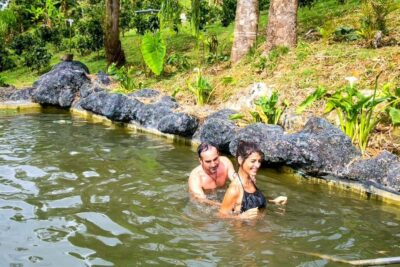
Horseback Riding Coffee Farm Tour with Coffee Spa
Read our review →
Browse the lists this tour appears in