
Reviewed · BOGOTA TOURS
Anti-tour Bogotá
Bogotá’s anti-tour takes you past the usual postcard sights and into stories of rebellion, memory, and repair. You make chicha at Chorro de Quevedo, visit the former home of Manu Chao, then cross the city to La Trocha Casa de la Paz, a project run by former FARC combatants.
I like the hands-on drink workshop, which turns an old indigenous tradition into something you can taste and understand. I also like the direct connection with people rebuilding their lives through crafts, culture, and peace work. The drawback is that the four-hour schedule is full, and the route may feel hurried if you prefer long stops or polished sightseeing.
The experience costs $42 per person, runs with no more than 10 people, and is led in English. Andrés, Michael, and Paula are named in the feedback, with Andrés receiving especially warm praise for his energy and clear storytelling. Bring water, sun protection, and comfortable shoes.
Key points at a glance
- Make chicha at Chorro de Quevedo: Learn about an indigenous corn drink and prepare your own sample before tasting it.
- Meet Bogotá’s revolutionary past: Visit the monument to Policarpa Salavarrieta, known as La Pola, a key figure in Colombia’s independence story.
- Step inside Manu Chao’s Bogotá: See the musician’s former home and connect his time in the city with its street culture.
- Travel by TransMilenio: The city’s famous bus system is part of the experience, not just a way to get from one stop to another.
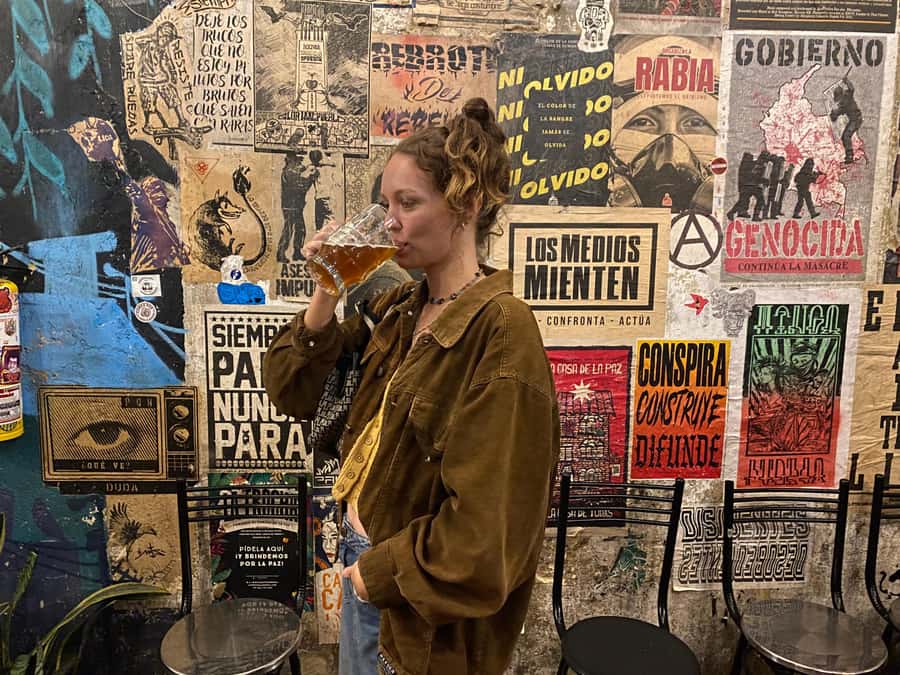
- Hear former FARC combatants speak: At La Trocha Casa de la Paz, personal stories sit beside crafts, art, and peace-building work.
- Choose substance over sightseeing: This tour suits people who want social context and difficult stories, not a quick checklist of monuments.
Bogotá beyond the postcard
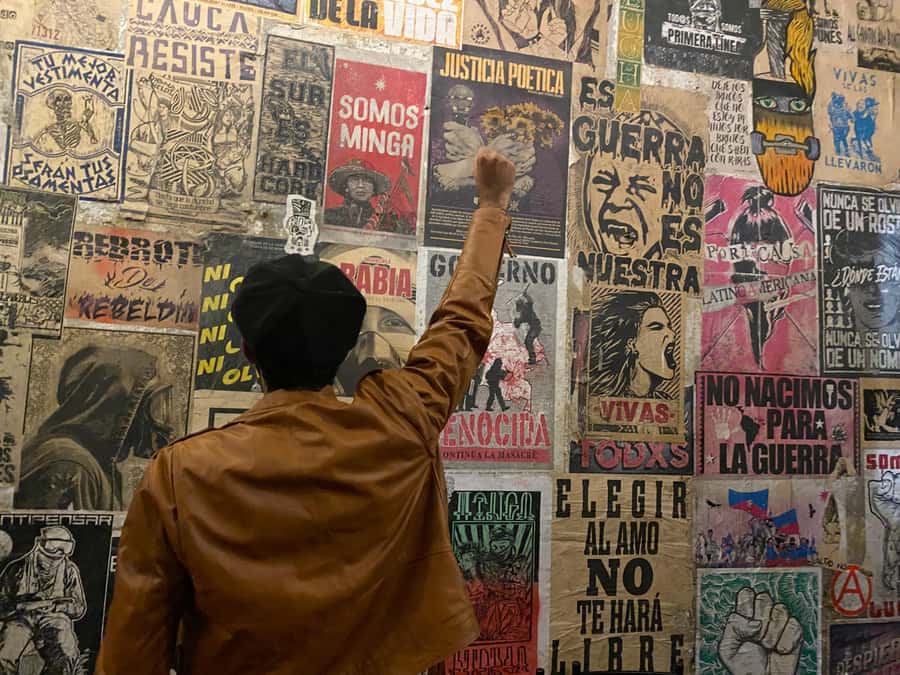
This is a tour about the city’s arguments with itself. Bogotá is presented through revolution, indigenous custom, music, political conflict, and the hard work of rebuilding trust.
That makes the experience different from a standard historic walk through La Candelaria. You will still see important places, but the guide uses them to ask larger questions. Who gets remembered? Who gets left out? How do old traditions survive beside modern city life? What does peace look like after armed conflict?
I appreciate that the route does not treat history as a collection of dates. La Pola is not simply a statue. Chicha is not simply a drink. La Trocha is not simply an arts market. Each stop gives you a person, practice, or place through which to understand Colombia.
The tone is likely to be frank. The tour deals with resistance, injustice, marginalization, the former FARC, and the effects of modern economic life. If you want a light introduction with only cheerful anecdotes, this may feel heavy. If you want to understand some of the forces shaping present-day Bogotá, the approach has real value.
Other Bogota days worth booking alongside this:
- Bogota: Bicycle City Tour
★ 4.9 · 2,156 reviews - Zipaquirá: Salt Cathedral Group Tour with Pickup
★ 4.8 · 1,606 reviews - Bogotá: Guided La Candelaria Walking Tour
★ 4.8 · 1,229 reviews
Starting at Parque de los Periodistas
The meeting point is in front of the Bogotá sign at Parque de los Periodistas Gabriel García Márquez. This is a practical start in central Bogotá, near the historic core and close to La Candelaria.
The park gives the guide room to set the scene before the walking begins. You start with Bogotá as a city of writers, political memory, public art, and competing versions of its past. From there, the tour moves toward the monument to Policarpa Salavarrieta.
Check the precise wording of the meeting instructions before leaving your hotel. The information says to meet in front of the sign, but central Bogotá has several busy public spaces and plenty of visual distractions. Arrive a little early, especially if you are unfamiliar with the area.
La Pola and the meaning of resistance
The stop at La Pola’s monument lasts about 15 minutes. That sounds brief, but it works as an opening chapter rather than a full history lesson.
Policarpa Salavarrieta was a revolutionary heroine associated with Colombia’s fight for independence. Her story lets the guide introduce resistance as something personal and risky, not merely a political slogan. You begin by looking at a named individual who chose to oppose power.
I like this stop because it gives the rest of the morning a clear frame. The tour is not only about unusual places. It is about people who challenged the official order, from independence-era figures to modern communities trying to change how Colombia is seen.
Do not expect a long museum-style explanation here. The visit is short, and the main value comes from the connection the guide makes between La Pola and the stories later in the day.
Chorro de Quevedo and the chicha workshop
The longest early stop is Chorro de Quevedo Plaza, where you spend about 90 minutes on a guided visit and chicha workshop. This is the most hands-on portion of the tour.
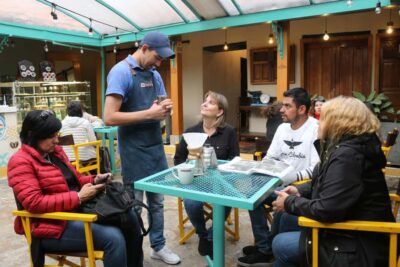
Chicha is a traditional indigenous corn brew. Making it yourself gives you a better sense of the drink than simply ordering a glass in a bar. You learn through the process, then taste the result. The activity also shows how ancient food and drink practices can survive in a modern capital.
The workshop is a strong choice for people who like to do something rather than only listen. You have a clear task, a local tradition to discuss, and a drink tied to questions about indigenous identity and changing city life.
The setting matters, too. Chorro de Quevedo is one of the best-known squares in La Candelaria, yet this experience aims to take you beyond the obvious photo stop. The guide uses the area to explore the clash between older customs and present-day Bogotá.
You should approach the tasting with an open mind. Chicha is not presented as a polished cocktail or a standard tourist sample. Its appeal lies in its age, cultural meaning, and connection to community tradition. If you do not drink alcohol, ask the guide what tasting options are available before booking, since the activity specifically includes sampling the brew.
Same city, a completely different kind of day:
- Bogotá: Private City Tour, Monserrate, Emerald and Botero
★ 4.9 · 798 reviews - Bogotá´s Barrios: El Paraíso Favela Tour with Cable Car
★ 4.8 · 731 reviews - Bogota: Guatavita and Salt Cathedral Daily Group Tour
★ 4.7 · 615 reviews - Bogotá City Tour with Monserrate, Gold and Botero Museums
★ 4.9 · 584 reviews
Manu Chao’s former home
The tour includes entrance to the former home of Manu Chao, the French-Spanish musician known for songs shaped by migration, protest, and street culture. The property is described as a lesser-known stop in La Candelaria, and it adds a surprising music angle to the route.
The point is not simply celebrity sightseeing. You learn how Manu Chao found inspiration in Bogotá’s streets and how his time in the city connected with its cultural scene. That makes the house relevant even if you are not a dedicated fan.
This stop should appeal most to people interested in the way artists absorb a city. Bogotá appears here as a source of sound, ideas, and social energy rather than just a backdrop for photographs.
The available schedule places this material around the Chorro de Quevedo portion of the route. Since the entire experience lasts only four hours, the visit is likely to be focused rather than leisurely. You may want to ask at the start how much time is planned inside the house and how the group will move between the stops.
The Gold Museum area and the move across town
The itinerary includes a 30-minute guided visit connected with the Gold Museum and then a public transport segment of about 12 minutes. The stop is listed as TransMilenio Gold Museum, which suggests a connection between the historic center, the museum area, and the city’s main bus system.
This section helps you see Bogotá as a working capital rather than a group of isolated historic sites. You move through the city using TransMilenio, the iconic bus network, and then continue toward La Trocha Casa de la Paz.
The transport is part of the story. Public transit places the group in the same urban flow as residents, and it shows the scale of Bogotá better than a private vehicle would. It is also less controlled. Crowds, waiting, and city noise are part of the experience.
Because personal expenses are not included, confirm whether your TransMilenio fare is covered or whether you should carry a little Colombian currency or a usable payment method. The supplied information confirms that public transport is used, but it does not state that fares are included.
La Trocha Casa de la Paz
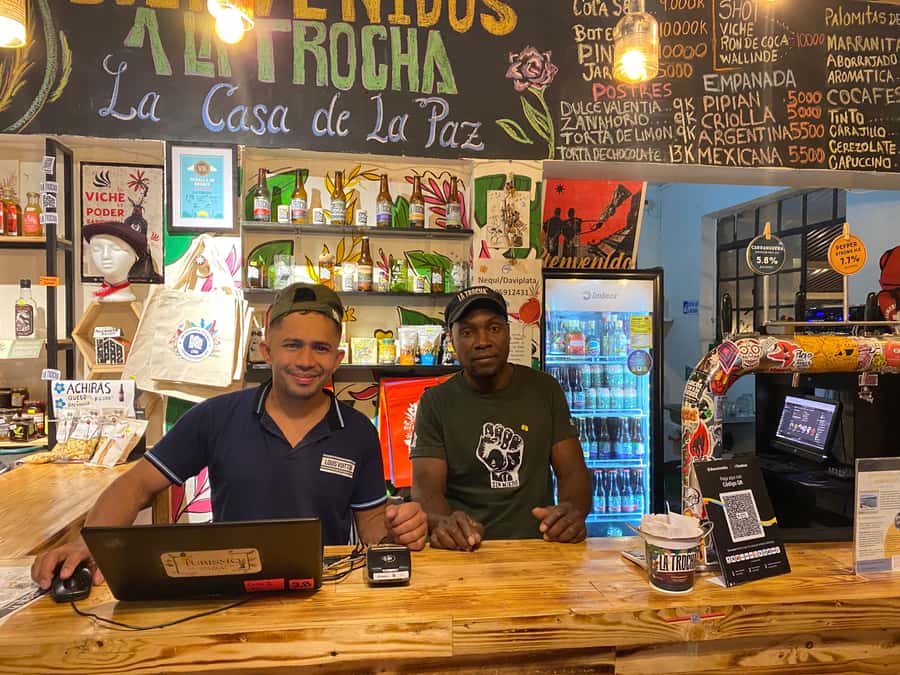
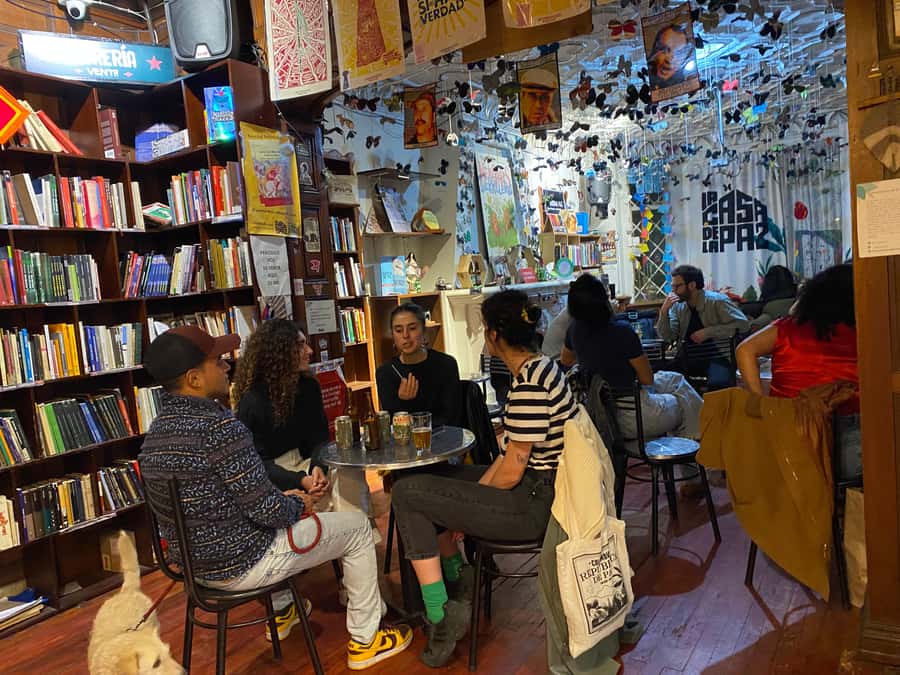
La Trocha Casa de la Paz is the emotional center of the tour. The visit lasts about 80 minutes and includes an arts and crafts market, a viche tasting, and conversations with former FARC combatants.
Viche is an ancestral sugarcane spirit from Colombia’s Pacific region. Tasting it gives the group another way to talk about local traditions, regional identity, and the survival of cultural practices. It also creates a natural setting for conversation rather than a formal lecture.
The former FARC participants are presented as people building a new chapter through peace work, crafts, and community projects. That does not erase the violence or controversy connected with Colombia’s armed conflict. Instead, it gives you a chance to hear about transformation from people whose lives were directly involved.
This is where the tour asks the most of you. You may hear personal stories that challenge simple ideas about heroes and villains. You should listen respectfully and avoid treating the conversation as a performance arranged for easy consumption.
The crafts market adds a practical side to the visit. You can see how art and handmade goods support a place devoted to peace-building. If you are interested in buying something, budget separately because personal expenses are not part of the $42 price.
The tour finishes at La Trocha, so you will need to arrange your next move from there. That is useful if you want to continue exploring the area, but less convenient if you expected to return to the original meeting point.
What the guides add
The guide matters a great deal here because the route deals with politics, history, music, indigenous culture, and armed conflict. A weak explanation would reduce the experience to a string of unusual stops. A strong one can connect them.
Andrés is specifically associated with an energetic, informative version of the tour. Michael is described as making the experience inclusive while handling complex social themes. Paula is singled out for her role at La Casa de la Paz.
The tour is offered in English and limited to 10 people. That small-group size is important. It gives you a better chance to ask questions, hear personal stories, and take part in the workshop without feeling lost in a crowd.
Guide quality can vary on any experience built around discussion. One published two-star rating called for better planning and a more prepared guide, while several five-star ratings praised the information, passion, and organization of Andrés or Michael. I would treat that as a reason to arrive ready to ask questions and to confirm the day’s sequence at the beginning.
Is $42 a fair price?
At $42, this is not the cheapest way to spend four hours in Bogotá, but the price covers more than a basic walking tour. You get a chicha workshop, a tasting of viche, entry to Manu Chao’s former home, guided historical stops, public transport as part of the route, and access to a peace project that would be difficult to arrange independently.
The strongest value is the human access. You are not simply passing through La Candelaria with a list of monuments. You are given context for a traditional drink, a musician’s connection to the city, and a community led by former combatants.
The price makes less sense if you mainly want classic Bogotá sights or a museum-heavy morning. It also may not suit you if you dislike public transit, social discussion, or tasting unfamiliar drinks.
The tour has a current rating of 4.4 from 14 ratings. The most consistent praise centers on its unusual route, strong storytelling, Andrés as a guide, and the visit to La Casa de la Paz. One practical criticism suggests that starting directly at La Trocha might make the route smoother, so the sequence may feel busy to some people.
Who should book this experience?
I would choose this tour if you have already seen some of Bogotá’s main sights and now want to understand the city’s less polished stories. It is a good fit for people interested in music, social history, indigenous traditions, peace-building, and contemporary Colombia.
It also suits curious first-time visitors who prefer a small group and a guide-led conversation. The combination of tasting, walking, public transit, and personal stories keeps the four hours varied.
I would think twice if you want a relaxed pace, a conventional historic tour, or a route built around major museum collections. The schedule includes several changes of subject and a city crossing, so you need to stay engaged.
Wear comfortable shoes. Add a hat, sunscreen, water, and a camera to your day bag. The tour is four hours, but Bogotá’s altitude, sun, and walking can still make basic preparation worthwhile.
Free cancellation is available up to 24 hours before the start, and you can reserve now and pay later. Starting times vary, so check availability before making other plans.
Should you book the Anti-tour Bogotá?
Book it if the words resistance, chicha, Manu Chao, former FARC combatants, and peace-building sound more appealing than another standard city walk. The experience offers real variety and a direct look at communities and traditions that many visitors would miss.
Skip it if you want a smooth, predictable route with long stops at famous attractions. This tour is compact, discussion-led, and sometimes demanding. For the right person, the $42 fee buys something more useful than a set of photographs: a clearer sense of how Bogotá remembers conflict, protects tradition, and tries to change.
FAQ
How long does the Anti-tour Bogotá last?
The tour lasts four hours. Starting times vary, so check availability when booking.
What language is the tour offered in?
The live tour guide speaks English.
How large is the group?
The experience is limited to 10 participants, making it a small-group tour.
Where does the tour begin?
It begins at Parque de los Periodistas Gabriel García Márquez, in front of the Bogotá sign.
Where does the tour finish?
The tour finishes at La Trocha Casa de la Paz.
Is chicha tasting included?
Yes. The tour includes a hands-on chicha workshop and a drink tasting.
Is viche tasting included?
Yes. A viche tasting is included during the visit to La Trocha Casa de la Paz.
Just added around Bogota
- Bogotá: Graffiti Tour el mejor recorrido de arte urbano★ 4.7 · 41 reviews
- Shared Tour of Colombian Exotic Fruit at Paloquemao Market★ 4.7 · 20 reviews
- Shared Tour to Monserrate Hill and Gold Museum in Bogota★ 4.9 · 8 reviews
- Shared Tour Bogota’s Street Local Food★ 4.5 · 22 reviews
- Shared Tour Colombian Conflict War, Drug Trafficking & Peace★ 4.8 · 46 reviews
- Paragliding Activity with Transfers from Bogota★ 4.9 · 21 reviews
- Monserrate Express tour 3 hrs★ 4.6 · 6 reviews
- Nemocón Salt Mine Tour★ 5.0 · 3 reviews
Bogota Tours, compared.
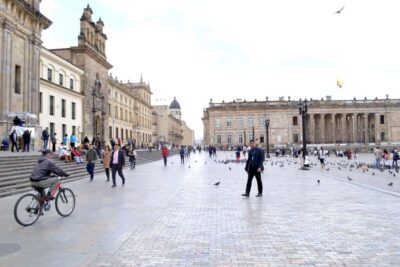
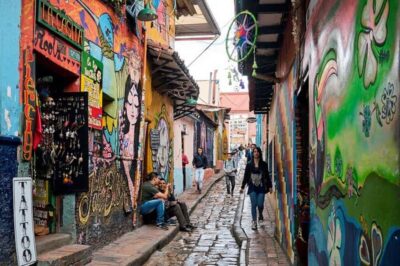
Private City Tour, Monserrate, Emerald and Botero
Read our review →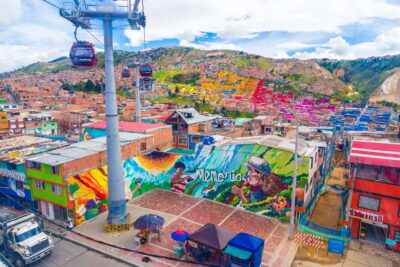
Bogotá´s Barrios: El Paraíso Favela Tour with Cable Car
Read our review →
Bogotá City Tour with Monserrate, Gold and Botero Museums
Read our review →
Zipaquirá Salt Cathedral and Lake Guatavita Day Tour
Read our review →Browse the lists this tour appears in