
Reviewed · CITY TOURS
Graffiti Tour: a fascinating walk through a street art City
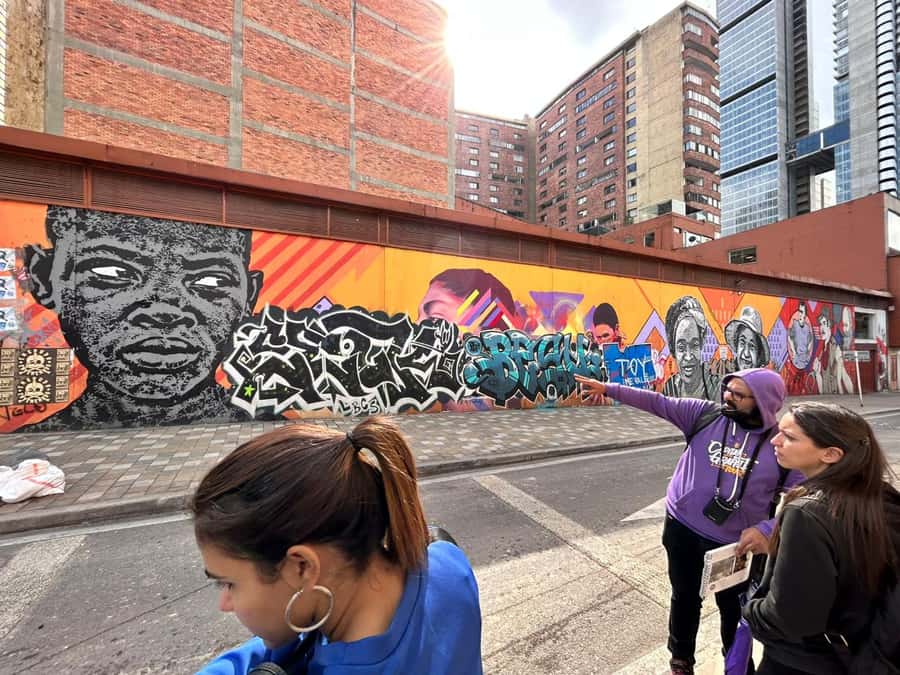
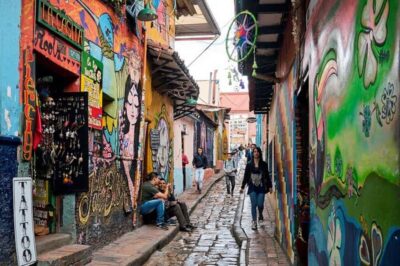
Bogotá’s graffiti is not just decoration. It is a public argument, a history lesson, and sometimes a warning painted across brick walls. This 150-minute walk brings you to the country’s tallest illegal graffiti, political posters about current social issues, and works tied to the city’s difficult path toward peace.
I like the artist-led approach, because your guide explains techniques, artists, sources of inspiration, and the political setting behind the work. I also like the tour’s social purpose: the company works with local artists and community leaders, putting money back into new murals and neighborhood projects.
The main consideration is that this is a walking tour focused on ideas as much as images. If you only want quick photo stops, the political discussion may feel demanding. The tour is also held in an active urban area, so you should leave valuables behind and come ready to pay attention.
Key points before you book
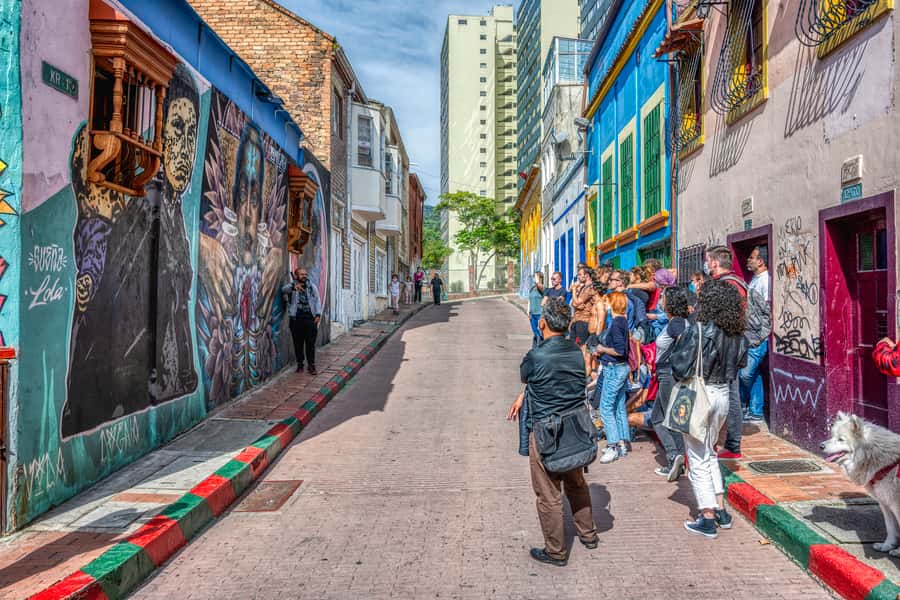
- The tallest illegal graffiti in Colombia gives the walk a striking centerpiece and a useful way to discuss Bogotá’s open attitude toward street art.
- Political posters address current social issues, so the tour goes beyond colorful walls and into public debate.
- Community resilience after false positives adds a human side to Colombia’s recent past and present challenges.
- Artist guides explain technique and meaning, with context on politics, culture, geography, and history.
- The $15 shared option includes the guide’s work, with no extra payment required at the end.
- Tours meet beside the Gold Museum, at Carrera 6 #15-88, where you look for a purple hoodie, cap, or umbrella.
Why Bogotá’s walls deserve two and a half hours
Bogotá has made street art part of its public identity. That does not mean every wall carries the same message, or that every mural is easy to understand at first glance. The value of this walk is that it helps you read the city instead of simply photographing it.
Your guide introduces you to several artists and their working methods. You learn how an image can carry political meaning, how color and scale affect a public space, and how local geography shapes the city’s visual language.
The tour also links art to Colombia’s complicated past. You hear about the country’s peace process, its present social concerns, and its hopes for a better future. The result is a street art walk with a civic purpose. You are not only looking at paint on brick. You are considering who gets heard in public, what communities choose to remember, and how art can press for change.
That makes the experience useful early in a Bogotá visit. It gives you a frame for understanding the city’s streets, neighborhoods, and public conversations. It also gives you a better chance of noticing details on your own after the tour ends.
A few more Bogota trips to weigh up
- Bogotá Street Art and Graffiti Tour 3 Hrs
★ 5.0 · 5 reviews - Medellín: Private Comuna 13 Street Art Tour
★ 4.8 · 88 reviews - 2-Hours Street Art Walking Tour in Medellin Comuna 13
★ 5.0 · 54 reviews
Starting beside the Gold Museum
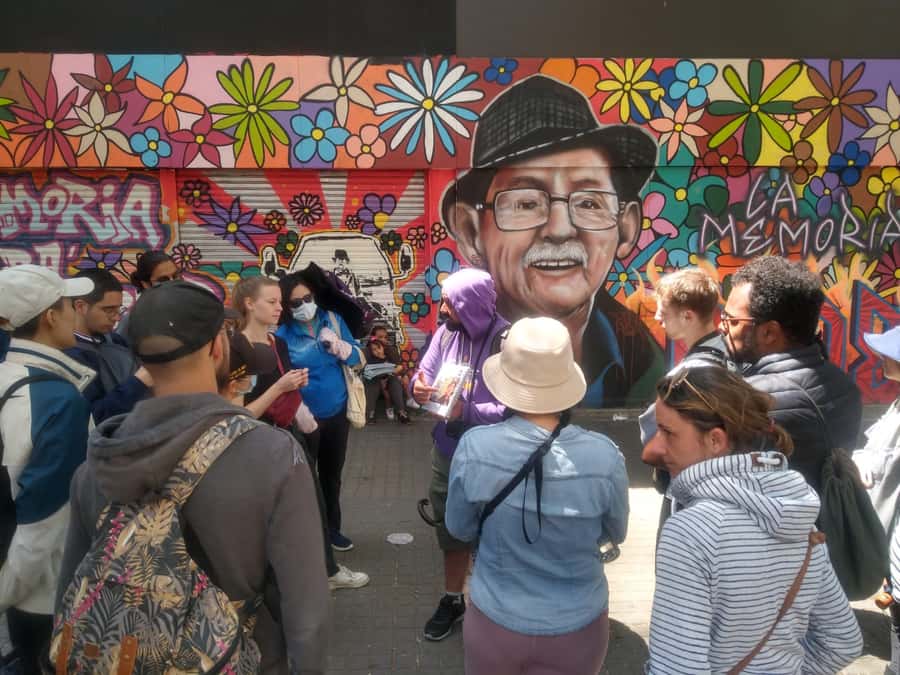
The meeting point is next to the Gold Museum at Carrera 6 #15-88. Look for the guide wearing or carrying something purple: a purple hoodie, cap, or umbrella.
This is a practical meeting place because the Gold Museum is a major central landmark. Still, give yourself enough time to find the exact spot beside the museum. The guide may be easy to recognize once you are in the right place, but the area can feel confusing if you arrive at the last minute.
The tour is offered in English, Spanish, Italian, French, and German. You can also select a private or small-group format, depending on availability. For many people, a small group is the best compromise: you still get the energy of a shared outing, but you have more room to ask about a particular artist or poster.
The walk is listed as wheelchair accessible. Since the experience takes place outdoors and involves moving through city streets, you may still want to confirm the exact route and conditions when booking if you have specific mobility needs.
The tallest illegal graffiti in Colombia
One of the walk’s clearest highlights is the chance to see the tallest illegal graffiti in the country. That phrase immediately raises an important question: why would a work of this scale be illegal, and how can something so large become part of the city’s public view?
Your guide supplies the needed setting. Rather than treating the mural as a record-breaking photo stop, the tour uses it to explain Bogotá’s relationship with unauthorized street art. Scale matters here. A small tag and a giant painted wall make very different demands on a neighborhood, a city government, and the people who pass by each day.
The work also shows the ambition of local artists. Large graffiti requires planning, coordination, technical skill, and a willingness to work in public view. You can consider how the artists use height, distance, and the surrounding buildings to make an image readable.
This stop should appeal to photographers, but you do not need a special interest in graffiti to value it. The story behind the work is what turns a huge wall into a meaningful part of the tour.
Political posters and present-day Colombia
The walk includes an area filled with political posters addressing current social issues. This is where the experience moves furthest from a standard city sightseeing route.
Posters are often more direct than large murals. They can use short phrases, recognizable symbols, and urgent images to make a point quickly. Your guide explains the cultural and political setting so you can understand why these messages appear in public and what concerns they bring into view.
The tour connects these works with Colombia’s peace process and the country’s hopes for the future. That context matters. Without it, political art can look like a wall of disconnected slogans. With it, you begin to see how public art can record conflict, disagreement, demands for justice, and the wish for social repair.
I would not book this walk expecting politics to stay in the background. The subject is part of the experience, not an optional aside. If you enjoy learning how cities express their arguments in public, this is a strong reason to go. If you prefer a light art outing with little discussion, choose your timing carefully or consider a private format where you can set the pace and ask only the questions that interest you.
Same city, a completely different kind of day:
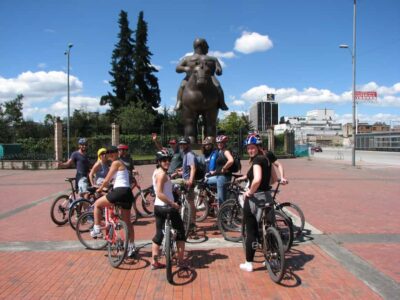
- Bogota: Bicycle City Tour
★ 4.9 · 2,156 reviews - Zipaquirá: Salt Cathedral Group Tour with Pickup
★ 4.8 · 1,606 reviews - Bogotá: Guided La Candelaria Walking Tour
★ 4.8 · 1,229 reviews - Bogotá: Private City Tour, Monserrate, Emerald and Botero
★ 4.9 · 798 reviews
Stories of resilience after false positives
Another important theme is the resilience of the community in the face of false positives. The phrase refers to a painful part of Colombia’s recent story, and the tour presents it through local art and community response.
The value of this section is its human scale. Large national events can feel distant when they are discussed only through dates and political terms. Murals and posters bring those issues into public space, where you can see how communities process loss, injustice, and the demand to be recognized.
Your guide provides the historical and social context needed to approach the subject with care. The tour does not treat difficult material as a dramatic backdrop. Instead, it shows how art can preserve memory and support people who continue to push for a fairer future.
This may be the most emotionally serious part of the walk. You should expect the tone to shift between humor, visual pleasure, political discussion, and painful history. That range is a strength, but it also means the tour asks more of you than a simple mural crawl.
How the artist guides add value
Capital Graffiti Tours works with guides who are artists and promoters themselves. That background shapes the walk in a useful way. You receive more than basic identification of a mural or a list of artist names.
The guides explain techniques and sources of inspiration, then connect those details to politics, culture, geography, and history. You might learn why an artist chose a certain method, how a composition works at street level, or how a mural speaks to the neighborhood around it.
Because the guides come from the art world, they can help you look closely. You begin to notice not only the finished image but also decisions about scale, placement, color, and public access. Those details help you understand why one wall feels playful, another confrontational, and another memorial in tone.
Language choice is another plus. English, Spanish, Italian, French, and German are available. Check the selected language when you reserve, since a good explanation is central to the experience.
Social impact beyond the two-hour walk
The company’s work does not end when the group leaves a mural. It collaborates with local artists and community leaders and reinvests in financing and managing new murals.
That promise gives the $15 price a wider meaning, especially on the shared option. The payment per person is treated as the suggested tip for the guides and support for their work, with the commission deducted. You do not need to pay extra at the end, even if other people in the group choose to do so.
For a short urban experience, $15 is a reasonable price if you want both a guide and a clearer understanding of Bogotá’s public art. You are paying for time, interpretation, language support, and a connection to local cultural work. The value is not measured by the number of walls you see.
A private or small-group option may cost more, but it can be worthwhile if you want a slower conversation about the art or prefer not to walk with a larger group. The available information does not give separate prices for those formats, so check the current option before booking.
What the 150-minute format means
Two and a half hours is long enough to move beyond a handful of famous images. The guide can develop themes, explain the city’s past, and allow the art to be considered in relation to current events.
The tradeoff is simple: you need to be comfortable spending 150 minutes on foot in an urban setting. Wear practical shoes and keep your schedule flexible around the starting time. The exact departure times vary, so check availability before you plan the rest of your day.
The experience is also best taken at a thoughtful pace. You may stop to examine a large wall, listen to a political explanation, or ask how a local artist works. The tour is not built around rushing from one photo opportunity to the next.
It is wheelchair accessible, but access can depend on the street conditions along the route. If that matters to you, confirm the route details in advance rather than relying only on the general accessibility label.
Who should book this Bogotá street art walk
I would recommend this tour to you if you enjoy:
- Public art with a political message
- Local history explained through everyday places
- Artist-led tours rather than generic sightseeing
- Small groups or private outings
- Learning about Colombia’s peace process and current social concerns
- Supporting cultural projects connected to local communities
Families with older children may find the visual side appealing, but the discussion of false positives and social conflict requires maturity. Art students, photographers, and visitors who want to understand Bogotá beyond its museums should get plenty from the walk.
I would be more cautious if you want a purely cheerful activity. The tour includes powerful and difficult subjects, and some of the political material may challenge your assumptions. That is not a flaw, but it is worth knowing before you reserve.
You should also keep valuables at home or in a secure place. Valuables are not allowed on the activity, so travel light.
Booking flexibility and group choices
You can cancel up to 24 hours before the activity for a full refund. The reserve-now-and-pay-later option lets you hold a place without paying today, which is useful when your Bogotá schedule is still shifting.
Shared tours are designed for people who want to meet other visitors and keep the price at $15 per person. Private and small-group choices make more sense if you want a quieter pace or more room for questions.
The meeting signal is simple: find the guide with the purple hoodie, cap, or umbrella beside the Gold Museum. Bring your attention, comfortable walking gear, and no valuables.
Should you book Capital Graffiti Tours?
Book it if you want Bogotá’s street art explained in its political and social setting, not reduced to a collection of colorful backgrounds. The tallest illegal graffiti, the current-issue posters, and the community stories about false positives give the walk substance.
The $15 shared option offers good value because it combines an experienced English-speaking guide with cultural interpretation and support for future local mural projects. It is especially worthwhile early in your stay, when the context can sharpen the way you see Bogotá afterward.
Skip it if you are looking only for a quick photo walk or if serious political discussion is not part of your holiday plans. For everyone else, this is a practical, thoughtful way to see how art can speak for a city and the people trying to shape its future.
FAQ
Where does the graffiti tour meet?
The tour meets next to the Gold Museum at Carrera 6 #15-88 in Bogotá. Look for a guide with a purple hoodie, cap, or umbrella.
How long does the tour last?
The tour lasts 150 minutes, or two and a half hours.
How much does the tour cost?
The shared option is listed at $15 per person.
What does the shared option payment cover?
The per-person payment is the suggested tip for the guides and helps cover their work, with the commission deducted. You do not need to pay anything extra at the end.
Which languages are available?
The tour is available in English, Spanish, Italian, French, and German.
Is the tour wheelchair accessible?
Yes, the activity is listed as wheelchair accessible.
Are private tours available?
Yes, private and small-group options are available.
What can I see on the tour?
You can see multiple street art and graffiti locations, including the tallest illegal graffiti in Colombia and an area with political posters about current social issues.
Does the tour discuss Colombia’s peace process?
Yes. The tour provides context about Colombia’s past, its present peace process, and hopes for the future.
Can I cancel for a refund?
Yes. You can cancel up to 24 hours in advance for a full refund.
Just added around Bogota
- Paragliding Activity with Transfers from Bogota★ 4.9 · 21 reviews
- Monserrate Express tour 3 hrs★ 4.6 · 6 reviews
- Nemocón Salt Mine Tour★ 5.0 · 3 reviews
- La Chorrera and Chiflon Waterfalls Private Hike Tour★ 5.0 · 7 reviews
- Layover City Tour or Conexion in Bogota★ 4.5 · 5 reviews
- Bogota: Horseback Riding Tour★ 5.0 · 5 reviews
- Guatavita: Tour to Guatavita Lagoon, the Village and Casa Loca★ 4.8 · 19 reviews
- 7-hour City Tour of Historic Bogotá with Monserrate★ 4.7 · 47 reviews
City Tours, compared.
Private City Tour, Monserrate, Emerald and Botero
Read our review →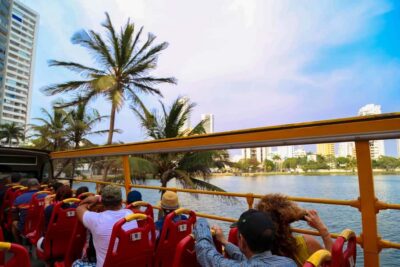
City Sightseeing Hop-On Hop-Off Bus Tour & Extras
Read our review →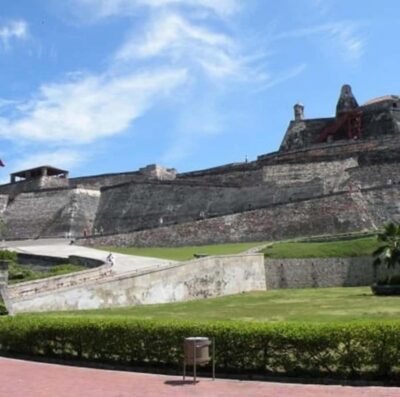
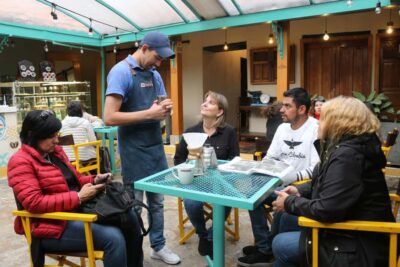
Bogotá City Tour with Monserrate, Gold and Botero Museums
Read our review →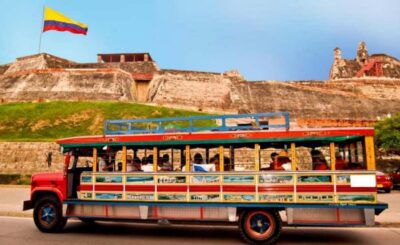
BILINGUAL CITYTOUR + SAN FELIPE CASTLE & Old city
Read our review →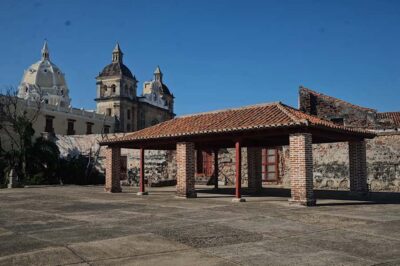
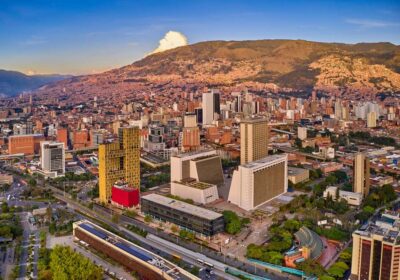
Private City Tour with Metrocable and Comuna 13
Read our review →Browse the lists this tour appears in