
Reviewed · HISTORICAL TOURS
Medellin Historic Walking Tour
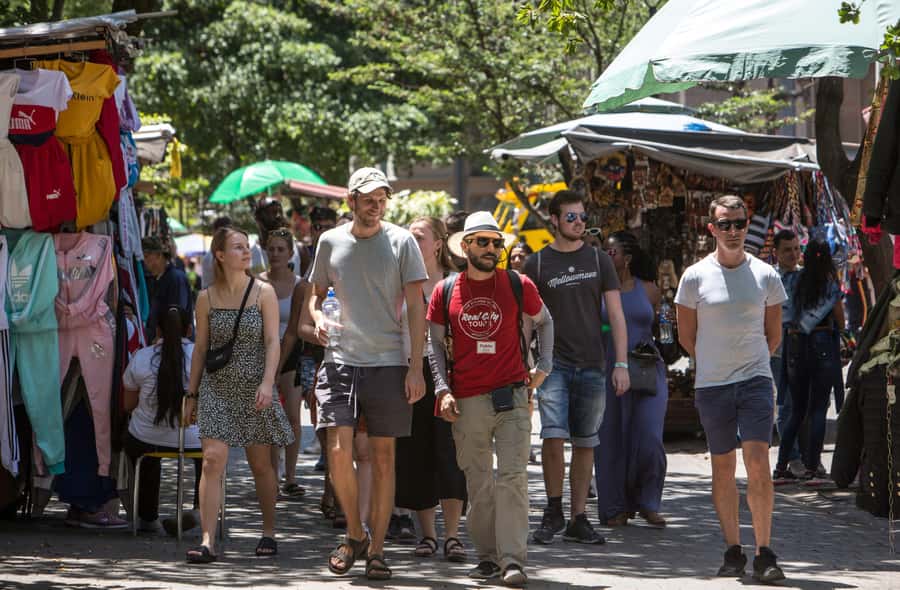
Medellín’s story makes the most sense on foot, where grand civic buildings, street vendors, public art, and everyday city life sit close together. This 210-minute downtown walk connects the city’s past with its present, from the old railway district to Botero’s famously rounded bronze figures.
I like the local perspective and the range of stops. Guides such as Suzie, Dio, Julio, Germán, and Hernán have been praised for making difficult subjects clear, personal, and engaging. I also like the useful extras: restaurant suggestions, activity ideas, and help getting oriented early in your stay.
The main consideration is that central Medellín can feel busy and visually uneven. There is plenty to learn, but not every stop is a major monument, and some Sunday visits may not include access to certain art spaces. This is a city walk built around explanation and local context, not a parade of grand interiors.
Key points to know before you go
- Three and a half hours on foot: The route takes 210 minutes and finishes at San Antonio Park.
- A local guide shapes the experience: Guides including Julio, Dio, Suzie, Germán, Hernán, and Pablo have been praised for clear English and personal stories.
- Downtown history comes first: You see Alpujarra, the old railway station, Plaza de las Luces, El Hueco, and Plaza Botero.
- The tour costs $14 per person: That is good value if you want a city orientation with history, culture, and practical advice.
- You pay extra for a few items: Metro tickets, lunch, and museum entrance are not included.
- Sunday planning matters: Some attractions may not allow entry on Sundays, so the route can feel more outdoor-focused that day.
Why this is a useful first look at Medellín
I would place this tour near the beginning of a Medellín visit. It gives you a working map of the center, introduces the city’s political and cultural story, and points you toward places to eat or explore later.
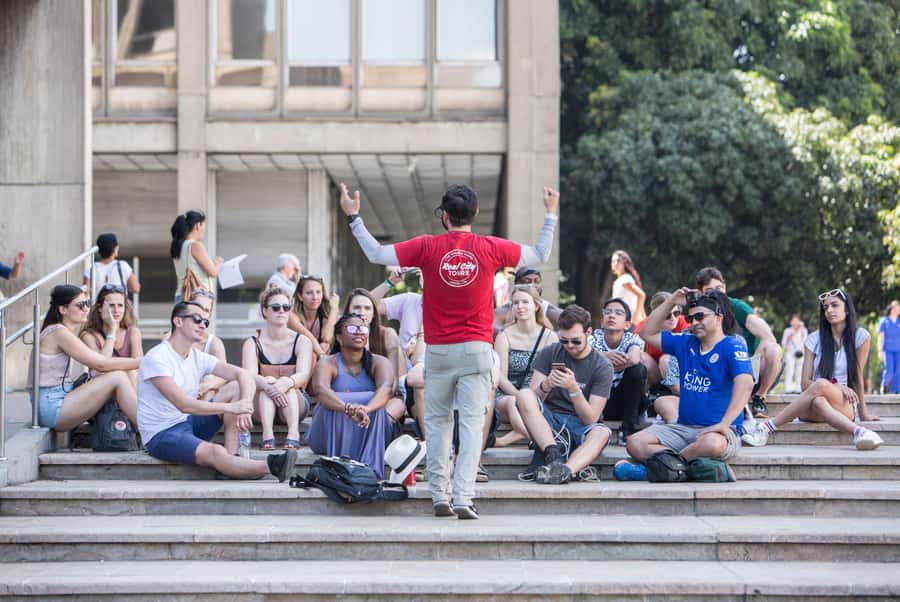
The strongest part is the guide’s role. This is not simply a route from one photo stop to another. The guide explains how Medellín developed, what shaped Paisa culture, and how the city has changed over time. Dio, for example, has been praised for combining history with personal memories of Medellín’s difficult years. Hernán is known for learning everyone’s name early and keeping the group involved.
That human side matters. Medellín’s past includes violence, social hardship, and major change. A local guide can explain those subjects with more care than a printed sign or a quick internet search. The best guides also leave room for questions, and that seems to be a major strength of this experience.
You should still set your expectations properly. The center is a working part of the city, not a preserved old town made up of postcard streets. You will see traffic, shops, street commerce, public squares, and ordinary city life. The reward comes from understanding what you are seeing.
A few more Medellin trips to weigh up
- Medellín: History & Local Life Essentials Tour on an E-Bike
★ 4.9 · 130 reviews - From Medellín: Private Pablo Escobar History Tour
★ 4.9 · 84 reviews - Medellín: Pablo Escobar Historical Tour Complete Experience
★ 5.0 · 15 reviews
Meeting at Alpujarra and starting with the railway
The meeting point is the pedestrian bridge at Alpujarra metro station. This is an important detail because the station has more than one possible exit and the meeting point is not simply described as the station itself. Allow extra time to find the bridge, especially if you are staying outside central Medellín.
The first listed stop is the Ferrocarril de Antioquia, or old Antioquia railway. You spend about 30 minutes here with a guided explanation and time for photographs. The railway offers a useful opening because transportation helped connect Medellín with the wider Antioquia region and shaped the city’s growth.
This early stop also sets the tone. You are not rushing through a checklist. The guide uses a place in front of you to explain how the city expanded and why its location and regional ties matter. If you arrive in Medellín without much background, this makes later stops easier to understand.
Alpujarra and the Monumento a La Raza
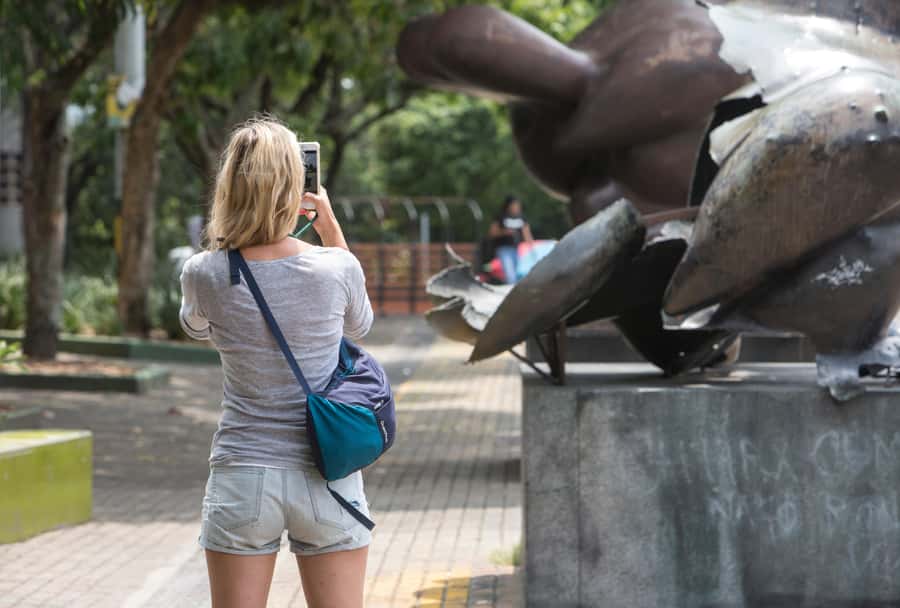
From the railway area, the walk continues toward the Monumento a La Raza. The monument is both a photograph stop and a place for guided interpretation.
Here, you can expect the focus to move from transportation and urban growth toward identity. The idea of Paisa culture is central to the tour. Paisas are associated with Antioquia and Medellín, and the guide uses the city’s public art and civic spaces to discuss local pride, social habits, and Colombian society.
This is one of the tour’s better features for anyone who wants more than a list of dates. The guide helps connect a monument to the people and region it represents. The exact amount of time spent at the stop may depend on the pace of the group, but it is part of the main walking route rather than an optional side trip.
Plaza de las Luces and the city’s public face
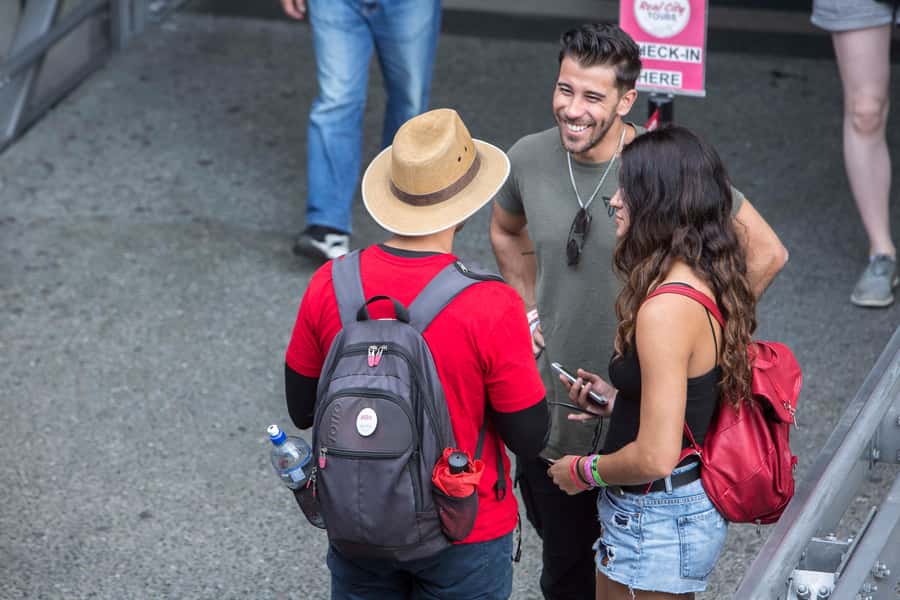
Plaza de las Luces, also known as Plaza de las Luces Medellín, gives you another view of the city center. The stop includes a guided visit and photographs.
Public squares can be hard to understand without context. You see buildings, columns, open space, and people moving through, but the place may not explain itself. A good guide turns the square into a lesson about Medellín’s civic identity and its efforts to reshape the center.
I would not come here expecting a quiet European plaza. This is part of central Medellín, with the sounds and movement of a working city. That is precisely why the stop helps you see the city as residents use it, not only as a display for visitors.
Same city, a completely different kind of day:
- Medellin: Comuna 13 Graffiti Tour, Cable Car & Street Food
★ 4.8 · 9,046 reviews - Medellín: The Real Pablo Escobar Tour
★ 4.8 · 3,205 reviews - Medellín: Comuna 13 True Story and Street Food Tour
★ 4.9 · 1,779 reviews - Medellín: Comuna 13 District Tour with Cable Car Ride
★ 4.8 · 1,467 reviews
El Hueco: street commerce and a quick local bite
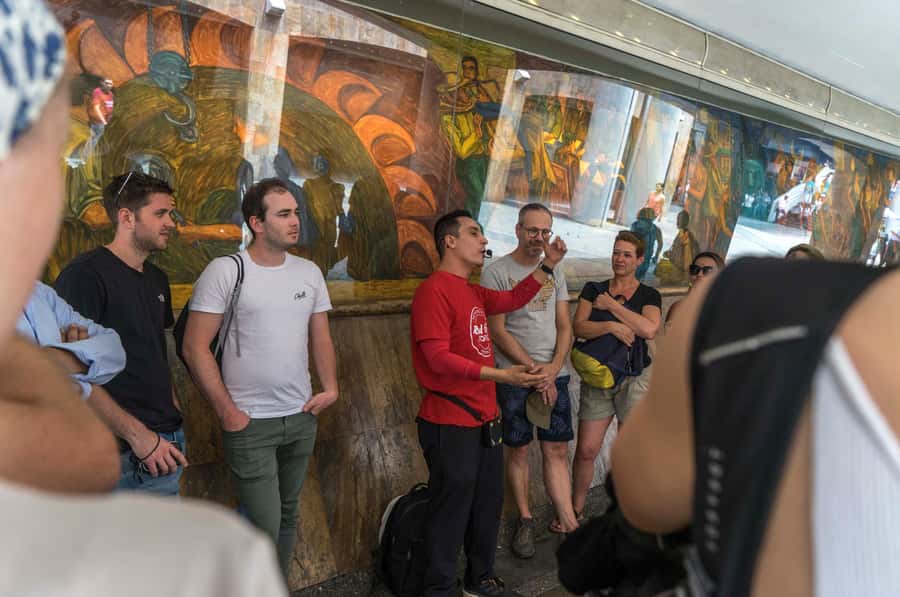
The route then reaches El Hueco, an area associated with dense street commerce. This part of the walk adds a sharper contrast to the formal monuments and government buildings seen earlier.
You have time to walk through the area, hear the guide’s explanation, and encounter street food. Lunch is not included, so you should carry some cash or plan to pay separately if you want to eat. The tour does not promise a full meal, but the stop gives you a chance to see how people shop, sell, and move through the center.
For me, this is the sort of place that makes a walking tour worthwhile. You are not confined to major sights. You get a sense of the city’s commercial rhythm and the practical side of downtown life. At the same time, keep your belongings secure and follow the guide’s instructions, as you would in any crowded commercial district. The supplied information does not promise a specific food tasting, so think of this as a street-food opportunity rather than an included culinary activity.
National Palace Mall and time to pause
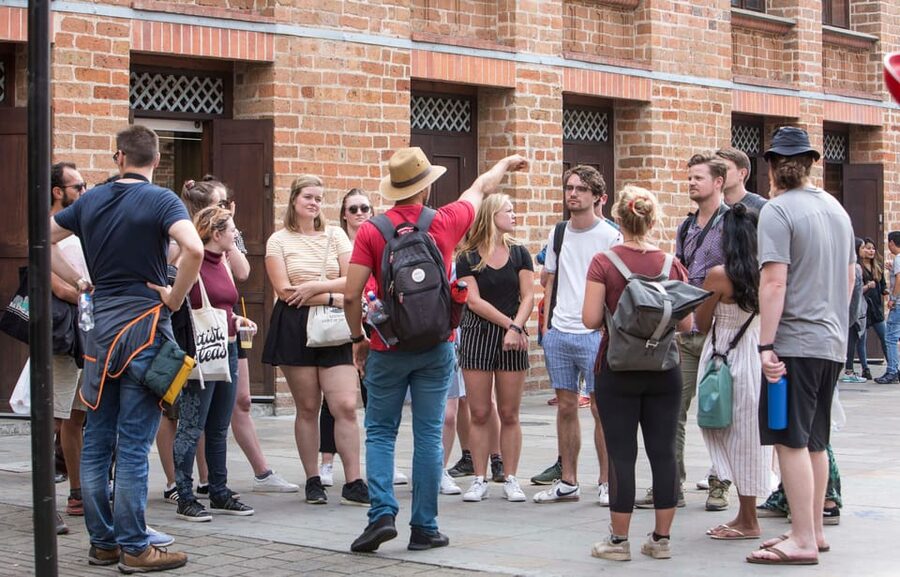
The National Palace Mall provides a break in the middle of the route. You have time for photographs, a visit, guided explanation, and some free time.
This pause matters on a walk lasting three and a half hours. You can catch your breath, look around, and ask questions before the route continues. The stop also adds a different kind of downtown setting, with shopping and architecture rather than an open public square.
Do not confuse the scheduled break with an included lunch. Food is not part of the price. If you need a proper meal, plan around the tour or use one of the restaurant suggestions offered by the guide.
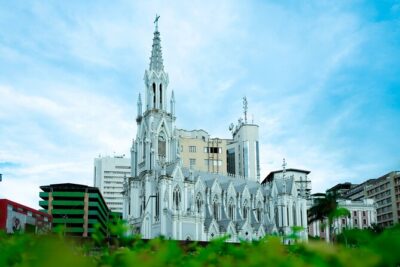
Ermita de la Veracruz and the older city
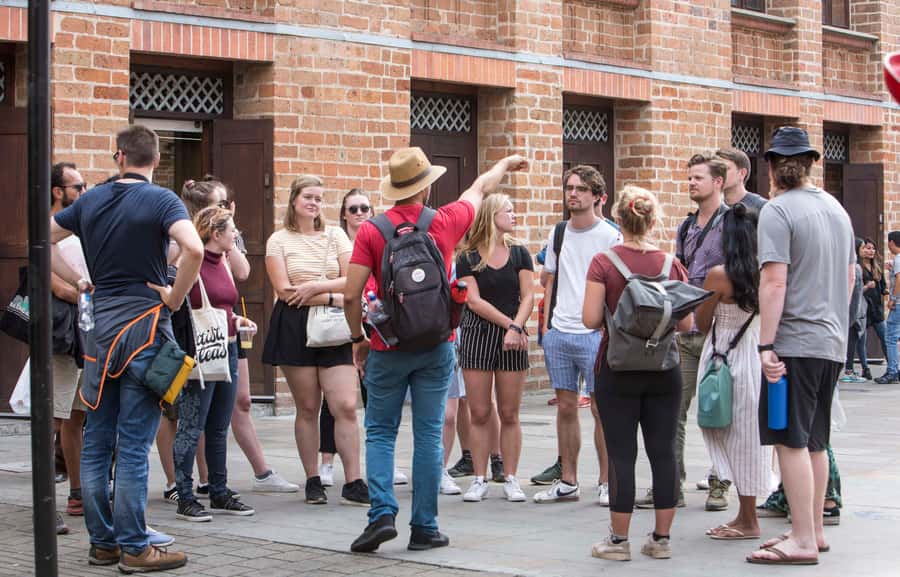
The Ermita de la Veracruz is one of the route’s religious and historic stops. You visit the site, hear the guide’s explanation, and continue on foot through the center.
This stop helps balance the modern commercial side of Medellín with an older layer of the city. You can expect sightseeing and interpretation rather than a long museum visit. Since the route includes several outdoor locations, the church offers a change of mood and scale.
The tour’s value is strongest when the guide explains how these different places fit together. On your own, you might photograph the church and move on. With context, it becomes part of a larger story about Medellín’s development, religion, and public life.
Plaza Botero and the art question
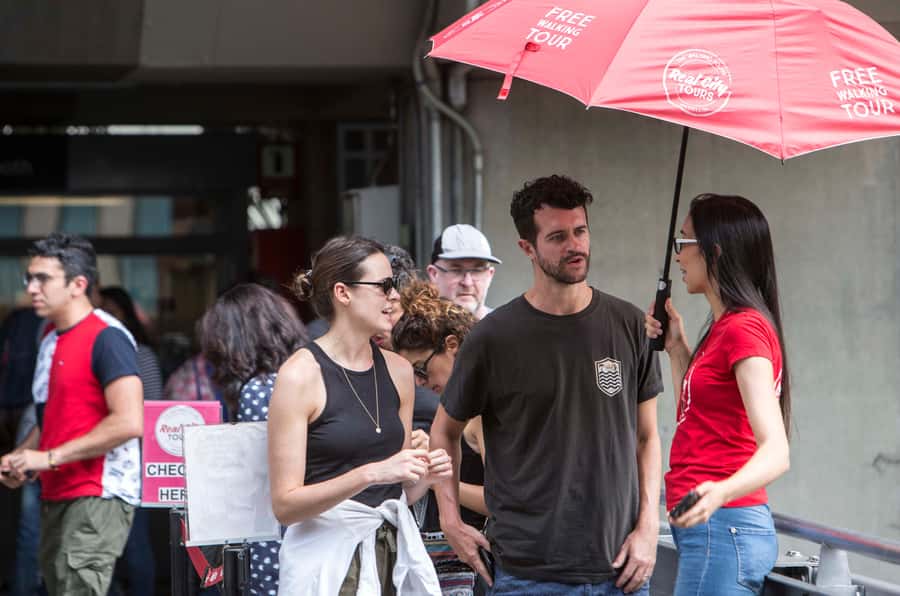
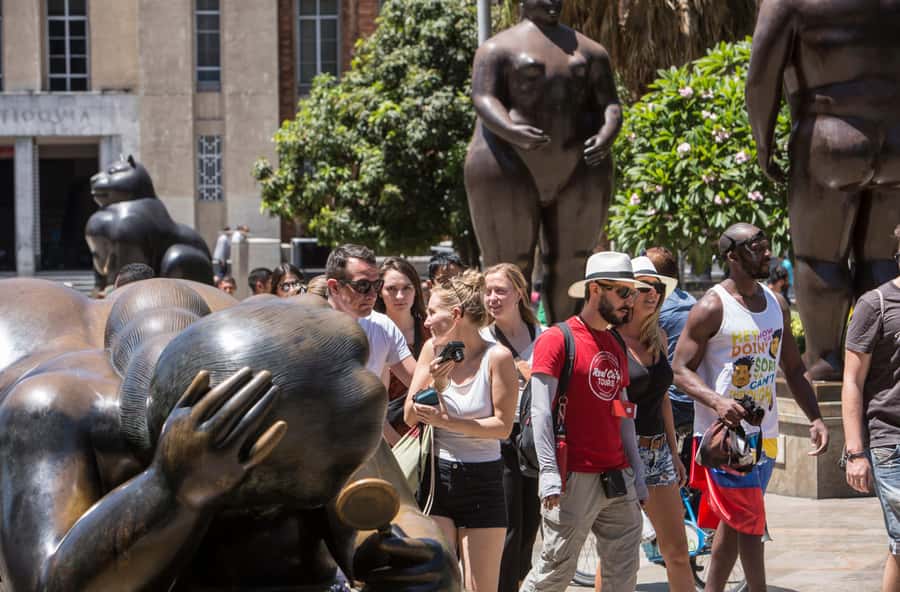
Plaza Botero is likely to be the most familiar stop for many people. It is filled with the large bronze works of Fernando Botero, the Colombian artist known for his rounded figures and distinctive style.
You get time for photographs, a guided explanation, and free time to look around. This is a good place to pause and study the sculptures rather than simply take one group photo. The guide can also connect Botero’s work with Medellín and Colombia, giving the art more meaning than a quick introduction would.
There is an important scheduling detail here. One Sunday booking did not include entrance to some art attractions, which caused disappointment. Museum entrance is not included in the tour price, and Sunday access to certain attractions may be limited. If Botero’s art is your main reason for booking, check the exact day and what is open before you reserve.
Even with that limitation, Plaza Botero remains a strong outdoor stop. It is accessible without paying museum admission, and the guide’s explanation helps you read the public art rather than treat it as background decoration.
A lesser-known stop and Parque Berrío
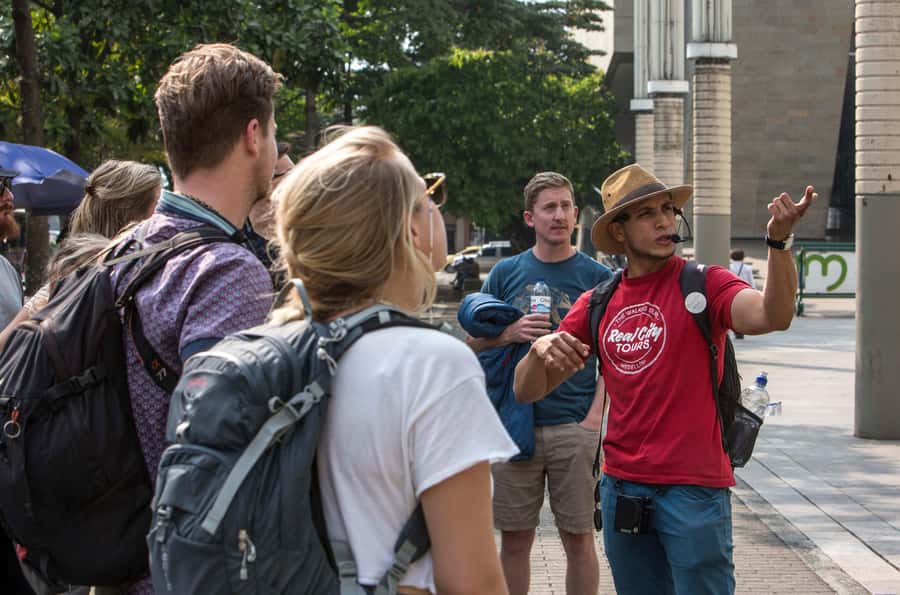
After Plaza Botero, the route includes a lesser-known stop described as a hidden location, followed by Parque Berrío. Since the exact name of the lesser-known stop is not specified, you should treat it as a surprise rather than plan your day around it.
The value here is the walk between major sights. You see how Medellín’s center changes from one block to the next and get a chance to ask about places that are not part of the standard sightseeing list. The guide can also point out details you might otherwise miss.
Parque Berrío continues the public-square theme. It is another photo stop and guided walk, with the chance to watch the center at close range. This section may feel less polished than the city’s major tourist areas, but it gives you a more grounded view of downtown.
That is also where expectations matter. One person noted that there is not too much to see in a conventional sightseeing sense. I take that as a fair warning: the tour does not promise one spectacular monument after another. Its appeal lies in the story, the people, and the connections between ordinary streets and major events.
Finishing at San Antonio Park
The final stop is San Antonio Park, where the tour ends. You have time for photographs, sightseeing, and a final guided explanation.
Ending here is practical. You are not returned to the original meeting point, so you should plan your next move from San Antonio Park. The guide can offer activity recommendations and restaurant ideas, which makes the finish useful if you are still deciding what to do with the rest of your day.
You also receive a group picture and insider tips. These extras are small, but they add value for solo visitors and anyone who wants a record of the experience. More important, the final location gives you a chance to ask what deserves a second visit.
The guides are the heart of the tour
The clearest pattern in the feedback is the quality of the individual guides. Suzie has been praised for polished English, energy, and personal stories about Medellín’s changes. Carolina is described as warm and well informed, with useful local restaurant advice. Julio receives especially strong praise for his detailed answers and ability to keep a group engaged.
Dio is another guide to watch for. He has been praised for historical detail, personal experience, and making a three-hour tour feel too short. Germán is described as entertaining and well prepared, while Hernán is praised for his passion, humor, and care with the group. Pablo receives credit for allowing time to buy from local sellers, eat, and take photographs while still covering the history.
Guide assignments can change, so you cannot book with a guarantee of a particular person. Still, the repeated strength of the guide team is a meaningful reason to choose this tour over a self-guided walk.
The tour is conducted in English, and the guide is bilingual according to the activity details. The published language for this experience is English. If you need another language, this particular booking may not be the right choice.
What $14 buys you
At $14 per person, this is a low-cost way to get a structured introduction to Medellín. You receive a 210-minute guided route, a group picture, restaurant recommendations, activity suggestions, and local tips.
The value is especially good if you are new to the city and would otherwise pay separately for a guide, a downtown orientation, and advice about what to do next. You also avoid the common problem of walking through a historic center without understanding what the buildings and public art mean.
The price does not cover metro tickets, lunch, or museum entrance. Those costs are not hidden if you plan for them, but they can affect your total budget. A Sunday visit may also provide less indoor art access than you expect.
There is one point worth checking before payment. A customer suggested that Real City Tours may offer a free version when booked directly. The supplied booking details list this experience at $14, so confirm the current direct-booking terms before assuming the price is waived. The paid option may still appeal if you prefer instant confirmation and the booking platform’s flexible cancellation terms.
Who will get the most from this walk
I would recommend it to first-time visitors, solo visitors, couples, and anyone who wants a clear introduction before exploring Medellín independently. It suits people who enjoy history, public art, local stories, and walking through active city districts.
It is also a good fit if you want advice beyond the tour itself. The restaurant and activity suggestions can help you avoid spending your first day guessing where to go next. Solo visitors may appreciate the group picture and the guide’s effort to include everyone.
Families can consider it too, since the activity is wheelchair accessible and the route includes varied sights rather than one long lecture. Still, the length is 210 minutes, so younger children may find the pace demanding. The provided information does not specify stroller conditions or child pricing, so ask before booking if those details matter.
You may prefer another activity if your priority is indoor art, a short route, or a quiet historic district. The walk is centered on downtown Medellín, and some of its most useful lessons happen in busy public spaces.
Booking details that affect your day
You meet on the pedestrian bridge at Alpujarra metro station and finish at San Antonio Park. Since the start and end points differ, do not leave a car, luggage, or a tight connection at the starting point.
The experience is offered Monday through Sunday, with last-minute booking available and instant confirmation. You can cancel up to 24 hours in advance for a full refund, and the reserve-now, pay-later option lets you hold a place without paying immediately.
Because the route is outdoors and lasts several hours, I would wear comfortable shoes and bring water. That is practical advice for any three-and-a-half-hour city walk, not a special requirement listed by the operator. Give yourself extra time to reach the meeting bridge. One person found the trip from a nearby hotel took much longer than a map estimate and had to catch up with the group.
Should you book the Medellín Historic Walking Tour?
Book it if you want to understand downtown Medellín through local stories, public art, commerce, and the city’s difficult past. The price is modest, the route covers many central landmarks, and the guide team appears to be the experience’s greatest asset.
Choose a weekday if access to art attractions matters to you, and confirm Sunday arrangements before booking. Also remember that lunch, metro tickets, and museum admission cost extra.
I would make this an early Medellín activity, especially if you want practical advice for the rest of your stay. It will not show you every side of the city, and not every stop is visually dramatic. But for $14, it gives you something more useful than a stack of photographs: a clearer sense of how Medellín works and how its people understand their city.
FAQ
How long does the Medellín Historic Walking Tour last?
The tour lasts 210 minutes, or three and a half hours.
Where does the tour meet?
The meeting point is on the pedestrian bridge at Alpujarra metro station.
Where does the tour finish?
The tour ends at San Antonio Park in Medellín.
What language is the tour conducted in?
The tour has a live English-speaking guide. English is the listed tour language.
Is the tour wheelchair accessible?
Yes. The activity is listed as wheelchair accessible.
Are metro tickets, lunch, and museum admission included?
No. Metro tickets, lunch, and museum entrance are not included in the price.
Can I cancel for a refund?
Yes. You can cancel up to 24 hours in advance for a full refund. The reserve-now, pay-later option lets you book without paying immediately.
Just added around Medellin
- Comuna 13 Neighborhood & Street Art Private Tour★ 4.7 · 12 reviews
- From Medellín: El Retiro Private Tour with Food Tastings★ 4.4 · 8 reviews
- Medellin: Private 3-Hour Pablo Escobar Tour★ 4.8 · 37 reviews
- Medellín: Private Pablo Escobar and City Tour★ 4.6 · 24 reviews
- Private Tour Comuna 13 with Cable Car★ 5.0 · 4 reviews
- Private Pablo Escobar Tour – Dark days and the new Medellin★ 4.9 · 6 reviews
- City Tour of Downtown Medellin Private or Shared★ 4.9 · 8 reviews
- Luxury boat ride – Guatapé★ 4.2 · 6 reviews
Historical Tours, compared.
Historic Center and Getsemaní Shared Walking Tour
Read our review →
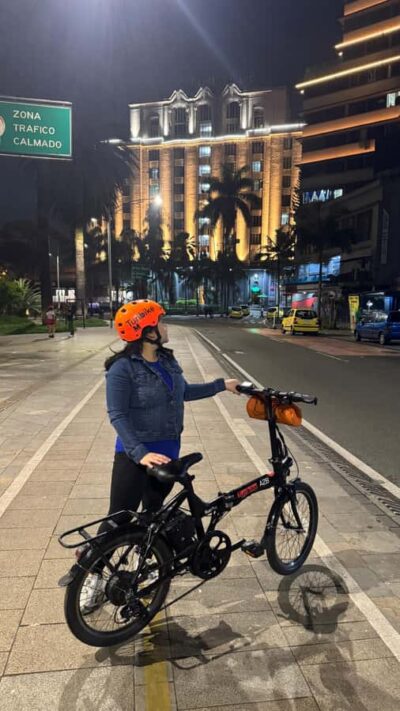
History & Local Life Essentials Tour on an E-Bike
Read our review →
Historical Shared Tour Salsa, Graffiti & Resistance in Cali
Read our review →
Shared Tour of Bogota’s Historic Downtown (La Candelaria)
Read our review →
Browse the lists this tour appears in