
Reviewed · MEDELLIN TOURS
Post-conflict Shared Tour (Paul) and Violence Medellin
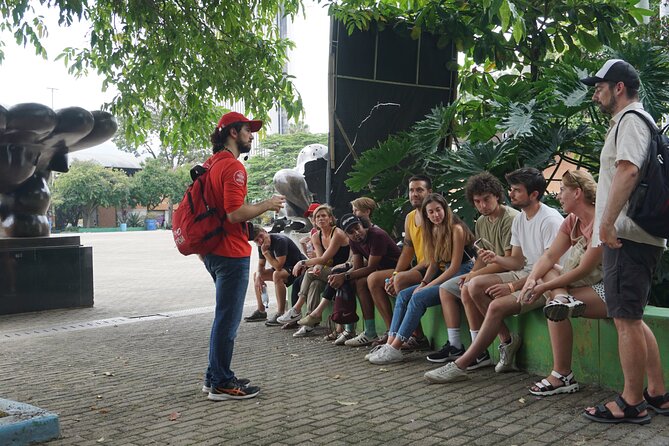
Medellín’s story is not told through grand monuments alone. This three-hour walk uses ordinary parks, schools, towers, murals, and public spaces to explain how the city faced violence and began rebuilding trust. Guides such as Paul, Miguel, Daniel, Manuel, Alejandro, and Sebastian have led this route, with the guide assigned for your date.
I like the tour’s small group limit of 10 and its clear focus on Colombia’s recent past, rather than a quick tour of postcard sights. I also like the value: at $14, your advance payment functions as the suggested tip for the certified guide. The main drawback is that several stops are more interesting for their stories than their appearance, and one poor experience involved a guide not showing up, so clear confirmation matters.
Key points about the Medellín post-conflict walk
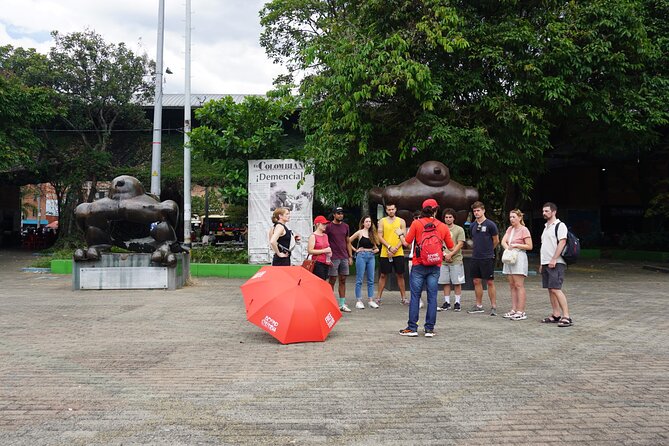
- Eight central stops: The route links San Antonio Park, San Ignacio, Comfama, Boston, and Bicentenario Park.
- A history lesson in public places: You connect conflict, education, architecture, art, and peacebuilding.
- Small shared group: The maximum is 10 people, allowing more room for questions than a large city walk.
- A guide-led experience: Paul, Miguel, Daniel, Manuel, Alejandro, and Sebastian are among the guides associated with this route.
- A 2 p.m. start: The walk lasts about three hours and finishes at the Memory House Museum.
- Bring your own break: Snacks, lunch, and tips are not included, and you should be ready for sustained walking.
Why this tour helps explain Medellín
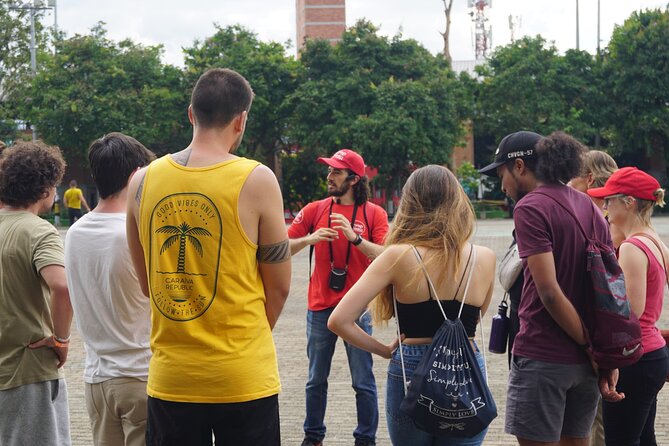
A standard city tour may show you Medellín’s center, but it can leave out the harder questions. How did violence shape everyday life? Why does education matter in a peace process? Can a park, cultural center, or mural help a city repair its social fabric?
This walk takes those questions seriously. It does not promise dramatic ruins or a string of famous monuments. Instead, it asks you to read the city itself. A plaza becomes a place to discuss public life. A school becomes part of a wider conversation about opportunity. A mural becomes a statement about memory and identity.
That approach is the tour’s real value. You are not simply collecting photos. You are learning how urban change can be tied to social change.
The subject is sensitive, and the quality of the guide matters a great deal. A good guide can explain Colombia’s national conflict while keeping the story connected to Medellín’s streets. The strongest praise has gone to guides who answer questions clearly, speak with passion, and explain both local and national politics in plain English.
Other Medellin days worth booking alongside this:
- Medellin: Comuna 13 Graffiti Tour, Cable Car & Street Food
★ 4.8 · 9,046 reviews - Medellín: The Real Pablo Escobar Tour
★ 4.8 · 3,205 reviews - Medellín: Comuna 13 True Story and Street Food Tour
★ 4.9 · 1,779 reviews
Starting at San Antonio Park
The walk begins at San Antonio Park at 2 p.m., at Calle 44 #50 in La Candelaria. This is a useful starting point because the park is an emblematic part of central Medellín and offers an immediate way to talk about change over time.
You will hear about the park’s place in the lives of local residents and how its appearance and role have changed. The point is not simply to admire a green space. It is to consider how public areas reflect a city’s condition, priorities, and efforts to move forward.
The stop lasts about 22 minutes. That is enough time for an explanation and questions, but not enough for a long pause. Arrive ready to begin on time. The start area is near public transportation, which makes reaching the meeting point easier, though the tour itself is designed as a walking route.
Education and peace at Plazuela San Ignacio
From San Antonio, the group continues to Plazuela San Ignacio. Here, education becomes the main subject.
This is one of the route’s more useful shifts. The tour does not treat peace as only a matter of government agreements or security. It explores how schools and education can affect a city’s future by creating opportunity and helping people take part in civic life.
The guide will place Medellín’s educational story in the wider process of transformation. If you want to understand why social programs matter in a city recovering from violence, this stop should give you a helpful framework.
Like most stops on the route, Plazuela San Ignacio may not look spectacular at first glance. That is worth knowing before you book. The value comes from the explanation, not from a major visual attraction.
Comfama San Ignacio and social programs
The next stop is Comfama San Ignacio, a cultural center focused on art, education, and public programs. The tour uses this space to discuss projects intended to strengthen social ties and encourage peaceful coexistence.
This stop gives the earlier discussion of education a more practical setting. You move from the general role of schools to the wider use of culture and learning in urban life. The message is that rebuilding a city involves more than roads and buildings. It also involves places where people can meet, learn, and take part in shared activities.
You may find this especially useful if you are interested in public policy, community programs, or the connection between culture and peacebuilding. It is less useful if you want a tour built mainly around spectacular architecture or famous landmarks.
The allotted time is about 22 minutes. Since the group is shared, the guide will need to keep the discussion moving, but a group of no more than 10 should make questions manageable.
Same city, a completely different kind of day:
- Medellín: Comuna 13 District Tour with Cable Car Ride
★ 4.8 · 1,467 reviews - Medellin: Coffee Tour with Transport, Snacks and Tastings
★ 4.7 · 1,357 reviews - From Medellín: Paragliding Tour with GoPro Photos & Videos
★ 4.9 · 1,210 reviews - Tour Guatapé
★ 5.0 · 865 reviews
Torres de Bomboná and the meaning of architecture
At Torres de Bomboná, the subject changes to modern architecture and urban transformation. The towers are presented as an example of how buildings can become reference points in a city.
This is not an architecture tour in the usual sense. You will not spend the whole time discussing design details, construction methods, or architects. Instead, the guide connects the buildings to the larger question of what a changing city chooses to build and how architecture affects the way people understand their surroundings.
I like this part because it keeps the tour from becoming only a chronology of violence. You are asked to look at the physical city and consider what its buildings say about ambition, renewal, and public identity.
Again, set your expectations correctly. The towers may not be a major sightseeing draw on their own. Their purpose here is to support a larger conversation about urban change.
Pasaje Cervantes and public art
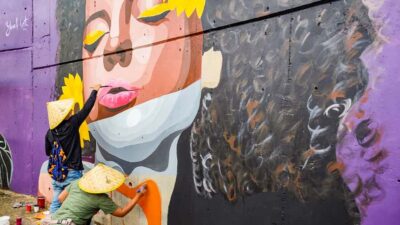
Pasaje Cervantes offers a more colorful stop. This passage is known for murals and urban art, and the guide explains the artists and messages behind the work.
Public art can change how you see a space. A passage that might otherwise be used simply as a route from one street to another becomes a place where ideas are displayed in public. On this tour, the murals help you think about who gets to tell a city’s story and how art can give a place a new purpose.
This is likely one of the more visually engaging parts of the walk. Bring a camera if you enjoy street art, but pay attention to the explanation rather than treating the murals as background decoration. The social meaning is central.
The tour allows about 22 minutes here. That gives you time to look closely and hear the context, though it is not a long art workshop or a private photography session.
A pause at Boston Park
Boston Park is described as a place to rest and think about what you have covered. That pause matters because the route deals with difficult material. A steady run of facts about conflict, social programs, and urban change can become a lot to absorb.
The guide uses the park for reflection and discussion. This is a good point to ask questions that may have occurred earlier, especially if you want to clarify how local events connect to Colombia’s wider political story.
You should not expect a formal meal break here. Snacks and lunch are not included, and the walk continues afterward. If you need food during the afternoon, plan ahead rather than counting on the tour to provide it.
Simona Duque Park and human rights
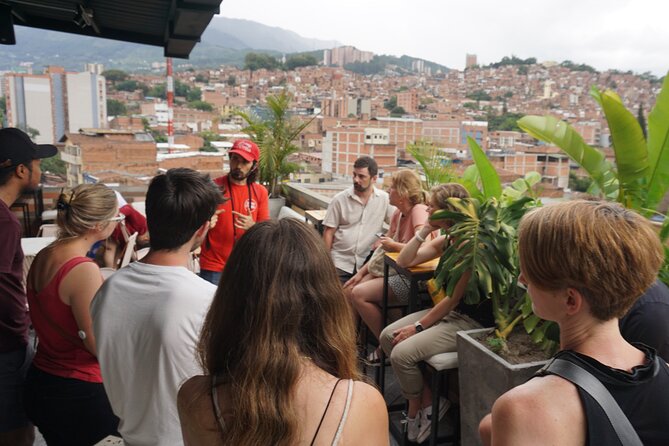
The route then reaches Simona Duque Park, named for a woman remembered for her work in human rights. The guide explains her story and legacy as part of the tour’s wider focus on the people and ideas connected to peace.
This stop adds a personal dimension. Large political events can feel remote, but an individual life gives the discussion a human scale. You are encouraged to think about the role one person can play in defending rights and shaping public memory.
The supplied details list admission as not included at this stop. No separate admission price is provided, so you should not assume that any possible cost is covered by the $14 payment. The same applies to the final stop.
Finishing at Bicentenario Park and the Memory House Museum
The walk finishes at Bicentenario Park, a newer public space presented as a symbol of Medellín’s future. The final discussion focuses on sustainability, the city’s remaining challenges, and the opportunities involved in continuing toward peace.
Ending here gives the route a forward-looking finish. The tour does not present Medellín’s transformation as complete or simple. Instead, it asks you to consider what still needs attention and how public spaces can help shape the next stage of the city’s development.
The listed endpoint is the Memory House Museum at Parque Bicentenario, Calle 51 #36-66. The tour information does not say that museum admission is included, and it lists admission at the final stop as not included. If you want to visit inside, confirm the entry arrangements separately.
Finishing at a museum is useful even if you do not go in. You end near a place devoted to memory, which fits the tour’s central concern: how a society remembers violence while trying to build something better.
What the $14 payment really covers
At $14 per person, this is inexpensive for a three-hour guided experience in a central city area. But the pricing model needs a clear explanation. This is a shared free walking tour, and the amount paid through the booking platform is the suggested tip for the guide’s work, minus the platform’s commission.
That means you are paying primarily for the guide’s time, preparation, interpretation, and local knowledge. You are not paying for lunch, snacks, transportation, or a bundle of attraction tickets.
The value is strongest if you enjoy asking questions and want help making sense of places you might otherwise pass without noticing. It is weaker if you expect paid-entry attractions, a polished sightseeing show, or extensive time at each location.
A certified guide is included, and the group maximum of 10 is a welcome feature at this price. A smaller group can make a serious topic feel more like a discussion than a speech. Still, tips are not included as a separate item, so budget for one if the guide provides the service you hoped for.
The guides make or break the experience
The most important variable is the person leading the walk. Paul is described as offering detailed explanations of Medellín and Colombia’s past and present, while Miguel is praised for clear English and strong explanations of national and local struggles.
Daniel is associated with an honest and direct style, and Manuel with an engaging explanation of politics, history, and the ongoing path toward peace. Alejandro has been noted for answering questions about the conflict, while Sebastian is associated with a warm storytelling style.
These names should not be treated as a guarantee that you will receive a particular guide. The guide assigned to your date may be different. The useful lesson is that this route depends on human interpretation. Ask questions, listen for connections between stops, and let the guide know what level of historical detail you want.
There have also been two serious reports of a guide not arriving and not contacting the person who booked. That appears to be an exception rather than the normal experience, but it is too important to ignore. Confirm the meeting details before setting out, keep your phone available, and contact the operator promptly if the guide is missing at the 2 p.m. start.
Walking conditions and practical planning
You should have a strong level of physical fitness for this activity. The route covers eight stops over about three hours, with roughly 22 minutes planned at each location. The information does not provide the total distance, so I would not assume that the walk is short simply because the stops are in central Medellín.
Wear comfortable walking shoes and carry water. The tour does not include snacks or lunch, and the schedule does not promise a meal stop. Because the activity starts at 2 p.m., eating beforehand may make the afternoon more comfortable.
The route is near public transportation at the starting area. You begin at San Antonio Park and finish at the Memory House Museum near Bicentenario Park, so you should not expect to return to the starting point automatically.
Service animals are allowed. Confirmation is provided at booking. The activity may require a minimum number of people, and if that minimum is not met, you will be offered another date or experience, or a full refund.
Free cancellation is available when you cancel at least 24 hours before the start time. Changes or cancellations made within 24 hours are not refunded, based on local time.
Who should book this walk
I would choose this tour if you want a serious introduction to Medellín’s recent social and political story. It suits you if you value context, public art, education, human rights, and thoughtful discussion more than famous sights.
It is also a good choice after a general city tour. The route can help you understand places you have already seen from a different angle, especially if you are curious about how Medellín changed and what peacebuilding looks like in daily urban life.
You may want another activity if your main goal is food, shopping, nightlife, panoramic views, or major monuments. The route is not built around those things. Several stops are visually modest, and the tour asks you to stay engaged with the guide’s explanation.
The topic may also feel heavy. That is not a flaw, but you should know what you are choosing. This is a history and civic discussion walk, not a light afternoon stroll.
My booking advice
I would book this tour if the history of Colombia and Medellín is important to you and you are comfortable paying for a guide-led walking discussion rather than attraction admissions. The small group, certified guide, central route, and low price make it a strong value when the guide is prepared and present.
Before booking, plan for three hours on foot, bring water, eat beforehand, and confirm the meeting details. If you want the best experience, arrive with questions about education, public art, urban renewal, and the path toward peace.
Choose it for the stories behind the streets. Skip it if you need every stop to be visually impressive.
FAQ
How long does the Post-conflict Shared Tour last?
The tour lasts approximately three hours. It begins at 2 p.m. and includes eight stops, with about 22 minutes planned at each one.
Where does the tour start?
The meeting point is San Antonio Park, at Calle 44 #50 in La Candelaria, Medellín.
Where does the tour finish?
The tour ends at the Memory House Museum near Bicentenario Park, at Calle 51 #36-66.
How much does the tour cost?
The listed price is $14 per person. This amount is the suggested tip for the guide’s work in the shared free walking tour model, minus the booking platform’s commission.
What is included in the price?
A certified guide is included. Snacks, lunch, and tips are not included.
How far in advance can I cancel for a full refund?
You must cancel at least 24 hours before the experience start time for a full refund. Cancellations or changes made less than 24 hours before the start are not refunded.
Just added around Medellin
- Tour Guatapé con visita a Granja de las Llamas y las Alpacas★ 3.5 · 11 reviews
- Medellín: Flower Farm & Silletero History Tour★ 4.3 · 23 reviews
- Shared Tour to Comuna 13 & Aurora Cable Car in Medellin★ 5.0 · 4 reviews
- Shared Tour Medellin’s Violence & Post-conflict after Pablo★ 4.1 · 3 reviews
- Comuna 13 Neighborhood & Street Art Private Tour★ 4.7 · 12 reviews
- From Medellín: El Retiro Private Tour with Food Tastings★ 4.4 · 8 reviews
- Medellin: Private 3-Hour Pablo Escobar Tour★ 4.8 · 37 reviews
- Medellín: Private Pablo Escobar and City Tour★ 4.6 · 24 reviews
Medellin Tours, compared.
Comuna 13 Graffiti Tour, Cable Car & Street Food
Read our review →
Coffee Tour with Transport, Snacks and Tastings
Read our review →
Browse the lists this tour appears in