
Reviewed · SAN ANDRES TOURS
San Andres: Coco Art Workshop
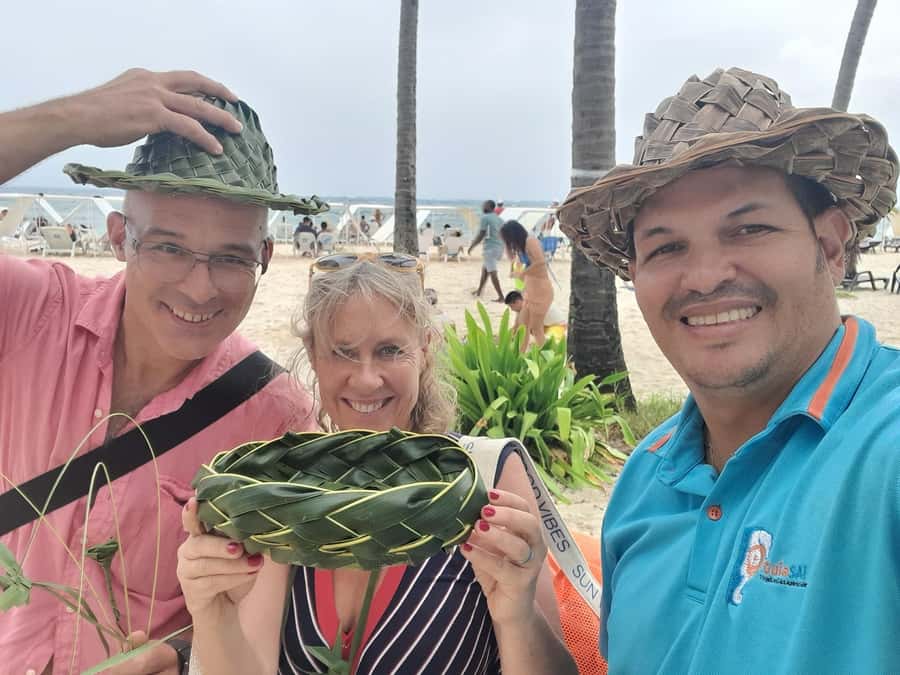
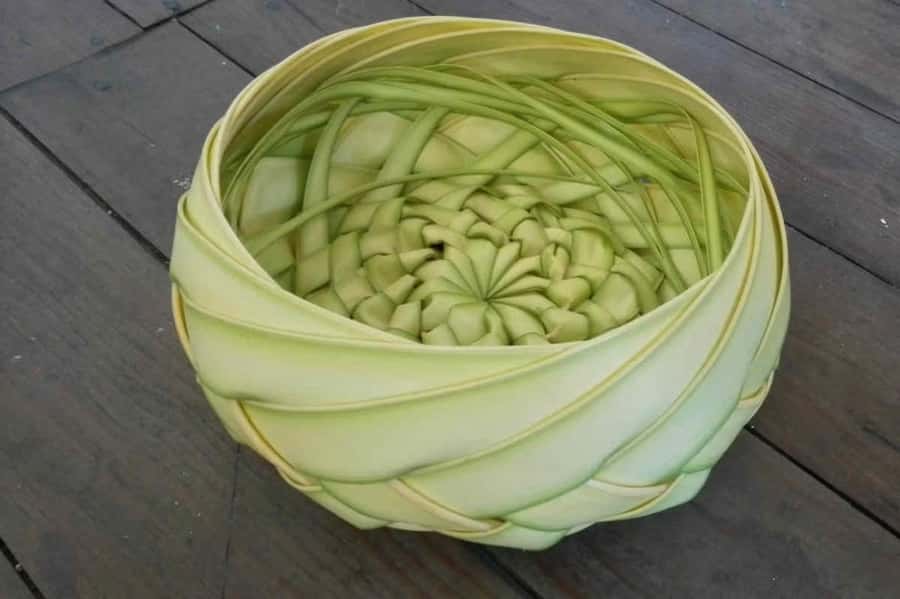
A coconut leaf becomes much more than a beach souvenir in this hands-on San Andrés workshop. You learn how the palm supported island life before tourism took over, watch local artist Sky and his father turn simple plant material into hats and bowls, then try your own hand at weaving.
I like the personal scale of the experience, since it is offered as a private group rather than a crowded demonstration. I also like the mix of craft and culture: the stories cover the local language, Creole roots, old island photographs, and the role of the coconut palm. The main consideration is that the workshop can last anywhere from 90 minutes to two hours, and outdoor portions mean you need to plan for sun, heat, and clothing that can get dirty.
Key points about the coconut workshop
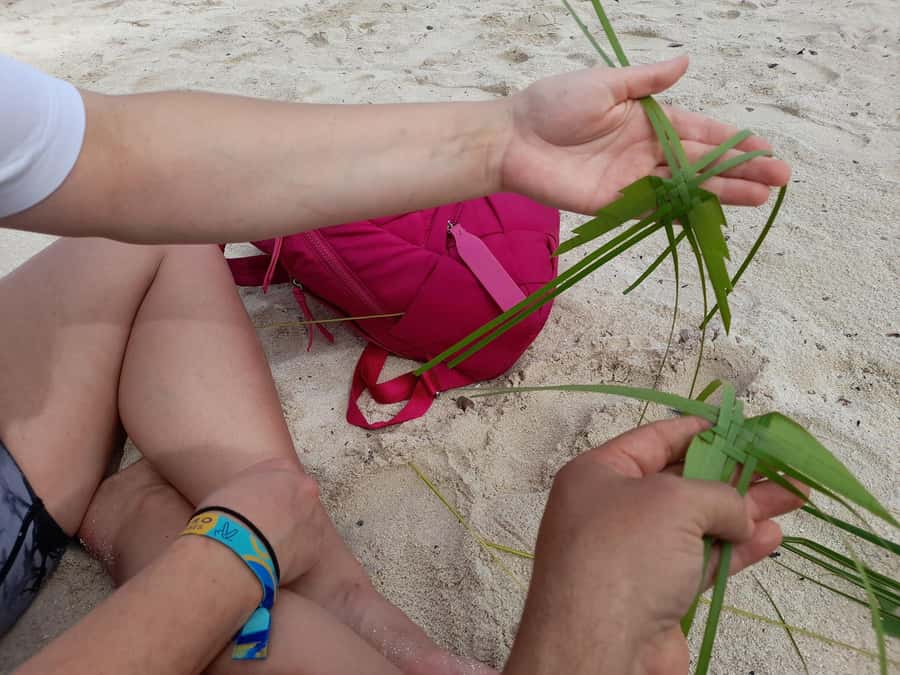
- Sky and his father lead the session: You receive instruction from local makers who learned these skills through family tradition.
- The coconut palm is the main subject: You learn how leaves and other coconut materials shaped practical objects and island customs.
- You make your own souvenirs: Simple projects may include a decorative bird, necklace, or similar ornament.
- Old and new techniques appear together: The demonstration can include a traditional sunhat, fruit bowl, and more contemporary decorative pieces.
- The setting adds to the lesson: Depending on your selected option, you may visit a typical house near Bolívar Park, travel toward the north beach, or enjoy Caribbean views during the class.
- The experience is private and bilingual: English and Spanish instruction is available, with hotel pickup and drop-off offered on selected bookings.
Why coconut palm matters in San Andrés
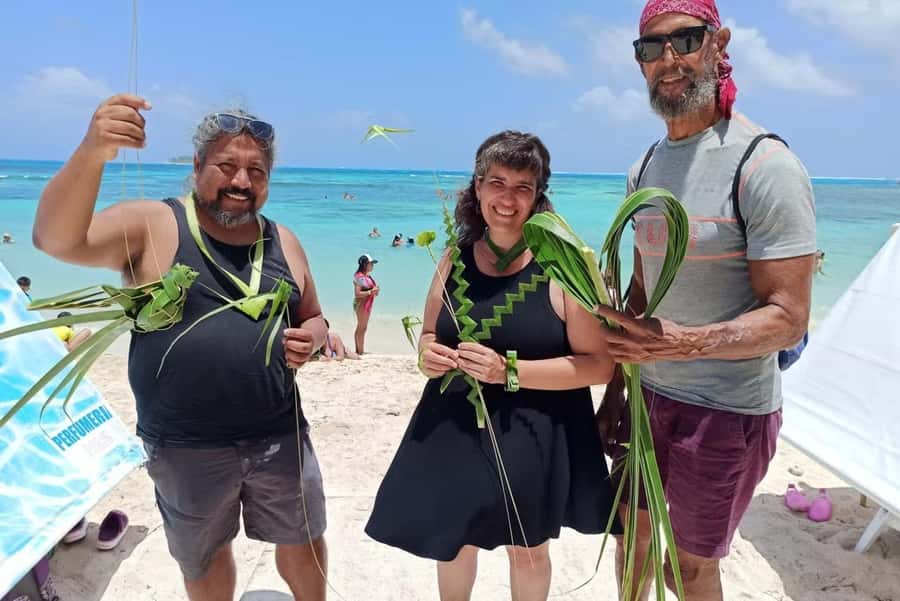
The workshop begins with a useful bit of island context. Coconut palms are easy to see as part of the Caribbean scenery, but here you learn to view them as working plants that supported daily life long before San Andrés became a holiday destination.
The palm provided material for practical objects, decorations, and accessories. The craft is not presented as a quick trick for tourists. It is a local trade tied to family teaching, hand skills, and the older economy of the archipelago.
That connection gives the class more weight than simply buying a woven hat. You see how a plant associated with beaches and tropical postcards became part of the island’s cultural identity.
Sky can also explain the story of San Andrés through old photographs at the family’s typical house. This is especially useful if you have just arrived and want more than a basic introduction to the island. The house setting gives the talk a personal feel, with the material culture of the island placed alongside family memory.
You also hear about the local language and the origins of Creole culture. The workshop does not claim to cover every part of island history, but it gives you a direct introduction to subjects that are easy to miss on a standard beach day.
A few more San Andres trips to weigh up
- Cartagena: Pub Crawl with Dancing Lessons and Free Shots
★ 4.2 · 211 reviews - Fun Graffiti Workshop: The Art of Aerosol and Color
★ 5.0 · 73 reviews - Bogota: Colombian Emerald Ring Workshop
★ 5.0 · 61 reviews
Meeting near Bolívar Park or arranging pickup
The stated meeting point is at the entrance of a typical house close to Bolívar Park, at Avenida 20 de Julio number 4A-26. It is in front of Omalina Clinic, diagonally across from Bolívar Park and diagonally across from the registration office.
That is a useful central location if you are already in San Andrés town. Take a moment to confirm the address and selected meeting arrangement before setting out, since pickup depends on the option you book.
Hotel pickup and drop-off are included when selected. The supplier, Guia SAI, contacts you to coordinate pickup, so keep your phone available before the activity. Transport is listed as a roughly 20-minute car ride, though the exact route depends on where you are staying and which version of the experience you choose.
The transfer is not the heart of the outing, but it helps if you are staying away from central San Andrés. If you prefer to make your own way, the central meeting point is the more straightforward choice.
A typical house, family stories, and old photographs
One of the most memorable parts is the opening talk at the family’s typical San Andrés house. Sky and his father use the setting to explain how the island functioned before tourism became its main industry.
Old photographs help make the story concrete. Instead of hearing a general speech about island culture, you get a look at earlier San Andrés and the people who lived there. The focus stays close to the coconut palm, but the discussion also reaches into the wider history of the archipelago.
This part may appeal most to you if you enjoy meeting local people and seeing how a craft fits into a family’s life. It is less suited to someone who wants to start weaving immediately. The introductory stories take time, and that is part of the value, but it means the class is not just a short make-and-take activity.
Depending on your chosen arrangement, the guide may also explain the history of San Andrés beside the sand at a northern beach. That setting brings the subject back to the sea and the island’s natural surroundings. Bring water and sun protection, since the outdoor explanation offers little reason to expect shade.
Watching a coconut leaf become a hat or bowl
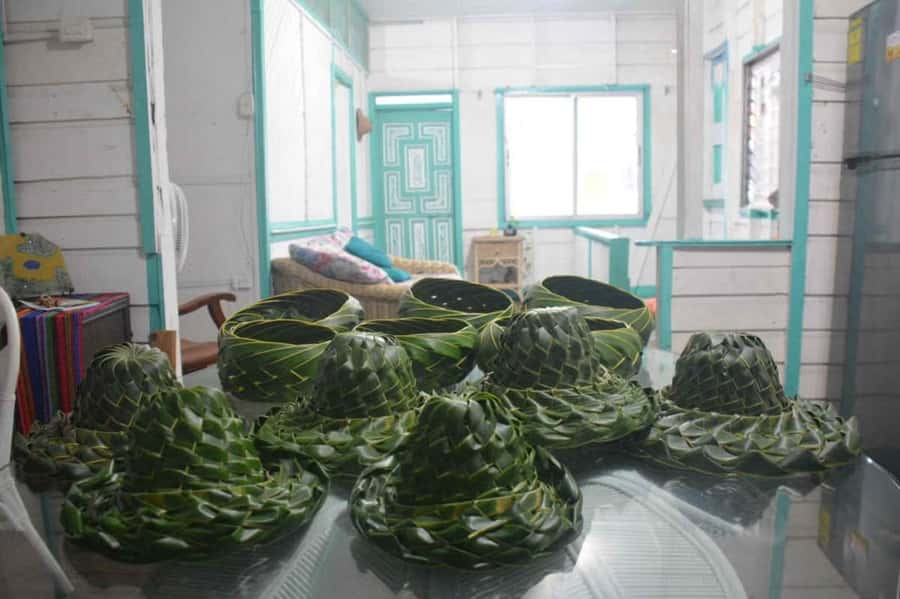
The demonstration is where the craft’s difficulty becomes clear. Sky and his father work with coconut palm material to form useful and decorative objects, including a sunhat and fruit bowl.
The appeal is in watching their hands. A trained maker can shape and fold the material with speed, while a beginner quickly learns that the same movements require patience and control. That contrast makes the demonstration worth your attention. It shows why these skills were passed from one generation to the next rather than picked up in a few minutes.
You may see both older methods and newer designs. The traditional side connects to objects once used in island homes, while the contemporary side includes accessories and decorative pieces suitable for taking home.
The material itself gives the work character. Each piece reflects the texture and limits of the coconut palm, so the finished item does not look mass-produced. You are not choosing from a shelf of identical factory souvenirs. You are watching a local material become something useful through handwork.
The guide can also respond to special requests during the session. That flexibility matters in a private class, since you can ask questions or request help with a particular shape instead of simply following a fixed group demonstration.
Same city, a completely different kind of day:
- San Andres: Scuba Diving Experience with Hotel Pickup
★ 4.8 · 192 reviews - Tourist white train – Tour around the island
★ 4.5 · 117 reviews - Let’s snorkel Hol Chan the Best Marine Reserve in Belize
★ 5.0 · 112 reviews - 3 Hours Barrier Reef Tour in Caye Caulker, Belize
★ 4.5 · 103 reviews
Your turn to weave a San Andrés souvenir
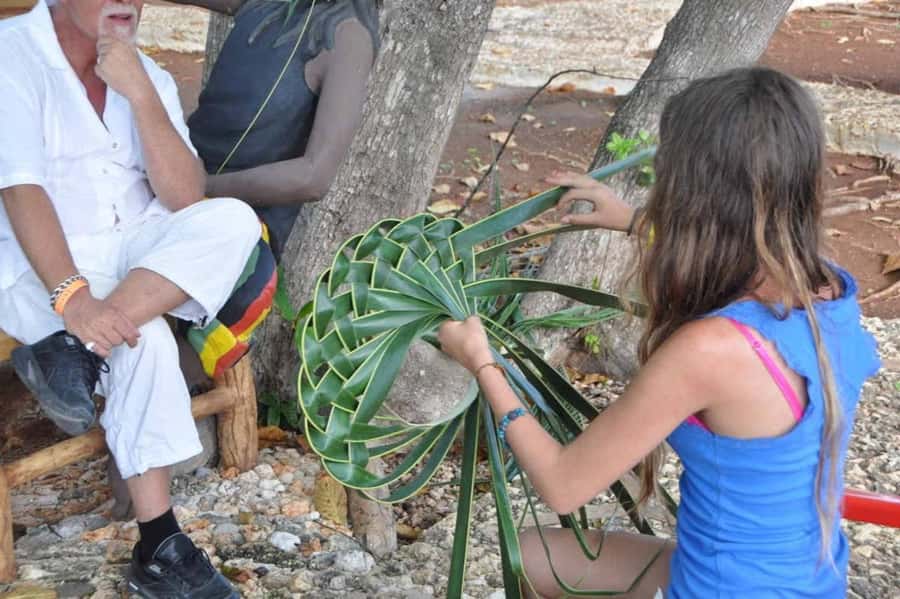
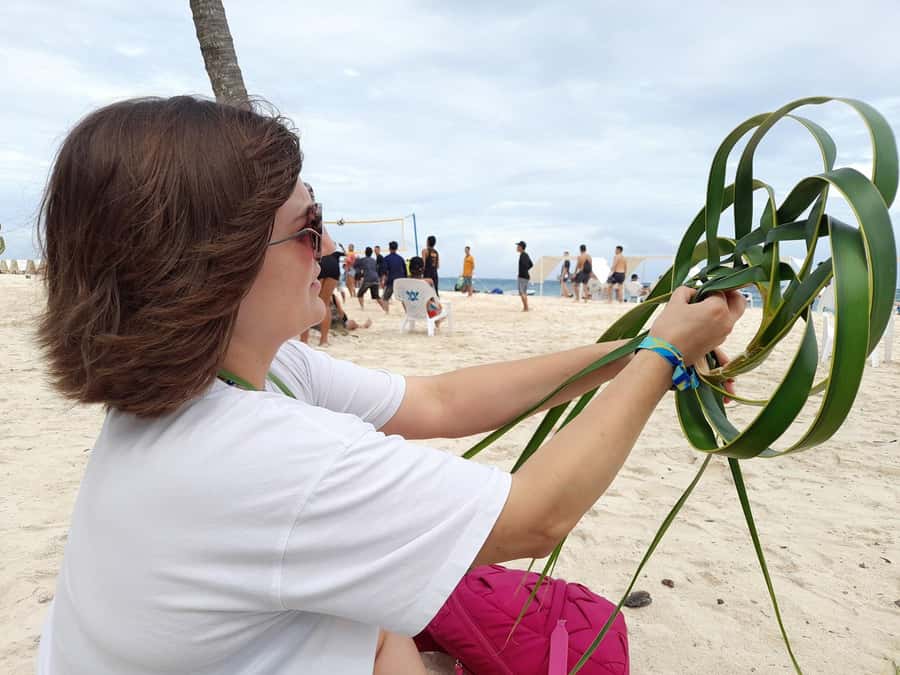
After watching the skilled makers, you get to handle the material yourself. The class includes simple ornamental projects such as a decorative bird and a necklace. These are more realistic beginner projects than trying to copy a full sunhat in a short session.
Do not expect perfect results on the first attempt. The point is to learn the basic handling of coconut palm and understand the work involved. You may produce something a little uneven, and that is part of the charm. A handmade souvenir carries the memory of the lesson better than a polished item bought without context.
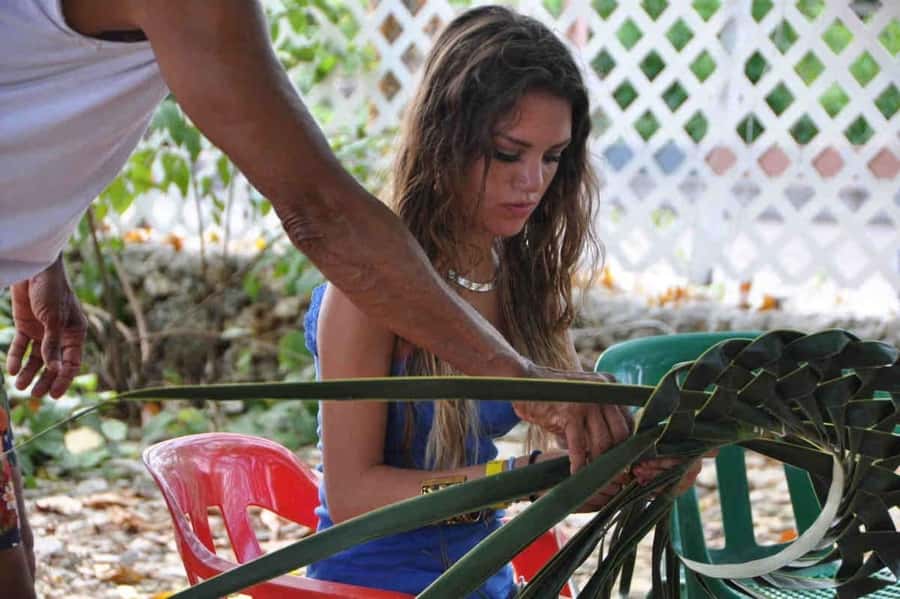
The instructor’s patience is important here. Sky is described as able to explain the process clearly and adjust to individual requests. That is helpful if your fingers need extra time or if you want to make a small change to the design.
Wear clothes that can get dirty. Palm material is natural, and the practical work may leave bits on your clothing. Comfortable shoes are sensible, especially if your session includes walking or a beach setting. A towel and beachwear are also listed among the suggested items, which points to the possibility of combining the activity with time near the coast.
Caribbean views and the practical side of an outdoor class
The workshop includes scenic views on the way and may take place near the sea. That setting gives the class a strong sense of place, but it also affects comfort.
Bring a sun hat, water, biodegradable sunscreen, and insect repellent. San Andrés sun can make a short outdoor session feel longer, especially if you arrive without enough water. A camera is useful for both the process and your finished piece, though you should stay focused on the material while you are weaving.
The activity is not a formal beach excursion, so beachwear is optional rather than essential. Still, the suggested packing list includes beachwear and a towel, and one arrangement includes a northern beach setting. Check your pickup and meeting details so you know how much coastal time to expect.
Smoking is not allowed. The activity is listed as wheelchair accessible, but the exact ease of movement may depend on the selected house, vehicle, beach area, and outdoor surface. If access needs are important for your booking, confirm the practical details with Guia SAI in advance.
How much value do you get for $39?

At $39 per person, this is priced above a quick souvenir purchase but below many full-day island outings. The value comes from the personal instruction, private format, transportation when selected, and cultural talk, not from the amount of material in the souvenir itself.
You could buy a coconut ornament for less. That would miss the family stories, the old photographs, and the chance to see a local craftsperson create a hat or fruit bowl in front of you.
The price makes the most sense if you want a short cultural activity between beach time and other plans. The 90-minute to two-hour length is long enough to learn and make something, but short enough to fit into a half-day schedule.
It may feel less worthwhile if you only want a polished item to take home or if you have no interest in learning the process. This is a class, not simply a shopping stop. You are paying for time with the makers and for the context around the objects.
Hotel pickup and drop-off can improve the value if you are staying outside the town center. A private group also means you are not paying for a large, impersonal demonstration. Still, confirm which services are attached to your selected option, since pickup is optional and the starting point depends on the booking.
Who will enjoy this most?
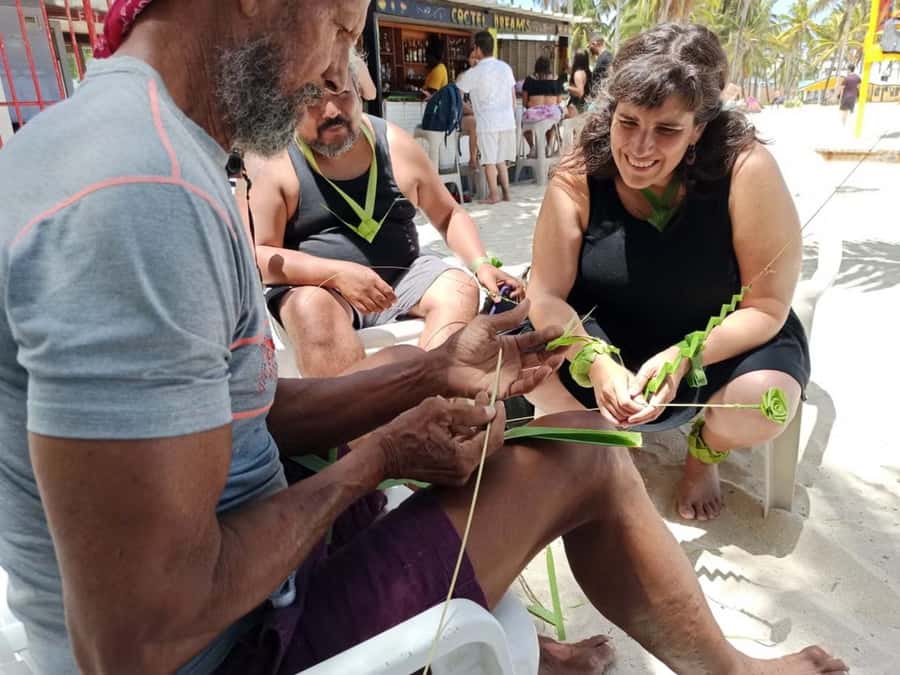
I would recommend the workshop to you if you like local crafts, family-run experiences, and small cultural encounters. It suits couples, families, and small groups who want to do something hands-on rather than spend another few hours in a vehicle.
It is also a good choice if you want a souvenir with a story. A small bird or necklace made during the class will remind you not only of San Andrés, but of the people who showed you how to work with the palm.
The activity should work well for visitors who speak English or Spanish, since both languages are offered. The private format is useful for mixed-age groups because the pace can be adjusted more easily than in a large class.
You might choose another activity if your main goal is water sports, a long beach outing, or a detailed craft course lasting most of the day. This is a compact cultural workshop with some outdoor time, not a full island tour or advanced artisan training.
Timing, cancellation, and what to bring
The duration is listed as 90 minutes to two hours, with start times based on availability. Leave a little space around the appointment if you have another booking afterward. The car transfer alone is about 20 minutes, and the exact pickup route can vary.
Cancellation is free up to 24 hours before the activity for a full refund. You can also reserve now and pay later, which helps if you are still arranging your San Andrés schedule.
Pack:
- Comfortable clothing and shoes
- Water and biodegradable sunscreen
- A sun hat and insect repellent
- A camera
- A towel and beachwear if your option includes a coastal setting
- Clothes that can get dirty
The practical rule is simple: dress for outdoor work, not for a formal meal. Keep valuables limited, and make sure you have room for the finished piece in your luggage.
The final call: book it for the story, not just the souvenir
I would book the San Andrés Coco Art Workshop if you want to meet local makers and understand why the coconut palm matters to the island. Sky and his father offer something personal: a family craft, old photographs, stories of San Andrés, and a chance to work with the material yourself.
The strongest part is the combination of demonstration and participation. You watch a sunhat or fruit bowl take shape, then make a simpler object with guidance. The class is friendly and practical, but it does require patience and a willingness to accept beginner-level results.
At $39, it is good value for a private, bilingual cultural activity with possible pickup and a take-home souvenir. Skip it if you want a fast purchase or a major sightseeing tour. Choose it if you want a memorable pause from the beach and a better understanding of the island behind the postcard.
FAQ
Where does the San Andrés Coco Art Workshop meet?
The supplier meets you at the entrance of a typical house near Bolívar Park, at Avenida 20 de Julio number 4A-26. The location is in front of Omalina Clinic, diagonally across from Bolívar Park and diagonally across from the registration office.
Is hotel pickup available?
Hotel pickup and drop-off are included with selected options. Pickup is optional, and Guia SAI contacts you to coordinate the arrangement.
How long does the workshop last?
The activity lasts between 90 minutes and two hours. Available starting times depend on the date and selected option.
What languages does the guide speak?
The workshop is available in English and Spanish.
Is this a private activity?
Yes. The experience is listed as a private group activity.
What will I make during the class?
You may learn to create simple ornamental pieces such as a decorative bird or necklace. You also watch local artists make objects such as a sunhat and fruit bowl from coconut palm material.
Is the workshop wheelchair accessible?
The activity is listed as wheelchair accessible. Since the exact setting can vary, confirm the practical access details for your selected option if needed.
Can I cancel for a refund?
You can cancel up to 24 hours in advance for a full refund. The activity also offers a reserve-now, pay-later option.
Just added around San Andres
- San Andres: White Party on boat with open bar, dinner and dancers!★ 5.0 · 4 reviews
- San Andres: Private San Andres Bay Tour by Luxury Speedboat★ 5.0 · 24 reviews
- San Andres: Private Boat Trip with Aquarium and Beach Stops★ 4.8 · 3 reviews
- San Andres Island Tour In Shared Pontoon★ 3.2 · 10 reviews
- From San Andrés: Speedboat Tour to Johnny Cay Island★ 3.6 · 6 reviews
- SAN ANDRES: Island Tour by Chiva + Hoyo Soplador★ 3.8 · 6 reviews
- SAN ANDRES: FULL DAY SHARED PONTOON TOUR★ 3.4 · 7 reviews
- San Andres: Transfer by Boat + Natural Aquarium★ 3.9 · 8 reviews
San Andres Tours, compared.

Beach Cart in San Andrés : your ideal Caribbean experience
Read our review →
Boat Tour to Johnny Cay & Aquarium in San Andres Island
Read our review →
Marine Safari Tour on San Andrés Island: Includes photo with DRONE
Read our review →
Browse the lists this tour appears in