
Reviewed · COLOMBIAN STREET FOOD TOURS
Santa Marta Street Food Tour: 7 Tastings with a Local Guide
Santa Marta’s best food stories are found in market stalls and family-run stands, not polished tourist restaurants. This three to four-hour walk takes you from San Francisco Church into the public market, then on to handmade arepas, specialty coffee, coconut sweets, and Caribbean patacones.
I like the generous amount of food and the way the stops show different sides of local life. I also like the small-group feel when numbers are low, since guides such as Álvaro, Paula, Al, and Hugo have room to explain dishes and adjust the pace.
The main drawback is the walking. You may cover about five miles, often in Santa Marta’s heat, so this is not a good match if long walks are difficult. Bring water, wear comfortable shoes, and arrive hungry.
Key points to know before you book
- Seven substantial tastings: Fruit, avocado, cayeye, arepas, coffee, cocadas, juice, and patacones add up to a full meal.
- A true market start: The public market offers a close look at daily shopping, street vendors, fish, meat, and produce.
- Cayeye is the local food lesson: This mashed green plantain dish explains an important part of Caribbean Colombian breakfast culture.
- A long city walk: The route is rewarding but demanding, with some groups covering roughly five miles.
- Good dietary flexibility: Vegan and vegetarian versions can be accommodated when arranged for the tour.
- Strong value at $39: The price includes food, drinks, coffee, and a bilingual local guide for three to four hours.
Why this tour works as a first taste of Santa Marta
This is more than a meal with a few facts attached. Food gives you a practical way to understand Santa Marta, a Caribbean city where plantains, coconut, fruit, coffee, fried snacks, and fresh produce shape everyday routines.
You begin at 9:00 a.m. in Saint Francis Square, in front of San Francisco Church. That early start matters. The market is active, breakfast foods are still being prepared, and you can eat enough here to make lunch unnecessary.
I would schedule this near the start of your stay. You’ll learn what cayeye is, discover fruits you may not recognize, and get a sense of where locals eat. That can make later meals in Santa Marta less intimidating and more enjoyable.
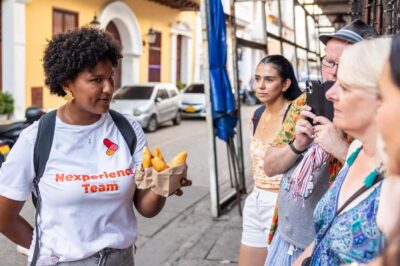
The tour has a maximum of 30 people, though some departures are much smaller. A small group makes it easier to ask questions and keep up with the guide. Álvaro is especially noted for his warm explanations and city knowledge, while Paula has led groups through the food stops with an easy, friendly manner. Guides named Al and Hugo have also been praised for sharing local context and looking after the group.
More Colombian Street Food Tours in Santa Marta:
- Santa Marta A Historical & Street food Experience
★ 4.7 · 41 reviews - Medellin: Comuna 13 Graffiti Tour, Cable Car & Street Food
★ 4.8 · 9,046 reviews - Medellín: Comuna 13 True Story and Street Food Tour
★ 4.9 · 1,779 reviews
San Francisco Square sets the scene
The meeting point is easy to identify: Saint Francis Square, at Cra. 4 in Santa Marta’s historic center, directly in front of San Francisco Church. The opening ten minutes are used to introduce the food and stories you’ll encounter.
Do not expect a long church visit or a formal history lecture. The value here is orientation. You meet the guide, hear how the tasting route works, and begin connecting the city around you with the food on your plate.
From the start, ask about ingredients you do not know. The tour is designed around explanation as much as eating, and the best questions often come before you reach the market.
Santa Marta’s public market brings the food to life
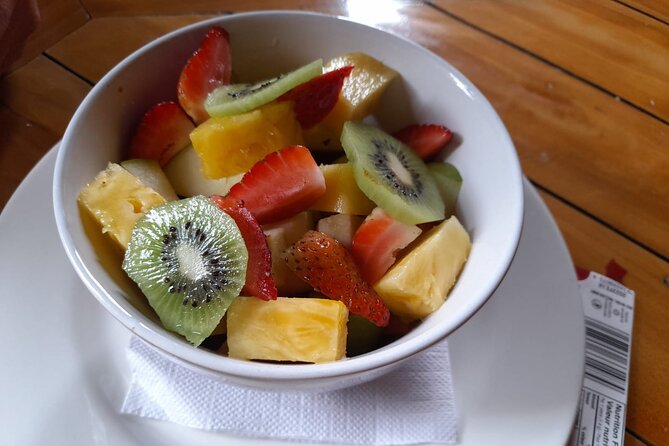
The public market is the heart of the morning. You spend about 45 minutes here tasting fresh zapote and creamy local avocado from street vendors, while walking among produce and other working market areas.
Zapote is worth special attention. It is a soft, sweet tropical fruit with a texture and flavor that may be unfamiliar if you come from outside the region. Trying it in the market, rather than ordering a version prepared for tourists, gives you a better feel for how local fruit is bought and eaten.
The avocado offers a different lesson. In Santa Marta, fruit is not just a dessert or breakfast side. It appears as a substantial, everyday food, and the market shows how central fresh produce is to the local diet.
The route also passes through fish, meat, and vegetable sections. These are working areas, not displays arranged for sightseeing. You may find the smells and activity intense, but that is part of the point. You are seeing where ingredients begin before they reach a café or restaurant.
This is one of the strongest parts of the experience for anyone who wants to understand ordinary Santa Marta. It is also where comfortable shoes matter. Market floors and city sidewalks are not always smooth, and you will continue walking after the tasting.
Doña Yami’s cayeye explains costeño breakfast
At Doña Yami’s stand, you try cayeye, a beloved Caribbean dish made from mashed green plantains. The stop lasts about 45 minutes, giving you time to eat and hear why this food matters in costeño culture.
Cayeye is filling, simple, and distinctly tied to the Caribbean coast. It is not merely a plantain substitute for potatoes. The dish reflects the region’s ingredients and the practical style of local cooking, where a few familiar foods become a satisfying meal.
Several people find this one of the most memorable tastings because it is something they might not order without guidance. That is the advantage of a food walk: you can try a local staple without committing to a full restaurant portion or guessing from a menu.
By this point, you may already be well on your way to being full. Do not eat a heavy breakfast before meeting the group. A light snack is fine if you need one, but most people will appreciate arriving with plenty of room.
A few more Santa Marta trips to weigh up
- Santa Marta: Guided Walking Food Experience
★ 4.8 · 33 reviews - Cartagena: Guided Street Food Tour with Tastings
★ 4.9 · 833 reviews - Medellín: Pablo Escobar Tour with beer included
★ 4.7 · 612 reviews - Bogota Food Tour with over 12 Tastings & Tejo
★ 4.9 · 454 reviews
Doña Ketty’s arepas bring the cooking close
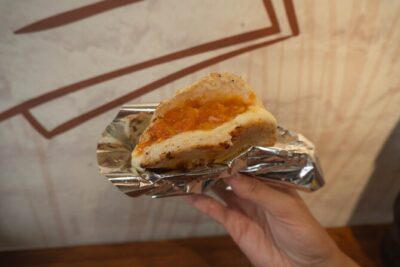
The next stop is Doña Ketty’s street stand, where you watch handmade arepas being prepared and served fresh. You spend about 30 minutes here.
Arepas vary across Colombia, and this stop gives you a chance to taste a local version rather than a generic packaged one. The preparation is part of the appeal. You see the food made at a small stand, then eat it while it is fresh.
One particularly popular variation mentioned by participants is arepa con huevo. The tour may include other fillings or combinations, but the important point is that you are trying arepas in the setting where locals buy them, not as a carefully styled restaurant appetizer.
This is also a good place to ask about texture and ingredients. Handmade arepas can be denser, crispier, or more filling than you expect. If you have dietary restrictions, tell the guide early so the food choices can be adjusted where possible.
GNAM Café slows the pace with Colombian coffee
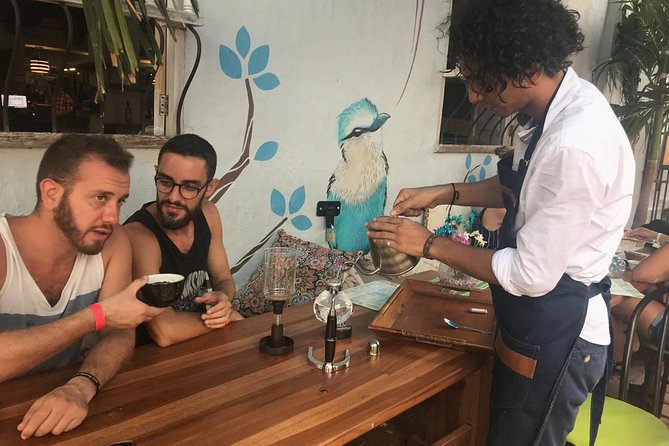
After the market and street food, GNAM Café offers a 30-minute change of rhythm. A barista prepares specialty Colombian coffee using an alternative brewing method, then explains aromas, flavors, and coffee’s place in Colombian culture.
This stop is useful because it treats coffee as more than a caffeine break. You get a chance to compare the drink’s aroma and flavor with the stronger, simpler coffee often served in everyday settings.
For coffee drinkers, this may be the most polished stop of the morning. It also provides a seated pause during a physically active tour. If you do not drink coffee, tea is included as an option, according to the tour details.
The coffee comes after several tastings, so pace yourself. You do not have to rush through the earlier food. Guides have been flexible about photo stops and breaks, and a good guide should help the group keep a comfortable rhythm.
Santa Marta Bay adds sea air and cocadas
The route then reaches Santa Marta Bay for a scenic walk and a taste of cocadas, traditional coconut sweets sold by local vendors. This stop lasts about 30 minutes.
The bay walk changes the mood. Instead of market aisles and food stands, you get open views and a chance to take in Santa Marta’s coastal setting. Cocadas are sweet, chewy coconut treats, and they make a natural snack while you walk.
I like this stop because it connects food with place. Coconut sweets make sense here, beside the Caribbean, and eating them along the water feels less formal than ending the day inside a restaurant.
It is also a useful pause before the final dish. The route is long, and the short scenic walk gives you time to enjoy the surroundings and let the earlier food settle. Keep your water bottle filled, though. A past experience on the route felt harder because water was not offered promptly, so you should ask directly if you need more.
Mañe Cayón finishes with Caribbean patacones
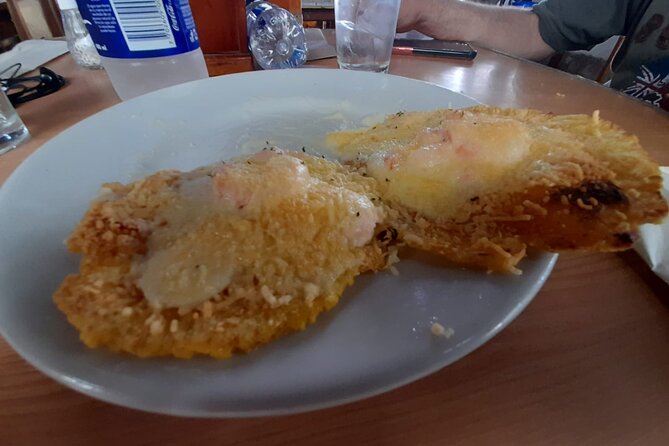
The final stop is Restaurante Mañe Cayón, where the group eats Caribbean-style patacones topped with Santa Marta flavors. You spend about 45 minutes here before returning to the starting point.
Patacones are flattened, fried green plantains, and they provide a savory finish after the fruit, coffee, and cocadas. The toppings make this more than a plain fried side dish. Expect a substantial final tasting, possibly including combinations such as cheese or shrimp, based on the kinds of food served on the route.
This is where the full-meal claim becomes clear. The morning includes fried foods, sweets, juices, fruit, breakfast dishes, coffee, and a final savory plate. If you eat everything at every stop, you may be full enough to save part of the last dish for later.
The restaurant ending also gives the route a gradual change from street food to a more settled meal. You begin in the market and finish at a traditional local restaurant, with cafés and vendors in between.
What the $39 price really covers
At $39 per person, the value is strong if you want both food and a guided city walk. The fee covers seven food and drink stops, natural fruit juice, a specialty Colombian coffee or tea tasting, and a bilingual local guide.
The amount of food is the main reason this works financially. You are not paying $39 for seven tiny decorative samples. The tastings include enough snacks and dishes to replace a full meal, and several people have found they needed to skip breakfast or save the last dish.
The guide adds another layer of value. Without help, you could visit the market or buy an arepa, but you might not know what zapote is, why cayeye matters, or how the dishes fit into Caribbean Colombian culture. The route also takes you through parts of Santa Marta you might not otherwise visit.
Alcohol is not included, though it may be available for purchase at some stops. One experience included cold beers, but you should treat alcohol as an optional extra rather than part of the $39 package.
The booking pattern suggests planning ahead. This experience is booked about 20 days in advance on average, so I would not leave it until your final morning in Santa Marta if the date matters to you.
The walking is the real condition of entry
The biggest practical issue is distance. The tour lasts three to four hours, but the eating stops do not mean you remain seated most of the time. You walk between the market, street stands, café, bay, and restaurant.
Some groups have covered about five miles. That is a serious walk for a food tour, especially in warm weather. Several guides have adjusted the route for older parents or allowed them to meet the group at the last stop, but you should not assume that every departure can be modified in the same way.
I would book this confidently if you enjoy walking through working city districts and can stay on your feet for much of the morning. I would think twice if you have mobility limitations, tire quickly, or dislike heat. Most people can participate, and service animals are allowed, but the route itself remains physically active.
Wear walking shoes rather than sandals with thin soles. Carry water, use sun protection, and tell the guide early if you need a pause. The food is generous, so the route’s walking also serves a practical purpose: it gives you time between dishes.
Dietary needs and group style
Vegan and vegetarian diets can be accommodated. You should state your needs when booking and remind the guide at the start, since the route includes dishes that may use eggs, cheese, shrimp, or other animal products.
The bilingual guide is there to explain the food and manage the route in both languages. English ability has been excellent on some departures, while one experience found the explanations hard to follow. That suggests the guide assignment can affect the experience, even though the overall setup is consistent.
A group may contain as many as 30 people, but smaller groups create a more personal outing. If your departure is full, expect less individual attention and more waiting at small stands. If the group is small, you will have a better chance to ask about ingredients, take pictures, and set the pace.
The tour ends back at the original meeting point. It is near public transportation, which makes it practical to pair with a free afternoon in the historic center.
Who should book this food walk
I would recommend it to first-time visitors who want a guided introduction to Santa Marta rather than a restaurant-only tasting. It suits curious eaters, couples, solo visitors, and families who enjoy walking and trying unfamiliar foods.
It is also a good choice if you want local context without booking a full-day excursion. You see the market, meet small food vendors, walk beside the bay, and learn how dishes such as cayeye and patacones fit into daily life.
I would not choose it for a leisurely, seated brunch. I also would not book it for someone who struggles with long walks, hot weather, or large amounts of food. The tour is active, filling, and broad in scope.
Free cancellation is available if you cancel at least 24 hours before the 9:00 a.m. start. Changes made inside that period are not accepted, and poor weather may lead to a new date or a full refund.
Should you book the Santa Marta food tour?
Book it if you want a full morning of local food and city walking for $39. The strongest features are the market visit, the generous portions, the chance to try foods you might skip on your own, and the guides’ ability to connect each dish with Santa Marta’s culture.
Skip it if you want a short stroll or a light tasting menu. The five-mile pace reported on some departures is the key warning. For everyone else, this is a practical way to get your bearings, eat well, and see a side of Santa Marta that a standard sightseeing route can miss.
FAQ
Where does the Santa Marta food tour begin?
It begins at 9:00 a.m. in Saint Francis Square, in front of San Francisco Church at Cra. 4 in Santa Marta’s historic center.
Where does the tour end?
The activity ends back at the original meeting point in Saint Francis Square.
How long does the tour last?
The tour lasts approximately three to four hours.
How many food tastings are included?
You visit seven food and beverage locations and try snacks or samples such as zapote, avocado, cayeye, handmade arepas, Colombian coffee, cocadas, and patacones.
Is coffee included?
Yes. A specialty Colombian coffee tasting at GNAM Café is included. Tea is also listed as an option.
Can vegan or vegetarian diets be accommodated?
Yes. The tour can accommodate vegans and vegetarians. Share your dietary needs when booking and confirm them with the guide at the start.
Are alcoholic drinks included?
No. Alcoholic beverages are not included, though they may be available to buy at some stops.
Is the tour suitable for people with mobility concerns?
Most people can participate, but the tour involves extensive walking, and some departures cover about five miles. It may not suit anyone who has difficulty walking longer distances.
More Food in Santa Marta
- Medellin: Street Food and Poblado Rooftop Tour with a Local
★ 4.8 · 317 reviews - Medellin: Party Bus with DJ & Street Food Tastings
★ 4.5 · 112 reviews - Medellín: E-bike and Foodie Tour
★ 4.8 · 102 reviews - The Cali Street Food Walking Tour
★ 5.0 · 81 reviews
Just added around Santa Marta
- Palomino: Palomino River Tubing and Hiking Tour★ 4.6 · 40 reviews
- Los Naranjos Beach Horseback Riding Tayrona Park.★ 5.0 · 32 reviews
- Tayrona Park Hike Tour to Cabo San Juan: Private or Shared★ 4.5 · 44 reviews
- Trekking Cerro Kennedy 2 days★ 5.0 · 47 reviews
- Full-Day Catamaran Tour through Tayrona★ 4.5 · 50 reviews
- Tour en Velero a Bahía Concha Parque Tayrona★ 3.5 · 4 reviews
- TOUR DE 2 DIAS AL CABO DE LA VELA, LA GUAJIRA★ 4.4 · 14 reviews
- Tour to Punta Gallinas with Cabo de la Vela 3 Days★ 3.3 · 4 reviews
Colombian Street Food Tours, compared.

Comuna 13 Graffiti Tour, Cable Car & Street Food
Read our review →

Street Food and Poblado Rooftop Tour with a Local
Read our review →
Browse the lists this tour appears in