
Reviewed · FOOD & DRINK
Shared Tour Bogota’s Street Local Food
Bogotá’s most memorable food lesson may be hot chocolate served with cheese, but this walk goes well beyond that unusual pairing. You’ll trace the roots of empanadas, obleas, ajiaco, coffee, and aguardiente while moving through the Candelaria area with a local guide.
I like the mix of food and cultural context, and I like that you choose what to eat instead of paying for a fixed tasting menu. Guides such as Leo and Patricia are singled out for clear explanations and an easygoing manner. The main drawback is practical: food is not included, some of the stops lean sweet, and the walk covers about 7 kilometers.
Key points to know before you book
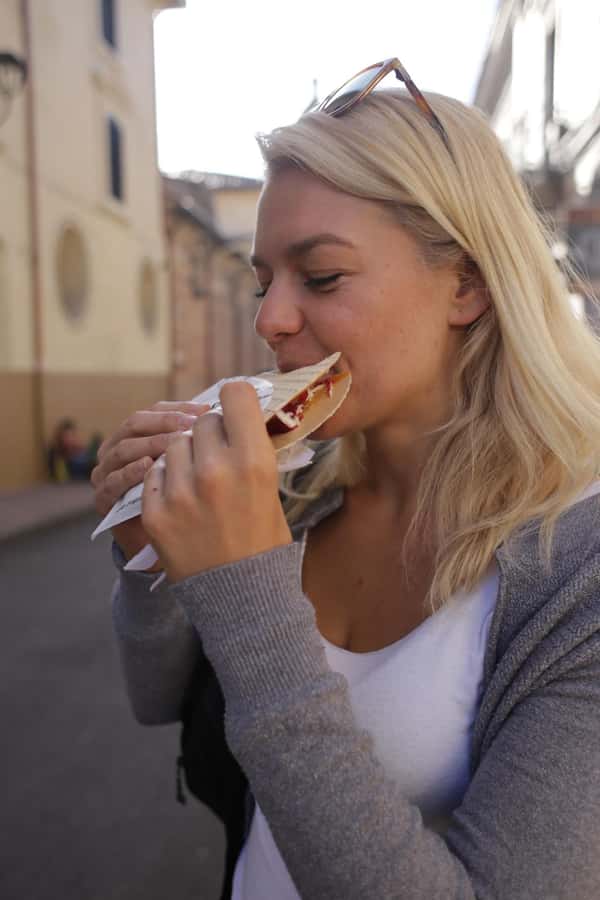
- Hot chocolate with cheese: Try Colombia’s most unexpected breakfast-style combination and decide for yourself if the flavors belong together.
- Local Candelaria stops: The route uses food spots in Bogotá’s historic center rather than relying only on polished tourist restaurants.
- Food costs extra: The tour costs $13 per person, then you pay for what you choose to eat, usually around $9 to $10.
- A walking history lesson: Your guide connects today’s dishes with Indigenous traditions and European influence.
- A good guide matters: Leo receives especially strong praise for detailed explanations, humor, and making solo participants feel comfortable.
- Come ready to walk: The route lasts about 150 minutes, or approximately three hours according to the tour description, and includes roughly 7 kilometers on foot.
Starting with Bogotá’s food story
Meet the Beyond Colombia team in front of the Museo del Oro, where red umbrellas make the group easy to spot. This location is useful for a first meeting because it puts you in central Bogotá, close to the Candelaria streets where much of the walk takes place.
The opening discussion sets up Colombia’s food as a meeting point of cultures. Your guide explains how Indigenous ingredients and cooking traditions changed after European influence arrived. That gives the tasting stops more meaning. You are not just trying an empanada, you are learning why a familiar snack belongs in Colombia’s larger food story.
The guide’s role is important here. Leo has been praised for detailed information about Bogotá and Colombia, while also keeping the group relaxed and easy to talk with. Patricia is also described as a good guide. The company says its guides present an objective account of Colombian food history rather than taking sides, which is helpful when a short city walk touches on colonization, local identity, and national dishes.
You should expect plenty of walking between stops, with pauses to listen and eat. The route is not designed as a sit-down meal. It is better for you if you enjoy changing locations, hearing stories in the street, and trying smaller portions instead of spending the afternoon at one restaurant table.
A few more Bogota trips to weigh up
- Bogota Food Tour with over 12 Tastings & Tejo
★ 4.9 · 454 reviews - Bogotá: Craft Beer Tour with Tasting
★ 4.9 · 120 reviews - Bogota: Colombian Coffee Tasting
★ 4.8 · 92 reviews
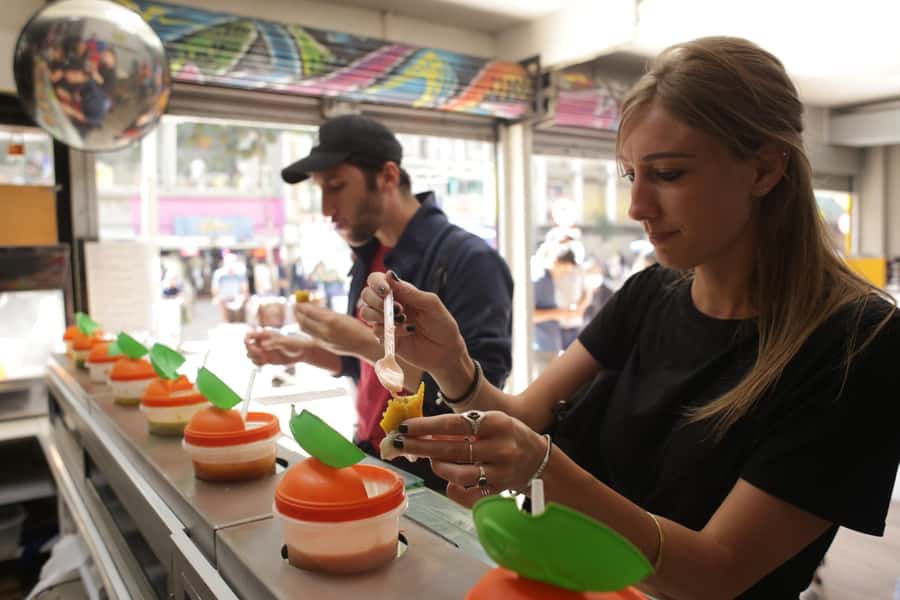
Empanadas and the first taste of local street food
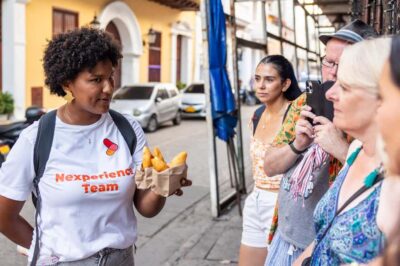
Empanadas are one of the clearest introductions to Colombian street food. The tour explains their origin and gives you a chance to consider how a food with European roots became part of everyday Colombian eating.
The important point is not simply the pastry itself. Your guide helps connect the dish to the country’s wider cultural mix, showing how food changes as it moves between places and people. You’ll also learn about the toppings and accompaniments that should not be missed.
Since food is purchased separately, you can decide how much to order. That makes sense if you have already eaten breakfast or are still adjusting to Bogotá’s altitude and schedule. It also gives you room to skip a dish that does not appeal to you, though the cost can become less predictable if you try everything.
Vegetarians have useful flexibility here. About 70 percent of the food choices are described as vegetarian-friendly, so you should have several options even if meat is not part of your diet. Still, tell your guide early that you want vegetarian food so the recommendations fit your needs.
Obleas, toppings, and the sweet side of the route
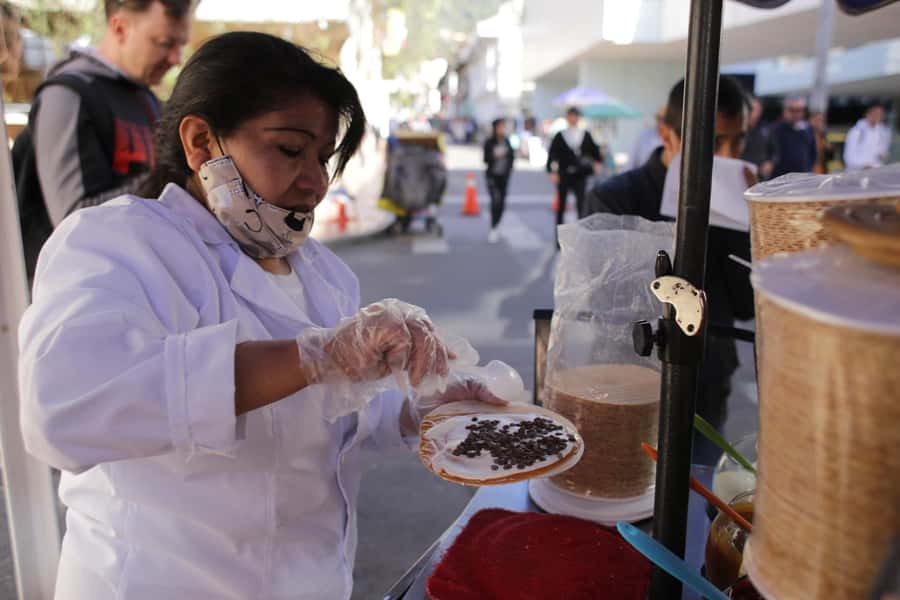
Obleas bring a very different texture and mood to the walk. These thin wafers are paired with toppings, and the guide explains both their background and the combinations worth trying.
This is one of the fun parts of the route, but it also points to a possible weakness. One person found the tour too focused on sweet foods. If you prefer savory dishes, ask your guide how to balance the stops before you start ordering.
The tour is flexible enough for you to pay only for what you eat. That is a better arrangement than a fixed package if you have allergies, a small appetite, or a strong preference for savory food. It is less convenient if you want to know the exact final price in advance.
The best approach is to treat the food budget as separate from the booking cost. At $13 per person, the tour itself is inexpensive for a guided walk in central Bogotá. Add roughly $9 to $10 for tastings, and your likely total is around $22 to $23 per person, depending on what you select.
Coffee and the European influence on Colombian cooking
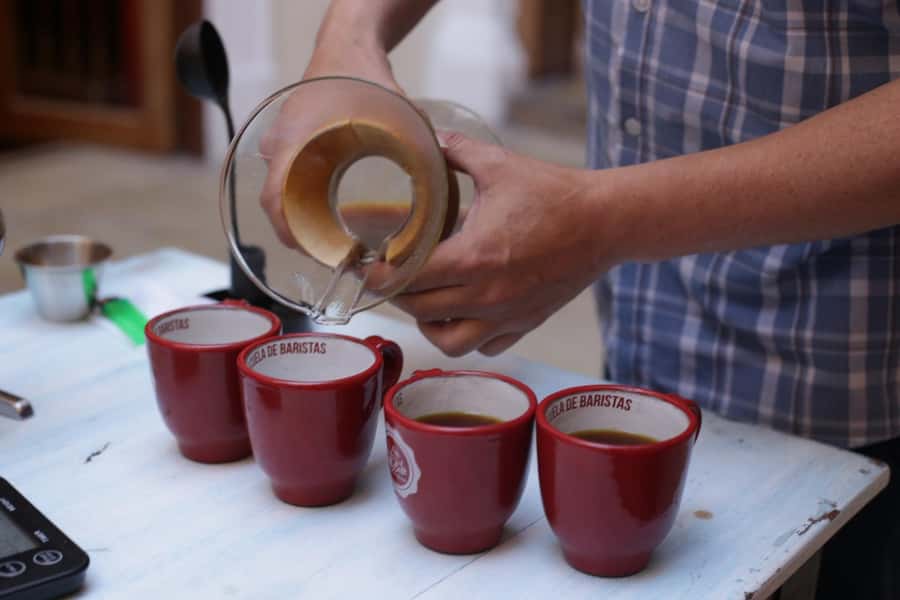
Coffee is included among the featured foods, and the walk uses it to explain another part of Colombia’s food identity. You will hear about the drink’s place in Colombian life and about the European influence that helped shape the country’s gastronomy.
This is not presented as a specialist coffee seminar. The value is the connection between a familiar drink and the city’s history. If you are planning to buy coffee during your Bogotá stay, the guide can also point you toward recommended local places after the tour.
The provider gives participants a wristband at the end, which can bring benefits and discounts with recommended partners. You also receive suggestions for places to eat lunch, buy coffee, and shop for souvenirs. Those recommendations can add value beyond the 150-minute walk, especially if Bogotá is your first stop in Colombia.
Keep your expectations sensible. The tour takes place in the city center and focuses on local food stops, but it is not a full coffee farm visit or a formal cooking class. You are getting an introduction to food culture, not a technical course.
Same city, a completely different kind of day:
- Bogota: Bicycle City Tour
★ 4.9 · 2,156 reviews - Zipaquirá: Salt Cathedral Group Tour with Pickup
★ 4.8 · 1,606 reviews - Bogotá: Guided La Candelaria Walking Tour
★ 4.8 · 1,229 reviews - Bogotá: Private City Tour, Monserrate, Emerald and Botero
★ 4.9 · 798 reviews
Aguardiente and the secret name for daytime drinking
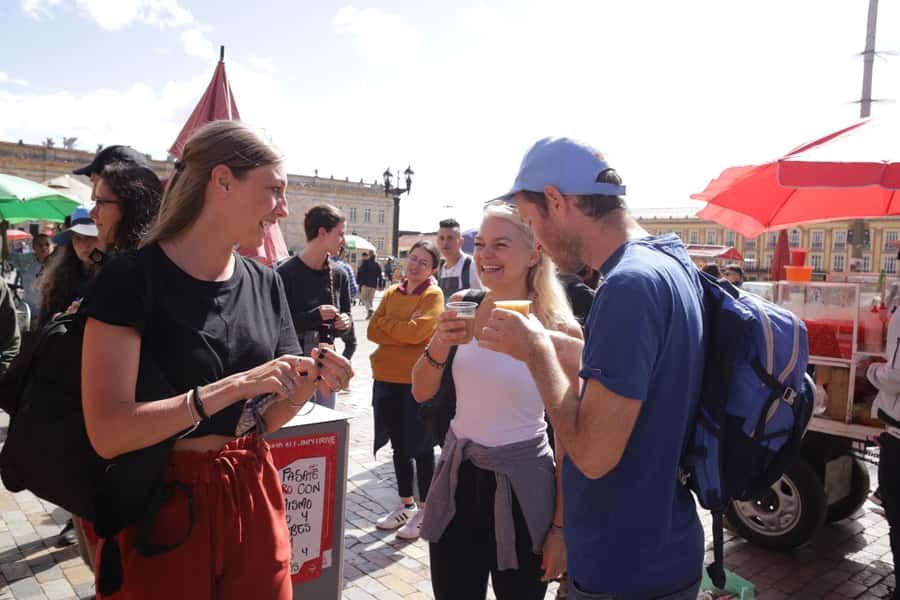
Aguardiente is Colombia’s anise-flavored national spirit, and the tour includes the amusing cultural detail of its secret name for drinking it at any time of day. This is the kind of small fact that can help you understand how Colombians talk about food and drink in daily life.
The stop is less about consuming a large amount of alcohol and more about learning the local custom and vocabulary. You should pace yourself, particularly because the walk continues afterward and Bogotá sits at high altitude. Water is specifically recommended, and it is smart advice.
Party groups are not allowed on this activity. That rule fits the format. The experience is built around conversation, food history, and local stops rather than a bar crawl. If you want a late-night drinking outing, this is not the right choice. If you want a brief cultural explanation of aguardiente alongside food, it fits much better.
Hot chocolate with cheese, Colombia’s boldest pairing
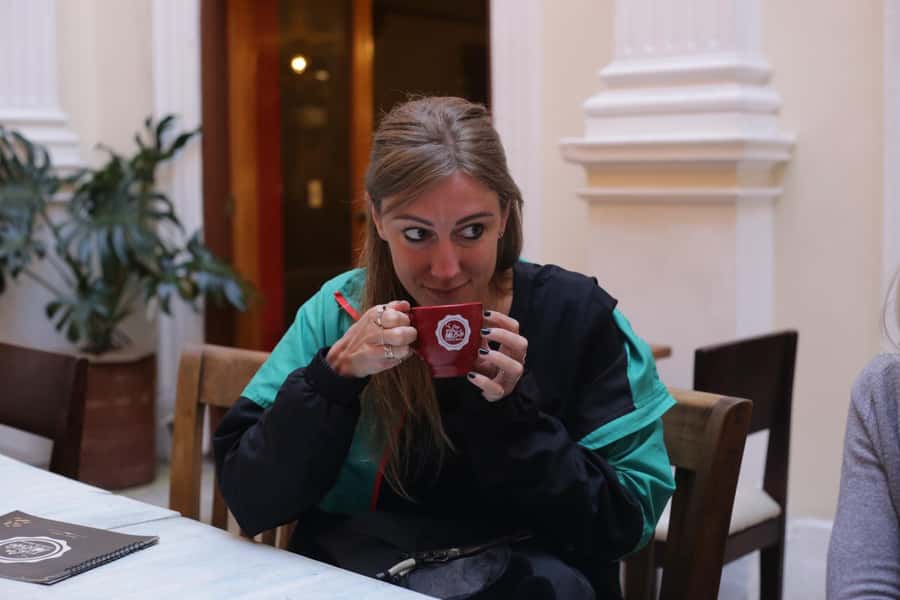
Hot chocolate with cheese is the tour’s most unusual food idea. The concept sounds simple, but the combination challenges the way many visitors think about a sweet drink. You are encouraged to try it as Colombians do and decide if the cheese softens into the chocolate in a way you enjoy.
This stop works because it is both culinary and social. Food traditions often make more sense when you see how they are eaten, not just how they are described. The guide can explain the custom, and you get a chance to test it without committing to a full meal.
It is also a reminder that Colombian food cannot be reduced to one flavor profile. The route moves between salty, sweet, savory, and alcoholic tastes. That variety is valuable, although the sweet stops may feel repetitive if you prefer hearty food.
If this pairing makes you cautious, order a small portion or share one. The pay-as-you-eat setup makes that possible and keeps an unfamiliar taste from becoming an expensive mistake.
Ajiaco and the right way to eat it
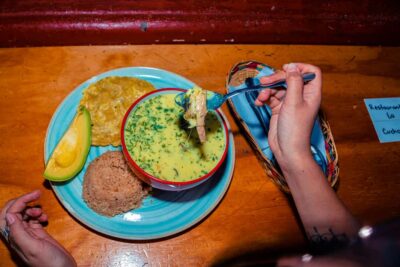
Ajiaco is one of Bogotá’s signature dishes, and the tour explains the best way to eat it. This matters because the dish is more than a bowl of soup. Its ingredients, preparation, and accompaniments reflect the highland setting and the mix of Indigenous and European influences discussed throughout the walk.
You should expect the guide to focus on how the dish is served and eaten, rather than simply handing you a sample without explanation. That practical instruction is one of the better reasons to take a food walk early in your stay. Later, when you order ajiaco on your own, you’ll have a clearer idea of what belongs on the table and how to approach it.
The available information does not promise a full restaurant meal, so plan for a tasting rather than lunch. If you arrive hungry, you may want to eat before or after the tour. The route contains several food stops, but portions and your own choices determine how filling it becomes.
Walking through Candelaria between bites
The route takes place in and around the historic center, especially Candelaria. You will walk through crowded areas, stop at local food places, and spend time listening to the guide outdoors. The tour notes roughly 7 kilometers of walking, so comfortable shoes are essential.
Bogotá weather can change quickly. Bring a rainproof coat or umbrella, along with water or another drink for the walk. Comfortable clothing matters more than looking polished, and there is no need to dress up for the food stops.
The city-center setting adds useful context, but it also requires attention. Keep your belongings close in crowded areas and follow the local advice not to give papaya, a Colombian expression meaning do not make yourself an easy target. The walk is not a reason to carry expensive equipment in plain sight.
Video and audio recording are not allowed. That may matter if you like documenting every stop, but it also keeps the activity focused on listening and conversation. You can take in the explanations without turning the walk into a filming session.
How the $13 price works
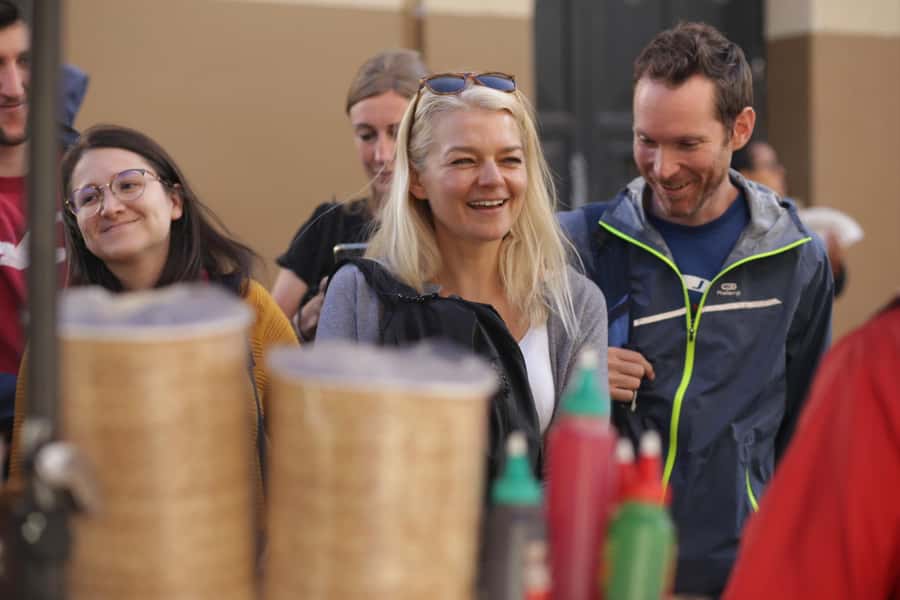
The $13 booking price is attractive, but it does not cover food or drinks. You should set aside another $9 to $10 for tastings if you want to sample several foods. Since you pay only for what you choose, the final amount can be lower or higher depending on appetite and drink choices.
For the price, you are mainly paying for the guide, the route, the explanations, and access to recommended local food spots. That is good value if you are new to Bogotá and want help ordering dishes that might otherwise be hard to identify. It is less compelling if you already know Candelaria well and prefer to eat independently.
The route also supplies practical follow-up help. The wristband discounts and recommendations for lunch, coffee, and souvenirs may be useful during the rest of your stay. I would book it early in a Bogotá visit, then use the guide’s suggestions to shape later meals.
Free cancellation is available up to 24 hours before the start, and you can reserve without paying immediately. Those terms make it easier to fit the walk around changing plans, though you should still cancel if you know you cannot attend because a guide has been assigned to the group.
Who will enjoy this walk most
I would recommend the tour to first-time visitors who want a quick introduction to Colombian food without committing to a formal restaurant tasting. It also suits solo visitors. The group format and guide-led conversation make it easier to join in, even if you arrive alone.
Food-curious adults will get the most from the experience. You need an open mind, since hot chocolate with cheese and aguardiente customs may not match your usual eating habits. The tour is intended for people age 12 and older, and it is not considered suitable for people over 65.
You should reconsider booking if you dislike walking, have difficulty covering about 7 kilometers, or need a guaranteed full meal. The food costs extra, the route is outdoors, and one part of the experience may feel too sweet for your taste.
It is also not a party activity. Groups looking for loud drinking or a nightlife atmosphere should choose something else. This walk is about food, local stories, and the daily culture behind the dishes.
Should you book Beyond Colombia’s food walk?
Book it if you want a guided first taste of Bogotá and like learning the story behind each dish. The low entry price, flexible food spending, vegetarian choices, and strong praise for guides such as Leo make it a sensible introduction to Candelaria.
Skip it if you want a fixed-price meal, a short route, or a strictly savory menu. Go in knowing that food and drinks cost extra, the walk is long, and the experience may take around 150 minutes to three hours.
For most food-curious visitors, I would schedule it early in your Bogotá stay. You’ll learn what ajiaco should be, discover which empanada and oblea toppings to seek out, and leave with a better sense of where to eat next.
FAQ
Where does the Bogotá street food tour meet?
Meet the Beyond Colombia team in front of the Museo del Oro. Look for the red umbrellas.
How long does the experience last?
The activity information lists a duration of 150 minutes. The tour description also says to expect approximately three hours, so allow extra time in your schedule.
Is food included in the $13 price?
No. Food and drinks are not included. You pay for the items you choose, with the additional cost estimated at around $9 to $10.
Is the tour available in English?
Yes. The experience includes a live English-speaking guide.
Are vegetarian options available?
Yes. About 70 percent of the food options are described as vegetarian-friendly.
How much walking is involved?
You’ll walk about 7 kilometers, with stops to hear explanations and try food.
Can I cancel the booking?
Yes. You can cancel up to 24 hours in advance for a full refund. You can also reserve now and pay later.
Just added around Bogota
- Bogotá: Graffiti Tour el mejor recorrido de arte urbano★ 4.7 · 41 reviews
- Shared Tour of Colombian Exotic Fruit at Paloquemao Market★ 4.7 · 20 reviews
- Shared Tour to Monserrate Hill and Gold Museum in Bogota★ 4.9 · 8 reviews
- Shared Tour Colombian Conflict War, Drug Trafficking & Peace★ 4.8 · 46 reviews
- Paragliding Activity with Transfers from Bogota★ 4.9 · 21 reviews
- Monserrate Express tour 3 hrs★ 4.6 · 6 reviews
- Nemocón Salt Mine Tour★ 5.0 · 3 reviews
- La Chorrera and Chiflon Waterfalls Private Hike Tour★ 5.0 · 7 reviews
Food & Drink, compared.
Comuna 13 Graffiti Tour, Cable Car & Street Food
Read our review →

Street Food and Poblado Rooftop Tour with a Local
Read our review →
Boutique Rum and Chocolate Tasting at Lunático
Read our review →Browse the lists this tour appears in