
Reviewed · HISTORICAL TOURS
Cartagena: Historic Center and Getsemaní Shared Walking Tour
Cartagena’s story changes block by block. In 150 minutes, this walk takes you from the indigenous people who lived here before Spanish arrival to Pedro de Heredia, the slave trade, pirate attacks, independence, African traditions, and today’s salsa and champeta. The final stretch through Getsemaní gives the old city a living, local pulse.
I like the route for two clear reasons: it connects famous sights to difficult history, and it adds practical local advice about food, prices, and places to visit. Guides such as Álvaro David, Dani, Legacy, Robert, and Ingrid have been singled out for their energy and clear explanations. The main drawback is the heat. You will walk for two and a half hours, often on sunny streets, so water, sunscreen, and sensible shoes matter.
Key points to know before you go
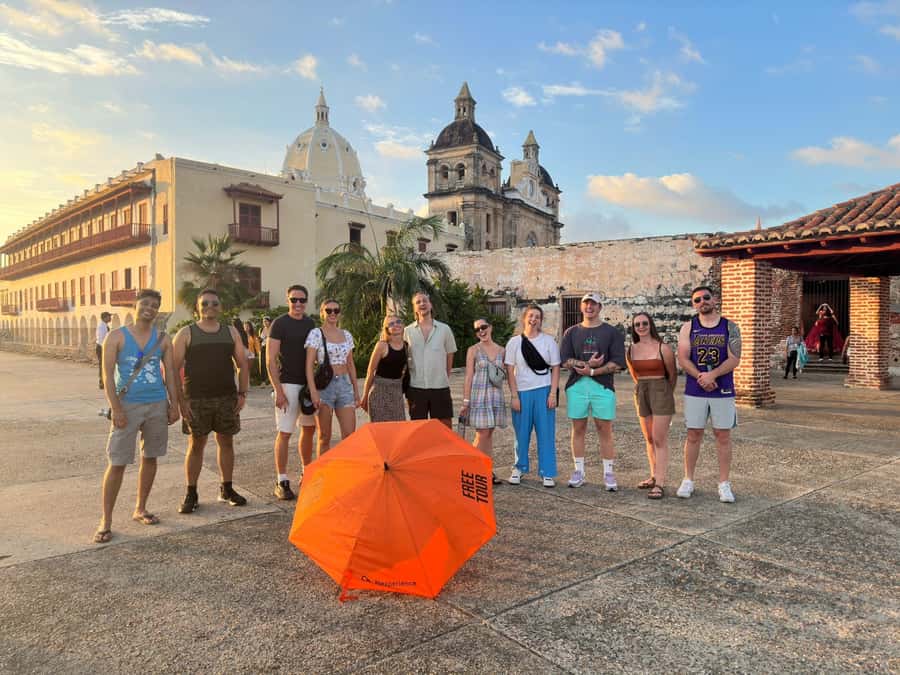
- A full introduction to Cartagena: Follow the city’s story from Spanish conquest and colonial trade to independence and modern culture.
- Two distinct neighborhoods: The route covers the Walled City, San Diego, and Getsemaní rather than staying in one historic pocket.
- History beyond pretty façades: Expect discussion of enslavement, African heritage, indigenous people, religion, military defense, and social change.
- Music and movement included: Salsa, champeta, and short dance moments may become part of the walk.
- A useful first-day activity: Guides often offer suggestions for restaurants, drinks, street food prices, and other places to see.
- Good value at $12: The fee includes the guide, both neighborhood walks, and tips, with no hotel transport, food, or drinks included.
Starting at Plaza Cervantes by the Clock Tower
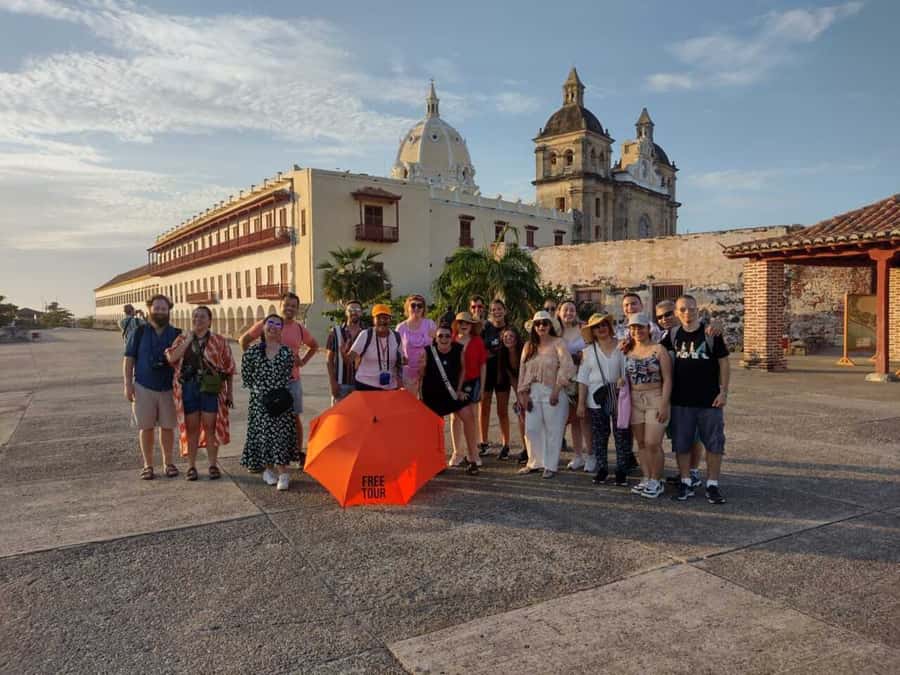
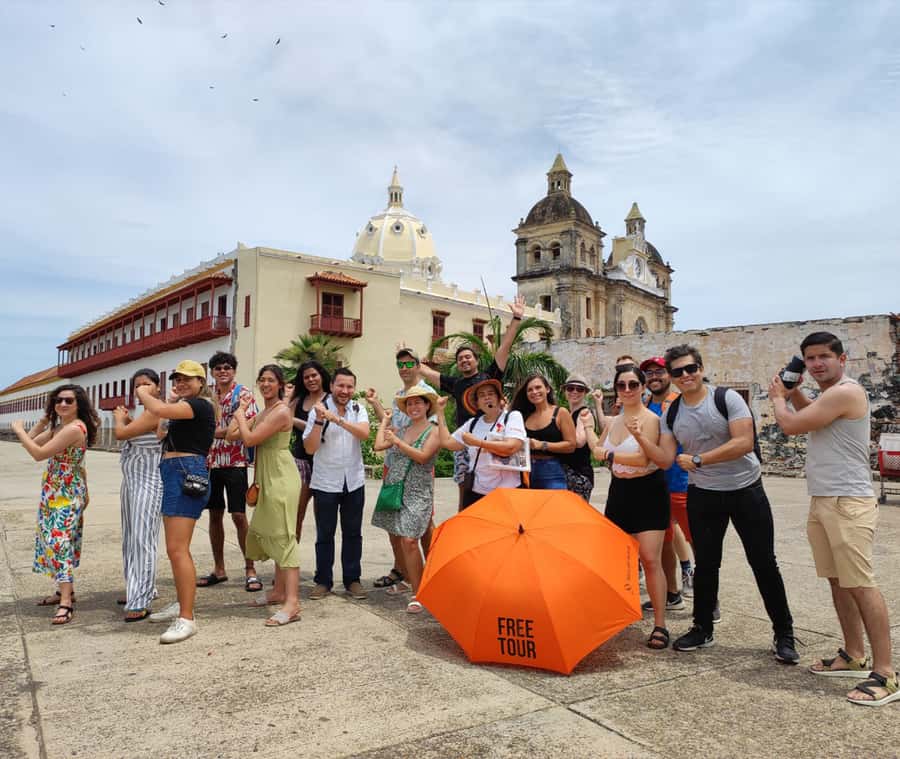
Meet at Plaza Cervantes, also called the Camellón de Los Mártires, directly in front of Cartagena’s Clock Tower. Look for the orange umbrella. That small detail matters in a crowded public square, especially when several walking groups gather nearby.
The Clock Tower is more than a meeting landmark. It is described as the Golden Key of Cartagena, and the tour uses it as the gateway into the Walled City. From here, your guide begins with the people who lived in the area before and during the arrival of the Spanish. That opening helps keep the story from beginning only with European buildings.
The walk is shared, so you will be part of a group rather than receiving a private tour. The guide may speak English or Spanish, and the quality of the experience will depend partly on the guide assigned that day. The recent guide team includes Álvaro David, Dani, Daniela, Legacy, Robert, Ingrid, Liz, Rebeca, and others. English-language feedback has been especially positive about clear storytelling, humor, and strong local pride.
A few more Cartagena trips to weigh up
- Visit Palenque with natives : history, culture and ancestral legacy
★ 5.0 · 53 reviews - Mangroves, cultural fishing, black heritage town and lunch
★ 4.5 · 29 reviews - Cartagena: History, Culture & Coffee Experience
★ 5.0 · 5 reviews
Following the old route of slavery and trade
After entering through the Clock Tower area, the group moves into Plaza del Ecuador, once called Plaza del Esclavo. The route continues along Porto Carrero and Candilejo streets, following part of the old enslavement route.
This is one of the most important parts of the walk because it puts Cartagena’s attractive colonial center in a more honest frame. You are not simply looking at balconies, churches, and painted walls. You are hearing how people, merchandise, and power moved through the city, and how slavery shaped its economy and social order.
Pedro de Heredia is introduced along the way as part of the city’s founding story. The tour does not treat conquest as a clean or simple beginning. Instead, the route links indigenous life, Spanish rule, African enslavement, and the mixed Caribbean culture that developed afterward.
At the Portal de los Dulces, the story turns toward women’s work and trade during the era of slavery. The women who sold sweets there helped create a tradition that descendants continue today. This is a useful stop because it shows how history survives through food, family customs, and public spaces, not only through monuments.
The old Plaza de la Aduana adds another layer. It was central to the sale and movement of merchandise, including enslaved people. You will see important buildings such as the Municipal Hall, while your guide explains why this square mattered to Cartagena’s growth.
Museums, churches, and the city’s cultural record
The route passes several places that you may want to revisit after the walk. The Museum of Modern Art presents Caribbean and Latin American art from the 1950s onward. It offers a different view of the city, one focused less on colonial stone and more on regional artistic expression.
The Gold Museum displays indigenous pieces from the Colombian Caribbean. This stop helps return the focus to cultures that existed before Spanish rule. If you enjoy museums, make a note of both the Gold Museum and the Modern Art Museum, since this walking tour provides an outside introduction rather than a long indoor visit.
The Emerald Museum is also included in the route. Colombian emeralds are presented as some of the world’s most beautiful, with connections to celebrity jewelry and luxury. The stop adds a commercial and visual note to the older political and religious stories.
Religion enters the walk through San Pedro Claver, known as the Slave of the Slaves. You will see the church, museum, and monastery named for him. The complex also serves as a headquarters for human rights, giving the site a connection to present-day concerns as well as its religious past.
Do not expect a full museum tour at every stop. The value here is the explanation of how the locations fit together. You can return later if a particular church, museum, or collection catches your interest.
San Ignacio Bastion and Cartagena’s defensive walls
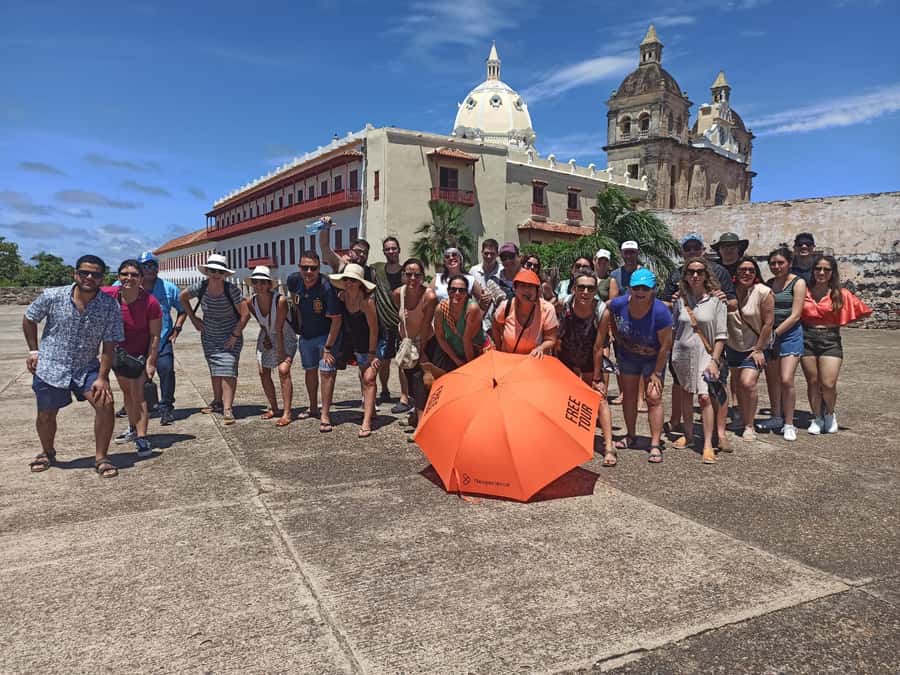
At the San Ignacio Bastion, the guide explains the Spanish military structures built to defend the Bay of Souls from pirate attacks. This is where Cartagena’s walls become more than a scenic backdrop.
Stories of pirates and corsairs bring the defensive system to life. You hear about the attacks the city feared and the strategies used to protect its harbor. The bastion also gives you a better reason to look closely at the walls, angles, and heavy masonry instead of treating them as a photo setting.
The tour focuses on the history behind the walls rather than promising a long walk along every section of them. If you want an extended wall walk, plan that separately. This portion gives you the context you need to understand the city’s military importance.
From there, the group reaches Plaza Bolívar, named for the leading figure of independence. It is a natural place to pause, take in the surroundings, and cool down. The itinerary describes it as a place to refresh, but food and drinks are not included, so bring your own water and budget separately for anything you buy.
Same city, a completely different kind of day:
- Cartagena: Rosario Islands Catamaran with Lunch and Snorkel
★ 4.5 · 2,479 reviews - Full-Day Rosario Islands Including Barú, Bocachica & Playa Blanca
★ 4.0 · 1,729 reviews - Cartagena de Indias: 2-Hour Sunset Cruise
★ 4.7 · 1,105 reviews - 2-hour tour in Cartagena Sunset View in party boat
★ 4.6 · 899 reviews
Centennial Park and Cartagena’s tropical wildlife
The walk continues to Centennial Park, one of Cartagena’s important green spaces. The site was formerly connected to the railway station and is described as a remnant of tropical dry forest.
This is a welcome change after the stone streets and open plazas. Shade from the trees gives the group a chance to recover from the heat while the guide continues with the city’s story. You might see sloths, squirrels, iguanas, and monkeys in the park, along with other sights of everyday urban life.
One useful detail from the walk is the guide’s attention to comfort. Robert has been praised for keeping his group in shaded areas, and other guides have done the same. That cannot remove Cartagena’s heat, but it can make a real difference during a long afternoon route.
The wildlife is not the main purpose of the tour, and sightings are not presented as guaranteed. Think of Centennial Park as a historical and natural pause, with the possibility of seeing animals along the way.
Getsemaní’s murals, umbrellas, and changing identity
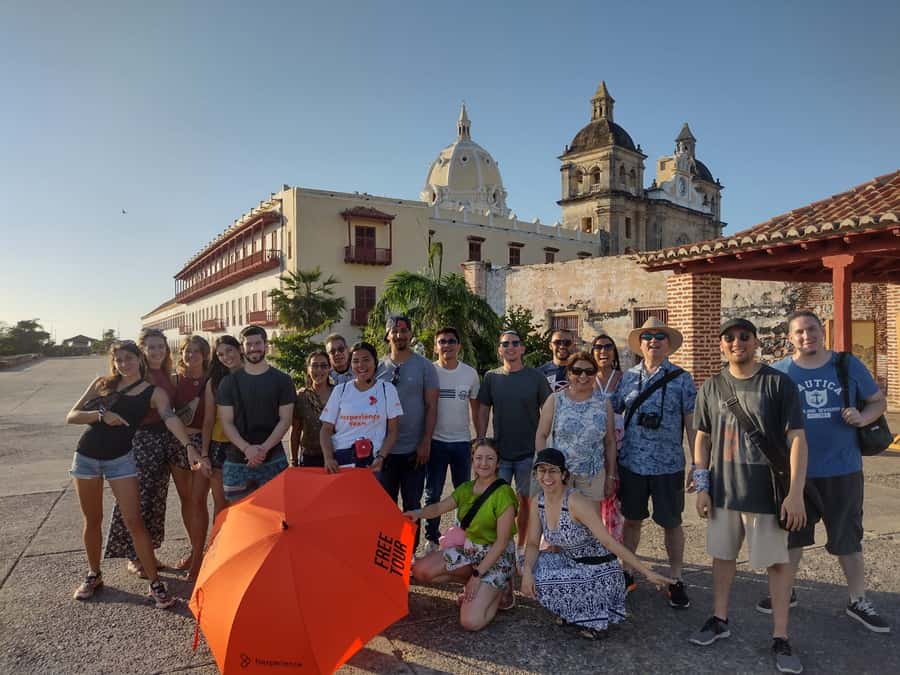
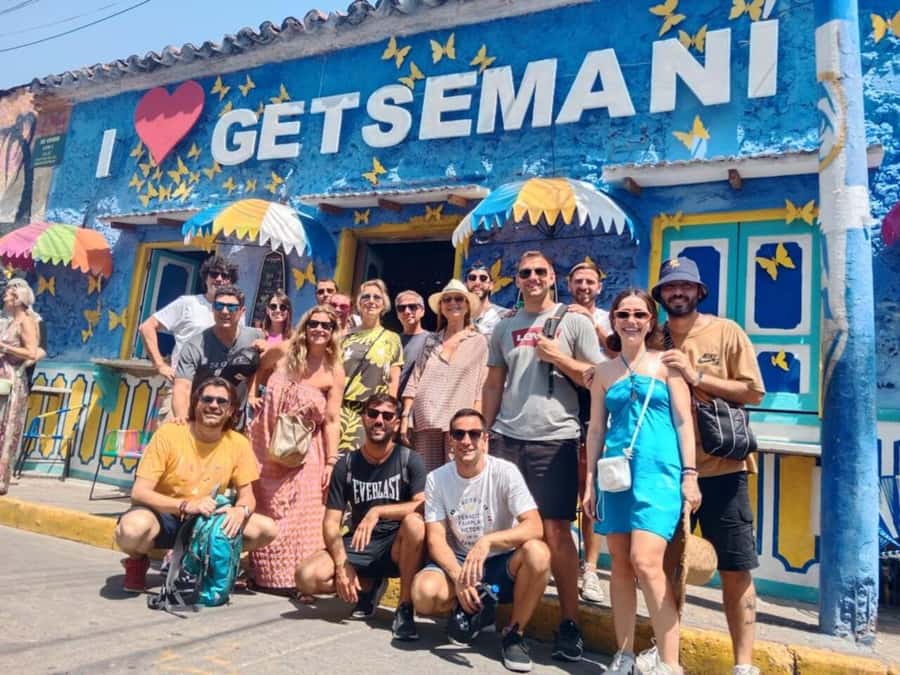
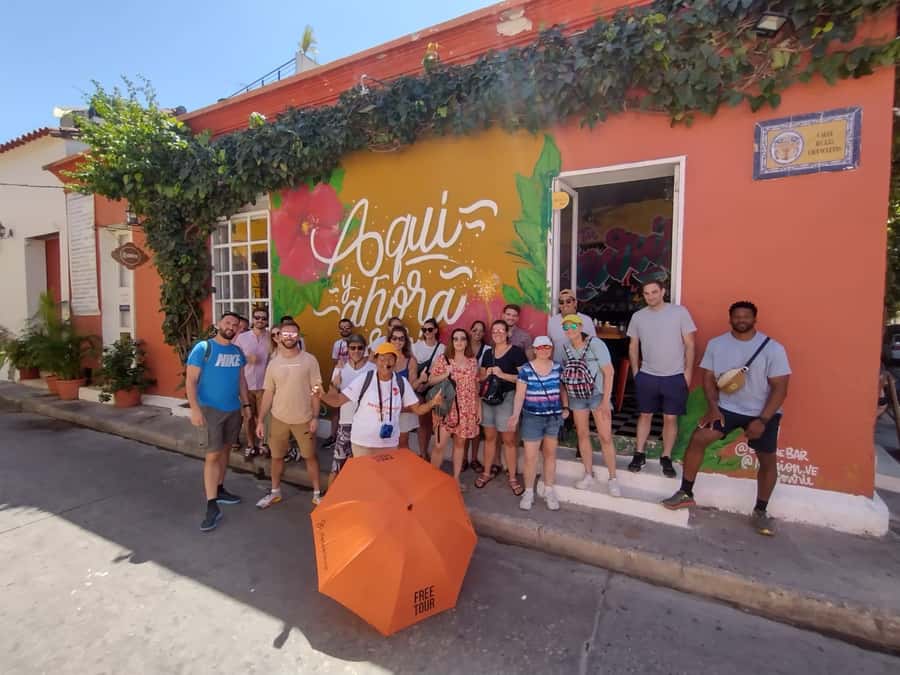
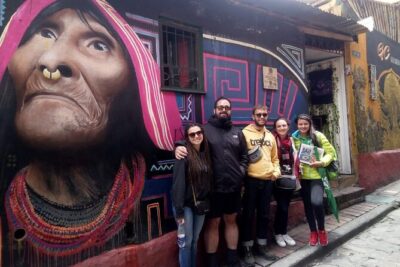
The final hour shifts into Getsemaní, one of Cartagena’s most colorful cultural areas. Here, umbrellas, graffiti, and distinctive architecture create a setting that feels different from the formal plazas and churches of the Walled City.
The tour’s strongest feature is the contrast. The first part explains colonial power, trade, religion, and defense. Getsemaní brings the discussion closer to African heritage, neighborhood life, music, and a new social order. The guide connects the area’s visual culture to Cartagena’s wider Caribbean identity.
The stories may include local customs, sayings, and legends. Gabo, the Nobel Prize winning author, enters through references to his writing, including One Hundred Years of Solitude. The connection is not simply literary decoration. It helps explain how myth, memory, and ordinary life often overlap in Caribbean storytelling.
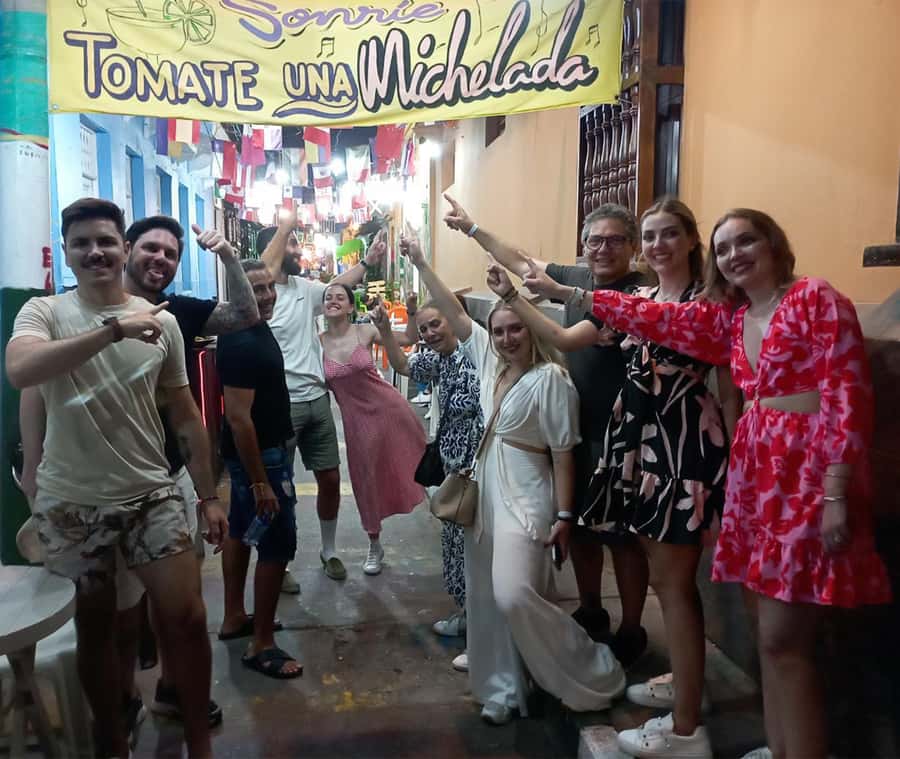
Several guides make this section interactive. Dani and Daniela have used traditional dance to bring salsa and local culture into the walk, and one recent group danced three times. You may be asked to move a little, so this is not the right tour if you want a silent lecture from start to finish. For most people, the music breaks up the historical detail and makes the final hour more memorable.
The route passes through Callejón Ancho and ends at Calle San Juan, where salsa and African champeta provide the closing soundtrack. This finish feels appropriate: the tour begins with conquest and ends with living culture that reflects Cartagena’s mixed roots.
What the guides do especially well
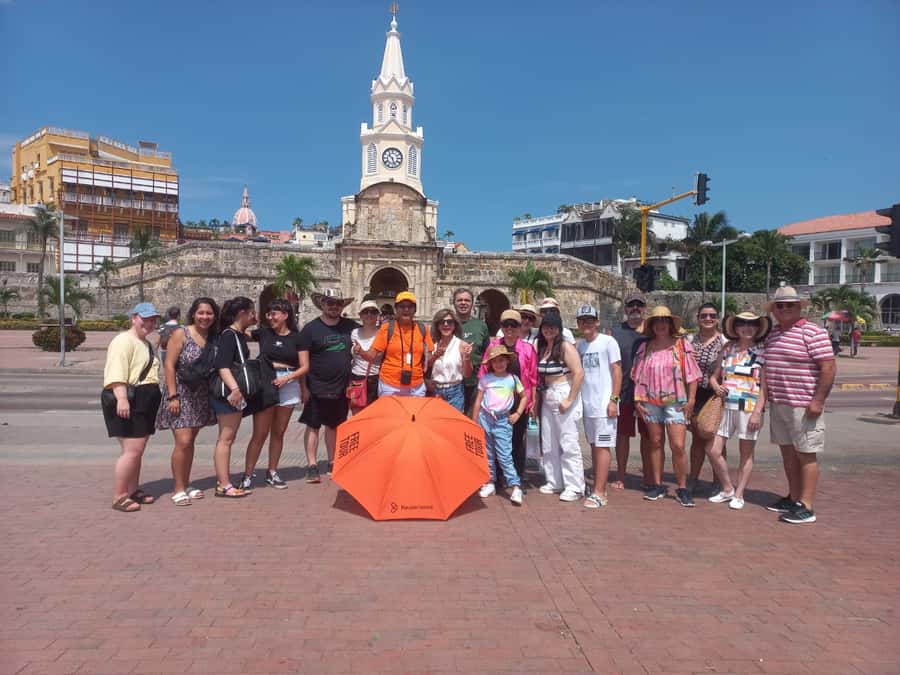
The guide is the key variable on a shared walk. The strongest reports point to a common pattern: clear historical explanation, genuine pride in Cartagena, humor, and attention to the group.
Legacy is often described as lively and entertaining, with a gift for keeping a large group engaged. Dani and Daniela bring energy, dance, and a strong personal connection to the city. Álvaro David is noted for careful historical explanations as well as practical advice about restaurants and street vendor prices.
Robert’s style appears especially useful if you want help beyond the landmarks. He has offered restaurant and drink suggestions, explained what to expect from Cartageneros, and worked to keep groups in the shade. Ingrid is a good fit if you like asking questions, since she is described as patient and able to discuss both history and present-day customs.
English ability can vary by guide. Most feedback describes the English as strong, but one person found that a guide sometimes spoke too quickly. If you are having trouble following the explanation, ask the guide to slow down. On a shared walk, that helps everyone.
Heat, pacing, and what to bring
The tour lasts 150 minutes, with about two hours in the Historic Center and one hour in Getsemaní. It is a substantial walk, even though the route includes pauses in plazas and shaded areas.
Wear comfortable shoes, light clothing, and clothing suited to the weather. Sunscreen is essential. Bring water, since food and drinks are not included. The afternoon heat can make the tour feel longer, especially on exposed streets.
Rain is another consideration. One recent walk took place in wet weather and was less enjoyable, though the guide was not at fault. Cartagena is often hot, but weather can still change, so check the forecast and dress accordingly.
Families can manage the route. A two-year-old joined one group, and the guide checked that the child was comfortable. Still, the walk’s length, heat, and occasional dancing mean you should judge it against your own family’s needs.
The activity is wheelchair accessible, though the supplied information does not describe every surface or accessibility detail along the route. If you use a wheelchair, confirm the current route conditions when booking.
Is $12 a good value?
At $12 per person, this is a strong value if you want an introduction rather than a private, highly specialized tour. The fee includes a professional guide, the Walled City portion, the Getsemaní portion, and tips. Hotel pickup, drop-off, food, and drinks are not included.
The phrase free walking tour can be confusing here. The activity is priced at $12, and the tip is already paid, so you are not expected to make a separate tip payment at the end. That makes the final cost easier to understand than a truly pay-what-you-wish walk.
You are paying for breadth. In one outing, you cover conquest, slavery, independence, military defense, churches, museums, wildlife, street art, salsa, champeta, and local advice. You will not receive a long indoor visit at every museum or a detailed architectural lecture on every building, but you will learn which places deserve more of your time.
I would take it early in your stay. The advice about restaurants, food prices, and places to visit can help you plan the rest of your time. It also gives you a framework for the Walled City, so the buildings and streets make more sense when you return on your own.
Who should book this walk?
Book it if you want a broad first look at Cartagena and care about both beauty and difficult history. It suits first-time visitors, independent sightseers, families able to handle a hot walk, and anyone who wants a friendly guide to local customs and music.
It is especially useful if you want Getsemaní included. Many city walks concentrate on the Walled City, while this route gives the neighborhood a full hour and finishes with salsa and champeta.
You may want a different format if you dislike group activities, have difficulty walking in heat, or want long visits inside museums. The shared setting also means you cannot choose the pace or spend extra time at every stop.
Cancellation is available up to 24 hours before the activity for a full refund, and you can reserve now and pay later. English and Spanish tours are offered.
Final call: book it for context, energy, and value
I would book this tour as a first activity in Cartagena. The $12 price covers a lot of ground, and the combination of the Walled City and Getsemaní gives you more than a pretty colonial stroll. You get the city’s harder chapters, its African and Caribbean influences, and practical advice for the days ahead.
Choose your clothing and timing carefully, bring water, and expect a lively walk rather than a quiet museum seminar. If you want history explained by guides who clearly care about their city, with room for humor and a little dancing, this is an easy recommendation.
FAQ
How long does the Cartagena walking tour last?
The tour lasts 150 minutes, or two and a half hours. The Historic Center portion takes about two hours, followed by about one hour in Getsemaní.
Where does the tour begin?
It begins at Plaza Cervantes, also called the Camellón de Los Mártires, in front of the Clock Tower. Look for the orange umbrella.
Where does the tour end?
The route ends on Calle San Juan after passing through Callejón Ancho in Getsemaní. The walk finishes with salsa and African champeta.
What neighborhoods does the tour cover?
It covers Cartagena’s Historic Center within the Walled City, including San Diego, and the Getsemaní neighborhood.
What languages are available?
The live tour guide is available in English or Spanish.
Is the tour wheelchair accessible?
Yes, the activity is described as wheelchair accessible.
Is hotel pickup included?
No. Hotel pickup and drop-off are not included, so you must reach Plaza Cervantes on your own.
Are food and drinks included?
No. Food and drinks are not included. Bring water and plan separately for any purchases.
Is a tip required at the end?
The activity describes itself as a free walking tour with the tip already paid. The $12 price includes the tip, so a separate tip is not expected.
Can I cancel for a full refund?
Yes. You can cancel up to 24 hours in advance for a full refund. You can also reserve now and pay later.
Just added around Cartagena
- Shared Old Cartagena & Getsemani Tour with Wireless System★ 4.4 · 8 reviews
- Cartagena: Scuba Diving Day Trip at Playa Blanca with Lunch★ 4.0 · 22 reviews
- Scenic Horseback Ride in Tropical Mountain Reserve★ 5.0 · 4 reviews
- San Felipe Castle and Getsemani Walking Tour with tickets★ 4.3 · 27 reviews
- San Basilio de Palenque Private Day Tour★ 4.2 · 4 reviews
- Cartagena: Rosario Islands Private Boat Tour★ 4.8 · 3 reviews
- Rosario Islands -Barú : Agua Azul Beach, with lunch★ 4.0 · 8 reviews
- Mud Volcano Tour in Cartagena with Lunch★ 3.4 · 3 reviews
Historical Tours, compared.
History & Local Life Essentials Tour on an E-Bike
Read our review →
Historical Shared Tour Salsa, Graffiti & Resistance in Cali
Read our review →
Shared Tour of Bogota’s Historic Downtown (La Candelaria)
Read our review →
Browse the lists this tour appears in