
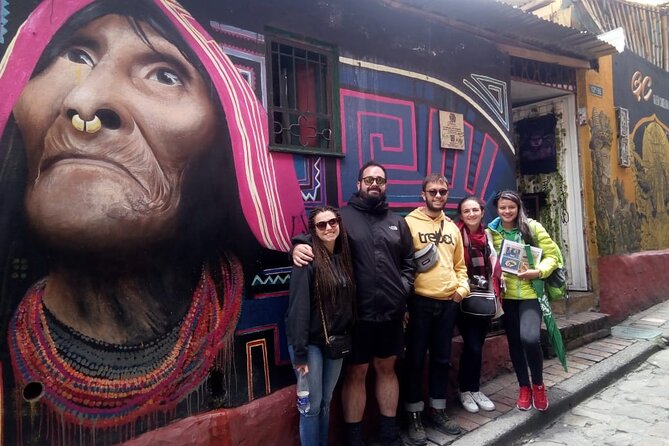
Reviewed · HISTORICAL TOURS
Historical tour Bogota
Bogotá’s story comes alive on foot, from the colonial buildings around Bolívar Square to the narrow streets of La Candelaria. This three-hour walk links El Dorado, independence, the Bogotazo, Colombian violence, Botero, García Márquez, chicha, and emeralds into one useful first look at the capital.
I like the tour’s broad reach and its practical finish, where you get restaurant and museum suggestions rather than simply being left at the last stop. I also like that the guides, including Paula, Ricardo, Jennifer, Diana, and Carlos, use questions, photographs, and clear explanations to keep a large historical subject moving. The main drawback is that a three-hour walk covers a lot, so some places are viewed from outside and the pace may feel brisk.
Key points at a glance
- Eight central stops: Follow a route from Bolívar Square through La Candelaria, La Concordia, the Eje Ambiental, and Rosario Square.
- History with hard edges: Learn about colonization, independence, the Bogotazo, and the violence that followed.
- Local culture included: Hear about chicha, Colombian food, Botero, García Márquez, emerald trading, and everyday life in Bogotá.
- A useful orientation: Finish with suggestions for restaurants, museums, coffee, money exchange, and getting to Monserrate.
- Good value for a city introduction: The listed price is $19.77 per person for about three hours, with group discounts available.
- Weather matters: The walk continues in rain, so bring an umbrella and wear shoes suitable for uneven city streets.
Why this Bogotá walk makes sense on your first day
I see this as an orientation tour rather than a deep museum visit. It gives you the names, stories, and street layout you need before deciding where to spend more time in Bogotá.
The route stays in the historic center, linking La Candelaria, La Concordia, and Las Aguas. You move through the city’s political core, oldest squares, cultural district, market area, and streets tied to Colombia’s modern history.
That range is the tour’s greatest strength. In one morning or afternoon, you can learn why Bogotá was founded where it was, hear the legend of El Dorado, discuss the arrival of the Spanish, and connect the assassination of Jorge Eliécer Gaitán to the Bogotazo and later violence.
The price listed is $19.77 per person. For roughly three hours with a guide and eight stops, that is a reasonable cost if you want context rather than simply a walk through attractive streets. Group discounts may make it more useful for families or friends booking together.
The experience is capped at 30 people. That is not an intimate private walk, but it is still small enough for a guide to lead a coherent group if everyone stays close. Ask questions when the group stops, since some streets and squares can be noisy.
A few more Bogota trips to weigh up
- Shared Tour of Bogota’s Historic Downtown (La Candelaria)
★ 4.7 · 100 reviews - 7-hour City Tour of Historic Bogotá with Monserrate
★ 4.7 · 47 reviews - From bogota: Salt Cathedral tour a Cultural Heritage Tour
★ 4.5 · 23 reviews
Bolívar Square and Bogotá’s political heart
The walk begins at Cra. 7 #11-10 in La Candelaria, close to Plaza de Bolívar. Give yourself enough time to find the meeting point, since this is a busy central area and the tour starts on foot.
The first stop lasts about 30 minutes. Here, the guide explains how Bogotá began and points out the country’s most important buildings. This is the right place to start because the square brings together the city’s civic, religious, and architectural power.
Expect the focus to be on orientation and explanation rather than entry into a building. Admission is listed as free, but this walking experience does not include museum or attraction tickets. You are mainly learning from the square itself and from the guide’s account of how the capital developed.
This opening section also gives you the political background needed for later stops. Once the guide explains Bogotá as Colombia’s national center, stories about independence, Gaitán, and the Bogotazo carry more weight.
Teatro Colón and the colonial city
The second stop is Teatro Colón, where you spend about 15 minutes. You can admire one of Colombia’s notable cultural buildings and hear about the place where Simón Bolívar lived.
The short stop suggests a look from the outside, not a full performance or interior tour. That limitation matters if you want detailed architecture or a theater visit. Still, it works well in a walking route because the guide can connect the building to the people and events that shaped the country.
I like this kind of stop because it prevents the tour from becoming a list of dates. A building, a national figure, and a street location give the past a physical setting. You are not only hearing that Bolívar mattered, you are standing in a district tied to his time in Bogotá.
Museums, Botero, and the cultural block
At the Museums of the Banco de la República, the guide speaks from outside for about 15 minutes. The subject is the cultural block of La Candelaria and why this part of the city matters.
The stop also introduces Fernando Botero. His work is an important part of Bogotá’s cultural identity, and the guide discusses his life and artistic importance. If you are planning to visit museums after the walk, this introduction can help you choose what deserves a closer look.
The practical catch is simple: the tour does not include entry. You should treat this as a preview, then decide if you want to return independently. That arrangement keeps the walk affordable and moving, but it means art lovers will need extra time elsewhere.
Guides named Paula and Jennifer have been especially associated with using pictures and simple explanations to make historical and cultural information easier to follow. The guide on your departure may differ, but the structure is designed to keep the story accessible rather than academic.
Same city, a completely different kind of day:
- Bogota: Bicycle City Tour
★ 4.9 · 2,156 reviews - Zipaquirá: Salt Cathedral Group Tour with Pickup
★ 4.8 · 1,606 reviews - Bogotá: Guided La Candelaria Walking Tour
★ 4.8 · 1,229 reviews - Bogotá: Private City Tour, Monserrate, Emerald and Botero
★ 4.9 · 798 reviews
Chorro de Quevedo and the story of chicha
Plaza del Chorro de Quevedo is one of the most interesting stops. You spend about 20 minutes learning about the square’s role in the foundation of Bogotá and why chicha, a traditional fermented drink, was prohibited.
This is where the tour shifts from official history to social history. A city is not only founded by leaders and defended in battles. It is also shaped by what people drink, where they gather, and which customs authorities try to control.
The square gives the guide room to explain the tension between Indigenous traditions, colonial rule, and later ideas about respectability and public life. The subject of chicha makes that tension easier to understand than a dry timeline would.
The streets around La Candelaria can be uneven and crowded. You will be standing while listening, so comfortable shoes and a moderate level of fitness are sensible. The tour is not described as strenuous, but three hours on foot is still a real walk.
La Concordia Market for a taste of Bogotá
The route continues inside Plaza de Mercado La Concordia for about 20 minutes. This is one of the best chances to see the tour move from monuments into daily city life.
You can buy a traditional chicha, choose a typical Colombian juice, or pick up a souvenir. Purchases, food, and drinks are not included in the tour price, so bring money if you want to try something.
I like the market stop because it gives you a choice. You can simply look around and listen, or turn the stop into a small tasting break. Do not expect a full meal or a dedicated food tour. The market is one piece of a much wider historical walk.
This is also a good place to ask the guide what Colombian foods to seek out later. The tour includes discussion of gastronomy, and the final recommendations can help you turn a short introduction into a better eating plan during your stay.
The Eje Ambiental and a route toward Monserrate
At the Eje Ambiental, the guide spends about 15 minutes showing you a view of Monserrate and explaining how to reach the hill. This is useful planning information, especially if Monserrate is on your list but you have not yet worked out the route.
The stop also connects the city to Gabriel García Márquez. You learn about a square where the writer used to attend social meetings, along with the cultural role of the area around it.
This section adds a literary thread to the political and colonial material. García Márquez is one of Colombia’s best-known cultural figures, and the guide uses his connection to Bogotá to show how writers and artists fit into city life.
The view of Monserrate is an orientation point, not a visit to the summit. You will not be taken up the hill as part of this three-hour route. Think of it as a helpful pointer for a separate outing.
Gaitán, the Bogotazo, and Colombia’s difficult past
The Jorge Eliécer Gaitán Monument is one of the most important stops for understanding modern Bogotá. The guide spends about 20 minutes explaining who Gaitán was, why he mattered, and how his death led to the Bogotazo.
The Bogotazo was a major turning point in Bogotá’s history. The tour also explains its connection to the violence that affected Colombia, giving you a framework for understanding a subject that is often reduced to a few vague references.
This portion may be more serious than the earlier stops, and that is a strength. A useful city tour should not present Bogotá as only colonial facades, coffee, and colorful street art. It should also explain the political wounds that shaped the country.
The quality of this section depends heavily on the guide’s delivery. Paula has been described as especially strong on Colombian history and politics, while other guides, including Ricardo and Diana, have been praised for clear and well-prepared explanations. Since guides can vary by departure, expect the overall route to remain the same while the storytelling style changes.
Rosario Square and Bogotá’s emerald trade
The last stop is Plazoleta del Rosario, reached after about 20 minutes. The square is known for its emerald market, and the guide explains how this informal trade works.
You might see emeralds being marketed in a way that feels very different from a formal jewelry store. That makes this a useful cultural observation, but you should take care with purchases and remember that buying anything is entirely optional and not covered by the tour.
The tour ends at Rosario Square, at Av. Jimenez de Quesada #6-71. This is a practical ending because you remain in the center, with the rest of La Candelaria close by.
Before saying goodbye, the guide gives recommendations for restaurants and other places to visit. You can also ask about museums, coffee, money exchange, and other stay-planning details. This final advice is one of the better reasons to schedule the walk near the beginning of your time in Bogotá.
What the guide style is like
The guide assigned to you may be Paula, Ricardo, Jennifer, Diana, Carlos, or another member of the team. The strongest pattern across the available feedback is clear explanation, friendly conversation, good pacing, and a willingness to answer questions.
Some guides use photographs to explain historical events. Others ask the group questions about what they have just heard, which helps keep a long sequence of dates and names from becoming a lecture.
The walk is available as a Spanish-language experience based on several departures described by participants. The supplied details do not clearly promise a specific language for every booking, so confirm the language when you reserve if that matters to you.
With a maximum of 30 people, you should expect a shared experience rather than a private conversation. If you want to ask about politics, history, or literature, save your questions for the stops when the guide has gathered the group.
Weather, comfort, and what to bring
The tour runs in bad weather and will not be cancelled for rain. Bring an umbrella, as specifically advised, and wear shoes that can handle several hours of walking.
You should have a moderate level of physical fitness. There is no statement that the route includes a major climb, but you will walk and stand for about three hours. Service animals are allowed, and the meeting area is near public transportation.
Food, drinks, and purchases are extra. Carry enough for a juice, chicha, a snack, or a souvenir if you want one, but you can also complete the route without buying anything.
The mobile ticket is convenient, and booking confirmation is provided at the time of booking. Cancellation is free up to 24 hours before the start time. A cancellation made later, or a change requested inside that period, is not refundable.
Who will get the most from this tour
I would choose this walk if you have limited time in Bogotá, want a firm introduction to La Candelaria, or prefer learning the city through politics, art, food, and local customs rather than through buildings alone.
It suits first-time visitors particularly well because the guide explains how to reach Monserrate and offers suggestions for museums and restaurants at the end. It also works for people who want to decide which places deserve a return visit.
Families and groups can benefit from the group discount, though younger children may find three hours of historical discussion tiring. The maximum group size of 30 also means that people who prefer quiet, private touring may want something smaller.
Art lovers should remember that the Botero and Banco de la República stops are introductions from outside. History-minded visitors will get more from the route because the tour gives substantial attention to independence, Gaitán, the Bogotazo, and Colombia’s later violence.
Is the $19.77 price good value?
At $19.77 per person, I consider this good value for a three-hour guided introduction, provided you want context and orientation. You are paying for a guide who ties together eight stops, not for admission to museums, food, drinks, or a ride.
The price is most worthwhile when you take the tour early in your stay. The advice about restaurants, museums, money exchange, coffee, and Monserrate can help you avoid wasting time later.
The value drops if you already know central Bogotá well or want extended time inside museums. In that case, a shorter neighborhood walk or a self-guided visit may suit you better.
The tour is listed as a free tour experience, but the booking price is $19.77. Do not confuse that with included spending at the market or with entry to cultural sites. Plan for the listed tour cost plus anything you choose to buy.
Should you book this Bogotá historical tour?
Book it if you want a lively first chapter to Bogotá, especially one that takes politics and recent history as seriously as colonial buildings. The route is broad, the price is fair, and the ending gives you practical ideas for the rest of your visit.
I would skip it only if you dislike group walks, need a slow museum-focused experience, or cannot manage three hours outdoors in uncertain weather. For most first-time visitors with a free morning or afternoon, this is a smart way to get your bearings and find the parts of La Candelaria you want to explore again.
FAQ
How long does the Bogotá historical tour last?
The tour lasts approximately three hours.
How much does the tour cost?
The listed price is $19.77 per person. Group discounts are available.
Where does the tour begin?
It begins at Cra. 7 #11-10 in La Candelaria, Bogotá, Colombia.
Where does the tour end?
The tour ends at Rosario Square, at Av. Jimenez de Quesada #6-71 in La Candelaria.
What places are visited?
The route includes Bolívar Square, Teatro Colón, the Museums of the Banco de la República area, Chorro de Quevedo, La Concordia Market, the Eje Ambiental, the Jorge Eliécer Gaitán Monument, and Rosario Square.
Are food and drinks included?
No. Food, drinks, snacks, and purchases are not included. At La Concordia Market, you can buy chicha, a Colombian juice, or a souvenir if you wish.
Does the tour operate in bad weather?
Yes. The tour is not cancelled because of bad weather, so you should bring an umbrella.
Can I cancel the booking?
You can cancel up to 24 hours before the experience starts for a full refund. Cancellations and changes made less than 24 hours before the start time are not accepted for a refund.
Just added around Bogota
- Paragliding Activity with Transfers from Bogota★ 4.9 · 21 reviews
- Monserrate Express tour 3 hrs★ 4.6 · 6 reviews
- Nemocón Salt Mine Tour★ 5.0 · 3 reviews
- La Chorrera and Chiflon Waterfalls Private Hike Tour★ 5.0 · 7 reviews
- Layover City Tour or Conexion in Bogota★ 4.5 · 5 reviews
- Bogota: Horseback Riding Tour★ 5.0 · 5 reviews
- Guatavita: Tour to Guatavita Lagoon, the Village and Casa Loca★ 4.8 · 19 reviews
- 7-hour City Tour of Historic Bogotá with Monserrate★ 4.7 · 47 reviews
Historical Tours, compared.
Historic Center and Getsemaní Shared Walking Tour
Read our review →
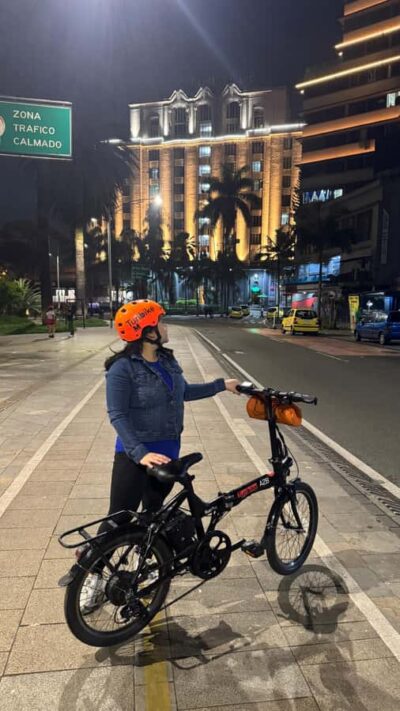
History & Local Life Essentials Tour on an E-Bike
Read our review →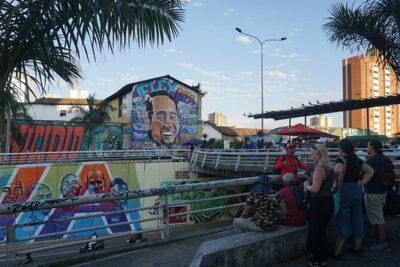
Historical Shared Tour Salsa, Graffiti & Resistance in Cali
Read our review →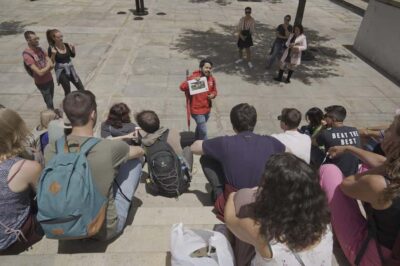
Shared Tour of Bogota’s Historic Downtown (La Candelaria)
Read our review →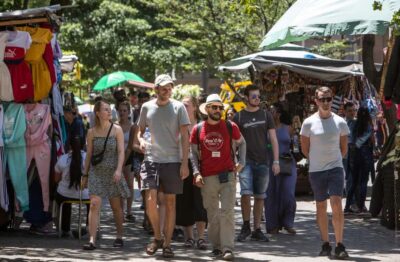
Browse the lists this tour appears in