
Reviewed · CITY TOURS
Bogota Walking Tour Teusaquillo, a different part of the city
Teusaquillo gives you a different view of Bogotá: not the usual colonial center, but a leafy district shaped by politics, industry, art, and the city’s mid-century growth. This 2.5-hour walking tour links those pieces through a national museum, old brewery buildings, a politically important home, street art, and the Parkway area.
I like the mix of serious history and everyday city life. You move from national politics and architecture to coffee, craft beer, cafés, and independent projects. I also like the route’s local focus, especially the chance to see buildings and streets that are easy to miss on a standard Bogotá visit.
The main consideration is the pace and format. This is a walking tour with no lunch included, and the group can reach 20 people. If you prefer a small private outing or a tour centered on Bogotá’s colonial sights, this may not be your best match.
Key points at a glance
- Museo Nacional starting point: Begin with Colombia’s story from independence to modern times, surrounded by important art and political architecture.
- Cavas and Falcas: Learn how an early national beer company connects to Colombia’s industrial growth and Bogotá’s expansion.
- Political history in a residential setting: Visit the home of a figure linked to a major turning point in Colombia’s political conflict.
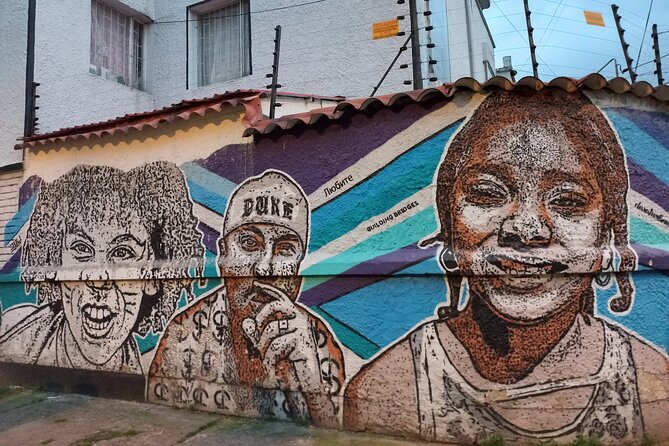
- Street art with local talent: See a public gallery featuring some of Colombia’s leading artists.
- Parkway finish: End among cafés, restaurants, bars, artists, and independent projects in a district known for its 1950s architecture.
- Coffee and craft beer included: The tasting stops add a relaxed social note to a tour that otherwise deals with weighty subjects.
Why Teusaquillo deserves a place on your Bogotá plan
Many first visits to Bogotá focus on La Candelaria, the Gold Museum, Monserrate, and the city’s grand central sights. Those places matter, but Teusaquillo answers a different question: how did Bogotá become the modern capital you see today?
This district connects several stages of the city’s growth. You encounter national politics, industrialization, planned urban expansion, mid-century architecture, street art, and the café culture of the present day. The route is useful because it does not treat each sight as an isolated photo stop. The guide explains how one period led into the next.
I would choose this tour after seeing Bogotá’s best-known historic center, or early in a longer stay if you want to understand the city beyond its postcard sights. The focus is on context. Buildings, homes, walls, and public spaces become clues to Colombia’s past.
Condor Tours supplies the guide, and Daniel is one guide associated with this experience. His role, based on the available feedback, includes explaining not only what you are looking at but also the political and social meaning behind it. That matters in Teusaquillo, where a plain-looking street corner can carry more weight than its appearance suggests.
A few more Bogota trips to weigh up
- Bogotá: Guided La Candelaria Walking Tour
★ 4.8 · 1,229 reviews - Zipaquirá Salt Cathedral Private Tour + Walking Tour
★ 5.0 · 66 reviews - La Candelaria Walking Private Tour (3 Hrs.)
★ 5.0 · 51 reviews
Starting at Museo Nacional
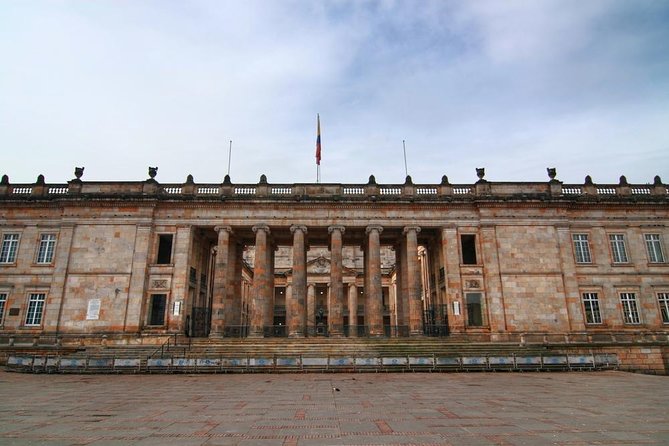
The tour begins at Museo Nacional Santa Fe. The museum covers Colombia from independence through the most recent periods, giving you a broad starting point for the walk.
You should expect this stop to provide a national frame rather than a narrow neighborhood introduction. The museum’s collection includes major works by important Colombian artists, while the building itself carries political history in its architecture and walls. That combination makes the first stop useful: you are looking at both the country’s story and the place where that story is presented.
The museum portion also helps explain why Teusaquillo matters. The neighborhood is not simply a collection of handsome streets. It sits within the wider story of a country trying to define itself after independence, cope with political conflict, and grow into a modern urban state.
The exact amount of time spent inside the museum is not specified, so you should not expect a full museum visit on the scale of a dedicated museum tour. Think of it as the opening chapter of a walking route. If you want to study every gallery, you will need a separate visit.
Cavas and Falcas, beer, and Bogotá’s industrial growth
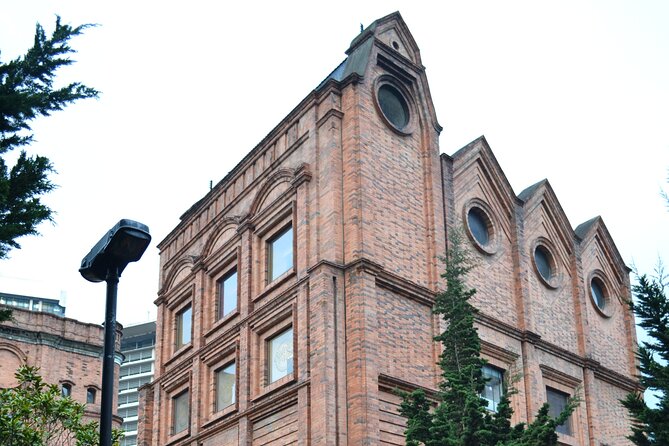
The route then turns to the Cavas and Falcas buildings, once part of the country’s first beer company. This is one of the tour’s most distinctive stops because it takes a familiar product, beer, and uses it to explain industrialization.
You learn how production, business, and urban growth affected Bogotá. As the city expanded, modern neighborhoods developed beyond older central areas. The brewery buildings help make that change visible. They are physical reminders of a time when industry shaped both the economy and the city’s form.
This stop should appeal to you if you enjoy social history more than a list of dates. The point is not simply that an old beer company existed. The point is how industrial activity helped push Colombia toward a different kind of urban life.
A craft beer is included, which gives the subject a pleasant local connection. It is not just a talk about the past followed by a walk to the next stop. You get a small tasting tied to the story of production and city life. The details of the beer selection are not provided, so you should not book this expecting a particular brand or a full brewery tour.
A politically important house
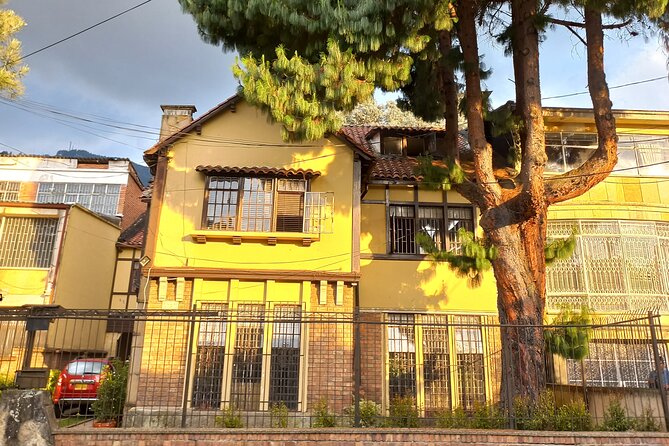
One of the most thought-provoking stops is a house connected to a figure who changed Colombia’s history and helped mark the beginning of the country’s political conflict. The person is not identified in the available tour details, so you should expect the guide to provide that context during the visit.
The setting matters. This is not described as a grand national monument separated from ordinary life. It is a home surrounded by some of Bogotá’s most appealing architecture. That contrast can make the political story more direct. National events happened in real homes and neighborhoods, not only in government buildings.
This section may be the emotional center of the walk. Colombia’s political past can be difficult, and the tour connects it to a specific place rather than treating it as an abstract subject. You will likely get more from this stop if you are willing to listen closely and ask questions.
At the same time, do not expect a full course in Colombian politics within a 2.5-hour tour. The guide must cover several periods and locations. If this subject is your main reason for booking, treat the stop as an introduction and use it to decide what you want to explore in greater depth later.
Same city, a completely different kind of day:
- Bogota: Bicycle City Tour
★ 4.9 · 2,156 reviews - Zipaquirá: Salt Cathedral Group Tour with Pickup
★ 4.8 · 1,606 reviews - Bogotá: Private City Tour, Monserrate, Emerald and Botero
★ 4.9 · 798 reviews - Bogotá´s Barrios: El Paraíso Favela Tour with Cable Car
★ 4.8 · 731 reviews
Teusaquillo’s architecture and city expansion
The neighborhood’s architecture is part of the experience, not just background scenery. The route shows how Bogotá expanded into newer urban areas and how different building styles reflect different phases of development.
You can use the walk to compare the museum’s institutional scale with the residential streets and the mid-century buildings near Parkway. The tour’s value lies partly in those transitions. Instead of riding between disconnected sights, you see the city change as you move through it.
The architecture also gives the political material a human setting. A house, a street, or a former industrial building can show how power and growth shaped daily life. You are not only learning about Colombia in broad terms. You are seeing how its past settled into the city’s blocks.
The available details do not promise access to private buildings or interiors beyond the stated museum stop. Plan on viewing the district from public streets and spaces. Comfortable walking shoes are a sensible choice, since the experience is entirely on foot and lasts about two and a half hours.
A street art gallery without museum walls
The street art stop changes the tone. Here, the city’s walls become an open-air gallery featuring some of Colombia’s strongest artists.
This is a good counterpoint to the museum. At Museo Nacional, art is held inside a formal institution. In Teusaquillo, art appears in the public realm, woven into the neighborhood’s daily life. The tour helps you see street art as part of Bogotá’s cultural identity rather than as decoration to pass on the way to lunch.
The available information does not name the artists or guarantee a fixed set of murals. Street art can change, so the exact works you see may depend on current conditions. Still, the stop gives you a reason to slow down and look carefully at walls you might otherwise ignore.
I particularly like this part for visitors who want a sense of present-day Bogotá. Political history explains where the city has been. Public art shows how artists respond to the city now.
Finishing at Parkway
The walk ends in the Parkway zone at Calle 39A. This is a practical finish because you are not left in an isolated spot. Restaurants, coffee shops, and bars are nearby, making it easy to continue your afternoon or evening.
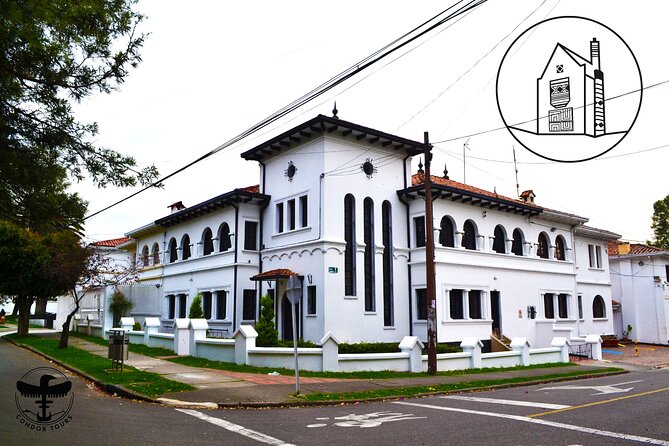
Parkway is known as a meeting point for artists, cafés, restaurants, and independent projects. Its architecture reflects Bogotá in the 1950s, while its social life has a bohemian feel. That mix gives the final stop a lighter, more open ending after the museum and political history.
The included coffee tasting fits naturally here or elsewhere along the route. Coffee is one of Colombia’s defining products, and a tasting adds a sensory break to the historical material. Craft beer is also included, so you get two familiar drinks presented in a Colombian city context.
Lunch is not included. That is not a major problem because the tour ends near places to eat, but you should budget for a separate meal. Parkway is best treated as part of the plan, not merely the point where the guide says goodbye.
What the $28 price gives you
At $28 per person, the tour is priced as an accessible introduction to a less familiar part of Bogotá. You are paying for a Condor Tours guide, about 2.5 hours of interpretation, a museum-centered start, several neighborhood stops, coffee tasting, and craft beer.
The value depends on how you like to explore. If you enjoy making sense of a city through streets, buildings, and local stories, the price is reasonable. The tour covers subjects that would be hard to connect on your own, especially the brewery buildings, political house, architecture, and Parkway.
It is less valuable for someone who wants a long museum visit, a food tour, or private transportation. There is no lunch, and the route is designed for walking rather than comfort between attractions. You should also remember that the maximum group size is 20 people. That is not a tiny group, though it remains manageable for a neighborhood walk if the guide can keep everyone together.
The tour is often booked around 18 days ahead. That pattern suggests you should plan it before arriving if the schedule matters to you, particularly during a short stay. Confirmation is provided at booking.
Who will enjoy this walk most
I would recommend it to you if you have already seen Bogotá’s central sights and want a second look at the city. It also suits first-time visitors who prefer neighborhoods and social history to a standard checklist of monuments.
The tour is a good fit for:
- People interested in Colombian political history
- Architecture fans who enjoy comparing urban periods
- Visitors who want street art and independent city culture
- Anyone who likes walking between connected sights
- Couples or small groups seeking a guided afternoon activity
- Museum fans who want more than a gallery visit
It may be less suitable if you have limited mobility, dislike walking, or want a tour built around food and a full meal. Most people can participate, and service animals are allowed, but the experience is still a walking tour. It is near public transportation, which helps with arrival and departure.
Because the walk deals with political conflict as well as art and cafés, it has a broader tone than a purely scenic neighborhood outing. You should book it for the range of subjects, not only for attractive buildings or a drink tasting.
Timing, group size, and cancellation
The tour lasts approximately two hours and 30 minutes. Start at Museo Nacional Santa Fe and plan your onward schedule from Parkway rather than returning to the museum.
A maximum of 20 people can join. The size is worth checking if you prefer a quiet, highly personal guide experience. Daniel is associated with the tour, but the provider assigns the guide, so do not assume he will lead every departure.
You can cancel for a full refund up to 24 hours before the local start time. Cancellations inside that window are not refunded, and changes made within 24 hours are not accepted. That policy is simple, but it is worth noting before you set a tight Bogotá schedule.
Should you book Bogota Walking Tour Teusaquillo?
Book it if you want Bogotá presented as a living city rather than a row of famous attractions. The strongest parts are the links between politics, industry, architecture, public art, and modern café culture. The route also ends in a useful area, with food and drinks close by.
Skip it if you want a private guide, a full museum day, or a tour with lunch included. For most independent-minded visitors, though, $28 is a fair price for a focused walk through a part of Bogotá that many short visits miss. Leave room afterward to eat or have coffee around Parkway, and the tour becomes a well-shaped half-day plan.
FAQ
Where does the tour begin?
The tour begins at Museo Nacional Santa Fe in Bogotá, Colombia.
Where does the tour end?
It ends in the Parkway zone near Calle 39A, Bogotá. Restaurants, cafés, and bars are available in the area.
How long does the walking tour last?
The tour lasts approximately two hours and 30 minutes.
How much does the experience cost?
The listed price is $28 per person.
Is lunch included?
No. Lunch is not included, although the tour ends near restaurants and cafés.
Are drinks included?
Yes. The experience includes a coffee tasting and craft beer.
How large can the group be?
The maximum group size is 20 people.
Can I cancel for a full refund?
Yes. You can cancel at least 24 hours before the local start time for a full refund. Cancellations or changes made within 24 hours are not accepted, and the amount paid is not refunded.
Just added around Bogota
- Zipaquira: 5 hrs Salt Cathedral Tour★ 4.4 · 9 reviews
- Zipaquirá: Private Salt Cathedral Mine and Walking Tour★ 4.8 · 3 reviews
- Zipaquirá: Private tour to the Salt Cathedral, Colombia’s first wonder★ 4.9 · 33 reviews
- Wonders of Salt: Colombia’s Underground Cathedral★ 5.0 · 18 reviews
- Zipaquirá Salt Cathedral & Andrés Carne de Res (Chía)★ 4.6 · 30 reviews
- Private Zipaquira Salt Cathedral and Guatavita Lagoon Tour from Bogota★ 4.5 · 44 reviews
- La Candelaria Walking Private Tour (3 Hrs.)★ 5.0 · 51 reviews
- Hiking to the largest paramo on earth : Sumapaz★ 5.0 · 49 reviews
City Tours, compared.
Private City Tour, Monserrate, Emerald and Botero
Read our review →
City Sightseeing Hop-On Hop-Off Bus Tour & Extras
Read our review →
Bogotá City Tour with Monserrate, Gold and Botero Museums
Read our review →
BILINGUAL CITYTOUR + SAN FELIPE CASTLE & Old city
Read our review →
Private City Tour with Metrocable and Comuna 13
Read our review →Browse the lists this tour appears in