
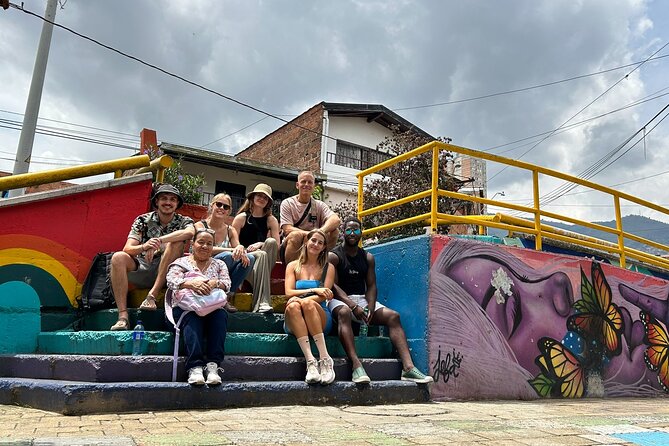
Reviewed · WALKING TOURS
Comuna 4 Walking Tour Medellin
Medellín’s Comuna 4 Walking Tour takes you beyond the polished story of the city’s transformation. In Moravia, you’ll hear how families built homes and community life on a former garbage dump, then faced government plans to move them elsewhere. The most powerful part is meeting Gladys, a longtime resident who lived through that struggle.
I like two things right away: the tour keeps its group small, with no more than eight people, and it pairs a bilingual guide, Toto, with a local community ambassador. I also like the range of subjects, from football graffiti and street food to Colombia’s health, education, and housing systems. The main consideration is that this is a serious, discussion-heavy walk, not a colorful photo stop like Comuna 13.
What makes this Moravia walk different
- A former garbage dump becomes the starting point: You learn how Moravia grew in the 1960s as an informal neighborhood and how residents shaped it over time.
- Gladys brings personal memory: Her account gives the tour a human voice that a standard city history walk cannot provide.
- The story is not one-sided: You hear both the official transformation narrative and the resistance to relocation.
- Small groups make conversation easier: The maximum of eight people suits a tour built around questions and personal stories.
- The subjects reach beyond architecture: Health care, welfare, education, social class, football, and community organizing all enter the conversation.
- A simple local snack is included: The tiny street empanadas at Fe y Alegría are a modest but memorable part of the walk.
Why Moravia changes the usual Medellín story
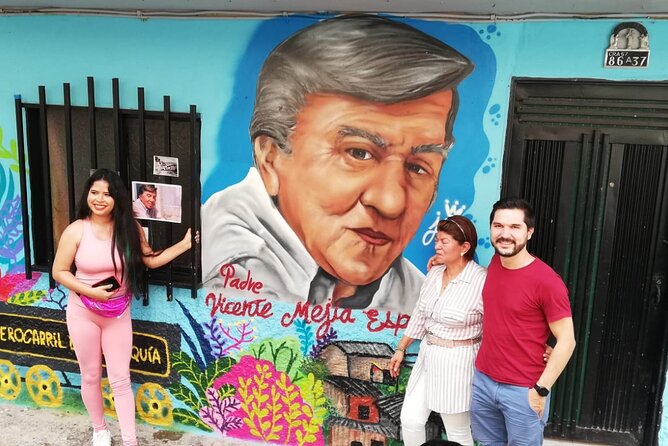
Many introductions to Medellín focus on dramatic change: improved public transport, safer public spaces, new cultural projects, and neighborhoods once marked by violence. This walk asks you to slow down and examine who benefited, who still struggles, and what residents themselves think about the changes.
Moravia began in the 1960s as an illegal settlement. The community grew around a large garbage dump, where families found a place to live and, in some cases, a way to earn money. That origin is difficult, but it also explains the resourcefulness at the heart of the neighborhood.
At Estación Metro Caribe, Toto and the community ambassador set the historical frame before you walk farther into Moravia. This first half hour matters because it keeps the rest of the visit from becoming a series of disconnected stops. You learn where the neighborhood came from and why its story does not fit neatly into a city publicity slogan.
I appreciate that the walk begins with context rather than rushing straight toward a viewpoint or mural. You are asked to think about urban change as a process with winners, costs, arguments, and unfinished work.
A few more Medellin trips to weigh up
- Medellin Historic Walking Tour
★ 4.9 · 86 reviews - 2-Hours Street Art Walking Tour in Medellin Comuna 13
★ 5.0 · 54 reviews - Arvi Park Walking tour and city views from Metrocable.
★ 4.6 · 13 reviews
Morro de Moravia and the fight over relocation
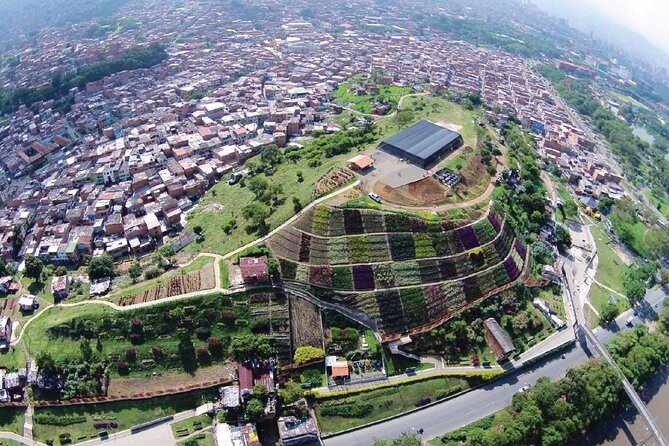
The visit to Morro de Moravia is the emotional center of the experience. Here, you learn about La Resistencia de Moravia and the families who have opposed government relocation plans for more than a decade.
The issue is not presented as a simple battle between good and bad. Moving families can be tied to safety, public health, and urban planning. But relocation can also separate people from jobs, schools, relatives, and the support networks they built over many years. This is why the community’s resistance deserves more than a quick photograph and a dramatic caption.
Gladys helps make that history personal. Her presence connects policy to ordinary life. Instead of hearing only when a neighborhood was founded or when a plan was announced, you get a sense of what it means to live through those changes.
You should expect the conversation here to be serious. The subject includes displacement, poverty, overcrowding, and the unequal effects of public decisions. That may not suit someone looking for a light morning outing, but it is exactly what gives the walk its purpose.
Health care, street vending, and daily survival
At Centro de Salud Moravia El Bosque, the group pauses in a quieter spot to discuss Colombia’s health care and welfare system. This is one of the tour’s strongest features because it links what you see on the streets with larger national questions.
You examine why street vending is so common and how a welfare system can still leave almost half of Colombians without access to it. The discussion helps explain why selling food, drinks, or small goods is not simply a matter of personal choice. For many families, informal work is part of how daily life functions when formal support is limited.
This stop also gives your feet a break. The walk lasts about three and a half hours, and sitting for a thoughtful discussion helps keep the pace comfortable. Still, you should come ready to listen. The tour is built around explanation and conversation, so your attention matters as much as your camera.
One practical point: no hotel pickup or drop-off is included. You meet at the designated starting point near Estación Metro Caribe and return there at the end. Since the tour is close to public transportation, planning your own route should be manageable, but you need to allow time to reach the meeting place.
Football, murals, and local identity
At Cigarrería La Plaquita, the walk turns to football. You see graffiti honoring Medellín’s major teams and discuss what the sport means in Colombian society.
The stop lasts only about ten minutes, but it adds needed texture. Moravia is not just a case study in urban policy. It is also a place where neighborhood identity shows up on walls, in loyalties, and in the symbols people choose to display.
I like this brief shift in tone. After talking about relocation and access to health care, football gives you a direct look at local culture. The graffiti is not treated as decoration alone. It becomes a way to discuss belonging, rivalry, pride, and how communities express themselves in public space.
Do not expect a long art tour here. This is a short stop, with the value coming from the explanation rather than a large collection of murals.
Same city, a completely different kind of day:
- Medellin: Comuna 13 Graffiti Tour, Cable Car & Street Food
★ 4.8 · 9,046 reviews - Medellín: The Real Pablo Escobar Tour
★ 4.8 · 3,205 reviews - Medellín: Comuna 13 True Story and Street Food Tour
★ 4.9 · 1,779 reviews - Medellín: Comuna 13 District Tour with Cable Car Ride
★ 4.8 · 1,467 reviews
Education and Colombia’s strata system
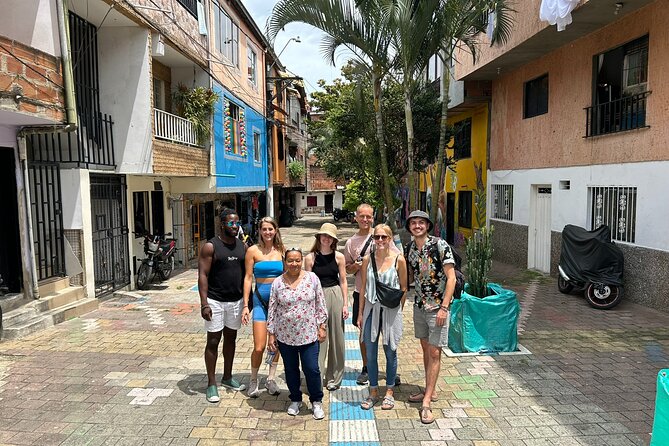
The group then rests under the trees in front of Fundación Oasis Urbano to discuss education and Colombia’s strata system. This is another example of the tour choosing substance over sightseeing.
The strata system is a way of classifying properties and neighborhoods, and it affects how people understand social and economic differences. Education, housing, and access to services are not separate topics in Moravia. They overlap, and this stop helps you see those connections.
The setting sounds simple, which is part of its appeal. You are not being moved from one grand attraction to another. You sit in the neighborhood and talk about systems that shape the lives around you.
This portion can be especially useful if you know little about Colombia beyond its recent tourism image. It gives you a framework for understanding why two parts of the same city can have very different access to resources.
Tiny empanadas at Fe y Alegría
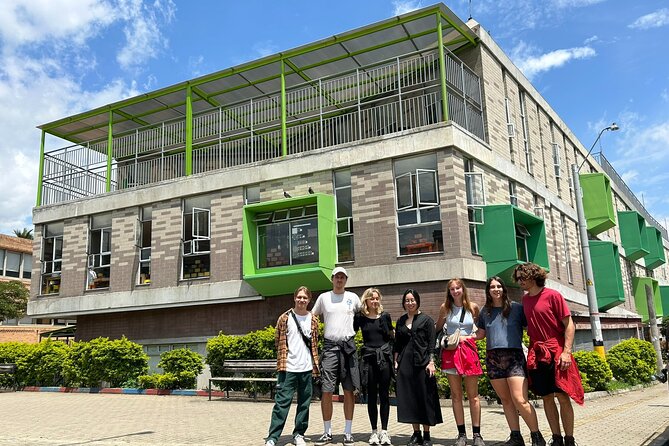
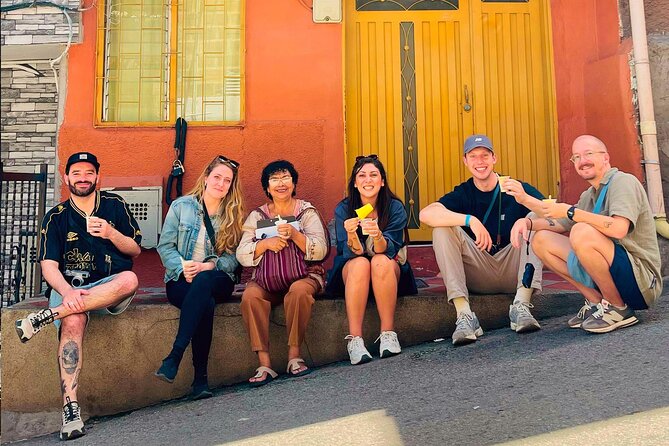
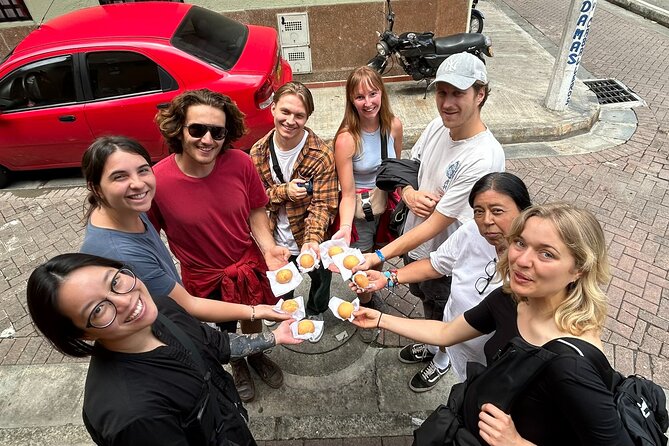
At E.I. Fe y Alegría, Luis Amigó, you stop for some of the city’s smallest street empanadas. The snack is included, and the pause adds a welcome taste of ordinary neighborhood life.
The empanadas are not presented as a formal food tasting. That is a strength. You get a small local bite during the walk rather than a staged meal built for an excursion. Food here is part of the rhythm of the neighborhood.
Because the stop lasts about ten minutes, keep your expectations in proportion. This is a snack, not lunch. If you need a full meal, plan one before or after the tour.
A football field and a community story
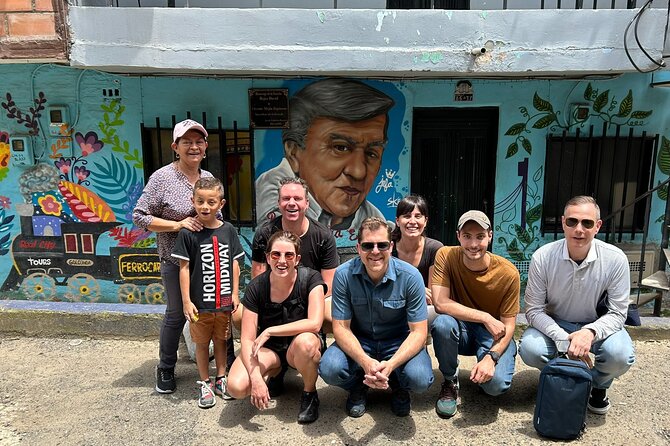
The synthetic football pitch is another short stop, but it gives the local ambassador a place to share her own story of resilience, resistance, and hope. A field may look like a basic neighborhood facility, yet it can also be a sign of what residents have managed to create and protect.
This is where the tour’s small format helps. With no more than eight people, you can hear the ambassador without being lost in a large crowd. You also have a better chance to ask a respectful question about the community’s experience.
The walk does not pretend that new facilities solve every problem. Moravia still faces overpopulation and serious social pressures. That balance is important. You see improvements, but you are not asked to mistake them for a finished transformation.
Moravia Cultural Center and community-led progress
The final major stop is the Moravia Cultural Center. With the community ambassador, you learn how residents helped build this kind of infrastructure.
This visit brings the tour’s central idea together: change is not only something delivered by government offices or outside experts. Communities also organize, resist, negotiate, and build. The cultural center represents that local effort.
It is worth paying attention to the way the tour moves from the former dump and relocation dispute toward education, sport, and culture. The point is not to erase the past. It is to show how residents have worked with what they had, including difficult conditions, and created places that support the next generation.
The activity ends back at the meeting point. That makes the day easier to plan, especially if you need to continue using public transportation afterward.
What the $35 price really covers
At $35 per person, this is a strong value if you want context and direct contact with local voices. You are paying for about three and a half hours with a professional bilingual guide, a community leader, a small group, and an included snack.
The price is not mainly buying admission tickets. Every listed stop is free. It is paying for interpretation, access, organization, and the chance to hear a resident’s account alongside the guide’s broader explanation.
That distinction matters. If you measure value by the number of famous sights or paid entrances, this walk may seem modest. If you value time spent understanding how a neighborhood works, the cost is easier to justify.
I would not choose this as your only Medellín activity. It does not replace the city’s major museums, viewpoints, or transport experiences. But it can add the social and political context that many sightseeing programs leave out.
Who should book this experience
I would choose this walk if you want to understand Medellín through its residents rather than through a polished success story. It suits people interested in urban development, social policy, community organizing, education, and the everyday effects of public decisions.
It is also a good choice if you have already seen Comuna 13 and want a different kind of neighborhood experience. Comuna 4 is less focused on a tourist route and more focused on Moravia’s people, disputes, and community projects.
You should be comfortable walking for roughly three and a half hours and spending time listening. The tour is not described as difficult, and most people can participate, but the length and discussion-based format still require some stamina.
Service animals are allowed, and the activity is near public transportation. Confirmation is provided when you book. The free cancellation policy allows a full refund if you cancel at least 24 hours before the start time. A late cancellation or late change is not accepted for a refund.
The limits of an authentic neighborhood visit
The same qualities that make this walk worthwhile can make it challenging. Moravia’s story includes hardship, overcrowding, and families fighting relocation. You may leave thinking about difficult questions rather than simply collecting pleasant memories.
The tour also gives you only a brief look at several subjects. Football gets about ten minutes. The empanada stop is short. The synthetic pitch is a quick visit. If you want detailed expertise in any one topic, this broad approach may feel too compressed.
There is also a need for sensitivity. You are entering a living community, not a museum display. Listen carefully, avoid treating hardship as scenery, and let the local ambassador set the tone for personal stories.
For me, that is a fair trade. The walk offers a more honest account of Medellín’s progress, including the parts that remain unresolved. Toto’s energetic guidance and Gladys’s firsthand connection give the program a human center without pretending that the neighborhood’s problems have disappeared.
Should you book the Comuna 4 Walking Tour?
Book it if you want a small-group walk with real social context, a local voice, and a clear look at the costs behind Medellín’s transformation. The strongest reasons are Toto’s explanations, Gladys’s personal connection to Moravia, and the chance to discuss health care, education, housing, and community action in the places those issues affect.
Skip it if you want a relaxed mural stroll, a full meal, or a list of major attractions. This is a thoughtful neighborhood visit, not a light sightseeing loop.
At $35, the experience gives you a useful three and a half hours and a perspective you are unlikely to gain from a standard city highlights tour. For an open-minded visitor who wants to understand Medellín rather than simply photograph it, I would book it.
FAQ
Where does the Comuna 4 Walking Tour begin?
The tour begins at the designated meeting point near Estación Metro Caribe, at Av. Regional, Calle 78, Castilla, Medellín.
Where does the tour end?
The activity ends back at the meeting point.
How long does the tour last?
The walk lasts approximately 3 hours and 30 minutes.
How much does the tour cost?
The listed price is $35 per person.
How large is the group?
The tour has a maximum of eight participants.
Is a guide included?
Yes. The experience includes a professional bilingual guide and a local community leader or ambassador.
Is food included?
Yes. A snack is included, specifically tiny street empanadas during the stop at E.I. Fe y Alegría, Luis Amigó.
Is hotel pickup included?
No. Hotel pickup and drop-off are not included.
Can I cancel for a full refund?
Yes. You can cancel at least 24 hours before the experience start time for a full refund. Cancellations or changes made less than 24 hours before the start time are not accepted for a refund.
Just added around Medellin
- Comuna 13 Neighborhood & Street Art Private Tour★ 4.7 · 12 reviews
- From Medellín: El Retiro Private Tour with Food Tastings★ 4.4 · 8 reviews
- Medellin: Private 3-Hour Pablo Escobar Tour★ 4.8 · 37 reviews
- Medellín: Private Pablo Escobar and City Tour★ 4.6 · 24 reviews
- Private Tour Comuna 13 with Cable Car★ 5.0 · 4 reviews
- Private Pablo Escobar Tour – Dark days and the new Medellin★ 4.9 · 6 reviews
- City Tour of Downtown Medellin Private or Shared★ 4.9 · 8 reviews
- Luxury boat ride – Guatapé★ 4.2 · 6 reviews
Walking Tours, compared.
Historic Center and Getsemaní Shared Walking Tour
Read our review →
A Pearl In The Caribbean-walking tour in English
Read our review →
Browse the lists this tour appears in