
Reviewed · WALKING TOURS
A Pearl In The Caribbean-walking tour in English
Santa Marta’s story comes in quick, flavorful chapters on this two-hour walk: Tairona gold, colonial churches, pirate tales, local gossip, nightlife, and a final fruit tasting by the bay. Guide Javier, often called Javi, brings a clear English narration and a local’s affection for his hometown.
I like the smart route through the historic center, which mixes major sights with everyday streets and food advice you can use later. I also like the ending at the juice stalls, where you taste a Caribbean fruit rather than simply taking photos of one.
The main drawback is the heat. Santa Marta can be hot, and two hours of walking between open squares and busy streets may feel tiring if you are not used to the climate. Water is not included, and the tour is offered only in English.
Key points to know
- Tairona gold and indigenous art: Begin inside Casa de la Aduana, with free entry to the Tairona Gold Museum.
- History told through local stories: Hear about pre-Hispanic cultures, Colombian independence, pirate attacks, religion, and city legends.
- Useful food advice: Get suggestions for typical Santa Marta dishes and places to eat near the cathedral area.
- A look at evening Santa Marta: Visit Parque de los Novios, known locally as the Lovers’ Park, and learn where the city goes out at night.
- Fruit tasting at the finish: Try an unfamiliar Caribbean fruit and buy a natural juice if you wish.
- Good value at $16: Museum entry, a guide, and fruit tasting are included in a compact two-hour introduction.
Starting with gold at Casa de la Aduana
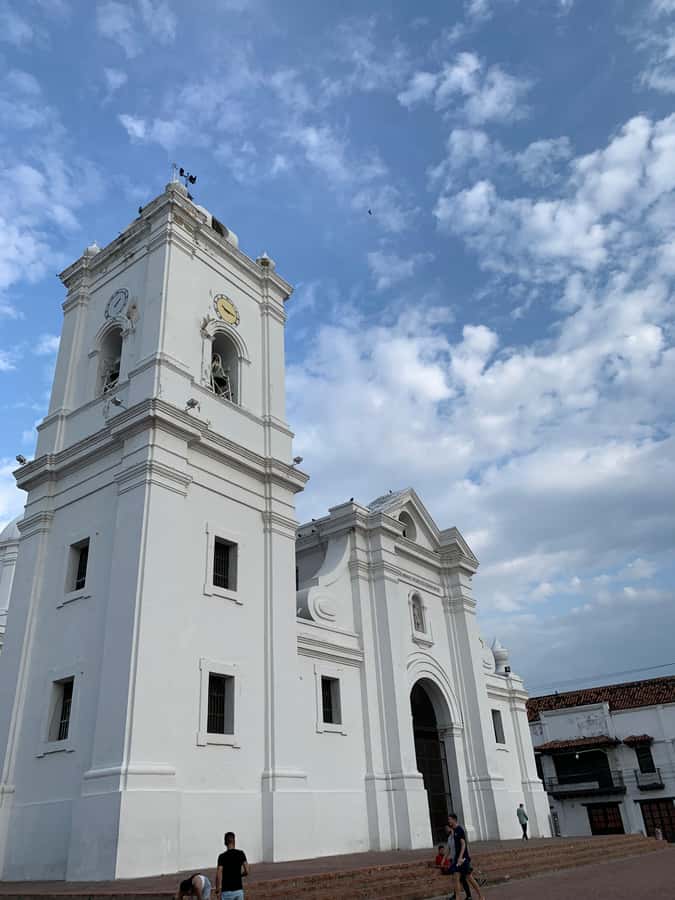
Meet at Museo del Oro Tairona, also called Casa de la Aduana, in the historic center. The white Spanish-colonial building faces Simón Bolívar Square and the bay, so it is an easy landmark to find. Your guide wears tour accreditation and carries a black backpack.
This is a strong starting point because the museum gives you a reason to look beyond Santa Marta’s colonial façades. Inside, you see pre-Hispanic and modern indigenous art, along with gold pieces connected to the Tairona people. The guide explains who the Taironas were and discusses why their society became extinct.
That last subject matters. A quick museum visit can easily become a parade of attractive objects with no context. Here, the gold is a door into questions about indigenous life, Spanish arrival, cultural change, and the forces that ended Tairona independence. You may not see every museum display in great detail, since the whole experience continues through several parts of the city, but you get a useful historical base.
Entry to the museum is included, which improves the value of the $16 price. If you want a long, quiet museum visit with time to read every label, come back separately. The tour uses the museum as the first chapter rather than treating it as the entire event.
A few more Santa Marta trips to weigh up
- Santa Marta: Guided Walking Food Experience
★ 4.8 · 33 reviews - Cartagena: Historic Center and Getsemaní Shared Walking Tour
★ 4.9 · 2,716 reviews - Bogotá: Guided La Candelaria Walking Tour
★ 4.8 · 1,229 reviews
Simón Bolívar Square and Colombia’s independence
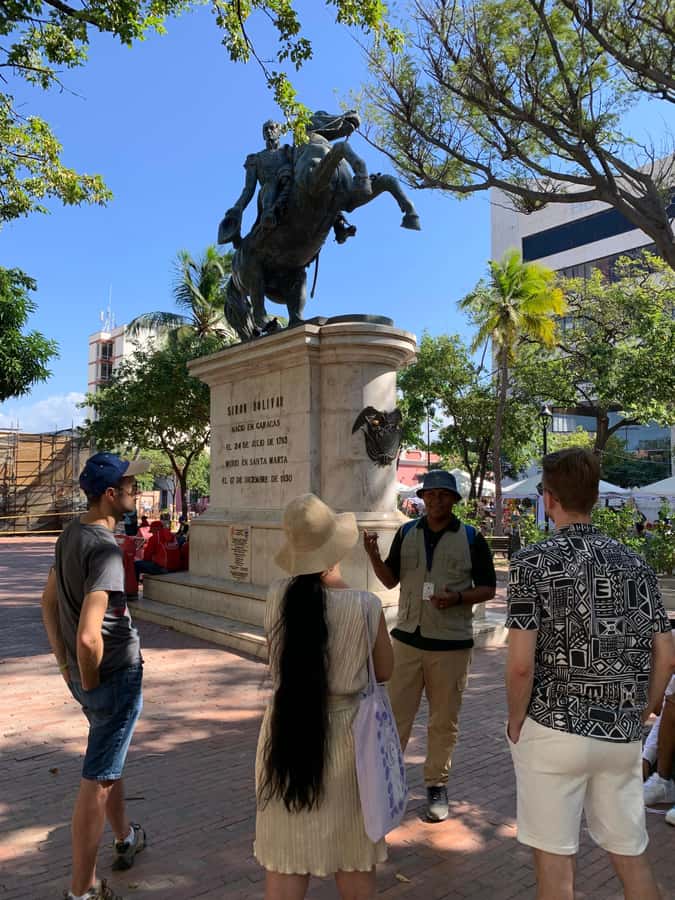
From Casa de la Aduana, the walk moves into Plaza Bolívar. The name is familiar across Colombia, but the guide uses this square to connect local places with the country’s independence story.
This stop is broader than a single monument. Expect discussion of pre-Hispanic history, independence, architecture, sculptures, and the way Santa Marta’s buildings reflect different periods. The appeal is in the connections. Instead of seeing a statue, a church, or a colonial wall as an isolated photo stop, you hear how each fits into the city’s past.
I find this kind of explanation especially helpful early in a visit. Santa Marta has several historical layers close together, and the walk gives you a basic map for understanding them. You also get a chance to ask questions, which is one of the best reasons to take a live guided walk rather than follow a phone map.
The pace is designed for a two-hour route, so do not expect a full lecture on Colombian independence. You will get a concise account, then move on to the next square. That keeps the tour lively, but visitors wanting specialist-level detail may want a longer history tour afterward.
San Francisco Square and the city’s daily rhythm
San Francisco Square offers a change of tone. Here, the focus turns toward daily life and the local economy, including rebusque, a Colombian term for the many informal ways people make a living.
That makes this stop useful because it takes you away from polished heritage sights. You see a working part of central Santa Marta and hear how local commerce operates. The guide also links the square with pirate attacks and Catholic religion, adding a Caribbean layer of danger, faith, and survival to the history.
The best part of the route is this shift between formal history and ordinary city life. You might begin by looking at museum gold, then find yourself considering how people earn money in the same central area today. The tour does not present Santa Marta as a tidy museum piece, and that is a strength.
Expect street activity and the normal distractions of an urban walk. The square is a place to observe rather than simply admire, so keep an open eye for small details and ask Javier about anything you notice.
Cathedral Square, legends, and architecture
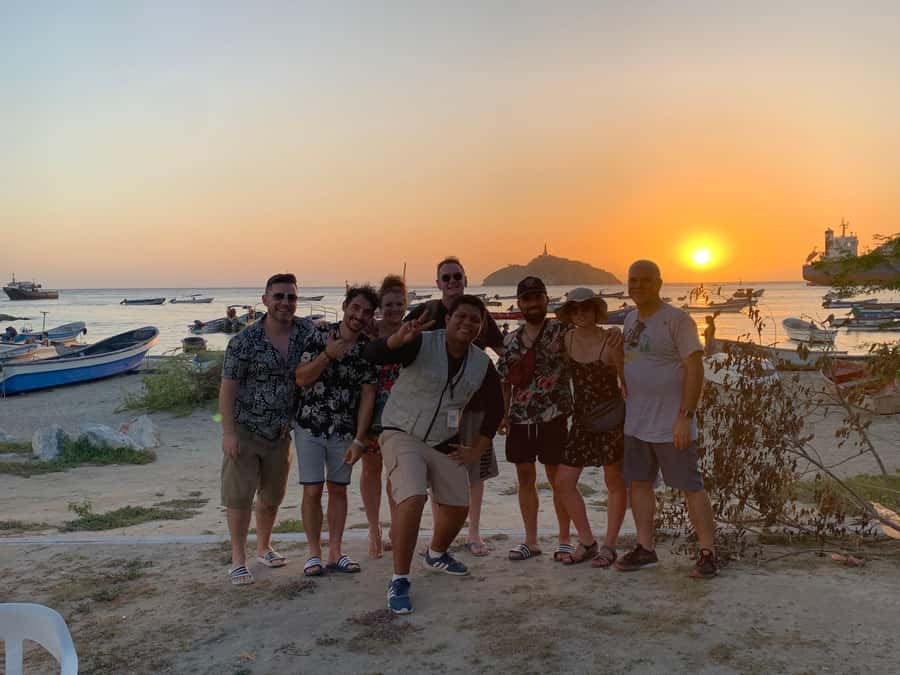
The next stop is Cathedral Square, home to Santa Marta’s cathedral, described on the tour as the mother of all churches in Colombia. Here the guide moves into religious customs, local superstition, and the darker stories attached to the city.
This is where Javi’s storytelling style is most useful. The tour includes chisme, or local gossip, along with spooky beliefs and anecdotes about Santa Marta. That gives the cathedral more personality than a standard architectural description. You hear how faith and superstition can share the same streets, and how old stories remain part of the city’s character.
Look closely at the building and the surrounding façades. The guide points out Arab, colonial, and Renaissance influences, making this a good place to keep your camera ready. You are not only looking at a church. You are reading traces of several design traditions layered into one central space.
The cathedral stop also doubles as a practical food briefing. Javier suggests typical local dishes and places to eat, which can save you from choosing a restaurant at random later. Food recommendations are particularly useful here because the tour connects what you see in the square with what you can taste in the city.
The limitation is simple: recommendations are not a meal. You will hear about dishes and restaurants, but food is not included in the tour price. Plan your own lunch or dinner separately.
Same city, a completely different kind of day:
- Santa Marta: Sailboat day tour to Tayrona Park
★ 4.5 · 352 reviews - From Santa Marta: Tayrona National Park Guided Tour
★ 3.8 · 131 reviews - Tayrona Bay Sailboat trip
★ 4.5 · 107 reviews - Santa Marta: Minca Coffee, Cocoa, & Waterfall Full-Day Trip
★ 4.6 · 102 reviews
Parque de los Novios after dark
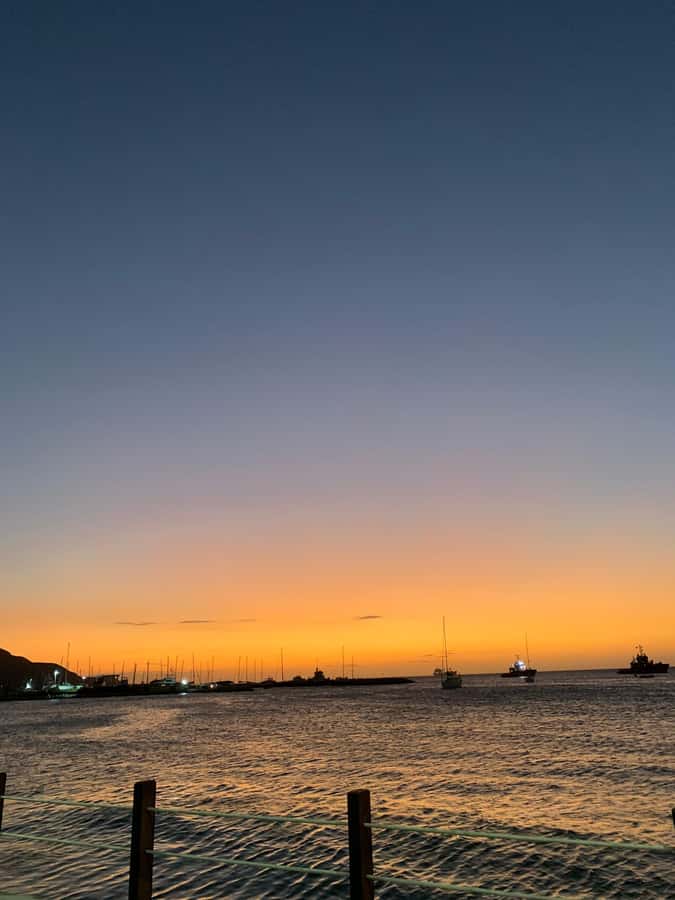
After the historical and religious stops, the route turns toward Parque de los Novios, or Lovers’ Park. The square is known for nightlife and suits an evening out with friends or a romantic night in the city center.
The guide explains how this part of Santa Marta functions after the sightseeing day ends. You get a sense of where to spend an evening, rather than only where to look at old buildings. That makes the stop practical for anyone staying in town for more than one night.
The park’s name is plain and memorable, and the tour uses it to discuss the social side of Santa Marta. This is less about a single historical event and more about how locals use the center today. If you want nightlife suggestions from someone who knows the city, pay attention here and ask specific questions.
The timing may affect this stop. The experience lasts two hours and includes a sunset element, but the exact starting time depends on availability. A late start should give the park a more evening-focused feel. An earlier one may offer more daylight for the historic center. Check the available time before booking if nightlife is a major reason for choosing the walk.
Finishing with Caribbean fruit and a sunset
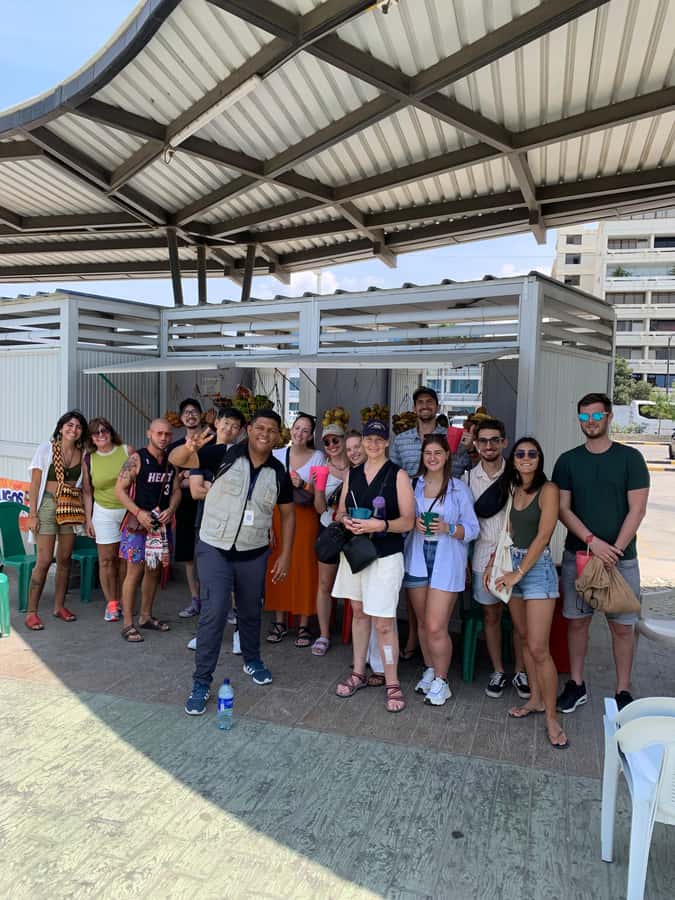
The tour ends at Plazoleta de Jugos Santa Marta, the juice area. This is a fitting finale because the experience moves from objects and buildings to something you can taste.
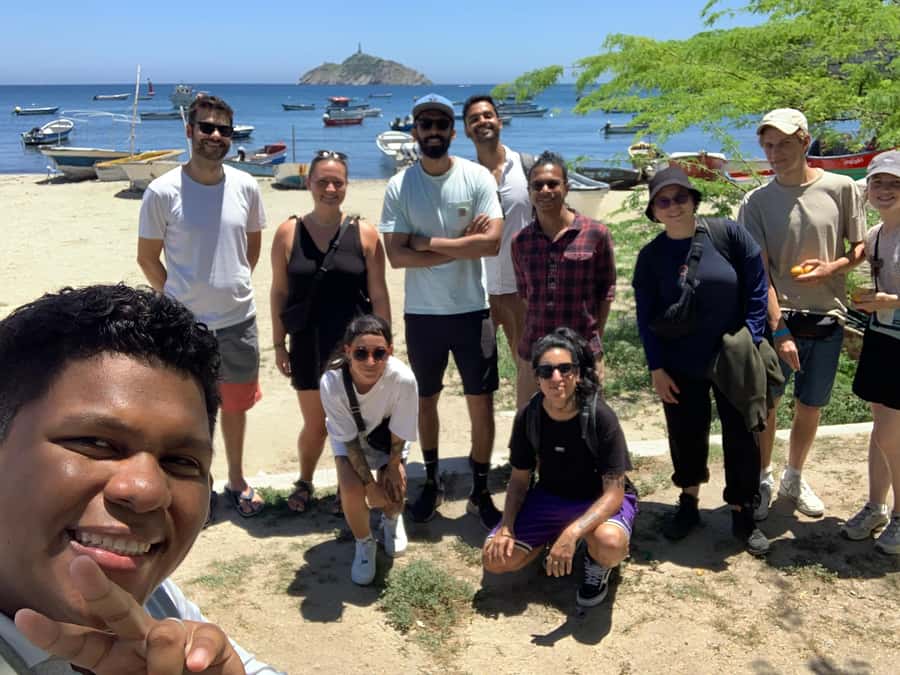
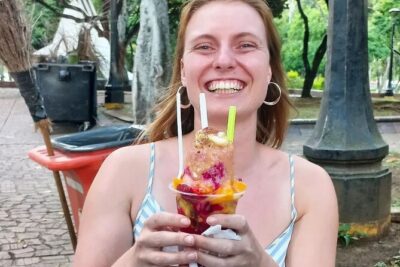
Javier gives a short fruit class on the unusual fruits found along Colombia’s Caribbean coast, then you sample one. The exact fruit may vary, but the point is to try something unfamiliar instead of staying with the usual orange or banana. You can also buy a natural juice at your own cost.
This finish has practical value beyond the sample. It introduces you to local produce and leaves you near a place where you can cool down. Several experiences on this route are designed for the senses: gold to look at, stories to hear, city streets to observe, and fruit to taste.
Some visitors have especially enjoyed coconut water and combinations such as lulo with orange juice. Those are useful ideas if you want to continue the tasting after the official sample, though drinks are not included. Bring cash if you hope to buy a juice, since the tour only covers the fruit tasting.
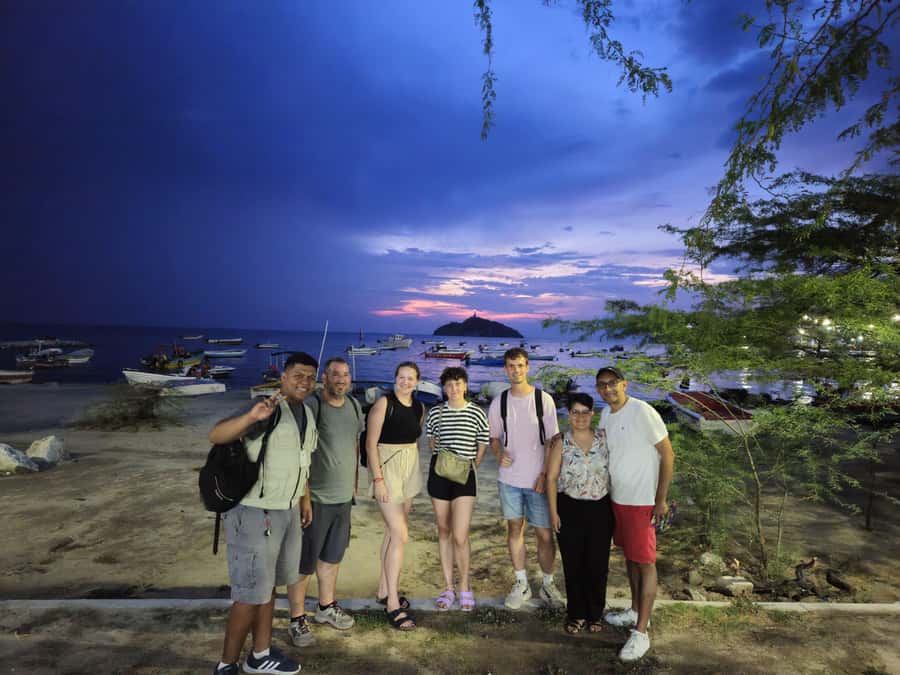
A sunset finish can be beautiful, but do not expect a dedicated viewpoint excursion. The tour passes through the center and ends at the juice plaza, with sunset listed as part of the experience. Think of it as a pleasant close to a city walk, not a separate sunset tour.
What the guide adds
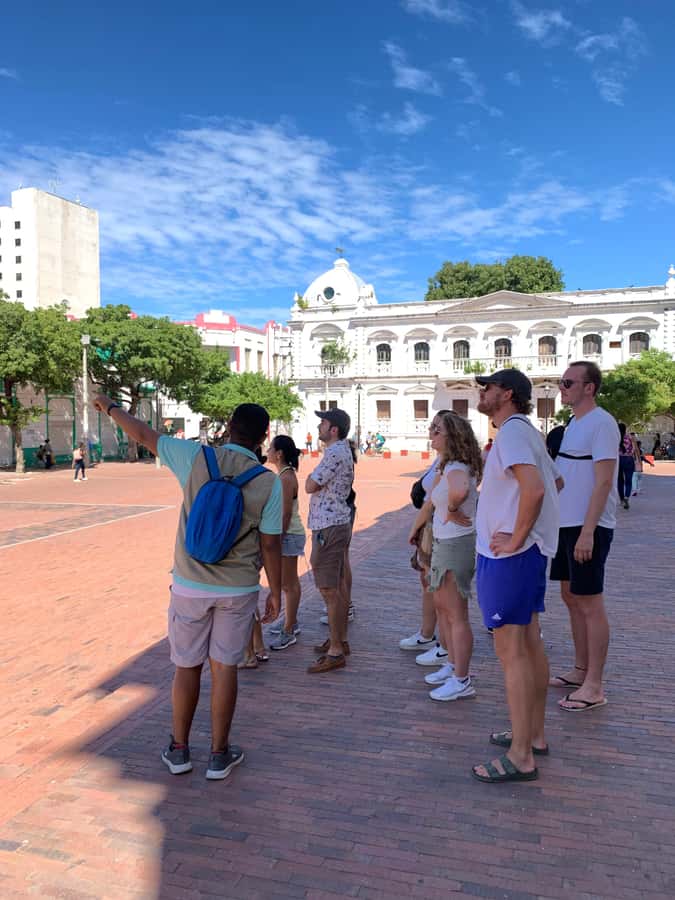
The guide makes a large difference on a short walk. Javier is known for clear English, a funny and patient manner, and an ability to answer questions without making the tour feel like a classroom.
His style connects historical facts with anecdotes about local heroes, villains, customs, and superstition. That approach helps the two hours pass quickly. You are not asked to memorize dates. Instead, you get stories that help you remember why a square, church, or museum matters.
I also value the local advice built into the route. Javier can point you toward places to eat, drink, and spend an evening, with suggestions for established local vendors and restaurants. You should still make your own choices, but this is far more useful than a generic list of attractions.
The English-only format deserves attention. The English is described as very good, but you should be comfortable following spoken explanations about history and culture. If you need a Spanish-language walk, this is not the right booking.
Is $16 good value?
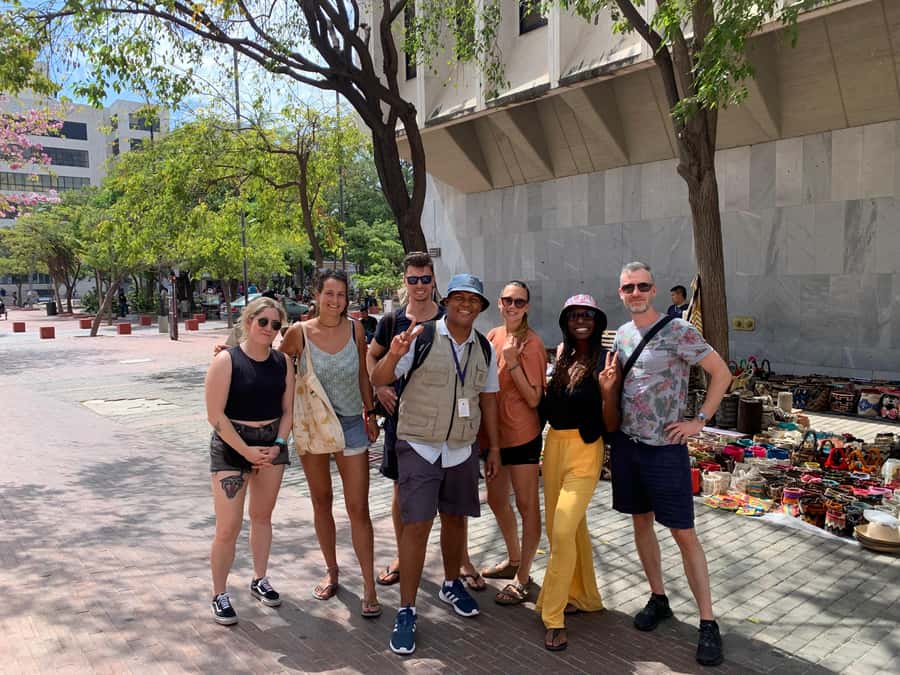
At $16 per person, this is a strong-value introduction to central Santa Marta. You receive a two-hour guided walk, free museum entry, and a fruit tasting. Those inclusions make the price more than a simple orientation stroll.
The value improves if you use the advice after the tour. A restaurant suggestion, a reliable nightlife area, or an idea for a local drink can shape the rest of your stay. The walk also saves you from treating the museum, cathedral, squares, and juice stalls as disconnected stops.
Still, keep the limits clear. Water, juice, meals, and anything else not listed are extra. You will cover the route on foot, and the heat may make the experience feel more demanding than its two-hour length suggests.
I would book it near the start of a Santa Marta stay. That way, you can return to the museum if you want more time, use the food recommendations for a later meal, and understand the center better when you explore on your own.
Who will enjoy this walk most?
This tour suits first-time visitors who want a quick introduction to Santa Marta’s central streets. It is also a good choice if you care as much about food, local customs, and nightlife as you do about monuments.
You will probably enjoy it if you like storytelling rather than a long technical lecture. The mix of indigenous art, independence, religion, piracy, architecture, superstition, and fruit keeps the subject matter moving.
It works well for solo visitors and couples, since the route includes both practical city advice and the romantic setting of Lovers’ Park. Families may also like the fruit tasting, though the heat and walking are worth considering for younger children.
You may want something else if you prefer a slow museum tour, a private vehicle, or a full-day historical program. This is a compact walk through central Santa Marta, not a visit to the wider Magdalena region or a trip to the mountains and beaches beyond the city.
Practical details before you go
The meeting point is the Tairona Gold Museum at Casa de la Aduana, in front of Simón Bolívar Square and facing the bay. Look for the white Spanish-colonial house. Your guide should be wearing tour accreditation and carrying a black backpack.
The walk lasts two hours, but check available start times because the sunset and nightlife portions will feel different depending on when you begin. Wear comfortable walking shoes and bring water, since water is not included. In Santa Marta’s heat, a hat and sun protection are sensible additions, though they are not supplied.
Make sure the phone number on your reservation works with WhatsApp. Tour information is sent through that service, so an inactive number could create needless confusion.
Cancellation is flexible: you can cancel up to 24 hours before the activity for a full refund. You can also reserve now and pay later, which helps if your Colombia plans are still changing.
Should you book A Pearl in the Caribbean?
I would book this walk if you want a friendly, story-led first look at Santa Marta for a modest price. Javier’s local perspective ties together the museum, squares, cathedral, food, nightlife, and fruit in a way that is hard to reproduce by wandering without context.
Book it early in your stay, carry water, and leave room in your schedule for the food and nightlife suggestions you receive. Skip it only if you dislike walking in hot weather, need a Spanish tour, or want a long museum-focused experience.
For most visitors spending time in central Santa Marta, the combination of included museum entry, local stories, practical advice, and a Caribbean fruit at the end makes this a worthwhile two-hour introduction.
FAQ
How long does A Pearl in the Caribbean last?
The walking tour lasts two hours.
What language is the tour offered in?
The tour is available only in English and includes a live English-speaking guide.
Where does the tour begin?
It begins at Museo del Oro Tairona, also called Casa de la Aduana, in Santa Marta’s historic center.
How can I identify the meeting point?
The museum is a white Spanish-colonial building in front of Simón Bolívar Square, facing the bay of Santa Marta.
Where does the tour finish?
It finishes at Plazoleta de Jugos Santa Marta.
Is museum entry included?
Yes. Entry to the Tairona Gold Museum is included in the price.
Is food or juice included?
A fruit tasting is included. Water, juice, meals, and anything else not specifically listed are not included.
What will I see on the route?
You visit the Tairona Gold Museum, Simón Bolívar Square, San Francisco Square, Cathedral Square, Parque de los Novios, and the juice plaza.
Can I cancel the booking?
Yes. You can cancel up to 24 hours in advance for a full refund. The activity also offers a reserve-now-and-pay-later option.
Just added around Santa Marta
- SANTAMARTA: TOUR Remanso, Taganga, Playa Grande Lunch and Snorkeling Included★ 3.5 · 4 reviews
- Santa Marta: Trekking in Minca Complete Waterfall Circuit★ 4.4 · 28 reviews
- SANTAMARTA: White Night Tour in Katamaran with open bar★ 3.8 · 6 reviews
- SANTAMARTA: TOUR Combo boat taxi, aquarium, lunch, and white sand beach★ 4.6 · 14 reviews
- Santa Marta: Playa Cristal in Tayrona Parque Day Tour★ 3.9 · 28 reviews
- Old Town and Quinta Pedro Alejandrino Santa Marta City Tour★ 4.6 · 11 reviews
- SANTA MARTA: Tour to Playa Inca Inca with Lunch★ 3.2 · 4 reviews
- Santa Marta: Multi-Day Trek to The Lost City★ 4.8 · 40 reviews
Walking Tours, compared.
Historic Center and Getsemaní Shared Walking Tour
Read our review →
Browse the lists this tour appears in