
Reviewed · WALKING TOURS
Cartagena: Gabriel García Márquez Private Walking Tour
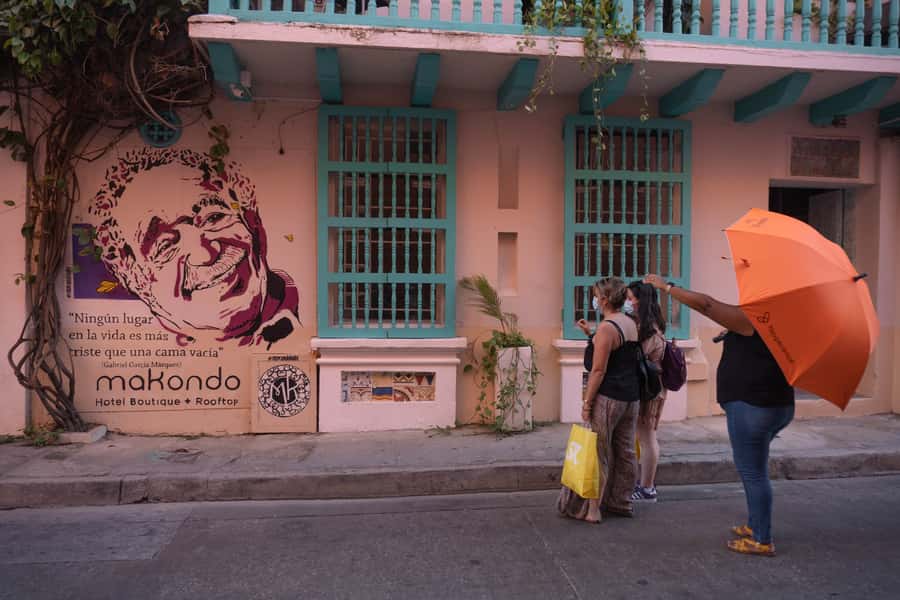
Cartagena’s old streets become a living map of Gabriel García Márquez’s books on this private walk. I like the way the tour links real places to Love in the Time of Cholera, The General in His Labyrinth, and Of Love and Other Demons, rather than treating Gabo as a name on a plaque. I also like the personal storytelling from guides such as Ingrid and Manuel, who bring in anecdotes about his work as a journalist and author.
The main drawback is timing. Some important stops, including the café and mausoleum or museum area, may be closed on Sundays. The tour is in Spanish, so you’ll get far more from it if you can follow spoken Spanish or are traveling with someone who can translate.
Key points
- Gabo’s Cartagena in 150 minutes: Follow streets, plazas, theaters, churches, and restaurants connected with his life and fiction.
- A private walk with local storytelling: Guides including Ingrid and Manuel focus on anecdotes, literary connections, and Cartagena’s legends.
- Claustro La Merced visit: Enter the site where part of García Márquez’s ashes rests.
- Several major novels come alive: The route connects places with Love in the Time of Cholera, The General in His Labyrinth, and Of Love and Other Demons.
- Pickup from selected areas: Hotel pickup is offered in places such as the historic center, Getsemaní, Bocagrande, Manga, and Castillo Grande.
- Sunday caution: The café and mausoleum or museum portion may be closed, so confirm your date before paying.
Why this walk is different from a standard Cartagena tour
Many Cartagena walks focus on walls, colonial buildings, plazas, and pirate-era stories. This one uses those same streets for a different purpose: it asks you to see the city through the life and imagination of Gabriel García Márquez.
That approach works best if you have read at least one of his books. You do not need a literature degree, but knowing the basic plot of Love in the Time of Cholera or Of Love and Other Demons gives each stop more weight. If you have not read his work, the guide still gives you a useful introduction to Gabo, his journalism, and the moment he decided to become a writer.
I especially like the connection between ordinary city places and major works of fiction. A plaza is not presented only as a pretty square. It becomes a setting, an influence, or the starting point for a story. That makes the walk feel more personal than a quick list of famous sights.
The experience lasts about two and a half hours and is private. That matters here. You can ask why a location appears in a particular novel, stop for clarification, or spend more time on the subjects that interest you. A large group would make this kind of literary conversation harder.
A few more Cartagena trips to weigh up
- Cartagena: Historic Center and Getsemaní Shared Walking Tour
★ 4.9 · 2,716 reviews - Cartagena: Walled City and Getsemani Shared Walking Tour
★ 4.5 · 352 reviews - 3 Tapas Cartagena walking tour
★ 4.5 · 105 reviews
Starting at Cervantes and Palito de Caucho
The tour begins near the monument to Miguel de Cervantes Saavedra. It is a fitting opening for a walk about a writer, and the guide uses the square to introduce legends from the Colombian Caribbean as well as stories from García Márquez’s life.
This first part helps set the tone. You are not simply following a famous author from address to address. You are hearing about the region’s oral traditions, its local characters, and the stories that shaped Gabo’s imagination.
The guide also discusses his early career as a journalist and the point when he decided to become a writer. The book La Hojarasca, known in English as Leaf Storm, enters the conversation here. That is a useful detail because it puts Gabo’s Cartagena years before the international fame of One Hundred Years of Solitude.
The stop at Palito de Caucho adds a small food element. You can try a Cartagena delicacy while hearing more local legends and biographical stories. A non-alcoholic drink is included in the tour, but the food tasting should be viewed as a brief flavor of the city, not a full food tour.
Plaza Fernández de Madrid and the Hotel Santa Clara
The route continues toward Plaza Fernández de Madrid, a place connected with both Love in the Time of Cholera and The General in His Labyrinth. The value of this stop is the bridge between Gabo’s fiction and Cartagena’s actual streets.
You will hear how locations in the city helped shape the settings in his novels. The guide also explains the importance of Hotel Santa Clara in his work. This is the sort of detail that can be easy to miss when walking through the old center on your own. You may recognize the building, but not its place in Gabo’s literary world.
The plaza is also a good point to pause and take in the city around you. The tour is not built around long interior visits at every stop. Much of its appeal comes from standing in a real location while the guide explains what happened there, what Gabo noticed, or how the place appears in his writing.
If you want a traditional Cartagena sightseeing tour with many formal monument entries, this walk may feel narrow in scope. Its subject is specific, and the literary links matter more than a broad survey of the city.
Plaza San Diego, the presentation school, and old streets
Plaza San Diego brings you farther into the web of places linked with Gabo’s life and books. The route passes the Museum of the Colegio de la Presentación and Calle del Estanco del Aguardiente.
Here the guide brings in anecdotes from García Márquez’s life. These details are one of the strongest parts of the experience. The walk gives you a sense of the author as a working journalist, observer, and local figure, not just a Nobel-winning novelist whose books sit on a shelf.
The route can also help you read Cartagena more carefully. Street names and old buildings take on meaning when the guide explains their connection to Gabo’s stories. I like this kind of sightseeing because it rewards attention. You are encouraged to notice doorways, corners, and public spaces that might otherwise pass by in the usual rush through the old city.
The walk takes place outdoors, so comfortable shoes, sunscreen, and clothing suited to the weather are important. Cartagena can be hot, and the route includes several stretches between stops. The tour is wheelchair accessible, but anyone who needs a precise account of surfaces or access at each individual stop should confirm those details before booking.
Same city, a completely different kind of day:
- Cartagena: Rosario Islands Catamaran with Lunch and Snorkel
★ 4.5 · 2,479 reviews - Full-Day Rosario Islands Including Barú, Bocachica & Playa Blanca
★ 4.0 · 1,729 reviews - Cartagena de Indias: 2-Hour Sunset Cruise
★ 4.7 · 1,105 reviews - 2-hour tour in Cartagena Sunset View in party boat
★ 4.6 · 899 reviews
Teatro Adolfo Mejía and the arts around it
The Teatro Adolfo Mejía, also known as Heredia Theatre, is one of the tour’s key stops. It is clearly referenced in García Márquez’s work, so the guide uses the theater to show how a real Cartagena institution enters his fiction.
The theater also connects Gabo with other local artists. The route points out a historic location associated with works by Enrique Grau, who was Gabo’s friend, and Luis Vincens. The guide explains how the place and its activities appear in Love in the Time of Cholera and Diatribe of Love Against a Seated Man.
This section gives the tour a wider cultural frame. García Márquez did not create in isolation. His world included artists, journalists, theaters, cafés, and the social life of Cartagena. If you are interested in the city’s creative circles, this stop adds useful context.
Do not expect a full theater performance or a long guided museum visit as part of the tour. The point is the literary and cultural connection. Access to venues can also vary by day, which is another reason to check the operating conditions for your chosen date.
Claustro La Merced and Gabo’s mausoleum
The visit to Claustro La Merced is the most personal part of the route. The site contains García Márquez’s mausoleum, and part of his ashes rests there. Entry to the claustro is included.
This is more than another photo stop. After hearing about his books, journalism, and connection to Cartagena, you reach a place tied directly to his memory. The mood naturally changes here. I would allow yourself a quiet moment rather than treating it as a quick item to check off.
The University of Cartagena’s Claustro La Merced is also part of the city’s academic setting. The tour passes the university and Calle del Tablón, where the poet Luis Carlos López, known as El Tuerto López, had a house. That detail broadens the walk beyond Gabo alone and shows the literary company associated with Cartagena.
The Sunday warning matters most at this point. One United States participant specifically found that the mausoleum or museum area and the café were closed on Sunday, creating a gap between what was expected and what could actually be seen. I would choose a weekday or Saturday if possible, and I would confirm access before booking a Sunday.
Calle del Arzobispado and the darker side of Gabo’s fiction
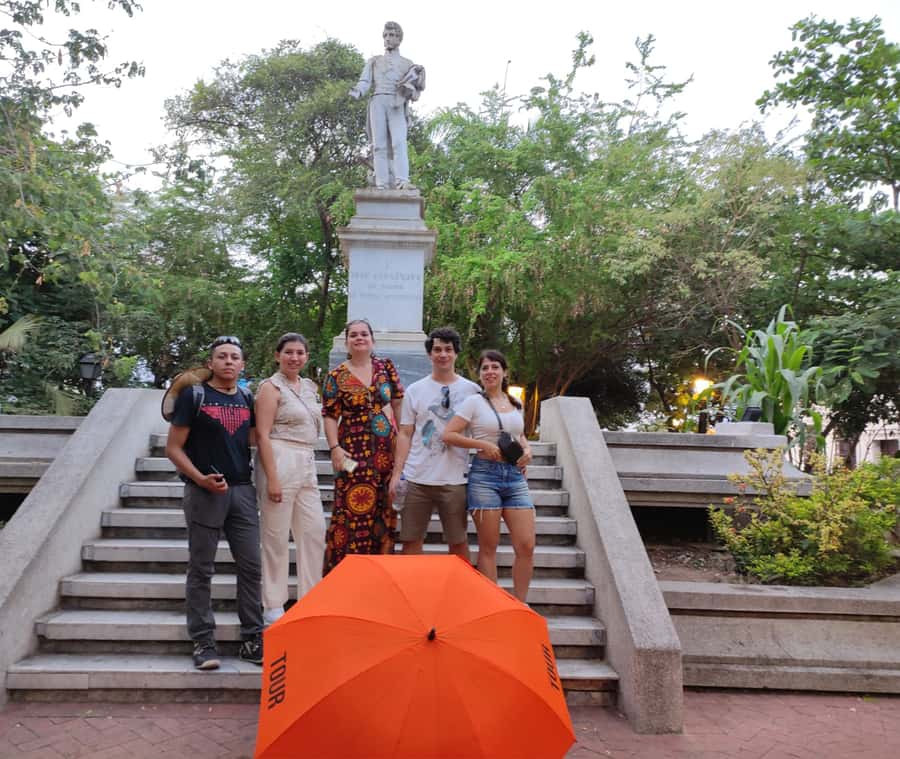
Calle del Arzobispado is tied to Of Love and Other Demons. The guide uses this street to explain the events that shape the fate of Sierva María and the love story at the center of the novel.
This part of the walk is valuable because it shows how García Márquez used Cartagena’s streets for stories that are not simply romantic or picturesque. His fiction can be strange, tragic, comic, and unsettling all at once. The guide helps connect those moods to actual places.
You may appreciate this stop most if you have read Of Love and Other Demons. If you have not, the guide still gives enough background to explain the location, but the literary effect will be stronger if the characters are already familiar.
The walk remains focused on interpretation rather than long visits inside buildings. That keeps the pace moving, but it also means you should not book this expecting a full museum schedule.
Don Sancho and Love in the Time of Cholera
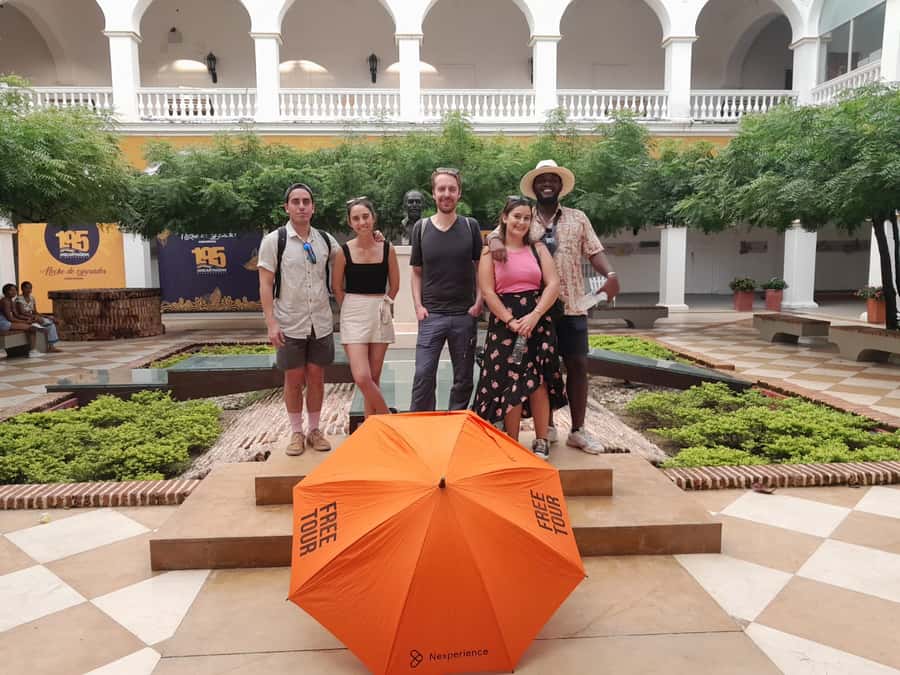
The final approach leads to Calle Don Sancho and El Mesón de Don Sancho, the restaurant portrayed in Love in the Time of Cholera. It is a fitting finish because the novel is one of the clearest links between Cartagena and Gabo’s fictional world.
This stop gives you a chance to end with a real place connected to a widely read book. Depending on opening hours and the day of your tour, you may find the restaurant functioning as a dining venue, but the experience itself is not presented as a full meal or restaurant reservation. The included non-alcoholic drink is separate from any meal you may choose to purchase.
If the café or restaurant portion is closed, this final connection may be explained from outside rather than experienced in the way you expected. Again, Sunday deserves special caution.
Guides Ingrid and Manuel bring the walk to life
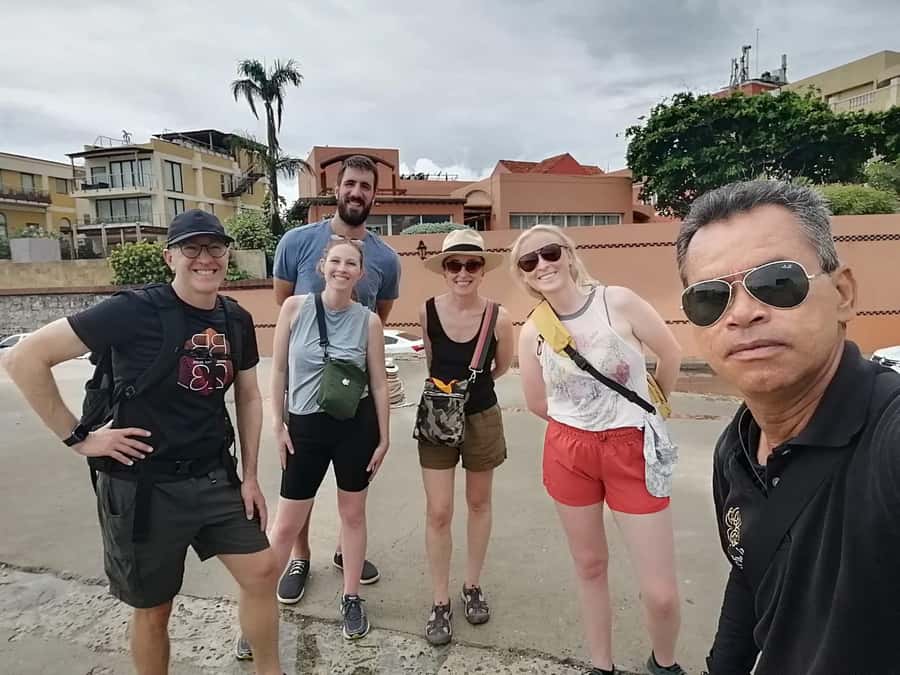
The guide can make or break a literary tour. Ingrid is repeatedly praised for her warm delivery, stories, biography of Gabo, and ability to keep the walk entertaining. Manuel is also described as an excellent teacher and storyteller, with strong knowledge of Cartagena’s cultural setting and plenty of humor.
The tone appears to be conversational rather than academic. That is good news if you want stories, curiosities, and context without a lecture. Ingrid’s style has been described as especially moving for people who already love García Márquez, while Manuel is noted for keeping a good pace and mixing information with laughs.
The tour is conducted in Spanish. This is not a small detail. The value lies in spoken anecdotes and explanations, not just in seeing the buildings. If your Spanish is limited, you may miss the best material unless someone in your group can translate.
Because the group is private, you have more control than on a standard city walk. You can ask about a novel, return to a point you missed, or tell the guide which works matter most to you. The exact guide is not guaranteed, so request Ingrid or Manuel only if the booking provider confirms availability.
Is $71 good value for a private walk?
The listed price is $71 per group of up to one person. Since the activity is described as a private group tour, check the price for your actual party before booking. A private rate can be good value for a solo traveler who wants focused attention, but the value changes depending on how additional people are priced.
The fee includes selected hotel pickup, a non-alcoholic drink, and entry to Claustro La Merced. Hotel drop-off is not included, so you will need to make your own way back after the final stop.
Pickup is offered from selected areas including Castillo Grande, Cartagena’s historic center, Getsemaní, El Laguito, Cielo Mar, Manga, El Cabrero, and Bocagrande. The guide is scheduled to arrive 10 minutes before the pickup time, with details sent the day before.
For a literature fan, the price buys more than transportation between sights. You are paying for a private Spanish-language guide who can connect biography, fiction, and local places in real time. For someone who has not read Gabo and mainly wants general Cartagena sightseeing, a standard historic-center tour may offer more broad coverage.
Who should book this experience?
I would choose this walk if you have read García Márquez, enjoy literary settings, or want to understand why Cartagena mattered to his writing. It is also a good choice for a repeat visitor who has already seen the main plazas and wants a more focused way to explore the old city.
The tour suits solo visitors especially well because of the private format. Couples and small groups may also find it worthwhile if they share an interest in Gabo and can split the cost.
I would hesitate if you want an English tour, a food-focused outing, or a long series of indoor museum visits. The listed guide language is Spanish, and the experience is built around walking, outdoor interpretation, and a handful of specific entries.
Book with care if Sunday is your only option. The closure issue can affect the café and mausoleum or museum stops, which are among the most meaningful parts of the route.
Practical advice before you go
Wear shoes you can walk in for 150 minutes and bring sunscreen. Choose clothing suited to Cartagena’s weather, since much of the experience takes place outdoors.
Read at least a short summary of Love in the Time of Cholera before you go. If you have time, add Of Love and Other Demons and The General in His Labyrinth. You will recognize more places and understand why the guide pauses at them.
Keep the tour’s pace in mind. It includes Cartagena, Plaza Fernández de Madrid, Plaza San Diego, the University of Cartagena’s Claustro de la Merced, Gabo’s mausoleum, Heredia Theatre, Calle del Arzobispado, and El Mesón de Don Sancho. This is a lot of literary ground in two and a half hours, so it is better viewed as a guided introduction than a slow architectural study.
Free cancellation is available up to 24 hours before the tour for a full refund, and you can reserve while paying later. The activity is wheelchair accessible, but confirm the practical details of each stop if that is important for your group.
Should you book the Gabriel García Márquez walk?
Book it if Gabo’s books mean something to you, or if you want Cartagena presented through stories rather than a simple list of monuments. The strongest elements are the private format, the Spanish-speaking local guides, the connections to several novels, and the visit to Claustro La Merced.
Skip it if you need English commentary, broad city coverage, or guaranteed access to every interior stop on a Sunday. For the right reader, though, this is a thoughtful way to see Cartagena: not as a backdrop, but as part of the story.
FAQ
How long does the Gabriel García Márquez walking tour last?
The tour lasts 150 minutes, or two and a half hours.
What language is the tour conducted in?
The live tour guide speaks Spanish.
Is the tour private?
Yes. It is offered as a private group experience.
Where can pickup be arranged?
Pickup is available from selected hotels and areas including Castillo Grande, Cartagena’s historic center, Getsemaní, El Laguito, Cielo Mar, Manga, El Cabrero, and Bocagrande.
Is entry to Gabo’s mausoleum included?
Yes. Entry to Claustro La Merced, where part of García Márquez’s ashes rests, is included.
Is the tour wheelchair accessible?
Yes, the activity is listed as wheelchair accessible.
What should I bring?
Bring comfortable shoes, sunscreen, and clothing suited to the weather.
Just added around Cartagena
- Shared Old Cartagena & Getsemani Tour with Wireless System★ 4.4 · 8 reviews
- Cartagena: Scuba Diving Day Trip at Playa Blanca with Lunch★ 4.0 · 22 reviews
- Scenic Horseback Ride in Tropical Mountain Reserve★ 5.0 · 4 reviews
- San Felipe Castle and Getsemani Walking Tour with tickets★ 4.3 · 27 reviews
- San Basilio de Palenque Private Day Tour★ 4.2 · 4 reviews
- Cartagena: Rosario Islands Private Boat Tour★ 4.8 · 3 reviews
- Rosario Islands -Barú : Agua Azul Beach, with lunch★ 4.0 · 8 reviews
- Mud Volcano Tour in Cartagena with Lunch★ 3.4 · 3 reviews
Walking Tours, compared.
Historic Center and Getsemaní Shared Walking Tour
Read our review →

A Pearl In The Caribbean-walking tour in English
Read our review →Browse the lists this tour appears in