
Reviewed · CYCLING TOURS
Bogotá: Shared Bike Tour
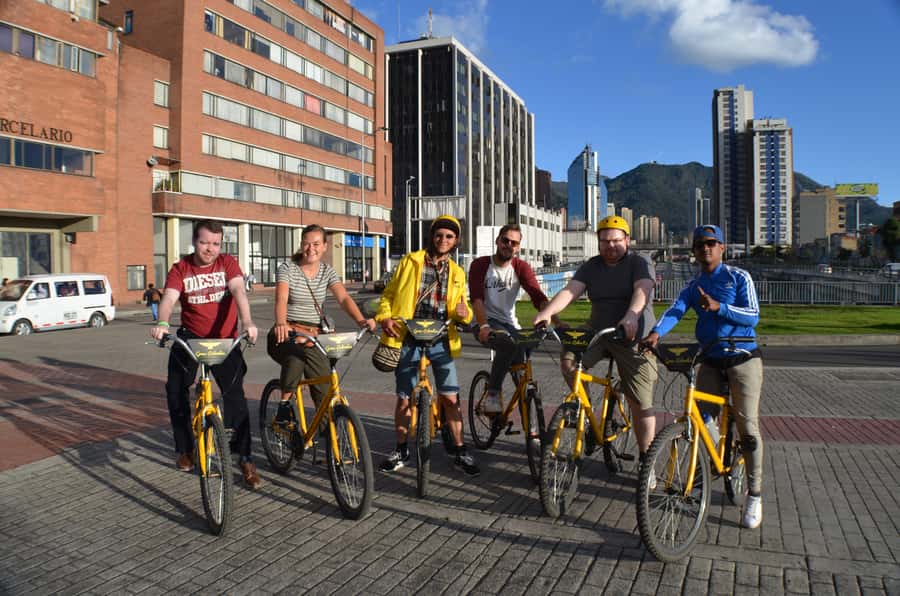
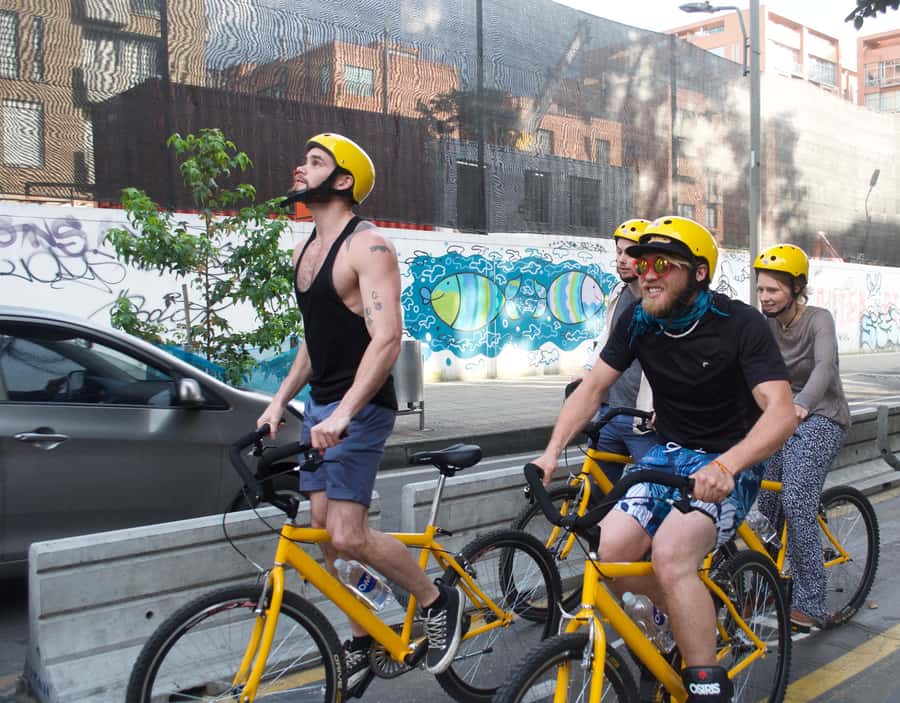
Bogotá makes more sense from a bicycle seat. You move from the old lanes of La Candelaria to broad 7th Avenue, tree-lined Parkway, National Park, and neighborhoods where graffiti tackles social problems. I especially like the small groups of up to 10 and the way guides such as Luis, José, Bernardo, and Francisco connect city history with everyday life.
I also like the excellent value: for $19, you get about three and a half hours, a bike, helmet, guide, technical support, and risk insurance. The main consideration is traffic and weather. You must already know how to ride a bike, and the tour runs in all conditions, so bring water and wear clothes you can pedal in.
Key points to know before you ride
- Three founding plazas: Start in La Candelaria and see how Bogotá grew from its earliest center.
- A city-spanning route: Ride 7th Avenue, once an indigenous salt road, then cross the city by bike paths and streets.
- National Park and Parkway: Compare a wooded public park with one of Bogotá’s best-known tree-lined urban corridors.
- History with social context: Guides explain class divisions, expansion, graffiti, and the city’s changing neighborhoods.
- Small-group feel: The group is capped at 10, and some departures have only four people.
- A simple finish: Return to La Candelaria for coffee before ending at El Gato Gris.
Why a bicycle is the right way to meet Bogotá
Bogotá is too spread out for a short walking tour to give you much beyond La Candelaria. A bicycle lets you cover several districts without spending the whole morning in a car or bus, and you get a better sense of how the historic center connects with newer parts of the city.
I like the change of pace. You pause in a plaza for a story, pedal through an ordinary neighborhood, then stop again in a park or along a major avenue. That rhythm gives you both the postcard sights and the less polished parts of Bogotá, which is where the city begins to feel real.
The ride also gives you a useful overview before you explore on your own. You can see how the old center, parks, commercial corridors, and residential areas fit together. It is not a museum tour with one attraction after another. It is a moving lesson in how Bogotá grew.
Your guide matters a great deal here. Luis has been praised for explaining both the city’s past and its social and economic divisions. José has guided riders through the city’s growth and offered practical safety tips. Bernardo has been described as friendly and professional, while Francisco brings humor and high energy. The exact guide depends on the departure, but the format allows plenty of conversation and questions.
A few more Bogota trips to weigh up
- Bogotá Private Bike Tour with Transportation
★ 5.0 · 65 reviews - Bogotá Private Bike Tour with Transportation
★ 4.6 · 14 reviews - Biking in Full Color: Urban Art Bike Tour
★ 3.2 · 4 reviews
Meeting at Chorro de Quevedo
The meeting point is next to the fountain in Plaza del Chorro de Quevedo. Look for the yellow umbrella. The nearby El Gato Gris is listed as the starting and ending point, but the practical meeting instruction is the fountain in the plaza, so use that as your landmark.
Chorro de Quevedo is a fitting place to begin. It sits in La Candelaria, the old heart of Bogotá, and the tour uses the square to introduce the city’s beginnings. You will receive your bicycle and helmet here, then get ready for a route that quickly moves beyond the historic center.
Give yourself enough time to find the fountain without rushing. The tour does not include hotel pick-up or drop-off, and one rider who came from northern Bogotá faced a long trip south because of traffic. That is useful advice: allow a generous margin if you are staying far from La Candelaria.
La Candelaria and the three founding plazas
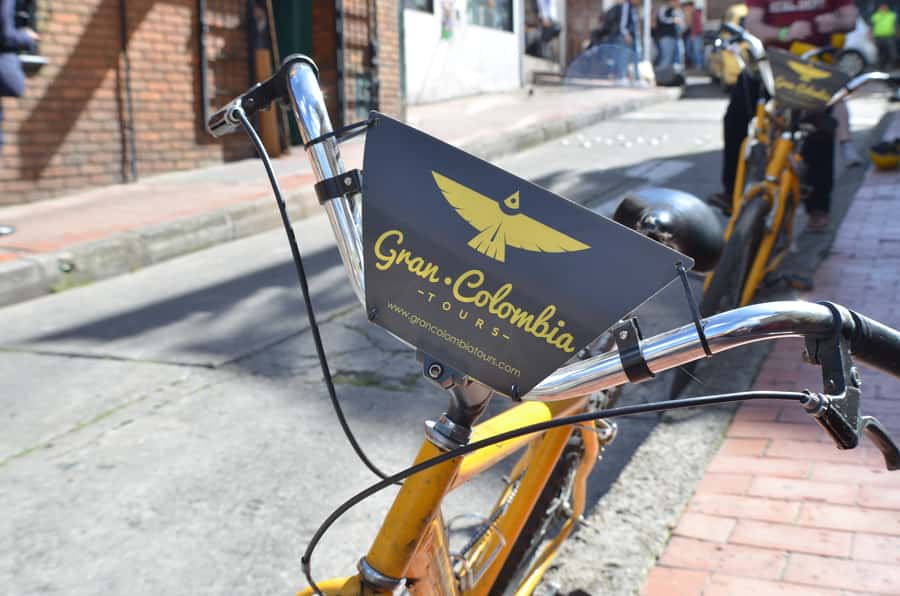
The first section focuses on the three founding plazas in La Candelaria. The listed stop at Chorro de Quevedo lasts about 15 minutes, followed by roughly 30 minutes of guided riding and sightseeing through the district.
You will hear how Bogotá changed over time as it expanded from its early center. The value here is not just looking at old buildings. Your guide helps you connect the plazas with the city’s later growth, changing neighborhoods, and different social groups.
La Candelaria can be crowded and uneven, so you should expect a slower start than on the open bike roads later in the route. That is a good thing for this part of the tour. You are getting your bearings, learning the basic story of Bogotá, and settling into the bike before the route opens up.
This is also where the tour begins to show its balance. The old center is the part most first-time visitors seek out, but you will not stay there for the whole ride. You get the historic setting, then move into areas many short walking tours never reach.
7th Avenue, from salt road to modern artery
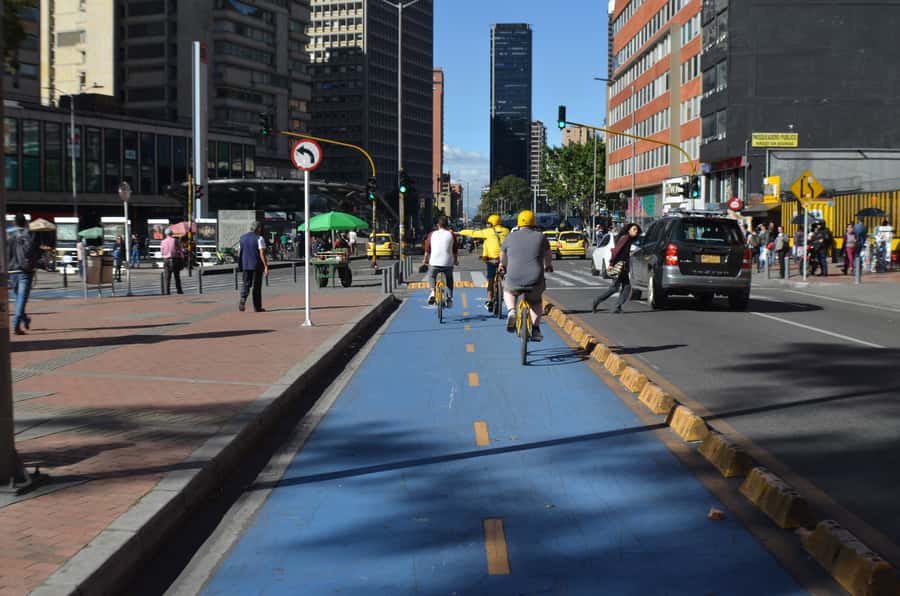
The route then reaches 7th Avenue, the north-south corridor that connects large parts of Bogotá. Its earlier role as an indigenous salt road gives the avenue a useful historical angle. You are not simply riding on a modern city street. You are following a route with a much older purpose.
For me, this is one of the most interesting parts of the ride because it shows Bogotá at a larger scale. The avenue helps you understand the city’s length and movement. It also makes clear why a bicycle can be more useful than walking when you want to see several areas in one outing.
Traffic is the practical issue. The tour uses bike roads where possible, and one group reported riding mainly on paths separated from the main road. Still, you need to feel comfortable handling a bicycle in an urban setting. The operator makes it clear that knowing how to ride is essential.
The guide’s safety advice is especially useful here. José has been noted for explaining how to move through different parts of Bogotá safely, while another rider appreciated the route’s use of separated cycle paths. You should listen closely during the first riding section and tell the guide if your pace or bike feels wrong.
Same city, a completely different kind of day:
- Bogota: Bicycle City Tour
★ 4.9 · 2,156 reviews - Zipaquirá: Salt Cathedral Group Tour with Pickup
★ 4.8 · 1,606 reviews - Bogotá: Guided La Candelaria Walking Tour
★ 4.8 · 1,229 reviews - Bogotá: Private City Tour, Monserrate, Emerald and Botero
★ 4.9 · 798 reviews
National Park, half forest and half public forum
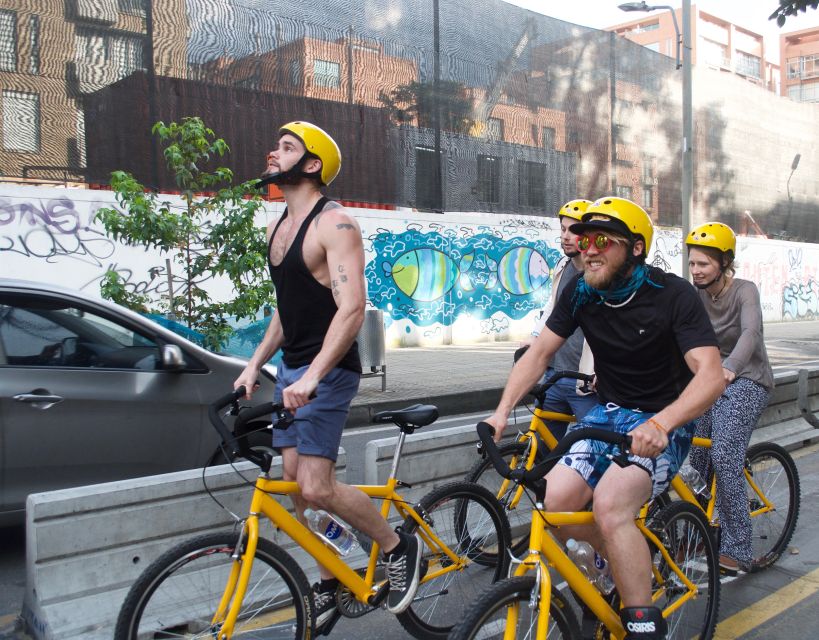
The stop at Parque Nacional lasts about 30 minutes and combines riding with guided sightseeing. The park is presented as both a wooded, water-related refuge and a cultural meeting place. That combination gives you a break from streets without removing you from city life.
I like this stop because it changes the mood of the tour. After the old plazas and the long avenue, you get trees, open space, and a place where Bogotá residents gather. Your guide can explain why parks matter in a city that is large, dense, and divided into very different districts.
The stop also gives you a chance to catch your breath. This is not a race, but three and a half hours on a bicycle is still a physical outing. Use the park pause to drink water and adjust your helmet or seat if needed.
The exact amount of riding can vary with the group. A small group of four once completed the experience in around two and a half hours, while the advertised duration is 210 minutes. Plan around the full three-and-a-half-hour schedule rather than assuming you will finish early.
Parkway Boulevard and its tree-lined path
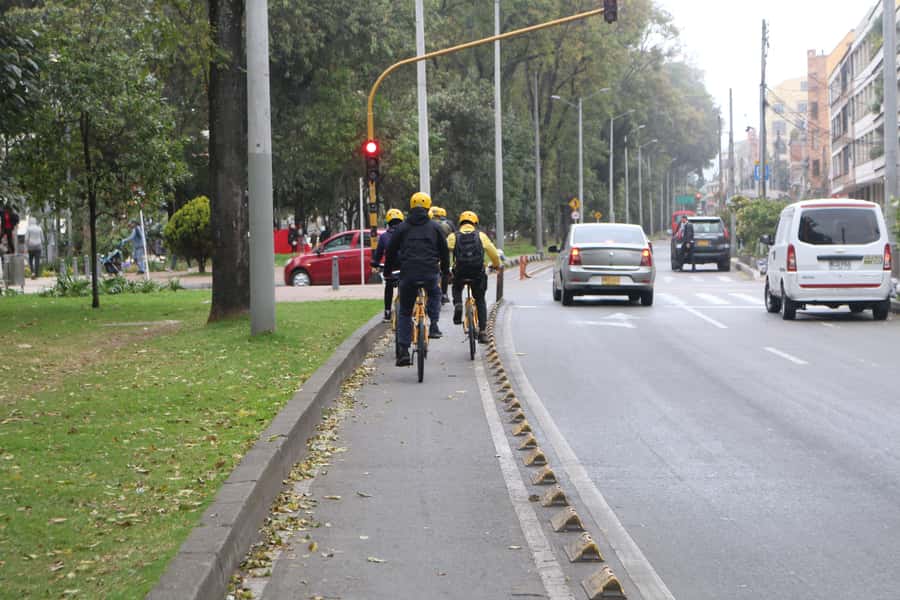
After National Park, you ride toward Parkway Boulevard. The route here uses bike roads and a natural path lined with trees. The stop is shorter, about 15 minutes, but it adds another useful contrast to the tour.
Parkway shows a calmer, greener side of the city without taking you far from urban life. You are still moving through Bogotá, but the trees and path make the ride feel less exposed than a major avenue. It is a good place to notice how public routes can connect neighborhoods while also providing a little breathing room.
This portion is likely to appeal to riders who want more than monuments. You will see ordinary city spaces used for commuting, exercise, and local life. I find that kind of stop more useful than adding another formal sightseeing point, because it helps you understand how the city works day to day.
The route crosses El Dorado Avenue after Parkway before returning toward La Candelaria. That crossing marks another change in scale. You have moved through the historic center, major corridors, and greener public spaces, then begin working your way back.
The bullring and Bogotá’s changing neighborhoods
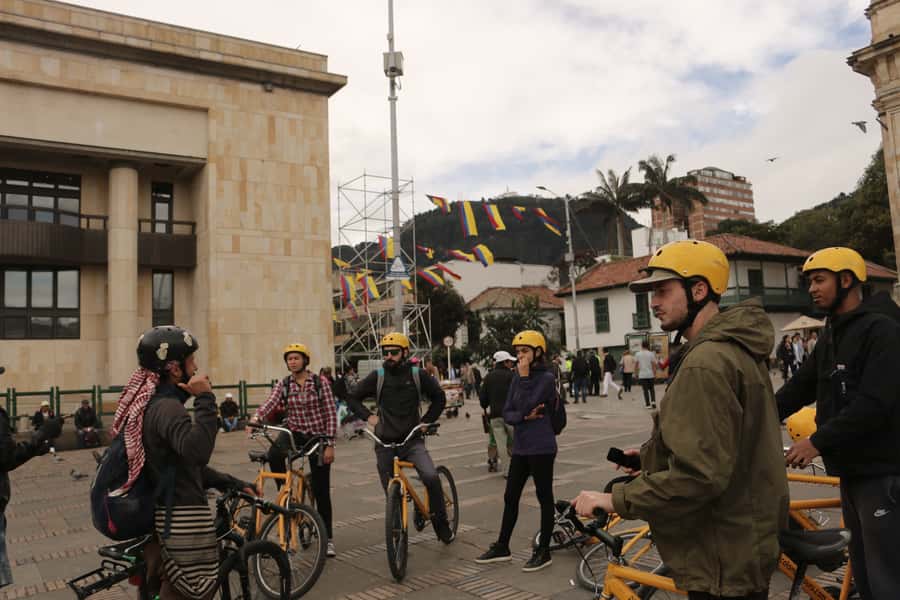
The itinerary includes a 15-minute stop at the Santamaría Bullring. The guide provides sightseeing and local context while you continue by bicycle. The stop adds a recognizable landmark to the route, but the larger value is how it fits into the story of central Bogotá.
The tour also takes you through less familiar neighborhoods where graffiti is used to address social issues. This is one of the strongest parts for anyone who wants to understand present-day Bogotá rather than only its colonial appearance.
Graffiti here is not treated as random decoration. The tour frames it as a way of facing difficult subjects and giving public space a voice. Your guide can help you read the city’s walls as part of its social conversation, although the exact works you see will depend on the route and conditions that day.
You may notice sharp differences between neighborhoods as you ride. One guide explained the city’s different class areas and how Bogotá has expanded, giving riders a clearer sense of its social divisions. That kind of explanation is hard to get from a self-guided ride, where you can see the contrast but may not know what it means.
Coffee and the return to La Candelaria
The route returns to La Candelaria for a final 15-minute stop that includes a coffee tasting. The tour then finishes back at El Gato Gris. After several hours of riding, a short coffee pause is a sensible ending rather than another major stop.
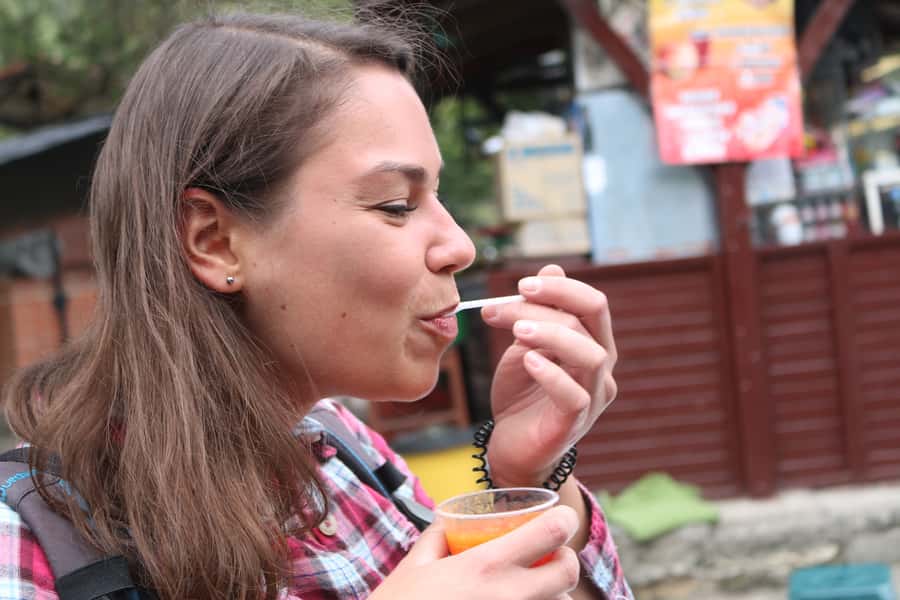
One guide ended the outing with good coffee, and another group sampled juices while learning about local fruits during a park stop. The supplied schedule specifically promises coffee tasting, so you should expect that as the reliable final treat. The juice stop is not listed as a standard part of every departure, so do not book this tour for that alone.
This final pause also gives you one last chance to ask questions. I would use it to get suggestions for the rest of your time in Bogotá, especially if you are trying to decide which districts or museums to visit next.
The tour ends where it starts, at El Gato Gris. Since transport back to your hotel is not included, you will need to arrange your own onward trip from central Bogotá.
What the $19 price really buys you
At $19 per person, this is a strong-value introduction to Bogotá. You are paying for a guide, bicycle, helmet, technical assistance, and risk insurance, not just a rental bike. The three-and-a-half-hour duration also gives the price real weight: you cover several districts and receive historical and social background along the way.
A private tour would give you more control over pace and stops, but this shared option keeps the cost low. The cap of 10 people is small enough for questions, and some departures have had only four riders. That can make the outing feel more like a personal city orientation than a large group excursion.
The tradeoff is flexibility. You follow the group’s pace and route, and the tour operates in all weather. There is no hotel pick-up, and you must be able to ride confidently. Bring water, wear comfortable clothes, and prepare for changing conditions rather than expecting a polished, indoor experience.
Free cancellation up to 24 hours before departure and the reserve-now, pay-later option also reduce the risk of booking ahead. Starting times depend on availability, so check the schedule before building the rest of your day around it.
Who will get the most from this ride
I would choose this tour early in a Bogotá visit. It gives you a map in your head, introduces the historic center, and shows you several districts before you decide where to spend more time.
It suits active visitors who want to cover ground and hear local explanation while moving. It is also a good choice for people who have only one day in Bogotá and want more than La Candelaria.
The tour may not suit you if you dislike city cycling, have difficulty riding for several hours, or want a slow architectural tour with long indoor visits. It is also not the right choice if you expect hotel transport or guaranteed dry weather.
Families and mixed-age groups should think about cycling ability rather than age alone. The key requirement is simple: you must know how to ride a bike. You should also be comfortable stopping, starting, and following a guide through urban streets and bike paths.
Should you book the Bogotá Shared Bike Tour?
Book it if you want a low-cost way to understand Bogotá as a whole rather than seeing only its old center. The best parts are the route variety, the small group size, the local guides, and the chance to connect landmarks with social issues and daily life.
I would book this for the first or second day of your stay, then use what you learn to plan later sightseeing. Just allow the full 210 minutes, arrive at the Chorro de Quevedo fountain with time to spare, bring water, and be ready to ride in whatever weather Bogotá provides.
FAQ
Where does the Bogotá Shared Bike Tour meet?
Meet next to the fountain in Plaza del Chorro de Quevedo. Look for the yellow umbrella. El Gato Gris is listed as the starting and finishing location.
How long does the bike tour last?
The stated duration is 210 minutes, or three and a half hours. A smaller group has completed the ride in around two and a half hours, but you should plan for the full advertised time.
What languages does the guide speak?
The live guide service is available in English and Spanish.
What is included in the price?
The tour includes a guide, bicycle, helmet, technical assistance, and risk insurance.
Is hotel pick-up included?
No. Hotel pick-up and drop-off are not included, so you must make your own way to the meeting point and arrange transport afterward.
Do I need to know how to ride a bike?
Yes. It is imperative that you know how to ride a bicycle before joining the tour.
What should I bring?
Bring water and wear comfortable clothes suitable for cycling. The tour operates in all weather conditions, so prepare for the conditions on the day of your ride.
Just added around Bogota
- Paragliding Activity with Transfers from Bogota★ 4.9 · 21 reviews
- Monserrate Express tour 3 hrs★ 4.6 · 6 reviews
- Nemocón Salt Mine Tour★ 5.0 · 3 reviews
- La Chorrera and Chiflon Waterfalls Private Hike Tour★ 5.0 · 7 reviews
- Layover City Tour or Conexion in Bogota★ 4.5 · 5 reviews
- Bogota: Horseback Riding Tour★ 5.0 · 5 reviews
- Guatavita: Tour to Guatavita Lagoon, the Village and Casa Loca★ 4.8 · 19 reviews
- 7-hour City Tour of Historic Bogotá with Monserrate★ 4.7 · 47 reviews
Cycling Tours, compared.
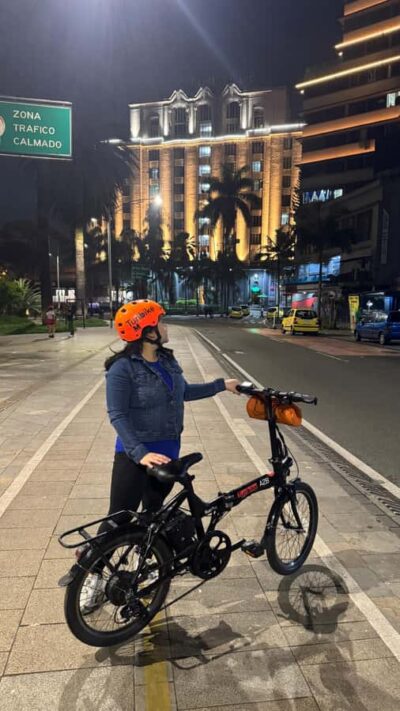
History & Local Life Essentials Tour on an E-Bike
Read our review →
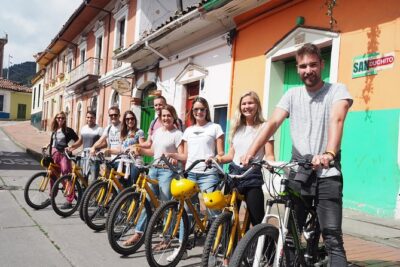
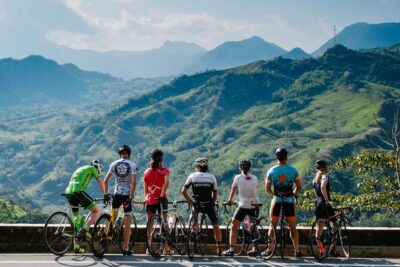
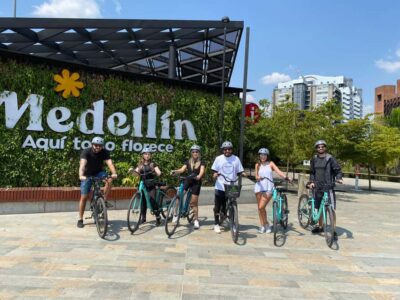
E-Bike City Tour Medellin with Local beer and Snacks
Read our review →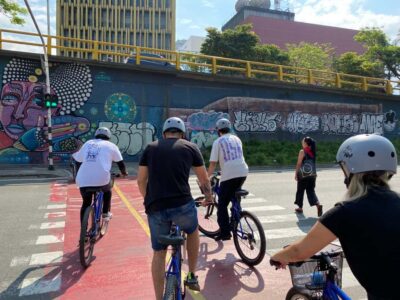
Browse the lists this tour appears in