
Reviewed · COFFEE EXPERIENCES
Salento: Coffee Master Roasting, Brewing and Tasting Tour
The best part of this two-hour Salento coffee experience is that you do not simply watch someone make a cup. You help roast a 2 kg batch of specialty coffee, then brew and compare five coffees using four pour-over methods. I like the hands-on format, and I like that the lesson explains both the science and the pleasure of coffee, from heat transfer to aroma notes.
I also appreciate the small group limit of 10 people. It leaves room for questions and personal help, including the kind of coffee-machine lesson the owner gave one visitor for use at home. The drawback is that this is a serious tasting session, not a plantation sightseeing tour, and you should eat before arriving, avoid perfume and strong deodorant, and skip smoking or alcohol beforehand.
Key points at a glance
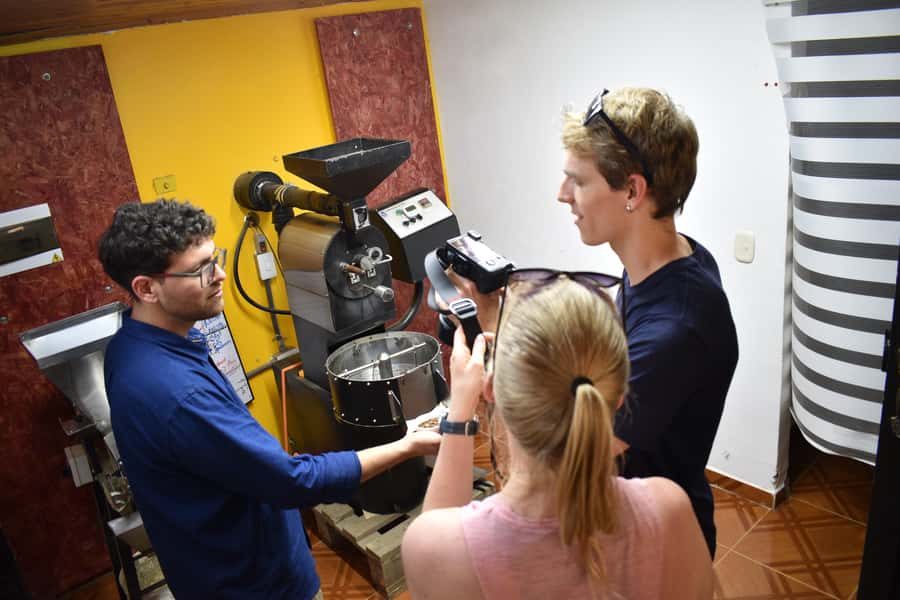
- Roast your own 2 kg batch: Work under expert supervision while learning how conduction and convection change green beans.
- Compare four pour-over brewers: See how classic brewing methods affect flavor, aroma, body, and aftertaste.
- Taste five specialty coffees: Explore full washed, extended fermentation, and natural processing methods.
- Learn from an involved owner: The owner leads the experience and can offer practical advice for home coffee equipment.
- Keep the group small: A maximum of 10 participants makes this more useful for questions and hands-on practice.
- Plan for a focused tasting: The session lasts two hours and does not include meals or transport to the plantation.
What happens during the two-hour coffee session
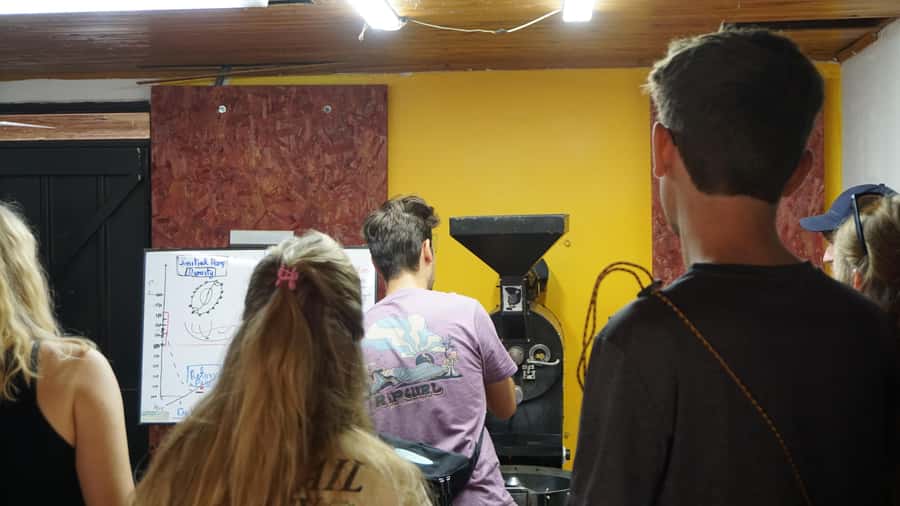
This experience follows coffee from green bean to finished cup. The order makes sense: first you learn what roasting does, then you see how brewing brings out the results.
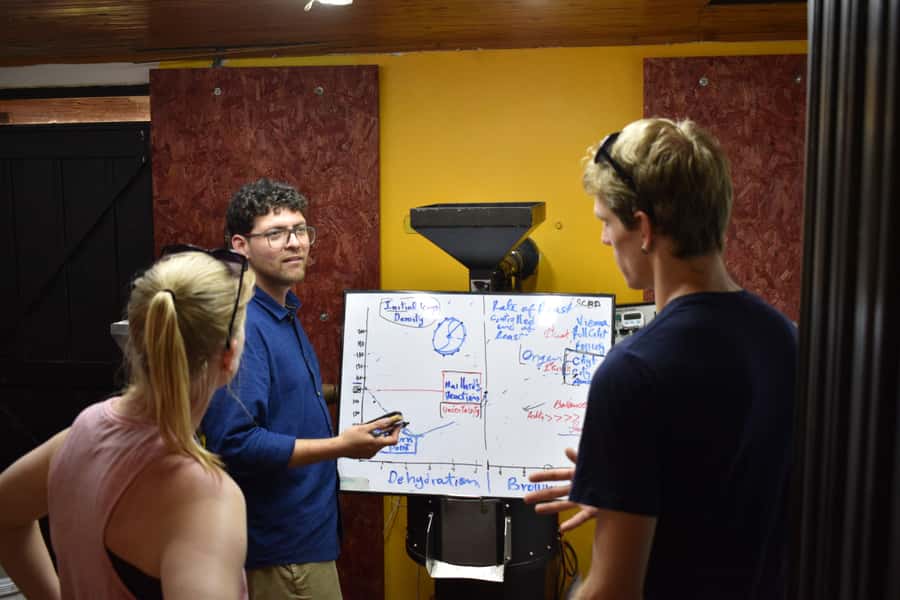
The session begins with the mechanics of a drum coffee roaster. An expert technician explains how heat reaches the beans through conduction and convection. You will also hear about the physical and chemical changes that take place as green coffee becomes roasted coffee.
That may sound technical, but it is useful information. Roasting is not just a matter of making beans darker. Heat changes the beans in stages, and the roasting profile affects what you later notice in the cup. The lesson also connects roasting decisions with coffee origin, which helps explain why beans from different places can taste so different.
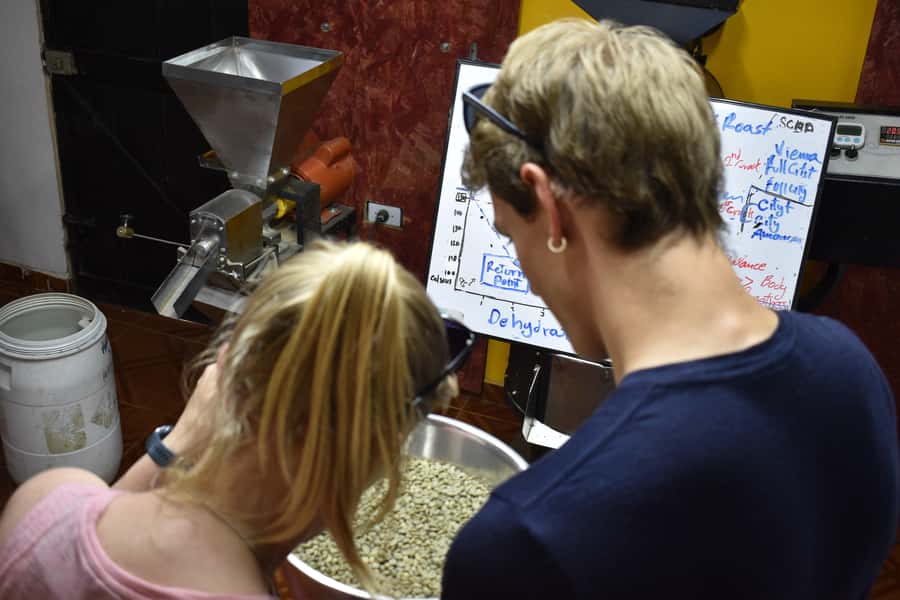
Then comes the most hands-on part: roasting a 2 kg batch of specialty coffee with expert supervision. You are not left to guess your way through it. The roasters guide you as the beans change, helping you connect what you see and smell with the process taking place inside the machine.
The 2 kg batch gives the activity some substance. You are not merely dropping a few beans into a small demonstration pan. At the same time, the batch is handled under supervision, so this remains a guided workshop rather than a test of your roasting skills.
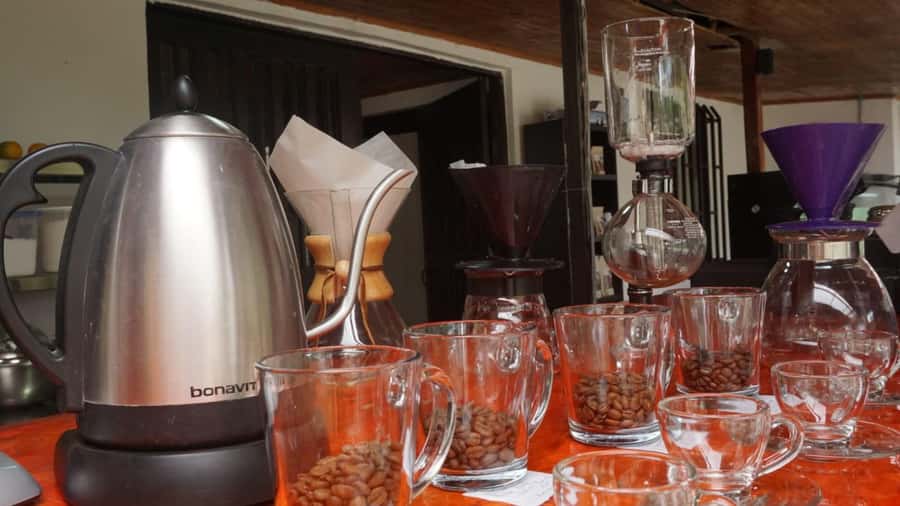
Once the roasting is finished, the focus shifts to brewing. You work with four different pour-over coffee makers and prepare five exotic coffees for tasting. This is where the earlier roasting lesson becomes practical. You can compare how different brewing methods reveal different qualities in the same broad world of specialty coffee.
The session teaches you to look for acidity, sweetness, body, and aftertaste. These words can seem vague until you compare several cups side by side. Here, the tasting gives you a way to connect those terms with actual flavors and sensations.
A few more Salento trips to weigh up
- Salento: Private Cocora Valley, Salento & Coffee Farm Tour
★ 4.9 · 202 reviews - Coffee Tour at Finca El Ocaso Salento: Traditional Spanish Farm
★ 4.8 · 89 reviews - Coffee Tour Salento-Ocaso Farm- English Tour
★ 4.6 · 88 reviews
Why the roasting lesson is worth your time
Many coffee activities stop at a farm walk or a quick cup. This one explains the part of the process that most coffee drinkers rarely see: the transformation from a hard, green bean into something aromatic and ready to brew.
The discussion of conduction and convection is especially helpful if you want more than a pleasant tasting. You learn that heat moves in different ways inside the roaster, and that the roaster must manage those changes carefully. That gives you a better sense of why timing and roasting profiles matter.
You will also hear why coffee origin matters. Origin does not work alone, of course. Processing and roasting shape the final cup too. Still, knowing that the bean’s starting point influences its character gives the tasting more meaning.
The master roasters do not present coffee as a mysterious art that only professionals can understand. The lesson gives you practical language and a working framework. Afterward, you should have a clearer idea of why one coffee tastes bright, another sweet, and another heavier in the mouth.
One point to keep in mind: the technical explanation may be more detailed than some casual coffee drinkers expect. If you only want a quick farm visit and a scenic cup, this may feel like too much information. If you enjoy knowing how things work, the science adds real value.
From full washed to natural processing
The tasting includes coffees made with different processing methods, including full washed, extended fermentation, and natural processing. These terms describe what happens to the coffee fruit and seed after harvesting, before roasting.
The point is not to memorize production vocabulary. The point is to taste how processing changes the coffee. When you sample several coffees in one sitting, you get a clearer comparison than you would from drinking one cup on its own.
You will be guided to consider four basic traits:
- Acidity: The lively, bright quality that can make coffee feel crisp.
- Sweetness: The impression of sugar-like flavor or roundness.
- Body: The weight and texture of the coffee in your mouth.
- Aftertaste: What remains after you swallow.
You may also notice different aromas and flavor notes as the cups change. The experience places these observations in a structured tasting, so you are not expected to identify every flavor perfectly.
This is a good setting for beginners because you can learn by comparison. It is also useful for people who already buy specialty coffee and want a better way to judge beans at home. The owner’s practical approach adds to that value. One participant received a personal lesson on using a home coffee machine, which suggests that questions about your own setup are welcome when time allows.
Four brewing methods, five coffees
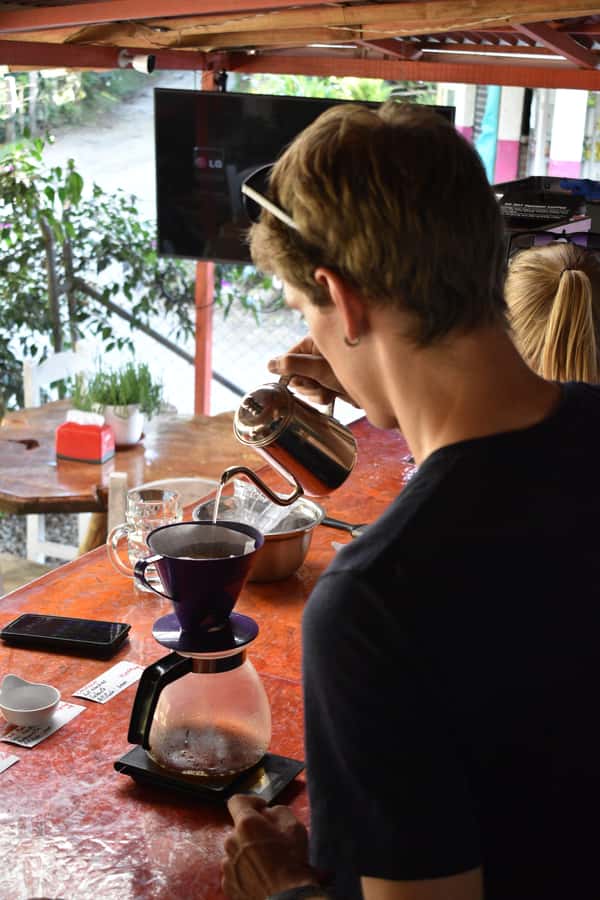
The brewing section is not a quick demonstration with one favored method. You work with four pour-over brewers and prepare five coffees for sampling.
That variety matters because brewing changes the way coffee reaches your cup. Water flow, contact time, and the brewer itself can affect the balance between acidity, sweetness, body, and aftertaste. The session does not ask you to accept one method as the best. Instead, it lets you compare results.
I like this approach because it turns the activity into a useful home lesson. You may leave with a better idea of which brewing style suits your taste, rather than simply remembering that the coffee was good.
The hands-on work also keeps the session from becoming a lecture. You participate in preparing the coffees, then taste the results. That combination helps you understand the difference between reading about brewing and actually seeing how a cup changes.
The five coffees are described as exotic specialty coffees. The exact beans and flavors can vary, so you should not expect a fixed tasting menu. What remains consistent is the chance to compare different processing styles and brewing techniques in one sitting.
Same city, a completely different kind of day:
- From Salento: Cocora Valley Shared Tour
★ 4.8 · 246 reviews - Salento/Pereira: Cocora Valley & Salento Hiking Private Tour
★ 4.8 · 78 reviews - Cocora Valley and Salento Hike Tour
★ 5.0 · 76 reviews - Coffee Farm and Salento Walking Tour
★ 5.0 · 47 reviews
The personal touch at Coffee Cupping Micro Roasters
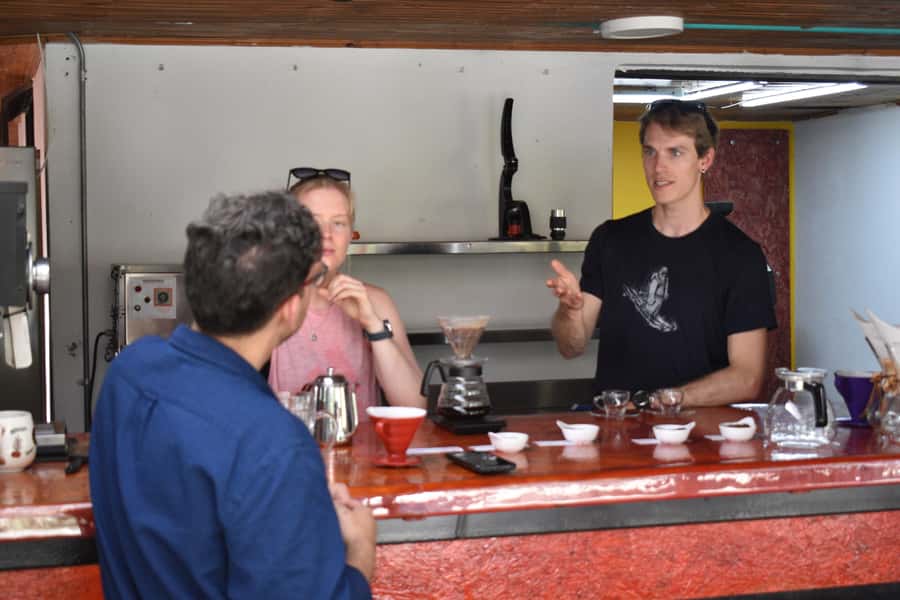
The experience is provided by Coffee Cupping Micro Roasters, and the owner plays an active role. The owner’s name is not provided, but the session is built around direct instruction rather than a distant presentation.
That matters in a small workshop. A guide who enjoys the work can adjust the pace, answer questions, and explain a point in plain terms. The owner has also helped a participant understand a home coffee machine, so you can bring practical questions about brewing equipment if they fit the flow of the session.
The current rating is 4.8 from six ratings, with praise focused on the owner’s hospitality, clear instruction, and passion for coffee. The strongest pattern is personal attention. People describe the atmosphere as welcoming and relaxed, while also pointing to the detailed roasting and brewing lessons.
You should still keep expectations sensible. This is a two-hour workshop, so it cannot cover every part of coffee production in great depth. It also does not promise a named guide or a long tour of the plantation. Its strength is focused instruction from bean to cup.
Is $52 good value?
At $52 per person, the price is reasonable if you plan to take part fully. You are paying for a two-hour small-group session, a roasting demonstration, hands-on brewing, a guided tasting, beverages, and insurance.
The value improves if you are curious about coffee beyond drinking it. You get several useful lessons in one appointment: roasting profiles, origin, heat transfer, processing methods, brewing equipment, and tasting vocabulary. A standard coffee tasting might offer cups to sample, but this experience adds the work and explanation behind them.
The price is less attractive if you mainly want transportation or a broad farm tour. Transport to the plantation is not included, and meals are not included either. One practical advantage is that the location is easy to reach from Salento, so you are not paying extra for a packaged transfer service you may not need.
Before booking, ask yourself what kind of afternoon you want. For a coffee enthusiast, home brewer, or curious adult, $52 buys a useful introduction with plenty to taste. For someone who prefers a relaxed agricultural visit with little instruction, another type of tour may suit better.
Getting ready for the tasting
Eat a proper meal before you arrive. The instructions specifically warn against coming on an empty stomach, and that is sound advice for a session involving several coffees.
Your sense of smell matters here, so avoid strong deodorant, perfume, skin lotion, and strong mosquito repellent. These scents can interfere with aroma, which is a large part of tasting coffee.
It is also best not to smoke before the experience or drink alcohol beforehand. Both can affect your sense of smell and taste. Smoking, alcohol, drugs, chewing gum, and bare feet are not allowed during the activity.
Wear something comfortable for a workshop involving equipment and standing around the roaster. People with back problems should take care, since the experience is not considered suitable for them.
The age limit is 15 and older. This is not designed as a children’s activity, and the tasting format requires attention to aromas and flavors.
There is mixed information about wheelchair access. The activity details describe it as wheelchair accessible, while the suitability information says it is not suitable for wheelchair users. Because those statements conflict, contact the provider before booking if you use a wheelchair. Do not assume the roasting area, brewing stations, and access route will work for your needs.
Timing, language, and group size
The experience lasts two hours, with starting times depending on availability. That makes it easy to fit into a Salento day, but you should allow extra time for getting to the plantation because transport is not included.
Instruction is available in English and Spanish. The small group limit is 10 participants, which is important for a hands-on workshop. With too many people, brewing practice can become a turn-taking exercise. A group of this size gives you a better chance to handle equipment and ask questions.
The compact format also means you should arrive ready to focus. This is not a long stop where you wander in and out. The roasting explanation, supervised batch, four brewing methods, and five-coffee tasting all need to fit into the scheduled time.
Free cancellation is available up to 24 hours before the activity for a full refund. You can also reserve now and pay later, which helps if your Salento plans are still changing.
Who should book this experience?
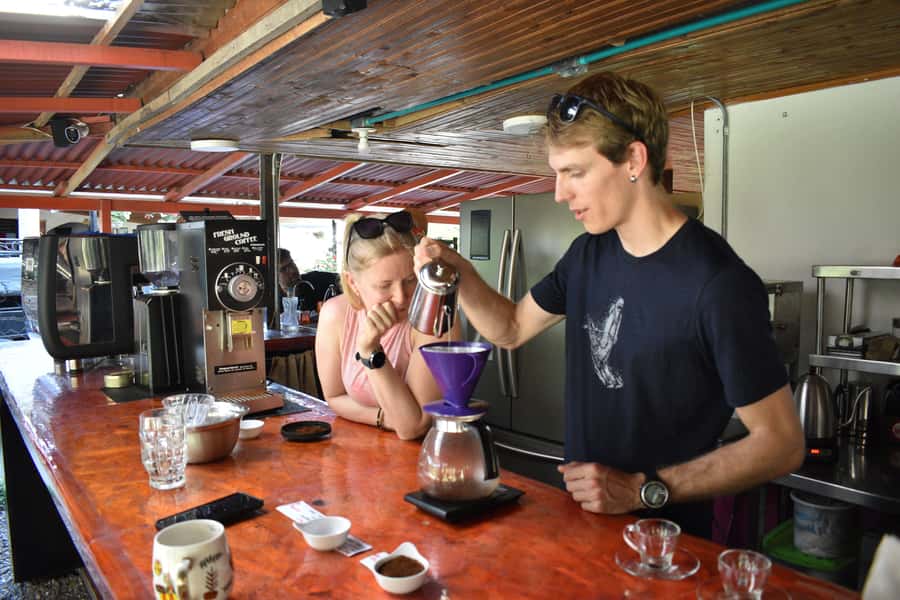
I would recommend it most strongly to adults who already enjoy coffee or want to understand why specialty coffee costs more. Home brewers will find the comparison of pour-over methods especially useful, and beginners will appreciate learning tasting terms with several cups in front of them.
It is also a good choice if you want a local activity that does not rely only on scenery. You get a look at an important part of Colombian coffee culture through the work itself: roasting, brewing, and careful tasting.
The session may suit you less if you dislike technical explanations, caffeine, or structured tastings. It is also not the right pick for children under 15, people with back problems, or anyone who wants meals and transport included.
The strongest reason to book is the combination of participation and personal instruction. You roast a real batch, prepare coffee through several methods, and leave with a clearer sense of what you like.
Should you book it?
Book this tour if you want a focused, friendly coffee workshop rather than a simple plantation visit. The owner-led format, small group, five coffees, and four brewing methods give the $52 price solid value for curious drinkers.
Skip it if you want a scenic half-day outing, a full meal, or included transport. Also check the wheelchair question directly before reserving. For everyone else, this is a practical way to turn a cup of Colombian coffee into a better-understood daily ritual.
FAQ
How long does the coffee experience last?
The experience lasts two hours.
How much does the tour cost?
The price is $52 per person.
What languages are available?
The instruction is available in English and Spanish.
How many people can join the group?
The activity is limited to 10 participants.
Will I get to roast coffee myself?
Yes. Under expert supervision, you will roast a 2 kg batch of specialty coffee.
How many brewing methods and coffees are included?
You will work with four pour-over coffee makers and prepare five coffees for the tasting session.
What should I do before arriving?
Eat a good meal and avoid strong deodorants, perfumes, skin lotions, and strong mosquito repellents. Do not smoke or drink alcohol before the session, since these can interfere with your sense of smell.
More Food & Drink in Salento
- Salento: Coffee Farm Tour with Tasting
★ 4.9 · 41 reviews - Medellin: Comuna 13 Graffiti Tour, Cable Car & Street Food
★ 4.8 · 9,046 reviews - Medellín: Comuna 13 True Story and Street Food Tour
★ 4.9 · 1,779 reviews - Cartagena: Guided Street Food Tour with Tastings
★ 4.9 · 833 reviews
Just added around Salento
- Santa Rita Waterfall and Salento Private Tour★ 5.0 · 9 reviews
- Salento: hike to learn about Birds★ 4.9 · 6 reviews
- Salento, Cocora and Filandia Full Plan from Pereira/Armenia★ 5.0 · 11 reviews
- Salento: Coffee Farm Tour with Tasting★ 4.9 · 41 reviews
- Salento: Salento & Cocora Valley Tour★ 5.0 · 11 reviews
- Salento and Cócora Tour + Coffee Farm from Pereira/Armenia★ 5.0 · 33 reviews
- Santa Rosa de Cabal Thermal Hot Springs★ 4.0 · 16 reviews
- From Salento: Cocora Valley Hiking Tour with Lunch★ 4.0 · 17 reviews
Coffee Experiences, compared.
Coffee Tour with Transport, Snacks and Tastings
Read our review →
Medellín Coffee Farm Tour with Trolley and Cable Car Ride
Read our review →
Horseback Riding Coffee Farm Tour with Coffee Spa
Read our review →
Browse the lists this tour appears in