
Reviewed · HIKING & TREKKING
Santa Marta: Multi-Day Trek to The Lost City
The real prize here is not just the Lost City. It is the slow approach through Colombia’s Sierra Nevada, where stone paths, jungle rivers, indigenous communities, and old Tayrona terraces build toward the final climb. The ancient site dates to around 800 CE, roughly 650 years before Machu Picchu.
I like the chance to choose a 4, 5, or 6-day pace, and I like that guides explain the plants, animals, archaeology, and traditions along the way. Meals, purified water, sleeping gear, transport, insurance, and luggage storage are included, which takes much of the planning off your plate.
The catch is simple: this is a serious jungle trek, not a regular walk. You face heat, humidity, mud, river crossings, steep slopes, and long days on foot. The price of about $713 per person also deserves a careful look, especially since some past bookings have been sold at noticeably different rates.
Key points to know before you book
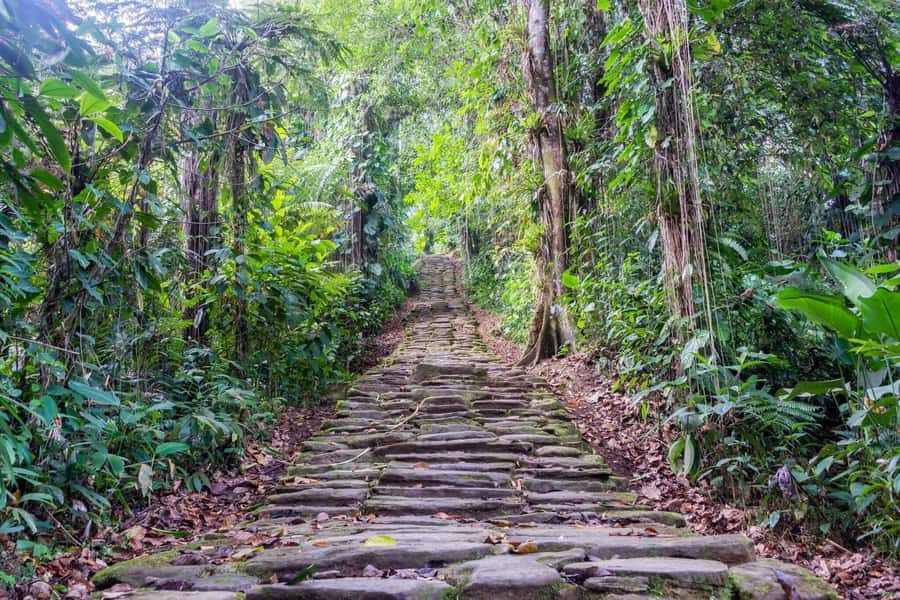
- 1,200 stone steps lead to the Lost City, with the archaeological terraces hidden high in the jungle.
- The 4-day option is the toughest schedule, while the 6-day version spreads the walking across more days.
- Jungle accommodation is basic but practical, using hammocks or beds with mosquito nets, plus electricity, showers, and toilets.
- Wiwa and Kogui cultural encounters add meaning beyond the archaeological site itself.
- Small groups are limited to 15 people, with Spanish and English guide service available.
- Expect real physical effort, slippery mud, mosquitoes, hot days, and cooler nights.
Reaching El Mamey by 4WD
Your day begins in Santa Marta around 9:30 AM, with pickup available in the urban area, Rodadero, and Taganga. Pickup does not include Bonda, Minca, Palomino, or places outside the stated urban perimeter, so check your hotel location before booking.
The drive to El Mamey takes about three hours in a 4WD vehicle. This is not glamorous transport, but it is part of the adventure. El Mamey is the trailhead where you eat lunch and begin walking toward the Lost City, known locally as Ciudad Perdida.
The transport matters because the trailhead is far from Santa Marta. At the same time, one practical warning is worth noting: the vehicle can feel crowded, particularly on the return journey. If you are tall, prone to motion sickness, or simply dislike cramped rides, prepare for a basic transfer rather than a comfortable shuttle.
From El Mamey, the first walk takes about four hours and covers roughly 7.6 kilometers. It is described as a gentler start, though warm weather and humidity can make even a moderate distance feel demanding with a pack.
A few more Santa Marta trips to weigh up
- Tayrona Park Hike And Beach Day
★ 5.0 · 91 reviews - Guided Hiking through Tayrona National Park and Cabo San Juan
★ 4.5 · 73 reviews - Trekking History and Indigenous Heritage in Minca + Cacao & Coffee + Waterfall
★ 4.9 · 63 reviews
Day one: Las Tres Cruces, waterfalls, and the first camp
The early section gives you a useful introduction to the climate and trail. At the Las Tres Cruces lookout, you stop for fruit and a snack. The viewpoint offers a pause before the route continues through thick jungle.
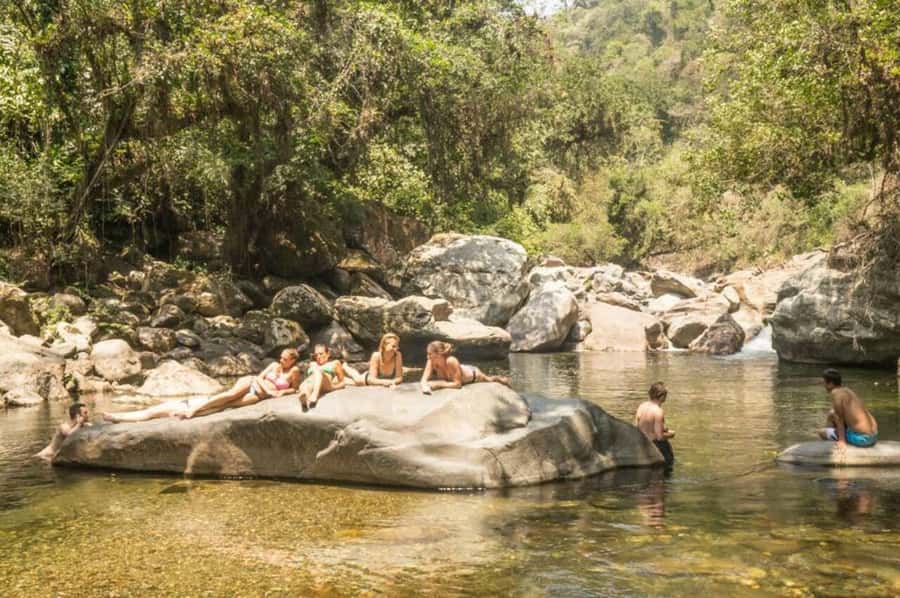
Natural pools and waterfalls provide another welcome break. You can cool off in the water, so keep your swimwear somewhere easy to reach rather than buried at the bottom of your bag. A towel and flip-flops are also useful after a river or pool stop.
By late afternoon, you reach the first camp for dinner and sleep. The camps are community-run establishments, and conditions can vary because they operate independently. You should expect a functional overnight stay, not a private room or polished lodge.
Sleeping arrangements use hammocks or beds with mosquito nets. Camps have electricity, toilets, and showers, although the general feel remains simple. Bring a headlamp or flashlight, quick-dry clothing, insect repellent, and a light layer for the cooler night temperatures.
Day two: Rivers, reserves, and the Wiwa and Kogui communities
The second day changes the rhythm. On the 4-day and 5-day versions, breakfast comes early, followed by a long walk toward Wiwa camp beside the Buritaca River. The route takes about seven hours and covers around 14.7 kilometers, with much of the day uphill.
The Buritaca River is both a scenic stop and a practical chance to cool down. You can bathe, rest, and eat lunch beside the water before continuing into the jungle. The route then passes Mutanyi, a Kogui settlement made up of several indigenous homes.
The 6-day itinerary breaks up this effort. Instead of immediately tackling the longest walking day, you spend day two near an indigenous reserve and have more time to learn about Wiwa and Kogui customs. The walking is only about three hours over relatively smooth ground.
That slower arrangement is the main reason I would consider the 6-day option. It costs you extra time, but it gives your legs more room to recover and allows the cultural side of the trek to receive proper attention. If you are fit but not accustomed to several consecutive days of steep walking, the added nights may make the whole experience more enjoyable.
Day three: Mutanyi and the approach to the archaeological site
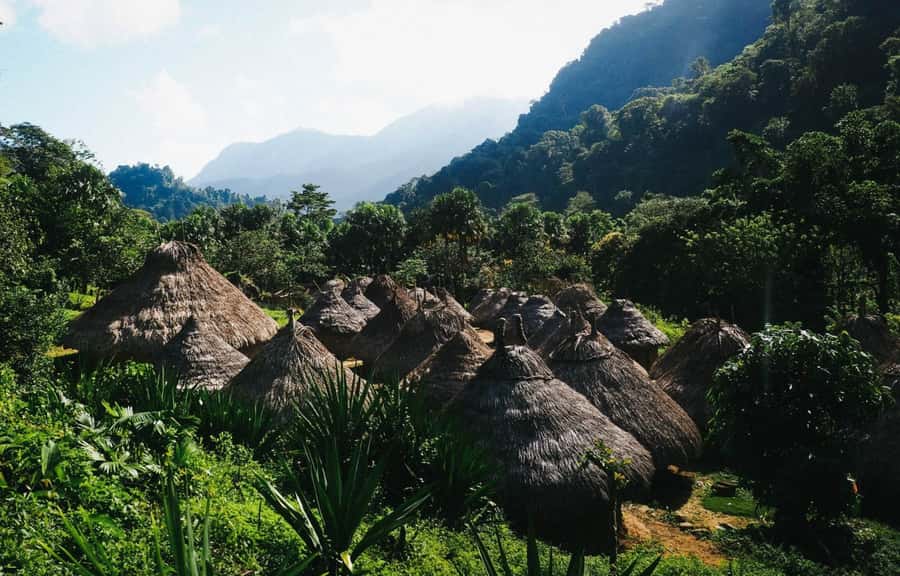
On the 6-day trek, day three leads down toward the Buritaca River valley. You pass Mutanyi, take breaks, learn about local plants and animals, and have the opportunity to bathe in a river. The walk lasts about five hours, with a mixture of uphill and downhill sections.
At camp, guides may share stories and explain more about the route and the communities that live in the region. This is where the trek becomes more than a long hike to a set of stone terraces. The cultural context helps you understand why the mountains and rivers matter to the indigenous people who still inhabit the area.
On the 4-day and 5-day itineraries, the schedule is more compressed. Day two covers the long route toward Wiwa camp, and day three becomes the main Lost City day. The physical demand is higher, but you reach the archaeological site sooner.
Guide quality matters greatly here. Guide teams can include people such as Arghenith, Francisco, Miguel, Coco, or English-speaking interpreters such as Victor and Emilie, depending on the departure. The strongest guide experience combines route management with clear explanations of Tayrona relics, indigenous traditions, plants, animals, and local history. Confirm the language arrangement you need before departure.
Same city, a completely different kind of day:
- Santa Marta: Sailboat day tour to Tayrona Park
★ 4.5 · 352 reviews - From Santa Marta: Tayrona National Park Guided Tour
★ 3.8 · 131 reviews - Tayrona Bay Sailboat trip
★ 4.5 · 107 reviews - Santa Marta: Minca Coffee, Cocoa, & Waterfall Full-Day Trip
★ 4.6 · 102 reviews
Day four: Climbing 1,200 steps to the Lost City
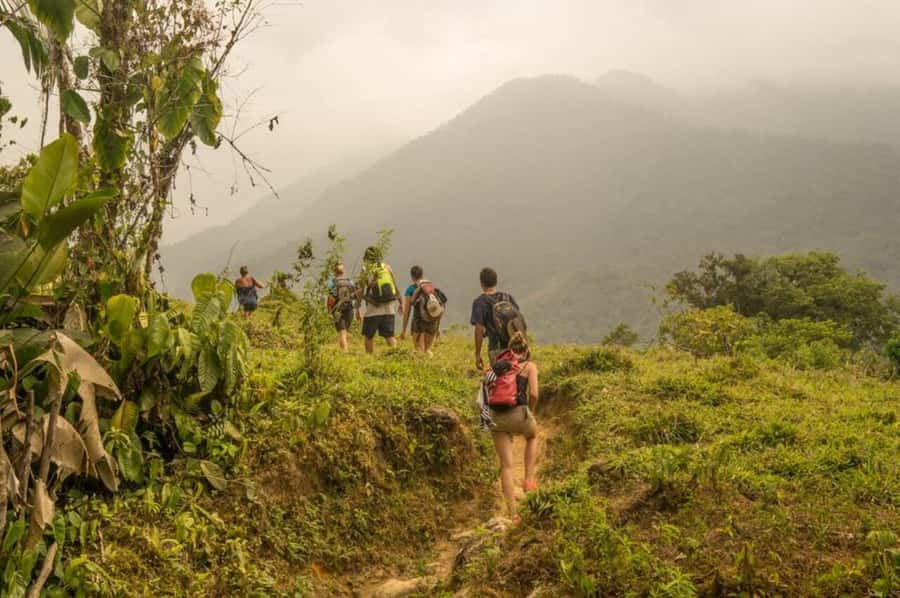
The central challenge arrives early in the morning. After breakfast, you follow the stone path built by the Tayrona people and climb about 1,200 steps toward the Lost City.
The steps are not a short staircase at the end of an easy walk. They come after several days of heat, humidity, uneven ground, and tired legs. Some sections can be slippery, especially after rain. Use shoes with a solid grip, keep your hands free when possible, and take the pace your body allows.
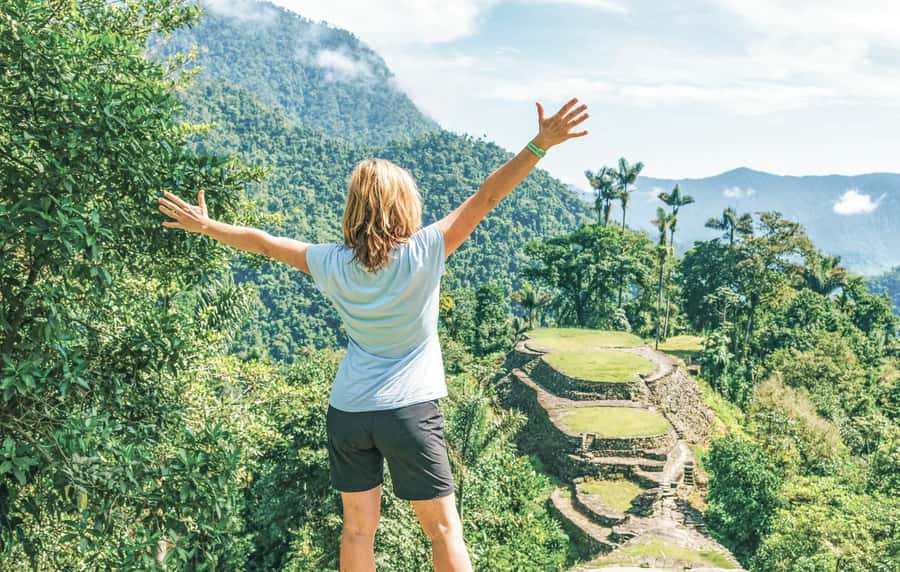
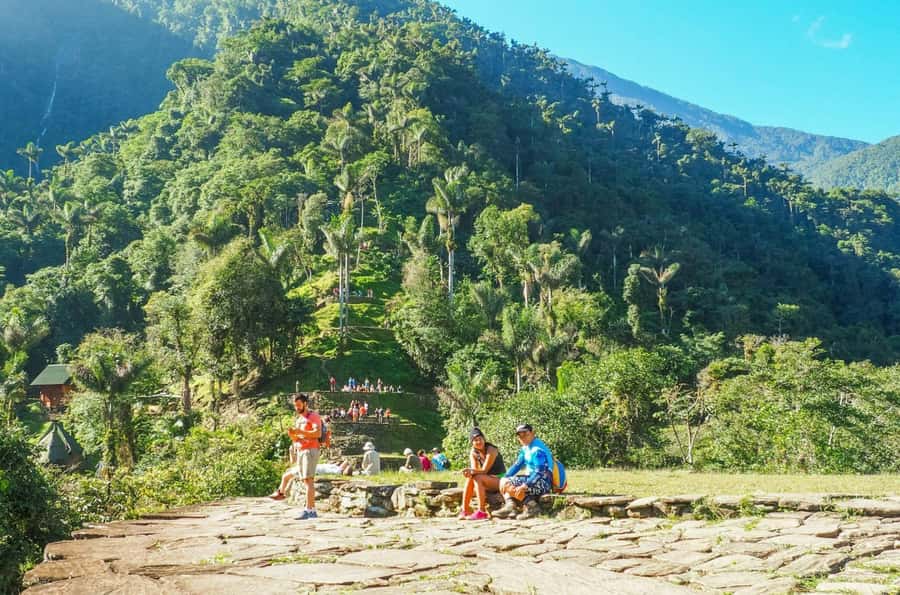
At the top, the effort pays off with a series of 169 terraces, tiled roads, and small circular plazas cut into the mountainside. The site sits within dense jungle, so the setting is as important as the stones. Your guide explains the remains and the ancestral stories connected with the place, then gives you time to take photographs and enjoy the views.
Respectful behavior is essential. This is an archaeological site connected to living indigenous cultures, not simply a photo stop. Follow your guide’s instructions, stay on the permitted route, and do not bring a drone. Drones are specifically prohibited.
After the visit, you descend to the camp where you began the morning, eat lunch, and continue toward the next camp. The full day takes about seven hours, with around six kilometers of uphill and downhill walking. That return journey is easy to underestimate. The site may be the highlight, but you still have several hours to walk after seeing it.
The 5-day option adds a useful rest afternoon
The 5-day program separates the return from the final exit. After walking back toward the first camp on day four, you eat lunch and spend the rest of the afternoon resting there. You can observe the surrounding views, talk with other members of the group, and recover before the final walk.
Day five begins with breakfast, followed by the walk to El Mamey. Lunch comes there before the 4WD vehicle returns you to Santa Marta.
This version makes sense if you want more time than the 4-day route but do not need the more gradual cultural and walking schedule of the 6-day program. It still includes a demanding climb and several long days, but the extra overnight stop gives you a little breathing space.
The 6-day return gives your legs more time
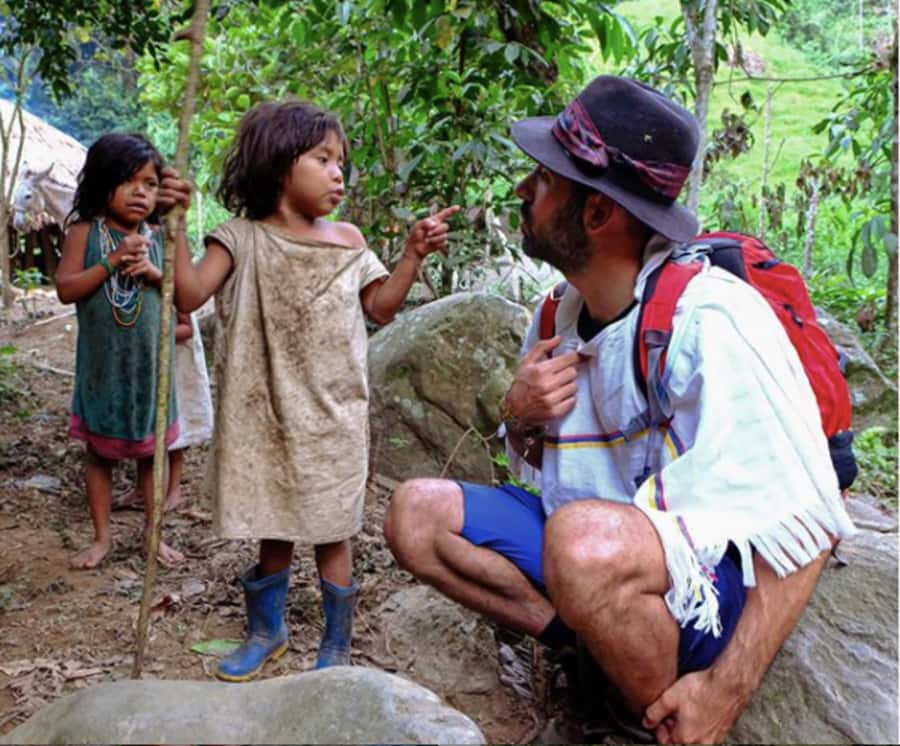
The 6-day itinerary places the Lost City visit on day four and spreads the return over two more days. After the archaeological visit and lunch, you continue to camp for the night. Day five includes a two-hour walk to another camp, lunch, and an afternoon to rest and enjoy the views.
The final day starts with breakfast and a walk to El Mamey. Lunch comes before the 4WD journey back to Santa Marta.
This version is not necessarily easy. It contains the same jungle conditions and the same steep stone steps. Its advantage is recovery time. You can walk shorter sections, spend more time near the river and communities, and avoid making every day a race against fatigue.
What sleeping and eating are really like
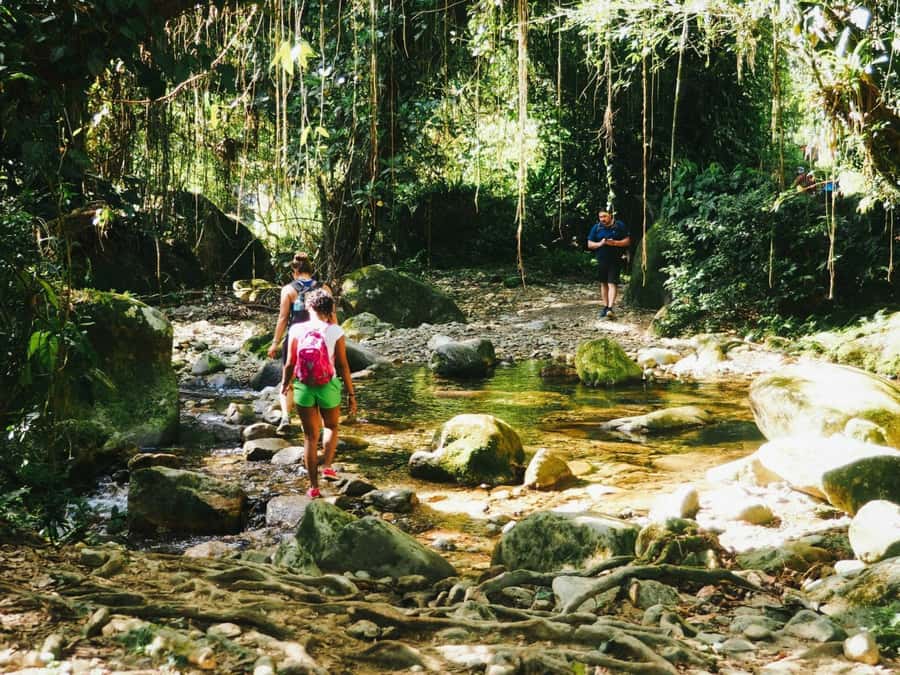
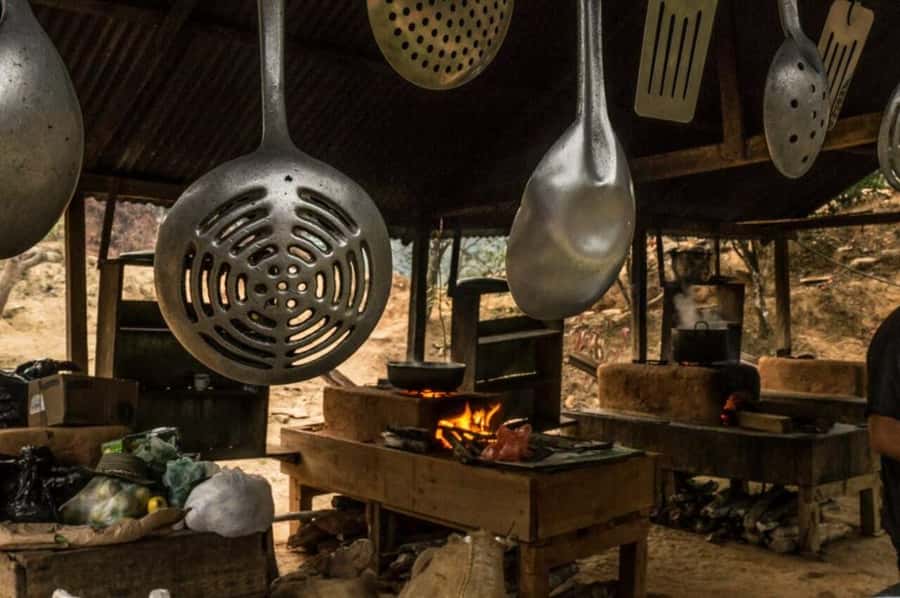
Three meals a day are included, along with purified water, fruit, and snacks during the walk. The food is designed to fuel a long trek, and the meals are generally filling. Drinks beyond water are not included, so bring cash for any additional beverages or other small purchases.
The camps provide hammocks or beds with mosquito nets. Electricity, toilets, and showers are available, but do not expect hotel comfort. Bring toiletries, a towel, spare socks, quick-dry clothes, and a small flashlight.
Community-run accommodation and food are an important part of the arrangement. Your money supports the people who live along the route, and the facilities reflect local conditions. Service can vary from camp to camp, so keep your expectations practical.
Food safety is also worth taking seriously. One past departure was affected by illness near the end of the trek, which shows why you should use purified water, keep clean hands, and be cautious with anything you buy outside the included meals. This is not a reason to cancel, but it is a reason to pack medication and pay attention to hygiene.
Heat, rain, mud, and mosquitoes
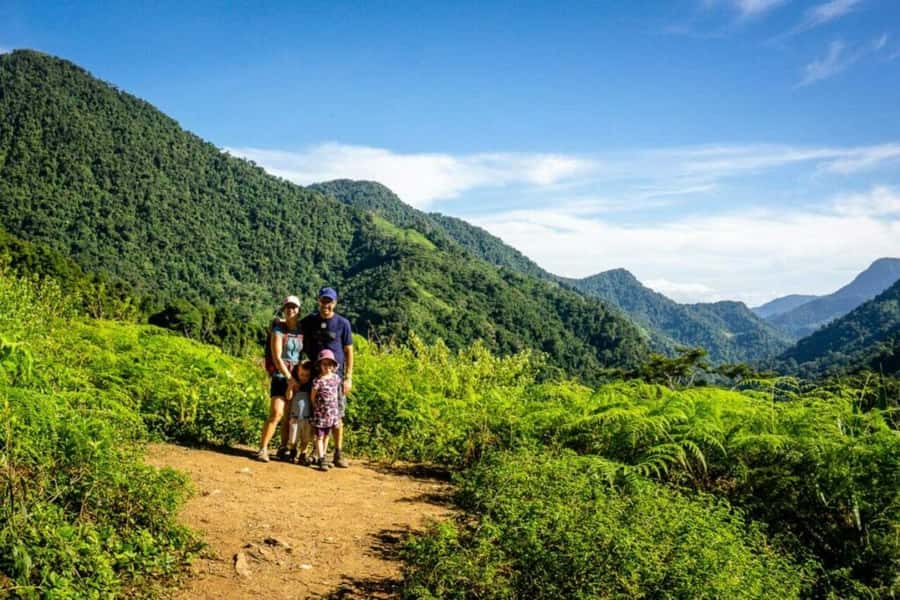
Temperatures usually sit around 26 to 32 degrees Celsius during the day. Humidity can make the walking feel harder than the distance suggests. Nights may cool to around 18 degrees Celsius, so pack one warm layer rather than assuming the jungle stays hot at all times.
Rain often arrives around sunset. The trail can become muddy and slick, and you may cross rivers or streams. Pack rain gear even if the sky looks clear at breakfast.
Your daypack should hold water, sunscreen, insect repellent, snacks, a towel, swimwear, a phone, personal medication, and a rain layer. You should also bring hiking shoes, flip-flops for camp, warm clothing, spare socks, cash, and a charged smartphone.
The operator stores your larger suitcase during the trek. That is useful because you should walk with only a light daypack. Pack sparingly, but do not cut the essentials. Wet clothes, blisters, and mosquitoes become much less amusing on day three.
Is $713 a fair price?
At about $713 per person, this is a substantial purchase. The price includes four to six days of food, the Lost City entrance, accommodation, purified water, snacks, 4WD transport, guide service in Spanish and English, accident insurance, indigenous community contributions, and storage for your luggage.
That package has real value. You do not need to arrange separate transport, camps, meals, entrance tickets, or a guide. The community contributions also mean part of the fee supports the people living in the region.
Still, the value depends on your expectations and the rate offered for your booking. Past prices have varied widely between sales channels, and some people have considered the higher rates expensive for basic accommodation, simple food, and possible extra costs for soft drinks, sports drinks, transport help, or other purchases.
I would compare the price for the same number of days before paying. Ask what is included in your specific departure, especially if you are comparing the 4-day and 6-day versions. A shorter trip is not automatically better value, since it compresses the walking and may be harder on your body.
Free cancellation up to 24 hours before the start and the option to reserve now and pay later add useful flexibility. They do not change the physical demands, though, so do not book based on cancellation terms alone.
Who should choose this trek?
You should consider it if you want an active introduction to the Sierra Nevada and are comfortable with basic camps, shared facilities, and long days outdoors. It suits people who value archaeology and indigenous culture as much as scenery.
You do not need to be an elite athlete, but you should be ready for sustained uphill and downhill walking. The 4-day route is best for someone who wants the shortest schedule and can handle a faster pace. The 5-day version adds a recovery afternoon. The 6-day route is the sensible choice for a slower rhythm and more cultural time.
This is not suitable for pregnant women or wheelchair users. Anyone with a medical condition should consider the heat, humidity, river crossings, steep steps, and limited camp facilities before booking.
The maximum group size is 15, which is small enough for a more personal guide experience without promising solitude. The trail and camps are shared parts of the journey, so patience and cooperation help.
Should you book the Lost City trek?
Book it if reaching an ancient jungle city matters enough to justify several demanding days on foot. The combination of Tayrona terraces, river pools, indigenous communities, and jungle camps gives the route substance that a quick archaeological visit could never provide.
I would choose the 6-day option if your schedule allows. It spreads the effort, leaves more time for cultural exchange, and gives you a better chance of enjoying the route instead of simply surviving it. Choose four days only if time is tight and you are prepared for the hardest schedule. The 5-day trip is a useful middle ground.
Bring proper shoes, rain gear, insect repellent, cash, and a good attitude toward basic accommodation. Compare prices carefully, confirm your pickup point and language needs, and remember that the 1,200 steps are only one part of the challenge. If you accept that, this is one of Colombia’s most rewarding multi-day treks.
FAQ
How long is the Lost City trek?
You can choose a 4-day, 5-day, or 6-day trek from Santa Marta to the Lost City and back.
How difficult is the trek?
It is physically demanding, with long walking days, steep uphill and downhill sections, muddy or slippery trail conditions, river crossings, heat, humidity, and a climb of about 1,200 stone steps.
What languages are available?
Guide service is available in Spanish and English. Confirm the language arrangement for your departure when booking.
Where does pickup take place?
Pickup is available within Santa Marta’s urban perimeter, Rodadero, and Taganga. Pickup is not included from Bonda, Minca, Palomino, or areas outside the urban perimeter.
Where do you sleep during the trek?
You sleep in jungle camps using hammocks or beds with mosquito nets. Camps have electricity, toilets, and showers.
Are meals and water included?
Breakfast, lunch, and dinner are included. Purified water, fruit, and snacks are provided during the walks. Drinks besides water are not included.
What should you bring?
Bring warm clothing, swimwear, a towel, hiking shoes, sunscreen, rain gear, flip-flops, insect repellent, toiletries, socks, cash, a flashlight, a charged smartphone, personal medication, quick-dry clothing, and a daypack.
Are drones allowed?
No. Drones are not permitted during the trek.
Just added around Santa Marta
- SANTAMARTA: TOUR Remanso, Taganga, Playa Grande Lunch and Snorkeling Included★ 3.5 · 4 reviews
- Santa Marta: Trekking in Minca Complete Waterfall Circuit★ 4.4 · 28 reviews
- SANTAMARTA: White Night Tour in Katamaran with open bar★ 3.8 · 6 reviews
- SANTAMARTA: TOUR Combo boat taxi, aquarium, lunch, and white sand beach★ 4.6 · 14 reviews
- Santa Marta: Playa Cristal in Tayrona Parque Day Tour★ 3.9 · 28 reviews
- Old Town and Quinta Pedro Alejandrino Santa Marta City Tour★ 4.6 · 11 reviews
- SANTA MARTA: Tour to Playa Inca Inca with Lunch★ 3.2 · 4 reviews
- Santa Marta: Sunset Cruise Around the Bay★ 4.2 · 26 reviews
Hiking & Trekking, compared.
Private tour: hiking to the crystalline MELCOCHO river from MEDELLÍN
Read our review →
Salento/Pereira: Cocora Valley & Salento Hiking Private Tour
Read our review →
Guided Hiking through Tayrona National Park and Cabo San Juan
Read our review →
Trekking History and Indigenous Heritage in Minca + Cacao & Coffee + Waterfall
Read our review →
Browse the lists this tour appears in